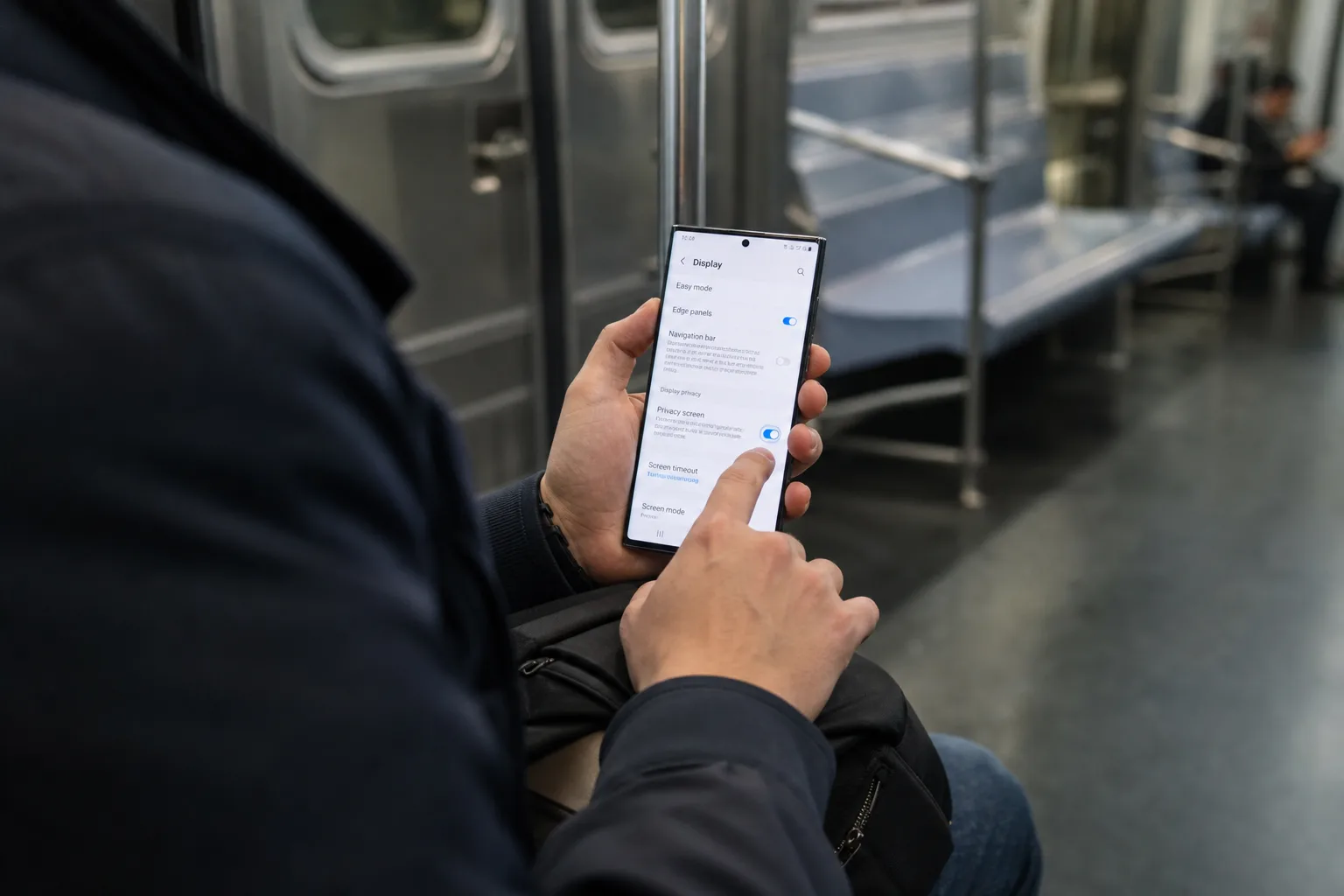
If a new report is accurate, the Samsung Galaxy S27 Privacy Display won’t be an Ultra-exclusive perk anymore. According to South Korean outlet The Elec, Samsung plans to bring the feature to all four models in the S27 lineup — the standard S27, S27 Plus, S27 Pro, and S27 Ultra. That’s a significant expansion for a technology that only made its debut on the Galaxy S26 Ultra earlier this year. The question is whether Samsung has done enough to fix the problems that plagued it first time round.
- Samsung Galaxy S27 Privacy Display is reportedly coming to all four models in the lineup, not just the Ultra.
- The Samsung Galaxy S27 Privacy Display uses Flex Magic Pixel tech to physically restrict viewing angles on-screen.
- Some Galaxy S26 Ultra users reported eye strain, and Samsung acknowledged brightness problems at certain angles when the Privacy Display feature was turned off.
- Xiaomi, Huawei, OPPO, and vivo are all developing competing private screen technologies, signalling a wider industry shift.
Table of Contents
What Samsung Galaxy S27 Privacy Display Actually Does
At its core, the Samsung Galaxy S27 Privacy Display is exactly what it sounds like — a way to stop the person sitting next to you on the train from reading your messages. But the way Samsung achieves this is more interesting than a simple software filter. The feature is built on Samsung Display’s Flex Magic Pixel technology, which physically manipulates the pixels on the screen to narrow their viewing angles. That’s a hardware-level solution, not a software overlay, which means the effect is far more convincing than anything you’d get from a third-party screen protector or an app-based dimming trick.
Samsung also built in meaningful flexibility. You can activate the Samsung Galaxy S27 Privacy Display across the entire screen, or enable it selectively on a per-app basis — so your banking app could default to private mode while your social media feed stays visible. It’s a genuinely practical approach for anyone who handles sensitive information on their phone in public.
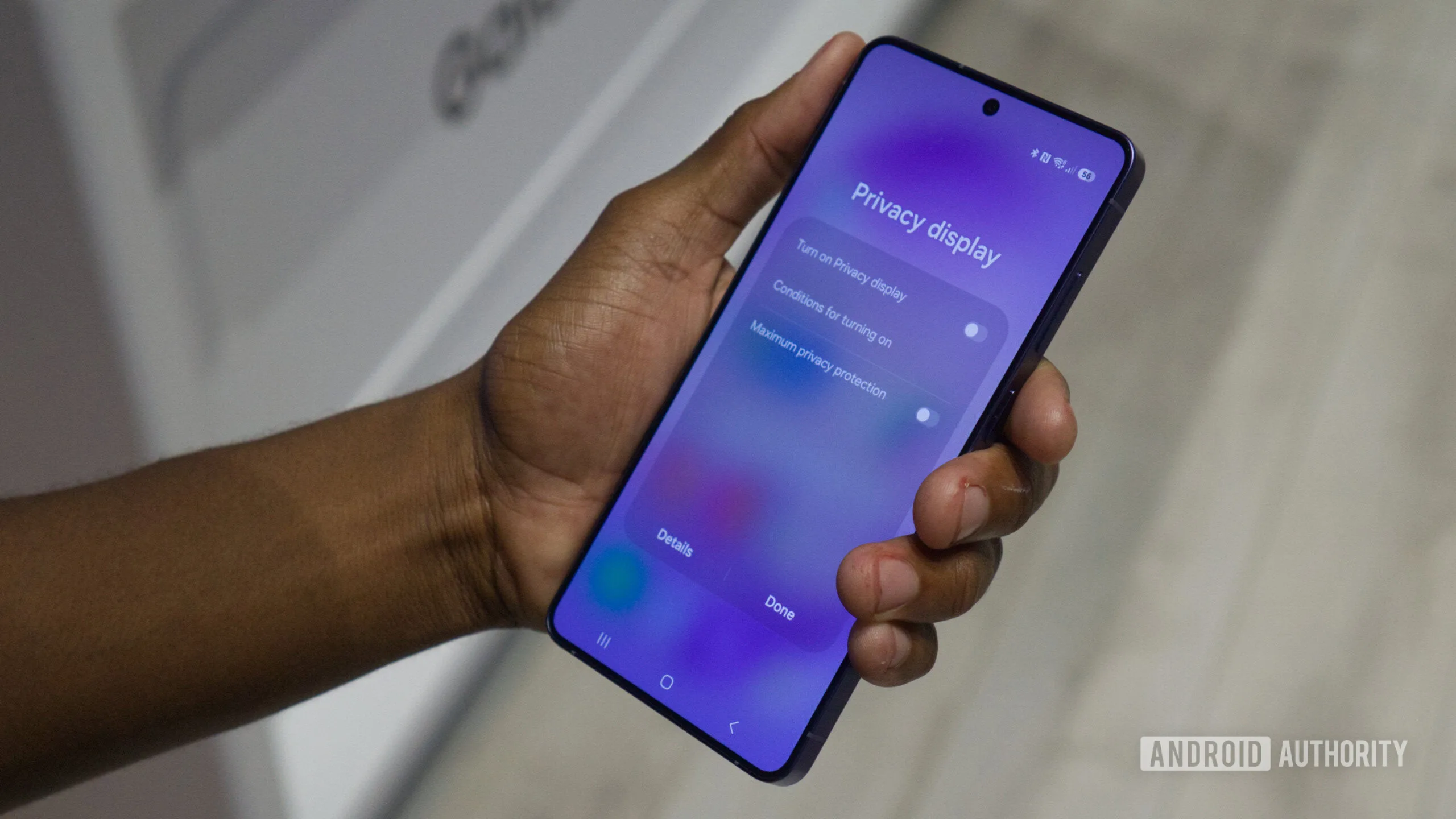
The S26 Ultra served as what one industry source described to The Elec as a ‘technology validation platform.’ The Samsung Galaxy S27 Privacy Display, by contrast, is where Samsung apparently intends to make it a standard feature across the flagship range. If the S26 served primarily as a technology validation platform, the Galaxy S27 marks the expansion of the feature into a standard capability across Samsung’s flagship lineup. That’s a meaningful shift in positioning — from a premium differentiator to something Samsung clearly believes should exist on every phone it sells at the high end.
The Eye Strain Problem Samsung Can’t Ignore
Here’s where things get uncomfortable. The Samsung Galaxy S27 Privacy Display story isn’t just about a useful feature scaling up — it’s also about whether Samsung has addressed a genuine flaw in the first generation. Colleague Zac Kew-Denniss reportedly found that the S26 Ultra’s screen hurt his eyes when using the Privacy Display. He wasn’t alone. User complaints about discomfort surfaced across forums and social media shortly after the S26 Ultra launched, with people describing the display as fatiguing over extended use.
Samsung also reportedly acknowledged a separate but related issue: brightness inconsistency at certain viewing angles when Privacy Display was switched off. That’s a notable problem. A feature that causes side effects even when it’s not running is the kind of thing that erodes user trust quickly, particularly at the price point Samsung charges for its Ultra hardware.
To be fair, this is how iterative hardware development tends to work. First-generation implementations of genuinely new display technology almost always come with rough edges. The transition from early OLED panels to the calibrated, reliable screens we see today took years and multiple product generations. Samsung debuting Flex Magic Pixel in the S26 Ultra and then refining the Samsung Galaxy S27 Privacy Display for the wider range is a logical progression. The concern is whether one generation — and roughly a year of development time — is enough to solve what sounds like a fundamental optical challenge.
Why the Whole Industry Is Watching This Space
Samsung isn’t building this feature in isolation. The Samsung Galaxy S27 Privacy Display rollout is happening against a backdrop of rapidly growing interest in private screen technology across the entire Android ecosystem. Xiaomi is reportedly working on its own private screen capability, though crucially, its solution is believed to be software-based rather than a hardware implementation like Samsung’s. That distinction matters — a software approach is faster and cheaper to develop, but it’s unlikely to match the physical pixel manipulation of Flex Magic Pixel for sheer effectiveness.
Meanwhile, Huawei is reportedly planning to include its own private display feature in an upcoming foldable device. OPPO and vivo are said to be developing similar technologies as well. That’s four major Android manufacturers all moving in the same direction at the same time, which tells you something important: the market is clearly signalling that privacy-focused display features have genuine consumer appeal, and companies are scrambling to offer competitive versions.
This mirrors what happened with high refresh rate displays, under-display fingerprint sensors, and satellite connectivity — features that started as niche differentiators on premium devices and then spread across price tiers as manufacturing costs fell and consumer expectations rose. Private screen technology looks like it’s on the same trajectory, just at an earlier stage.
Samsung Galaxy S27 Privacy Display: Good News With a Caveat
For anyone who was tempted by the Samsung Galaxy S27 Privacy Display but balked at the Ultra’s price tag, this expansion is straightforwardly welcome news. Getting the feature on the base S27 and S27 Plus means far more people will have access to it without paying a premium to do so. That’s how technology should progress.
But the caveat is real. Rolling out a feature that has documented usability complaints to four times as many devices is only good news if the underlying issues have been fixed. Eye strain at the display level isn’t a minor inconvenience — for people who spend hours each day looking at their phone, it’s a dealbreaker. Samsung needs to demonstrate that it has resolved the brightness inconsistency problem and improved the visual comfort of the pixel manipulation effect before it ships this on its entire flagship lineup.
The company has a strong track record of iterating on display technology — its OLED panels are widely considered the best in the Android world, and its variable refresh rate implementation has been class-leading for years. There’s every reason to believe Samsung’s display engineers have been working hard on exactly these problems. But ‘every reason to believe’ isn’t the same as confirmed, and until we see independent testing of the Samsung Galaxy S27 Privacy Display in action, a degree of healthy scepticism is warranted.
What’s clear is that private screen technology is becoming a competitive battleground across Android’s high end. Samsung has a head start with real hardware implementation, but the pressure from Xiaomi, Huawei, OPPO, and vivo means it can’t afford to ship a second generation that repeats the first one’s mistakes. The Galaxy S27 launch — expected in early 2026 — will be a crucial test of whether Samsung has genuinely solved the problems or simply scaled them up.
Frequently Asked Questions
What is Samsung Galaxy S27 Privacy Display and how does it work?
Samsung Galaxy S27 Privacy Display uses Samsung Display’s Flex Magic Pixel technology to physically adjust individual pixels, drastically narrowing the screen’s viewing angles. This prevents people nearby from seeing your screen. You can enable it across the entire display or on a per-app basis, depending on your privacy needs.
Does Privacy Display cause eye strain or brightness problems?
Some Galaxy S26 Ultra users have reported eye strain and discomfort when using Privacy Display. Samsung has also reportedly acknowledged brightness inconsistencies at certain angles when the feature is switched off. Whether these issues are resolved in time for the S27 lineup remains to be seen.
Which other phone makers are building private screen features?
Xiaomi is reportedly working on a software-based private screen solution, while Huawei is expected to include its own variant in an upcoming foldable. OPPO and vivo are also said to be developing similar technologies, suggesting private display features could become standard across Android flagships.
When will the Galaxy S27 series launch?
The Galaxy S27 series is expected to launch next year, according to industry sources cited in reports. Samsung has not made any official announcement regarding a specific launch date.