

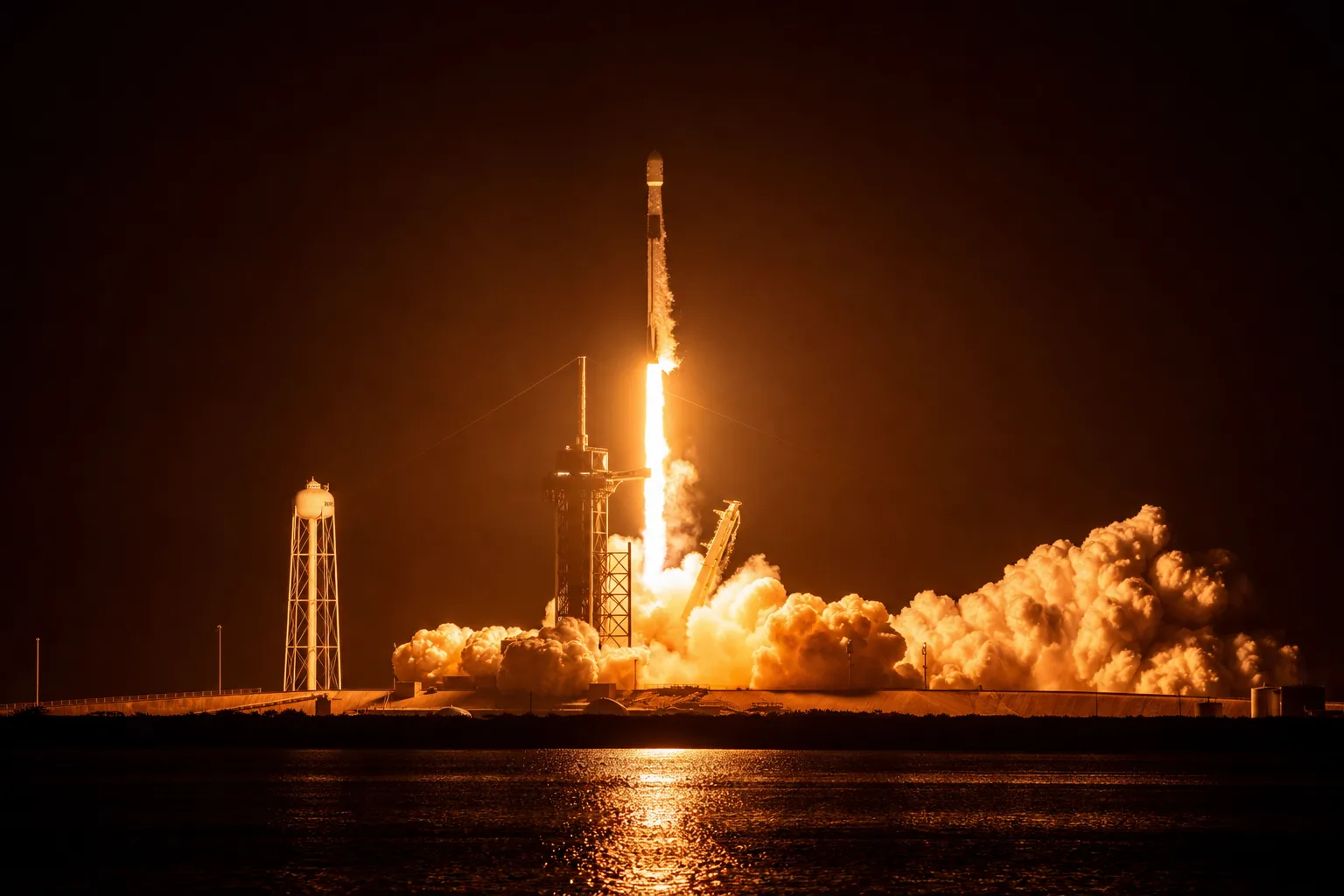
Early on the morning of July 9, SpaceX pulled off what is becoming a routine miracle — a Falcon 9 record launch that is anything but ordinary. Booster 1067 thundered off the pad at Cape Canaveral Space Force Station in Florida at 5:25 a.m. EDT, completing its 36th orbital mission and setting a new company record for the most flights ever logged by a single SpaceX rocket.
- SpaceX’s Falcon 9 record launch marks Booster 1067’s 36th flight, the most orbital missions ever flown by a single SpaceX rocket.
- The Falcon 9 record launch carried 29 Starlink satellites to low Earth orbit, lifting off from Cape Canaveral at 5:25 a.m. EDT.
- Booster 1067 landed on drone ship ‘A Shortfall of Gravitas’ roughly 8.5 minutes after liftoff, continuing SpaceX’s reuse streak.
- This was already SpaceX’s 80th Falcon 9 mission of 2026, with around 80% of flights dedicated to growing the Starlink constellation.
Table of Contents
Booster 1067: The Falcon 9 Record Launch That Keeps on Flying
To appreciate how far SpaceX has pushed the concept of reusable rocketry, consider that when Falcon 9 first flew in 2010, the idea of launching the same booster three dozen times would have sounded like science fiction. At the time, rocket stages were considered expendable — you flew them once, they hit the ocean, and you built another. SpaceX spent the better part of a decade proving that model wrong, and Booster 1067 is the clearest proof yet that a Falcon 9 record launch can be achieved through disciplined engineering rather than luck.
This particular booster has now completed 36 orbital missions — more than any other rocket in SpaceX’s fleet. Each turnaround requires inspection, refurbishment, and re-certification. SpaceX hasn’t published a detailed breakdown of how long those cycles take, but the fact that Booster 1067 keeps flying is itself a statement about the maturity of the company’s reuse program.
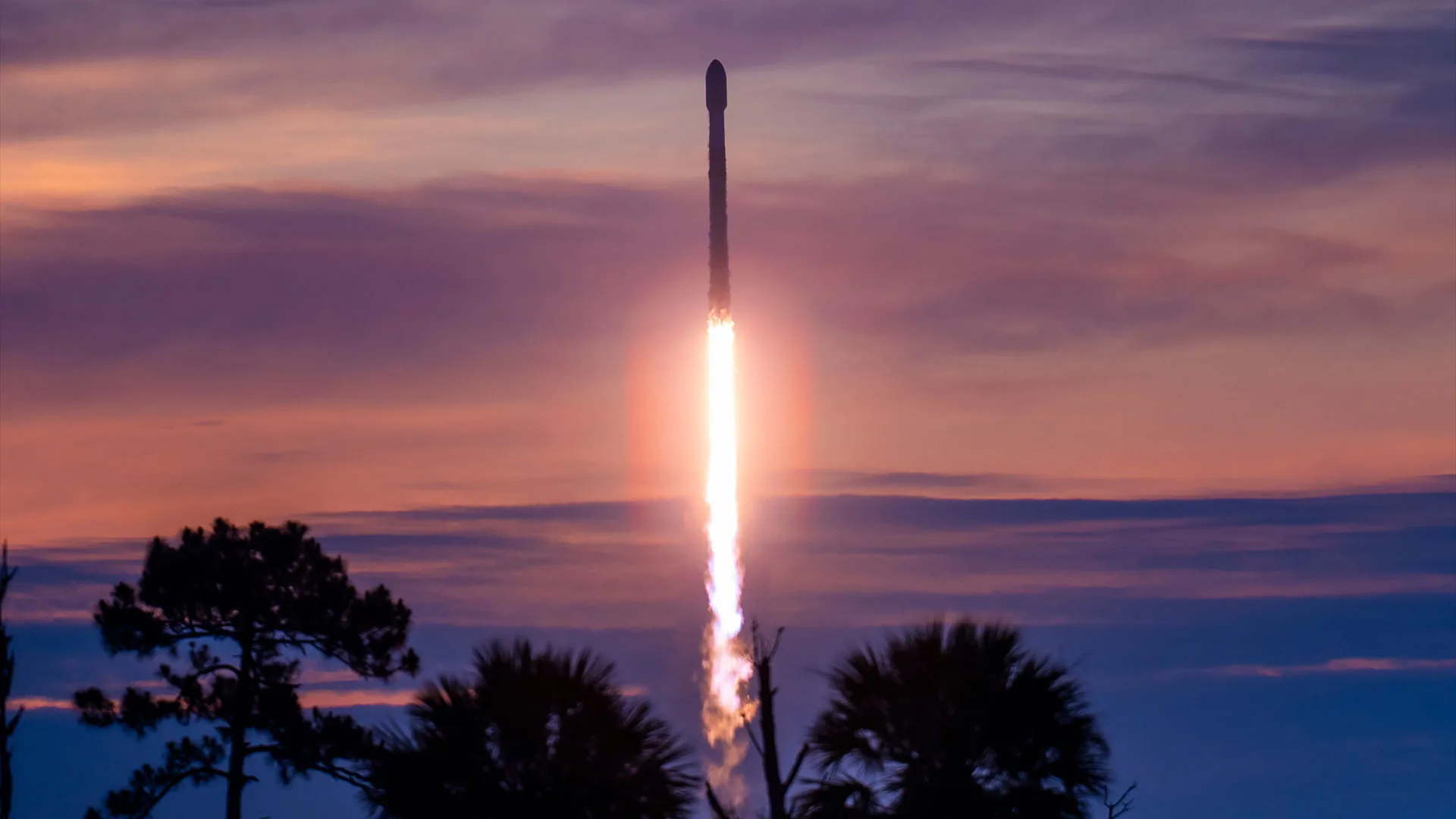
The mission followed a now-familiar script: the Falcon 9 lifted off carrying 29 Starlink broadband satellites, the upper stage hauled them to low Earth orbit and deployed them 63.5 minutes after launch, and Booster 1067 came home to land on the drone ship ‘A Shortfall of Gravitas’ — stationed in the Atlantic — roughly 8.5 minutes after liftoff. Clean, efficient, almost boring in its precision. That’s exactly how SpaceX wants it.
How Close Is SpaceX to the All-Time Reuse Record?
The overall spaceflight reuse record still belongs to NASA. The Space Shuttle Discovery flew to orbit and back 39 times over its operational life — a number that seemed untouchable when it was set. With 36 flights now under its belt, Booster 1067 is just three missions away from matching that figure. Each future Falcon 9 record launch for this booster will bring it one step closer to rewriting that piece of spaceflight history.
The comparison isn’t entirely apples-to-apples, of course. The Space Shuttle was an enormously complex vehicle that carried astronauts and required months of processing between flights. A Falcon 9 booster is a single rocket stage with no crew, and SpaceX has compressed turnaround times dramatically. But records are records, and the prospect of a commercial booster surpassing the Space Shuttle’s milestone within the year is a genuine inflection point for the industry.
Whether SpaceX will intentionally push Booster 1067 toward that record — or spread flights across its growing booster fleet — is an open question. The company hasn’t stated a public target for any individual booster. But its track record suggests that as long as the hardware keeps passing inspection, it keeps flying.
80 Falcon 9 Missions in a Single Year — and Counting
The July 9 flight was the 80th Falcon 9 mission of 2026. That number is worth sitting with for a moment. Eighty launches before mid-year. At that cadence, SpaceX is on pace to deliver well over 150 Falcon 9 missions by December — a launch rate that would have been unthinkable for any space agency or launch provider a decade ago. Every individual Falcon 9 record launch in that tally is another data point proving how thoroughly reusability has transformed the economics of reaching orbit.
Roughly 80% of those 2026 flights have been dedicated to Starlink, SpaceX’s broadband satellite internet service. The Starlink constellation now counts more than 10,700 active satellites in orbit, according to data tracked by independent spaceflight analyst Jonathan McDowell — making it by far the largest satellite network ever assembled, and still growing. For context, the entire active satellite population across all operators combined was only around 2,000 satellites as recently as 2019.
That growth raises real questions about orbital sustainability that the industry hasn’t fully answered. Debris mitigation, frequency coordination, and the long-term fate of decommissioned satellites are issues that regulators and astronomers continue to press SpaceX on. The International Astronomical Union has flagged concerns about satellite trails interfering with ground-based telescope observations, and the FCC has tightened its end-of-life deorbit requirements in response. SpaceX has introduced sun-shade visors and other brightness-reduction measures, though the debate is ongoing.
What Reusability Really Means for the Launch Market
The Falcon 9 record launch milestone matters beyond just the hardware bragging rights. Every time a rocket like Booster 1067 flies again, SpaceX amortizes the manufacturing cost of that vehicle across more missions. That’s the economic engine behind Starlink’s aggressive deployment pace — and it’s also why competitors are scrambling to catch up.
United Launch Alliance’s Vulcan Centaur is designed for partial reuse. Blue Origin’s New Glenn booster landed successfully on its debut flight and is being readied for future missions. Rocket Lab has demonstrated booster recovery from sea. But none of these programs have yet come close to the operational tempo or the per-booster flight count that SpaceX has achieved with Falcon 9.
Europe’s Ariane 6 remains expendable. China’s Long March series is mostly expendable, though CASC and other Chinese launch providers have been experimenting with reuse at a smaller scale. The gap between SpaceX and the rest of the commercial launch market isn’t closing as fast as many expected.
The Falcon 9 Record Launch in a Broader Context
There’s something almost paradoxical about the fact that the most-flown rocket in SpaceX history is a workhorse Falcon 9 booster rather than the far more powerful Starship, which continues its own test campaign. Starship is the vehicle SpaceX is betting its Mars ambitions on. But Falcon 9 — and specifically boosters like 1067 — is the vehicle that’s actually funding that ambition, one Starlink batch at a time.
Every Falcon 9 record launch chips away at the assumption that space access is inherently expensive and infrequent. The numbers are making that argument better than any press release could. Three more flights and Booster 1067 will have matched the most-flown spacecraft in NASA’s history. When that happens — and at this pace, it’s a question of when, not if — it’ll mark a quiet but significant line in the history of spaceflight.

