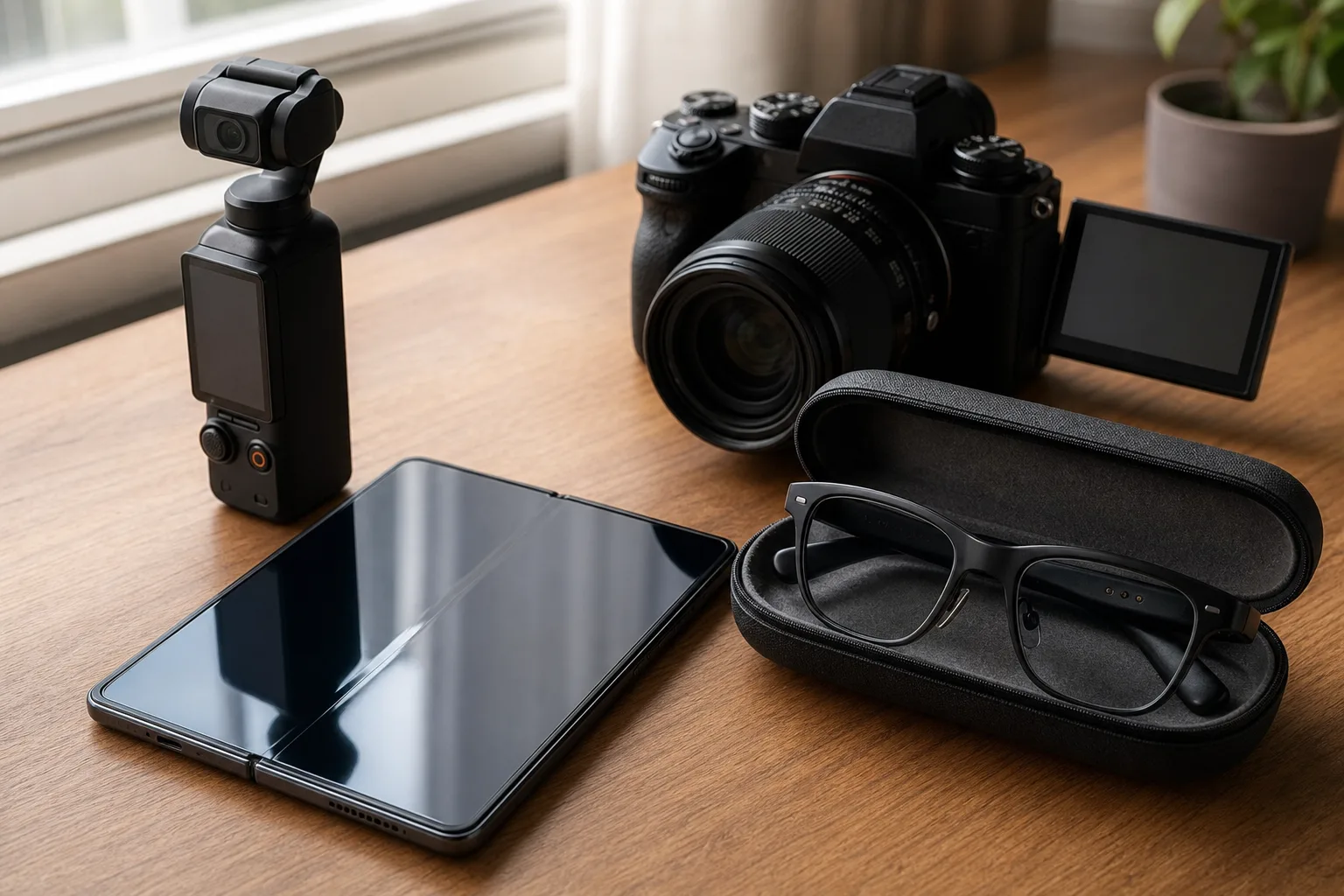
- Samsung Galaxy Z Fold 8 reportedly improves the standard Fold formula with a wider shape built for video, games and everyday typing.
- The Samsung Galaxy Z Fold 8 review points to a familiar problem: Samsung’s regular model may now make more sense than Ultra branding.
- Meta’s lower-cost glasses offer value, while eyewear partnerships still appear to deliver stronger styling and prescription-lens options.
- DJI, Canon and Alienware each make sharper product trade-offs as camera competition and component prices reshape their markets.
Table of Contents
Samsung Galaxy Z Fold 8 puts the regular model first
The most interesting takeaway from this batch of gadget verdicts is not that the Samsung Galaxy Z Fold 8 is good. Samsung has spent years making increasingly capable foldables. It’s that the standard Fold may finally be the one that makes the most immediate sense for normal people willing to pay foldable money.
According to Engadget’s assessment, Samsung has altered the handset’s proportions, opting for a shorter and wider body. That sounds like a minor industrial-design adjustment, the sort of thing companies turn into a very long keynote slide. In practice, though, it addresses the awkward compromise that has trailed book-style foldables since day one: the narrow outer display can feel like using a remote control to write an email, while the big inner display is where the device actually comes alive.
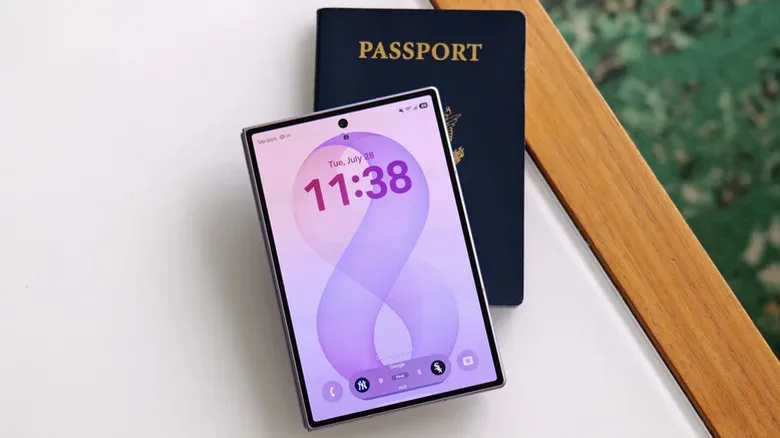
Senior reviews editor Sam Rutherford’s argument is blunt. By focusing on the activities people actually do most on their phones — watching video and playing games — Samsung has made a Fold that is more appealing than its own higher-tier sibling. He called the redesign a brilliant foldable and said he wished the Ultra had received the same treatment. On that measure, the Samsung Galaxy Z Fold 8 looks designed around real use rather than a spec-sheet hierarchy.
That is a quietly awkward verdict for Samsung’s product strategy. The word Ultra is supposed to signal the no-compromise choice. But larger, pricier hardware doesn’t automatically equal better hardware if the shape is less pleasant every time you pick it up. The Samsung Galaxy Z Fold 8 appears to understand that a foldable has to succeed as a closed phone before users will care about its tablet trick.
My read is that Samsung is responding to the pressure created by competitors that have made wider covers and thinner profiles feel less experimental. Foldables remain expensive, delicate compared with conventional slabs, and still a niche. Yet this is the direction the category needed: less theatrical futurism, more attention to the boring moments such as replying to a message one-handed on the train.
For anyone considering the Samsung Galaxy Z Fold 8, the key question isn’t whether a folding screen is neat. We settled that years ago. Ask whether the outer screen removes enough friction that you will use the phone naturally, rather than constantly opening it because the closed mode feels compromised. That everyday test matters more for Samsung Galaxy Z Fold 8 buyers than any claim of Ultra-level prestige.
Meta Glasses show why fashion is still the hard part
Meta’s smart-glasses effort has a different challenge. The technology has become familiar: cameras, speakers, voice controls and an AI assistant stuffed into something that is supposed to look like ordinary eyewear. The hard part is getting people to wear them without feeling as if they are beta-testing a gadget on their face.
The latest Meta Glasses are the company’s first model not developed with an established eyewear brand, and that independence has a trade-off. They are cheaper, and Engadget’s Karissa Bell characterizes them as a strong value. But the design reportedly lacks the refinement of the Ray-Ban-derived Optics line, while Meta’s Oakley versions remain the safer option for active users.
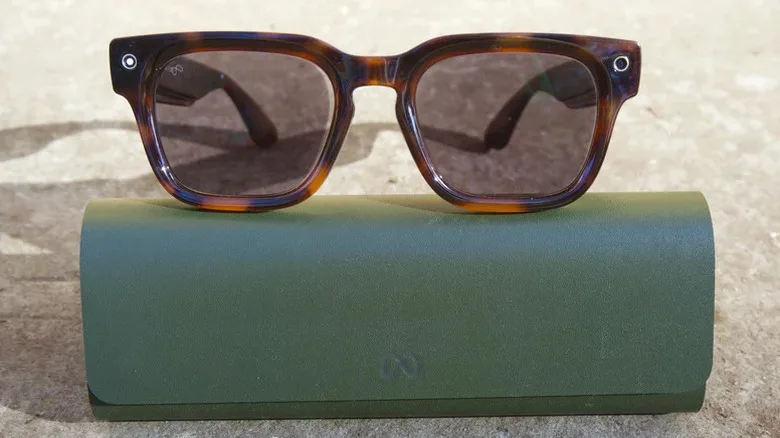
The pattern makes sense. Hardware companies often treat fashion partnerships as a logo-rental exercise. Meta’s experience suggests the partner may be doing more than supplying a badge. Eyewear has fit, lens choices, weight balance and social signaling baked into it. People forgive a phone for looking generic because it lives in a pocket. Glasses sit on your face, announcing themselves all day.
The lower price could make Meta Glasses a sensible entry point, particularly for buyers who want hands-free audio and a camera without paying for premium frames. Still, prescription lenses are not a footnote. They are a deal-breaker for a huge share of potential customers. If a buyer needs corrective lenses, Bell’s recommendation to look at the Optics range despite its higher cost is the practical one.
Cameras are splitting into more specialized tools
The Samsung Galaxy Z Fold 8 may be the most consumer-facing device in this group, but the camera reviews reveal a more consequential market shift. General-purpose gadgets are being squeezed. Creators increasingly want purpose-built tools, and manufacturers are answering with increasingly specific compromises.
DJI’s Osmo Pocket 4P is a case in point. The dual-lens pocket gimbal camera is positioned as a more professional answer to rising competition in compact creator cameras. Reviewer James Trew found it worth the wait and a solid step forward for the Pocket line. The catch is a serious one for US buyers: availability appears limited enough that importing or paying inflated reseller pricing may be required.
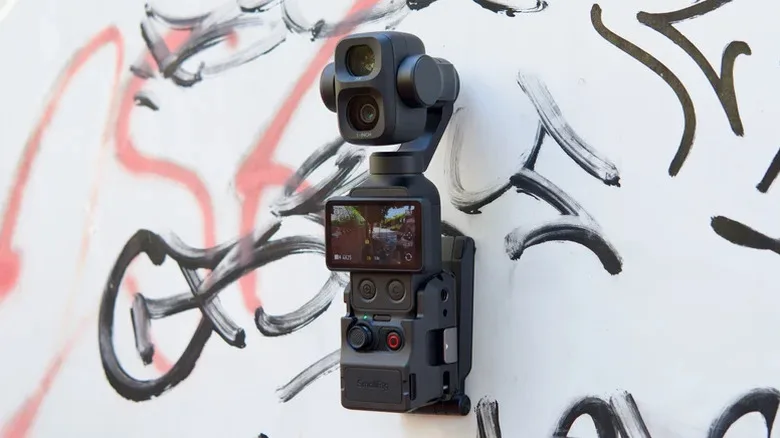
That is not a small asterisk. A product’s value proposition collapses quickly when its realistic purchase price becomes unpredictable. DJI can build a terrific camera, but buyers should not be asked to play amateur logistics manager to get one. Before treating the Osmo Pocket 4P as an easy recommendation, check the actual price in your region — not the nominal price on a launch page.
Canon’s EOS R6 V takes the specialization further. Contributor Steve Dent describes it as an outstanding vlogging and creator camera, citing RAW video quality, handling, in-body stabilization and dependable video autofocus. Photography, however, is reportedly its weak spot. That makes the Canon a tool with a clear job description, not a classic do-everything hybrid.
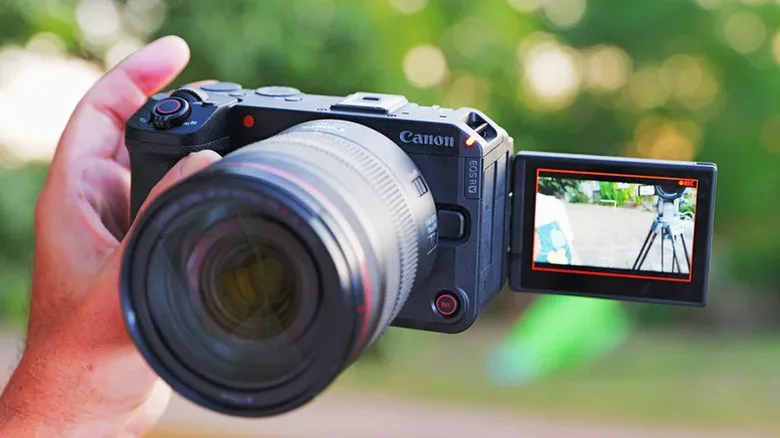
There is nothing wrong with that, frankly. Too many camera buying guides still assume every buyer needs maximum competence at every task. A working video creator may get more value from a camera that is exceptional in motion than from one that merely does everything adequately. But photographers who shoot events, travel or family life should take the warning seriously and compare it with more photo-oriented hybrids before committing.
Alienware’s budget bet comes with a familiar warning
The Alienware 15 closes out the roundup with a very 2026 problem: component costs keep moving upward, so the definition of a budget gaming laptop has become slippery. Alienware’s first attempt at that segment reportedly gets several basics right, even if its screen and webcam leave room for improvement.
Rutherford’s point is fair. Those flaws sting less on a cheaper machine than on a flagship priced like a used car. A slightly upgraded configuration can make the Alienware 15 appealing, and that is probably the model worth scrutinizing. Budget laptops are notorious for looking affordable until RAM, storage and graphics options turn the checkout page into a hostage negotiation.
Read side by side, these reviews make a sharper point than any launch presentation will. The Samsung Galaxy Z Fold 8 succeeds because it appears to improve the everyday experience, not because it adds another tier of exclusivity. Meta needs its glasses to feel better as eyewear. DJI needs accessible distribution. Canon needs buyers who know exactly what they are buying. And Alienware needs to keep upgrades from erasing its value. The companies that win this hardware cycle will be the ones that make their trade-offs honest.