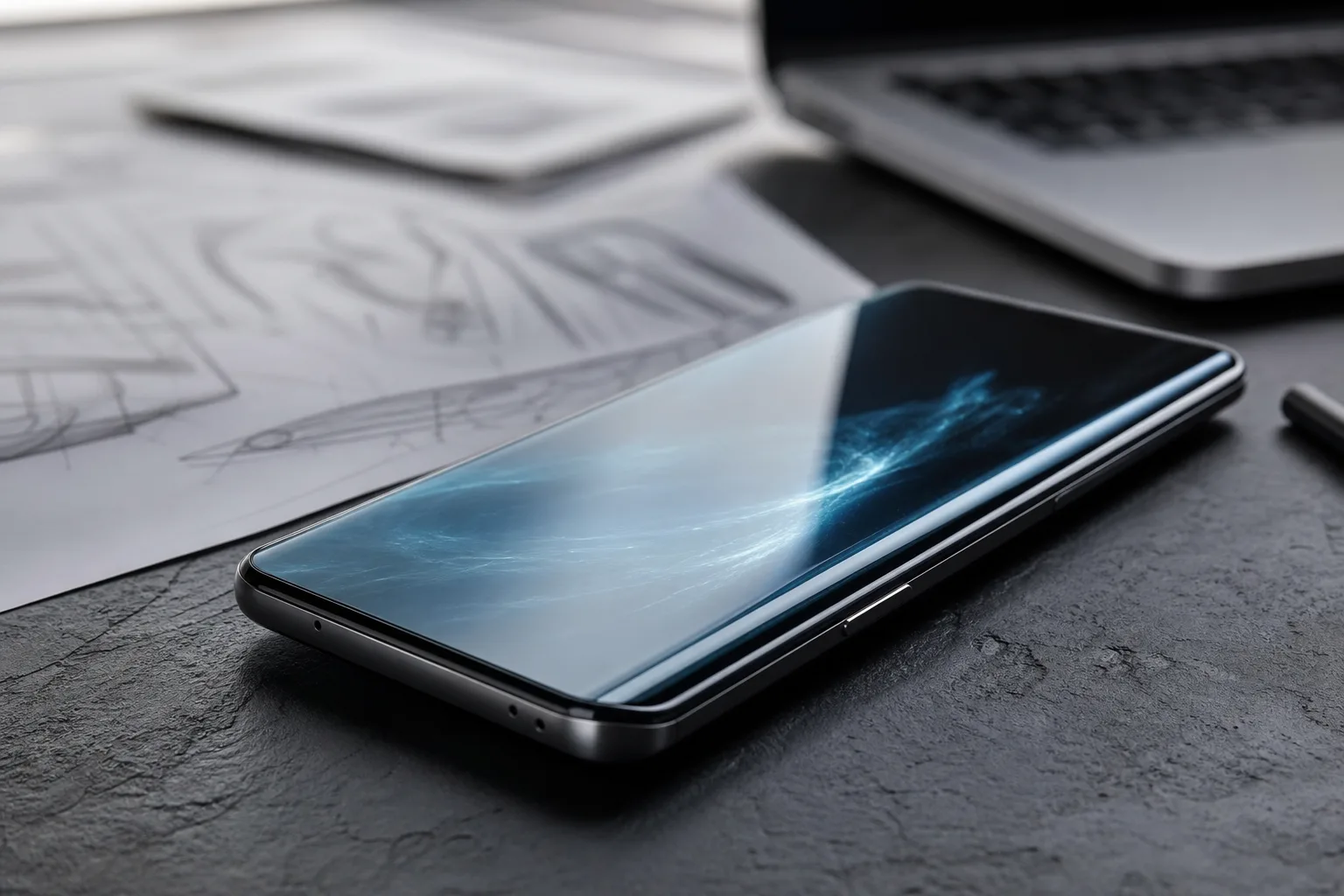
- The iPhone 20 Pro is rumored to use a quad-curved glass display that visually wraps around all four edges.
- Apple reportedly wants the iPhone 20 Pro to improve heat management and thinness without repeating the compromises of ultra-thin phones.
- The claimed redesign would arrive around the iPhone’s twentieth anniversary, giving Apple a clear reason to pursue a more dramatic look.
- The leaks are early and unverified, but they suggest Apple is pulling ideas from both its thin-phone and foldable-hardware work.
Table of Contents
The iPhone 20 Pro may be Apple’s next big design bet
Apple has spent years making the iPhone look more polished rather than fundamentally different. The rumored iPhone 20 Pro, expected around the handset’s twentieth anniversary, could finally break that pattern. Reports now point to a phone built around glass that curves over each edge, shrinking the visual role of the frame and making today’s flat-sided Pro models feel surprisingly conservative.
That sounds like classic anniversary-product theater, and Apple loves a symbolic date. That timing would give the company a tidy reason to try something bolder than another camera bump revision. According to a fresh claim from Weibo leaker Fixed Focus Digital, Apple is still working through the manufacturing details, with particular attention on thermal performance and device thickness.
Those are the two details that matter. A phone can look gorgeous on a stage for ten minutes. It still has to survive a summer navigation session, a demanding game, and a day of photos without turning into a warm glass paperweight.
What an all-glass iPhone 20 Pro could actually look like
The reports describe a quad-curved panel, meaning the display glass would bend around all four sides rather than only the left and right edges. Think less like Samsung’s old Edge phones, with their pronounced side curves, and more like a surface that appears to flow into the chassis. The goal seems to be a nearly borderless face from most angles.
That would make the iPhone 20 Pro a clear visual departure from the squared-off industrial design Apple brought back with the iPhone 12. It could also revive a problem the industry has mostly moved past: accidental touches. Curved screens look fantastic in product photos, but they can create strange palm inputs, glare along the edges, and expensive repair bills. Apple has enough software and touch-control expertise to mitigate some of that, but physics remains stubbornly uncooperative.
Fixed Focus Digital says Apple is using a glass-assembly approach related to the process used for the ultra-thin iPhone Air, though adapted for more rounded materials. That wording should be treated cautiously. Supply-chain leaks often catch a component experiment and mistake it for a finished retail design. Still, the basic idea tracks with Apple’s broader direction: it wants hardware that feels less assembled from separate parts and more like a single object.
Apple has long made industrial design part of its sales pitch. Its official iPhone lineup already emphasizes durable glass, recycled materials, and tightly integrated hardware. An all-glass treatment would push that language much further, even if the internal structure still relies on metal for strength and radio performance.
Heat and battery life are the real test
The most interesting part of this rumor is not the curved glass. It is the claimed work on heat dissipation. Modern Pro iPhones must handle sustained camera processing, console-grade games, on-device AI features, 5G radios, and increasingly large displays. All of that creates heat, and thinner bodies give engineers less room to move it away from the chip and battery.
Apple learned this lesson publicly when the iPhone 15 Pro’s titanium launch was followed by reports of unusually warm handsets under certain workloads. Software updates addressed some behavior, but heat is never only a software story. Materials, internal volume, battery placement, vapor chambers, graphite sheets, and the physical relationship between components all matter.
If the iPhone 20 Pro really uses an expansive glass structure, Apple will need to balance aesthetics against the practical reality that glass is not a magical heatsink. The company could use a reinforced internal frame, new thermal materials, or a revised logic-board layout. None of those options are confirmed. But the leak’s focus on thermals suggests Apple is not treating this as a mere cosmetic exercise.
Battery life is tied to the same equation. A slimmer phone with more glass can be attractive, but Pro buyers do not typically want a device that sacrifices endurance for a few millimeters. Apple’s rumored iPhone Air is expected to explore thinness more aggressively. The iPhone 20 Pro may instead take the useful bits from that effort while keeping the larger battery and sustained performance people expect from the Pro tier.
Apple is reportedly building toward several distinct iPhones
The timing makes this rumor more plausible than it might have sounded a few years ago. Apple is widely expected to unveil its first foldable iPhone before this anniversary model arrives. A foldable would test new display materials, hinge engineering, thin components, and internal packaging at scale. A radical all-glass iPhone 20 Pro could benefit from that work without inheriting a folding screen’s obvious durability concerns.
Apple is unlikely to make a fragile fashion phone. Quite the opposite: Apple generally waits until it believes it can present a new hardware category as dependable, even when the first generation carries trade-offs. Remember the original Apple Watch? It was sold as jewelry, fitness tracker, notification screen, and tiny computer all at once because Apple needed to justify why it existed. An anniversary iPhone will need a similarly coherent story beyond ‘the edges look cool.’
Smartphone upgrades have slowed across the industry because standard phones are already very good. Better cameras and faster chips help, but people hang onto their devices longer. A genuinely different silhouette gives Apple a reason to make the next upgrade cycle feel tangible in a store, not merely measurable in benchmark charts.
Don’t confuse a compelling direction with a finished product
For now, the iPhone 20 Pro remains a rumor attached to an unannounced product more than a year away. Apple could change the materials, limit the curved glass to one model, or decide that yield rates and repairability make the concept a bad deal. Manufacturing a flawless curved panel at iPhone volumes is not the same as producing a limited luxury handset.
My read is that the all-glass concept is believable precisely because Apple has been inching toward it for years. The company has tried curved glass, reduced borders, titanium frames, thin-body experiments, and increasingly ambitious display designs. The question is whether it can combine those ideas without making the phone harder to hold, hotter under load, or brutally expensive to fix. If Apple solves that triangle, the iPhone 20 Pro could be the rare anniversary device that earns the ceremony around it.