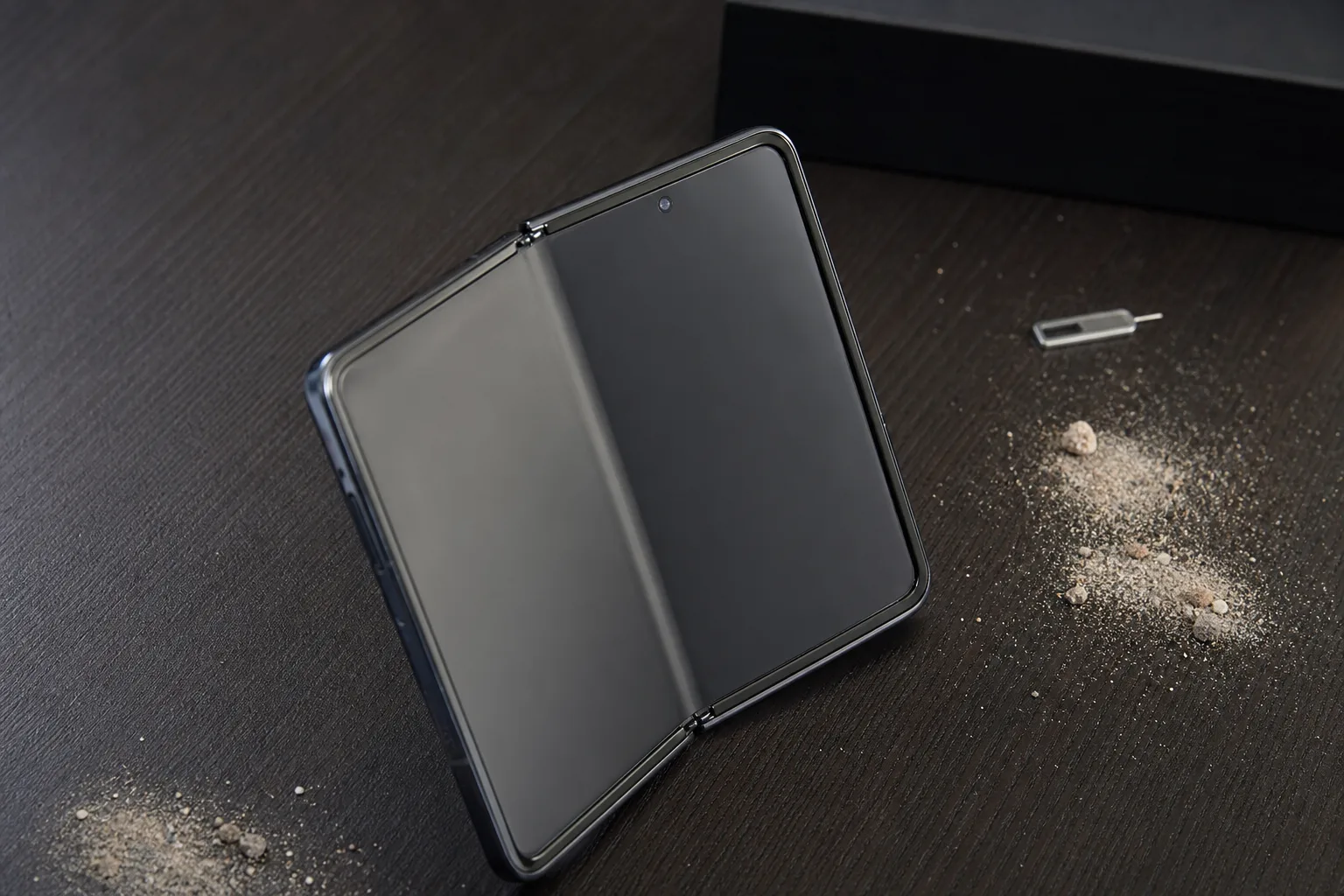
- Galaxy Z Fold8 Ultra testing found its Gorilla Glass Ceramic 3 cover screen resists scratches at expected Mohs level 6.
- The Galaxy Z Fold8 Ultra inner folding surface scratched at level 2, underscoring the familiar soft-display compromise.
- Foldable durability still depends heavily on real-world handling rather than laboratory claims.
Table of Contents
Galaxy Z Fold8 Ultra durability still comes down to the inner screen
The Galaxy Z Fold8 Ultra may have a tougher-looking exterior, but the latest durability footage lands on the uncomfortable truth that has followed foldables for years: the screen you actually unfold remains the part you’ll worry about most.
Samsung reportedly introduced the Fold8 Ultra last month as the direct successor to the Galaxy Z Fold7, alongside a wider Galaxy Z Fold8. That split sounds deliberate: Samsung appears to be giving buyers a conventional book-style foldable and a more premium, presumably more feature-packed Ultra.
But a phone doesn’t earn an Ultra badge because its spec sheet is longer. It has to survive life in a pocket, a backpack, and the occasional careless moment at a kitchen counter. The early teardown and scratch-test discussion around this device suggests Samsung has made progress in some obvious places while leaving the central foldable trade-off largely untouched.
That’s not a scandal. It’s physics. But it does matter when these phones cost flagship money.
The cover display gets the expected glass result
On the outside, the Galaxy Z Fold8 Ultra appears to use Gorilla Glass Ceramic 3 for its cover display. In a standard Mohs-style scratch test, the glass reportedly showed marks at level 6, with deeper grooves appearing at level 7. That is broadly what buyers should expect from a modern premium phone’s protective glass.
The popular Mohs test is useful, but it is not a perfect proxy for daily use. Your house keys aren’t usually made of a level-6 mineral, and neither is loose change. Sand and grit are the real villains. Quartz, a common component of sand, is hard enough to scratch plenty of phone glass, which is why a quick wipe before dragging a dusty handset across a table is still sensible advice.
Still, level 6 and level 7 results are reassuring because they put Samsung’s outer screen in familiar flagship territory. The company is not asking buyers to accept a fragile conventional display just because the phone happens to unfold. Corning’s own Gorilla Glass materials overview makes the broader point: these coatings are designed to balance scratch resistance with drop protection, not render glass invincible.
The more interesting question is whether the rest of the chassis can match that level of confidence. The Fold8 Ultra’s durability will still depend heavily on how, where, and how often force is applied. A rigid slab phone is basically a tiny glass-and-metal sandwich. A foldable is a sandwich with a hinge in the middle.
Why the Galaxy Z Fold8 Ultra inner display remains vulnerable
Then there’s the display that defines the product. The inner folding surface of the Galaxy Z Fold8 Ultra, or more precisely its non-removable protective layer, reportedly scratched at level 2. That sounds alarming beside the cover glass result, and it should make buyers cautious, but it is also normal for today’s foldable screens.
The issue is structural. A display that must bend thousands of times cannot simply be topped with the same rigid glass used on a regular smartphone. Samsung and its rivals use ultra-thin glass beneath flexible layers, adhesives, coatings, and a factory-applied screen protector. The visible surface is therefore far softer than the glass beneath it.
Put bluntly: don’t treat the inner panel like a normal phone screen. Fingernails, sharp debris, pen tips, and even a tiny grain of grit can leave their mark. If you’ve ever pressed a thumb into the lid of a takeaway container, you understand the basic problem. Something can be useful, flexible, and reasonably durable without being difficult to dent.
This isn’t a new limitation for Samsung. The original Galaxy Fold became infamous after early review units suffered display failures, a bruising episode that forced the company to delay the launch and rethink its design. Samsung’s subsequent generations have been much more mature, and the company has steadily improved hinge protection, ingress resistance, and panel reliability. But scratch resistance on the foldable surface remains a compromise the industry has not solved.
That is why a screen protector replacement policy and repair pricing matter nearly as much as a scratch-test score. A buyer can live with a superficial mark more easily than a display repair bill that resembles a small appliance purchase.
Mixed bend results are a warning, not a verdict
The inconsistent results in reported Galaxy Z Fold8 Ultra bend tests deserve attention, but they do not prove that every unit will fail or flex in the same way. Internet durability testing is useful precisely because it is brutal and repeatable in spirit, not because it perfectly models real ownership.
Force applied to the center of an open foldable, pressure near the hinge, torsion while the device is partially closed, and a phone sitting in a tight back pocket are all different scenarios. The outcome can change dramatically with the angle and direction of pressure. That is part of why two tests can paint very different pictures without either being dishonest.
My read is that Samsung needs to be especially transparent about what its new hinge and frame can tolerate. Marketing claims around fold counts are useful, but most people don’t destroy phones by opening them 200,000 times in a clean laboratory. They drop them, sit on them, carry them with crumbs in a bag, and occasionally let a child borrow them for five minutes. That last one may be the most punishing test of all.
The Galaxy Z Fold8 Ultra looks to be following the modern foldable formula: conventional-screen protection is improving, while the folding panel still demands care. For enthusiasts, that may be an acceptable bargain for a tablet-sized workspace in a pocket. For everyone else, the mixed bend-test story is a reason to wait for more long-term reports before assuming the Ultra label has finally made foldables feel ordinary.