
- Meta’s camera-free AI glasses start at $349 and trade recording hardware for music, calls, live translation, and its Muse assistant.
- The camera-free AI glasses are slimmer and lighter than Meta’s camera models, with a claimed 12-hour battery and 48-hour charging-case total.
- Meta is using the audio-only Ray-Ban launch to answer a genuine public backlash over covert recording and consent.
- New camera-equipped Ray-Ban Meta models still arrive alongside the audio version, with 3K video, 12-megapixel cameras, and nine-hour battery claims.
Table of Contents
Camera-free AI glasses are Meta’s answer to an obvious problem
Meta has spent years trying to make smart glasses feel normal. The company’s new camera-free AI glasses, called Ray-Ban Meta Audio, may be its most sensible attempt yet. They look like regular Ray-Bans, play audio through open-ear speakers, handle calls and translation, and talk to Meta’s Muse assistant. The important part: they cannot record the person sitting across from you at a café.
That last point is the product. Meta and Ray-Ban parent EssilorLuxottica are selling the glasses from $349, with preorders opening October 13. These camera-free AI glasses are not a pitch for some grand new computing platform. It is more practical: keep the useful parts of wearable AI, remove the tiny camera that has made strangers understandably nervous.
Frankly, this was inevitable. Camera-equipped glasses have a consent problem that software patches cannot fully solve. A recording light helps, but it does not erase the unease of wondering whether a person wearing ordinary-looking frames is documenting you without permission. The internet’s less charitable nickname for these devices captured that anxiety rather efficiently.
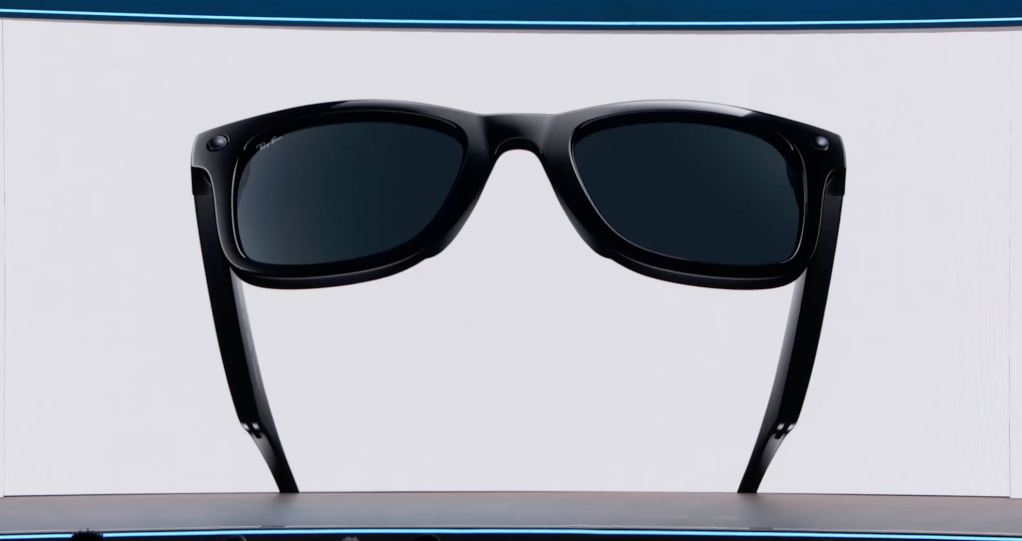
Meta says its existing camera glasses disable recording when their indicator light has been tampered with. That is a reasonable safeguard, as far as it goes. But hardware that can see everything around its wearer carries a social cost no LED can completely fix. The camera-free option is Meta admitting that not every smart-glasses buyer wants, or needs, to be a walking point-of-view camera.
What Meta is actually putting in the frames
The Ray-Ban Meta Audio is an audio wearable first. Users can listen to music and podcasts, make calls, translate speech, receive assistance from Muse, and presumably avoid digging their phone out of a pocket for every small task. Zuckerberg described the appeal in bluntly human terms: “Once you get used to high quality audio, it’s just a thing that you want all the time, right?”
There is a serious product idea tucked inside that casual line. Apple has turned AirPods into a default interface for calls, notifications, voice commands, and increasingly hearing features. Meta’s camera-free AI glasses want a slice of that behavior, but in a form factor people already wear outdoors. Think AirPods with temples instead of earbuds.
For that audience, camera-free AI glasses make more sense as an everyday accessory than a device built around occasional recording. Without camera components, Meta says the frames weigh 43 grams and can run for up to 12 hours per charge. The bundled case supposedly extends that to 48 hours. Those are promising claims, though real battery life will depend heavily on volume, calls, assistant use, and translation. Anyone who has watched a smartwatch battery estimate collapse during a long workout knows the drill.
The frames will come in 23 color and lens combinations, across Clubmaster and Burbank styles, and buyers can order prescription lenses. Adjustable temple tips, interchangeable nose pads, and overextension hinges sound mundane, but fit is the entire ballgame here. A wearable that pinches your head will end up in the same drawer as an abandoned fitness tracker.
Privacy is the feature Meta needed to build
Meta’s camera-free AI glasses are not privacy products in the broadest sense. They still connect to Meta services, and Muse is an AI assistant that must process what a user says to be useful. Meta has also teased “private processing,” which it says will keep the company from seeing user data. That phrase deserves scrutiny when Meta explains precisely what stays on-device, what is encrypted, and what data may still be retained.
Remove the camera, and the social contract changes in a meaningful way. There is no video to secretly capture. There is no still image to analyze. The people around the wearer do not need to decode an indicator light or trust that it is working. In privacy terms, these camera-free AI glasses are less like installing a better lock and more like removing a window.
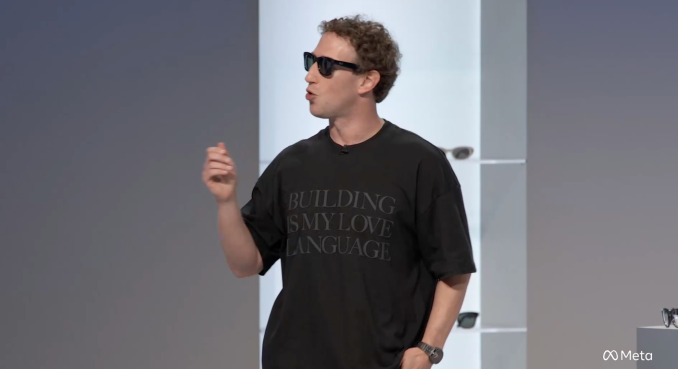
That distinction could make the audio-only frames easier to wear at work, on public transit, or during a conversation. It could also make them more attractive to companies with strict policies around cameras, although Meta has not announced an enterprise program. My read is that the biggest audience may be people who liked the convenience of smart glasses but disliked feeling conspicuous or vaguely rude while wearing a camera on their face.
The catch is that Meta is making a case for restraint while simultaneously expanding its camera lineup. Its third-generation Ray-Ban Meta models will add Aviator and cat-eye Zena designs alongside Wayfarer frames, plus a 12-megapixel camera, 3K Ultra HD video, six microphones, and up to nine hours of stated battery life. The company is not backing away from camera glasses. It is splitting the category in two.
Two product categories, one AI assistant
That split is smarter than pretending every user has the same appetite for surveillance-adjacent hardware. Some people genuinely want a hands-free camera for cycling, travel, or recording family moments. Others want directions whispered in their ear and music during a walk, nothing more. The camera-free AI glasses give Meta a way to serve the second group without asking them to accept the baggage of the first.
For people in that second group, camera-free AI glasses may be the more socially durable version of the product category. All of these products are tied to Muse, Meta’s newer personal assistant. The company says forthcoming updates across its glasses will include customizable controls, improved hearing assistance, more detailed responses, selectable audio modes, Dolby Atmos Capture, and a system that picks the best image from several frames. Translation remains one of the clearest real-world uses: it is the sort of feature that feels almost boring until you are trying to buy train tickets in a language you do not speak.
Meta also plans wider international availability and has continued recruiting fashion-world visibility, including a partnership with singer Lisa after an earlier Kylie Jenner collaboration. That may sound superficial, but it is central to the category. Google Glass failed partly because it looked like a gadget demo strapped to someone’s face. Ray-Ban brings cultural camouflage that most technology companies cannot manufacture on their own.
The $349 question: will people wear them?
At $349, the camera-free AI glasses are not cheap, but they are within reach of premium headphones plus prescription eyewear. That comparison matters. Meta is not asking buyers to spend Vision Pro money on a speculative computing future; it is asking them to consider whether their everyday glasses could replace, or supplement, earbuds.
There are obvious tradeoffs. Open-ear audio can be less private and less immersive than sealed earbuds, especially on a loud street. Voice assistants remain hit-or-miss in crowded environments. And Meta will have to earn trust around Muse and data processing, a task made harder by the company’s long history of privacy controversy. A camera-free frame does not automatically make its maker a privacy champion.
But the category has been waiting for a product that understands the difference between useful ambient computing and making everyone nearby feel observed. If Meta’s battery claims hold and the fit is genuinely good, these camera-free AI glasses could be the rare AI wearable that succeeds by doing less. The bigger question is whether Meta can resist adding back the things that made smart glasses socially awkward in the first place.
For now, the company has found a surprisingly credible answer: put the AI in the frame, leave the camera out.
For product details and availability updates, see its official smart glasses page.