
- Alexander Grothendieck transformed algebraic geometry in the 1950s, producing thousands of pages of work that mathematicians still wrestle with today.
- Alexander Grothendieck introduced the concept of a ‘scheme,’ reorienting how mathematicians think about polynomial equations across entirely different number systems.
- He abruptly quit elite mathematics in 1970, eventually becoming a hermit in the Pyrenees — one of science’s most dramatic disappearing acts.
- His ideas connected algebraic geometry to topology, number theory, and logic, reshaping fields he never directly worked in.
Table of Contents
Alexander Grothendieck and the Making of a Mathematical Mind
Alexander Grothendieck is, depending on who you ask, either the most important mathematician of the 20th century or the most important mathematician most people have never heard of. Where Einstein reshaped physics with ideas a curious non-expert could at least partially grasp — curved spacetime, E=mc² — Grothendieck operated in territory that becomes abstract almost instantly. That’s probably why his name doesn’t carry the same cultural weight. But within mathematics itself, his influence is total. He didn’t just solve problems. He rebuilt the intellectual scaffolding of an entire discipline.
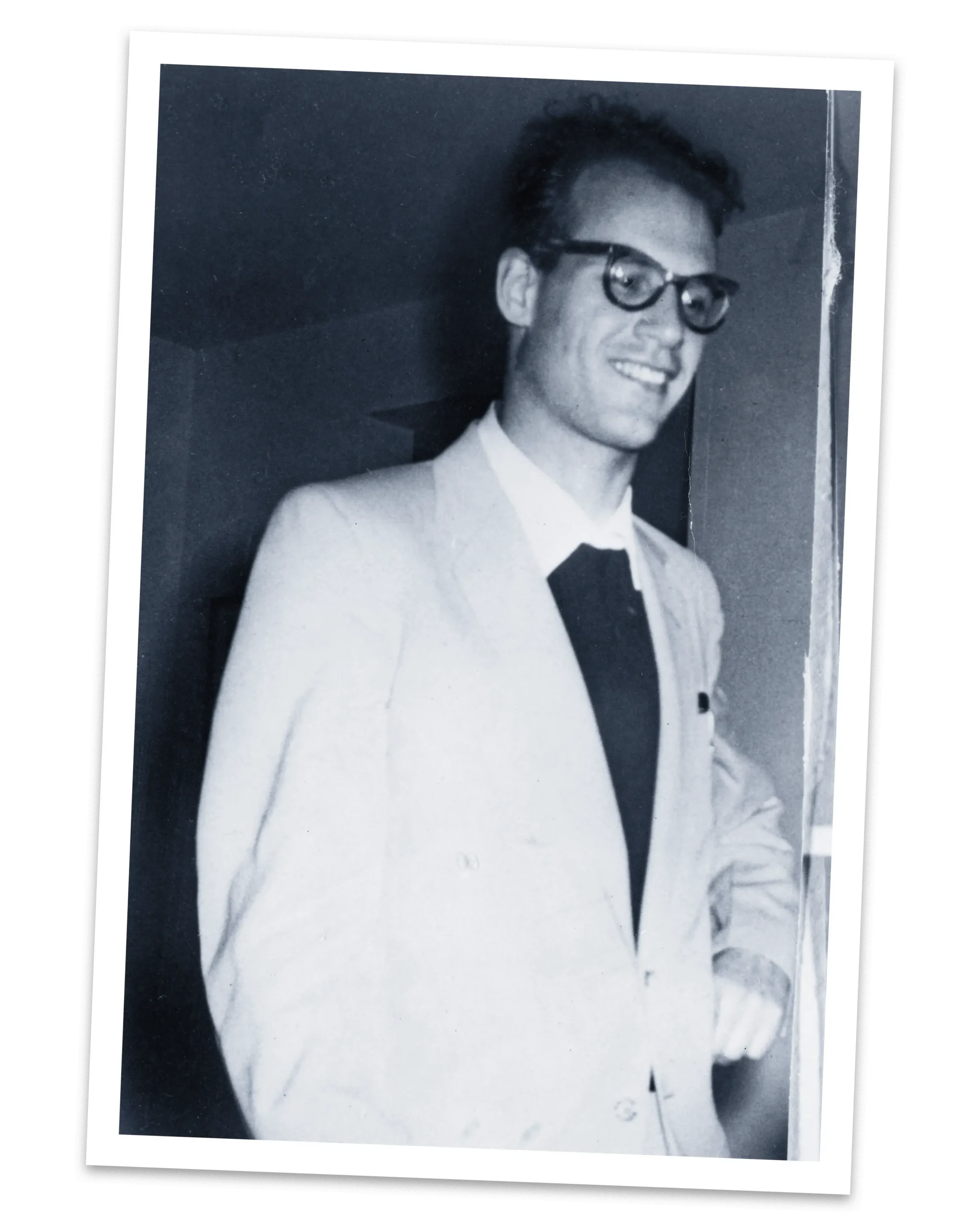
What made Alexander Grothendieck remarkable wasn’t just raw technical power — though he had that in abundance. It was his instinct for finding the right level of abstraction. Where other mathematicians would wrestle with a specific equation or theorem, Grothendieck would step back, ask what the problem was really about at its deepest structural level, and then build entirely new mathematical machinery to address it. The results were staggering in scope.
A Career That Burned Bright and Ended Abruptly
Starting in the early 1950s, while still in his twenties, Alexander Grothendieck began generating thousands of pages of both formal papers and informal notes. The pace and depth were extraordinary. By the late 1950s he had announced ambitions to essentially rebuild algebraic geometry from the ground up — and then proceeded to actually do it. He worked from the Institut des Hautes Études Scientifiques (IHÉS), a prestigious research institute outside Paris that had been set up partly to attract exactly this kind of talent.
Then, in 1970, he walked away. Alexander Grothendieck left IHÉS to take a teaching post at the comparatively modest University of Montpellier — the same institution where he’d studied as an undergraduate. He gradually withdrew from the mathematical community. By the early 1990s, he had moved to a remote village in the Pyrenees and was living, by most accounts, as a hermit. He died in 2014, having spent his final decades in near-total isolation.
It’s one of the most dramatic exits in the history of any scientific field. And it makes his legacy stranger and more poignant: the work he left behind was incomplete by his own standards, a vast, unfinished cathedral that other mathematicians are still trying to explore.
What Alexander Grothendieck Actually Did
To understand why Alexander Grothendieck matters so much, you need at least a rough sense of the field he transformed. Algebraic geometry, at its core, studies shapes defined by polynomial equations. Think of something as simple as a circle — x² + y² = 1 — or a line. As you add more variables and consider systems of many equations at once, the shapes become far more complex and the mathematics far more demanding.
By the mid-20th century, the field was thriving but also, frankly, a mess. David Mumford, one of the leading algebraic geometers of the era, later wrote that researchers were using incompatible definitions and half a dozen different mathematical languages to describe what were supposedly the same foundational concepts. There was no shared ground.
Grothendieck supplied it — and then some. His 1957 generalization of the Riemann-Roch theorem was the opening salvo. The original theorem, proved a century earlier, described how the geometry of a surface constrains which functions can be defined on it. Grothendieck extended it so dramatically that, as Leila Schneps of the French National Center for Scientific Research has written, it “propelled him to instant stardom in the world of mathematics.” Brian Conrad of Stanford University captures what made the new approach so powerful: “A whole new wealth of operations becomes available. It opens up a whole new way to think about why the theorem is true.”
But that was just the beginning.
The Scheme: A New Architecture for Mathematics
At the 1958 International Congress of Mathematicians, Alexander Grothendieck announced something that would have seemed absurdly overreaching from almost anyone else: he was going to rebuild all of algebraic geometry around a new central concept he called a scheme.
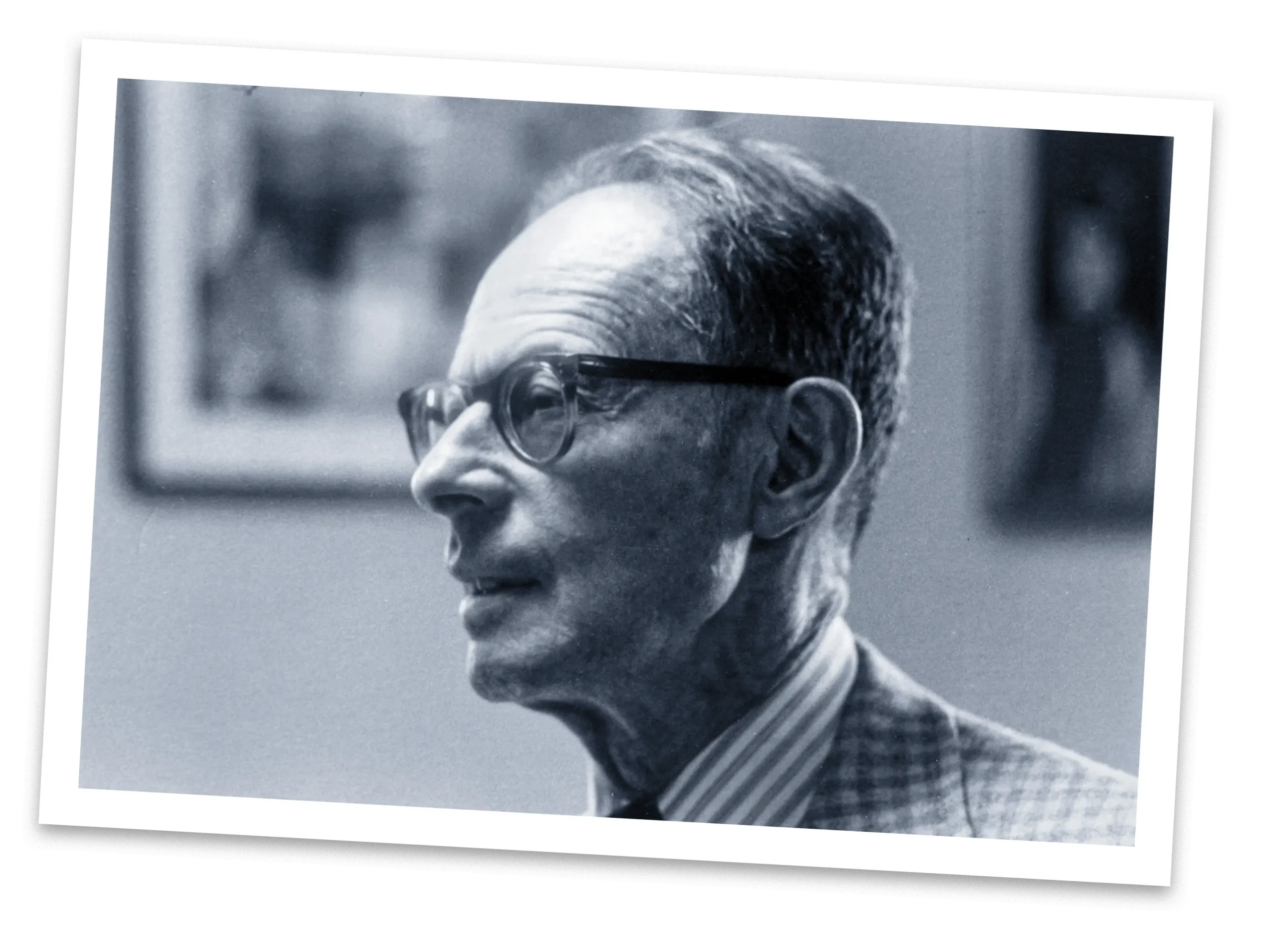
To understand why this was a big deal, it helps to know about the Weil conjectures. A decade earlier, the mathematician André Weil had proposed four conjectures linking solutions to polynomial equations in two radically different mathematical settings: finite fields (number systems with cyclical arithmetic, like clock arithmetic) and complex numbers (ordinary numbers extended by the square root of -1). Conrad describes them as sounding like “communication between parallel universes.” On the surface, these two settings have almost nothing to do with each other. Weil believed there was a deep connection anyway, and he was right — but proving it required new tools that didn’t yet exist.
Grothendieck’s scheme theory was built, in part, to supply those tools. And it worked — though the final proof of the Weil conjectures actually came from his student Pierre Deligne in 1974, using the machinery Grothendieck had constructed.
But here’s what made scheme theory so lasting: it solved a problem that mathematicians hadn’t quite articulated yet. Before Alexander Grothendieck, when you wrote down an equation like x² + y² = 1, you had to specify your number system upfront. Whether x and y were integers, real numbers, or complex numbers gave you very different solution sets. The equation felt like it was fundamentally tied to the number system you chose.
Grothendieck argued — and then proved — that equations have meaningful structure independent of the number system. The scheme is the abstract object that captures the equation itself, before you decide what numbers to plug in. Daniel Litt of the University of Toronto puts it neatly: the Weil conjectures were a primary motivation for schemes, but “what it really bought you was a whole lot more.”
The analogy Grothendieck’s defenders sometimes reach for: a sentence has a meaning regardless of which language you translate it into. The idea is the same even as the words change. That’s what a scheme does for an equation.
The Ripple Effects: Fields He Never Worked In
One of the most telling things about the influence of Alexander Grothendieck is how far it extends beyond algebraic geometry itself. His work pulled together topology, number theory, representation theory, and even mathematical logic into a broader web, with algebraic geometry at the center. These fields didn’t just borrow his results — they were restructured by his ways of thinking.
Conrad makes this point explicitly: “Grothendieck never worked directly in number theory, but the ideas he introduced into algebraic geometry totally transformed how number theory is done.” That’s a remarkable statement. The man never set foot in a field he nonetheless fundamentally changed.
This is actually where the comparison to Einstein becomes most apt. Einstein’s general relativity didn’t just answer questions about gravity — it created a whole new framework that physicists are still using to ask questions Einstein never imagined. Grothendieck’s abstraction did the same for mathematics: it provided tools so general, so structurally deep, that researchers in fields he barely touched are still discovering what they make possible.
What His Legacy Means Now
Alexander Grothendieck left behind an enormous, partly unprocessed body of work — including a sprawling memoir called Récoltes et Semailles (Harvests and Sowings) that runs to thousands of pages and blends mathematical philosophy with autobiography and, frankly, some deeply eccentric thinking. Mathematicians are still cataloguing, translating, and working through material he produced decades ago.
There’s something almost technological about how his ideas propagate. Much like foundational software architecture that gets built upon for decades by engineers who never knew the original author, Grothendieck’s frameworks — topos theory, étale cohomology, the theory of motives — underpin cutting-edge work in ways that practitioners sometimes don’t fully trace back to their source. His name appears in mathematical papers the way TCP/IP appears in internet infrastructure: everywhere, mostly invisible, absolutely essential.
The mathematician who walked away from the world left the world with tools it’s still learning to use. That’s a strange and striking thing. And it raises a question worth sitting with: how many more insights were locked away in that Pyrenean village that mathematics never got to see?