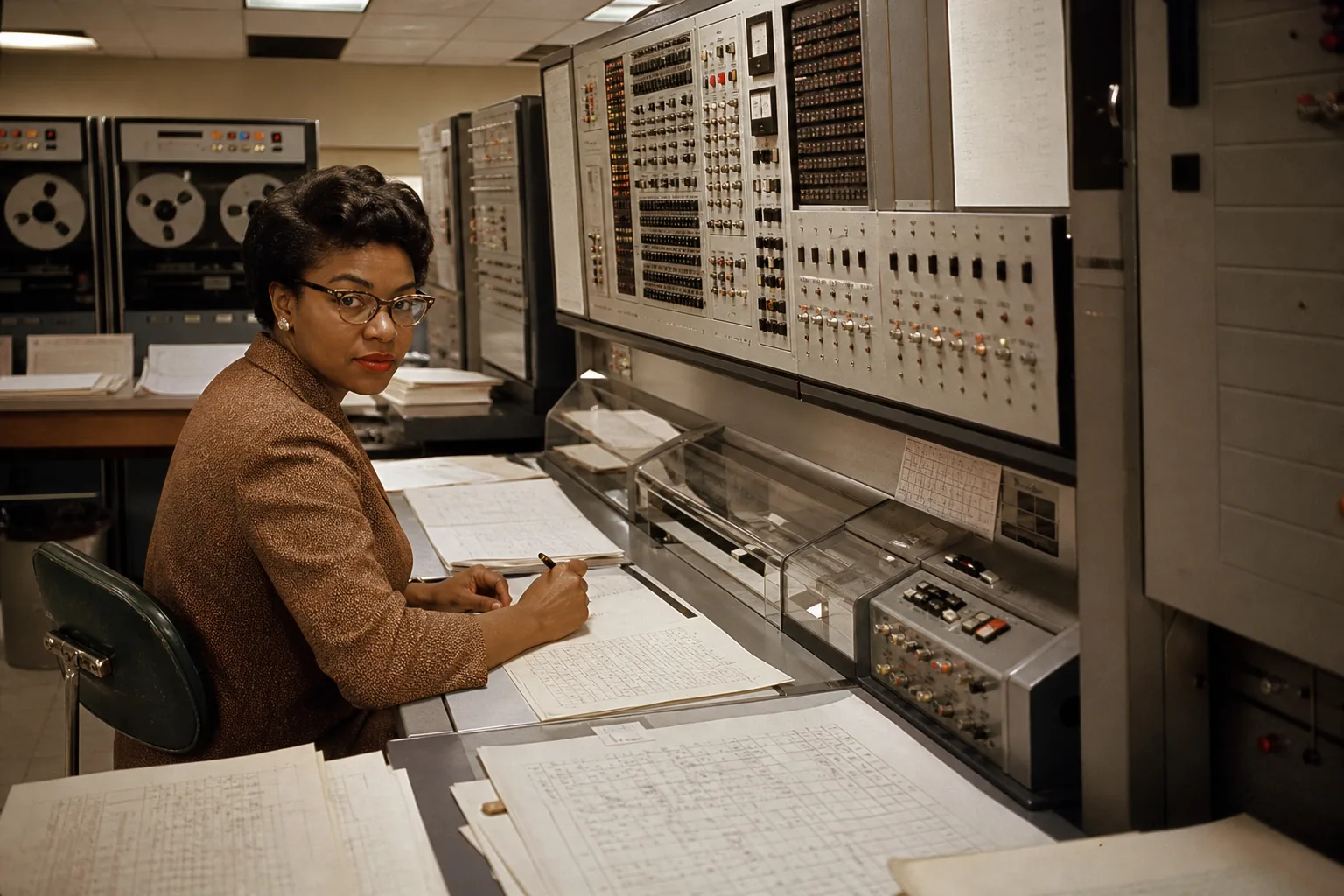
On Juneteenth — the federal holiday marking the moment in 1865 when Union soldiers finally enforced emancipation across the American South — it’s worth pausing to look at the people history tried to sideline but couldn’t quite manage to erase. Annie Easley is one of them. A mathematician, programmer, and NASA trailblazer, Easley spent 34 years quietly shaping the technology that sent spacecraft to Saturn, and she did it while working in an institution that, for much of her career, didn’t fully want her there.
- Annie Easley joined NACA in 1955 as one of only four Black employees among 2,500 staff, facing both racism and sexism.
- Annie Easley developed code for energy-conversion systems that contributed to hybrid rocket technology and the 1997 Cassini mission to Saturn.
- Human computers like Easley were classified as ‘subprofessionals’ despite performing calculations that were critical to America’s space program.
- Easley later became an Equal Employment Opportunity counselor at NASA, advocating for the people the agency had historically marginalized.
Table of Contents
Who Was Annie Easley?
Annie Easley joined the National Advisory Committee for Aeronautics — NACA, the agency that would eventually become NASA — in 1955. She was hired as a ‘human computer,’ a job title that sounds almost paradoxical now but was deeply meaningful at the time. Human computers were women with exceptional mathematical ability, employed to run the calculations that guided aerospace research. Think of them as the human infrastructure beneath the rockets: painstaking, precise, and almost entirely invisible to the public.
When Easley walked through the doors at what is now NASA’s Glenn Research Center in Cleveland, she was one of just four African Americans among roughly 2,500 employees. The number alone says a great deal about the environment she was entering. NACA had been hiring white women for these computing roles since 1935. Black women weren’t permitted to join until 1943 — and even that opening came not from any progressive rethinking but from a wartime labour shortage that left the agency with little choice.
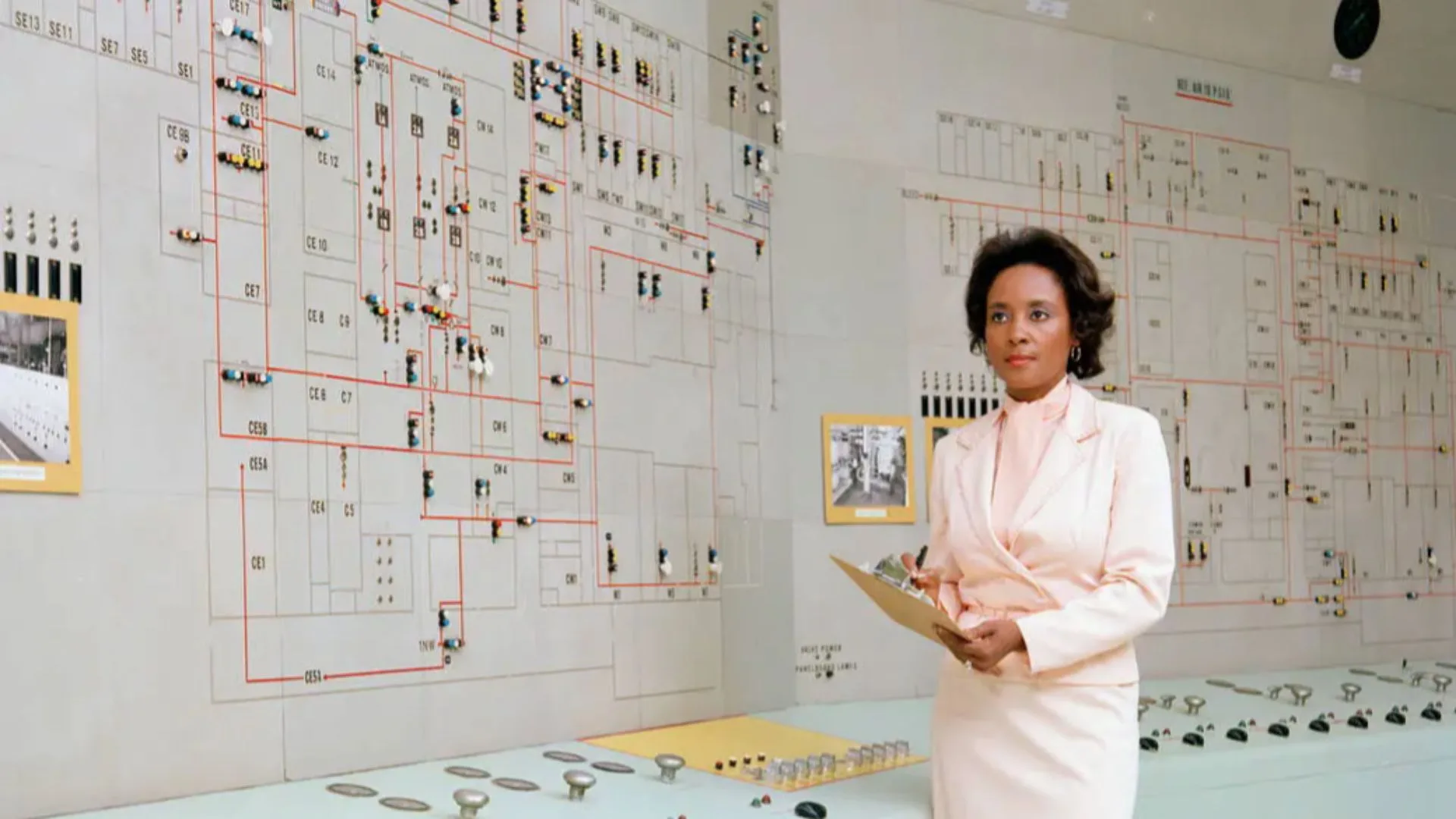
The Work That Annie Easley Did — and Why It Mattered
The transition from human computers to machine computers happened gradually through the late 1950s and into the 1960s. Many of the women who had been doing this work by hand found themselves without a clear path forward. Annie Easley wasn’t one of them. She adapted, earned new skills, and shifted fully into computer programming — a field that was itself still young enough that the boundaries of what it meant to be a programmer were being written in real time.
Her most consequential technical contribution came through her research into energy-conversion systems. The code she developed in this area directly supported the development of the Centaur upper-stage rocket, a vehicle that has since become one of the most reliable and long-serving launch platforms in American spaceflight. Centaur’s early work on high-energy propulsion also laid conceptual groundwork for hybrid vehicle technology more broadly — a thread that runs, decades later, into the electric and hybrid cars now sitting in driveways across the country.
But the headline application of Easley’s work is hard to top: her research contributed to the 1997 launch of the Cassini spacecraft, NASA’s extraordinary mission to Saturn that spent 13 years orbiting the ringed planet and fundamentally changed our understanding of the outer solar system before it was deliberately plunged into Saturn’s atmosphere in 2017. That’s a legacy most engineers would be proud to claim. Easley’s connection to it was rarely spotlighted in her lifetime.

The Discrimination Behind the Accomplishments
The story of NASA’s human computers has received more mainstream attention in recent years — largely thanks to Margot Lee Shetterly’s book and the 2016 film Hidden Figures, which centred on Katherine Johnson, Dorothy Vaughan, and Mary Jackson at NASA’s Langley Research Center. Easley worked at Glenn rather than Langley, but she faced structurally identical conditions: a workplace where the women performing essential calculations were classified not as professionals but as ‘subprofessionals,’ and where being talked down to by male colleagues was routine.
For Black women, the indignities were compounded. Segregation meant separate bathrooms, separate dining facilities, and the constant low-grade message that their presence was conditional and their contributions incidental. Annie Easley navigated all of this for decades, not by ignoring it but by refusing to let it be the ceiling. She pursued continuing education, upgraded her technical skills as the field evolved, and eventually moved into a role as NASA’s Equal Employment Opportunity counselor — a position that put her in the business of advocating for others who faced the same walls she’d been quietly dismantling her whole career.
Her Own Words
In a 2001 interview, Easley recalled the advice her mother had given her:
“You can be anything you want to. It doesn’t matter what you look like, what your size is, what your color is. You can be anything you want to, but you do have to work at it.”
Easley added simply: “I still believe that.” It’s the kind of statement that can read as platitude until you consider the specific context — a Black woman who joined a federal aerospace agency the same year Rosa Parks refused to give up her seat on a Montgomery bus, and who spent the next three and a half decades doing the math that helped America reach the stars.
Annie Easley’s Place in a Larger Story
NASA has made genuine efforts in recent years to acknowledge the contributions of people like Easley — renaming facilities, commissioning portraits, and integrating these histories into its official record. The agency’s own documentation now credits her work on energy-conversion systems as formative. That’s progress, even if it comes posthumously. Easley retired in 1989 and died in 2011, so she didn’t live to see Hidden Figures turn the story of NASA’s Black female mathematicians into a cultural moment.
What makes Annie Easley’s story particularly resonant on Juneteenth isn’t just the racial dimension, though that’s real and important. It’s the reminder of how much institutional inertia costs everyone. The women classified as ‘subprofessionals’ were, by any honest measure, doing professional and often expert-level work. The calculations they performed, hundreds of thousands of them collectively, were the foundation on which American space exploration was built. The label wasn’t a reflection of their capability — it was a reflection of who was in charge of the labels.
NASA today employs a far more diverse workforce than the NACA that Easley entered in 1955, but the pipeline into aerospace, engineering, and computer science still shows persistent gaps along racial and gender lines. The structural work of closing those gaps is slow and incomplete. Easley’s career is a useful lens for understanding both how far things have moved and how much the cost of exclusion compounds over time — in human potential, in scientific output, and in the stories a field gets to tell about itself. The Cassini mission flew to Saturn on decades of accumulated expertise. Some of that expertise belonged to a Black woman from Birmingham, Alabama, who was told she could be anything she wanted — and proved it.
Frequently Asked Questions
What did Annie Easley actually do at NASA?
Annie Easley began as a human computer at NACA in 1955, performing complex mathematical calculations for space missions. She later transitioned into computer programming, developing code for energy-conversion research that paved the way for hybrid vehicles like the Centaur upper-stage rocket, and contributed to the Cassini spacecraft launch in 1997.
What was a ‘human computer’ at NASA or NACA?
Human computers were predominantly women hired to perform precise, repeatable mathematical calculations by hand. They functioned as the analytical backbone of early space missions before digital machines took over. NACA began hiring white women for these roles in 1935 and only allowed Black women to join in 1943, partly due to wartime labor shortages.
How long did Annie Easley work for NASA?
Annie Easley worked for NACA and then NASA for 34 years, retiring in 1989. She passed away in 2011. Over that span she shifted roles multiple times — from human computer to programmer to Equal Employment Opportunity counselor.
Why were Black women at NASA treated differently from white colleagues?
Black women at NACA and NASA faced a dual layer of discrimination — the systemic racism that defined mid-20th century America combined with the widespread sexism that devalued all female employees. All human computers were labeled ‘subprofessionals,’ but Black women faced additional barriers and were excluded from the workforce entirely until 1943.