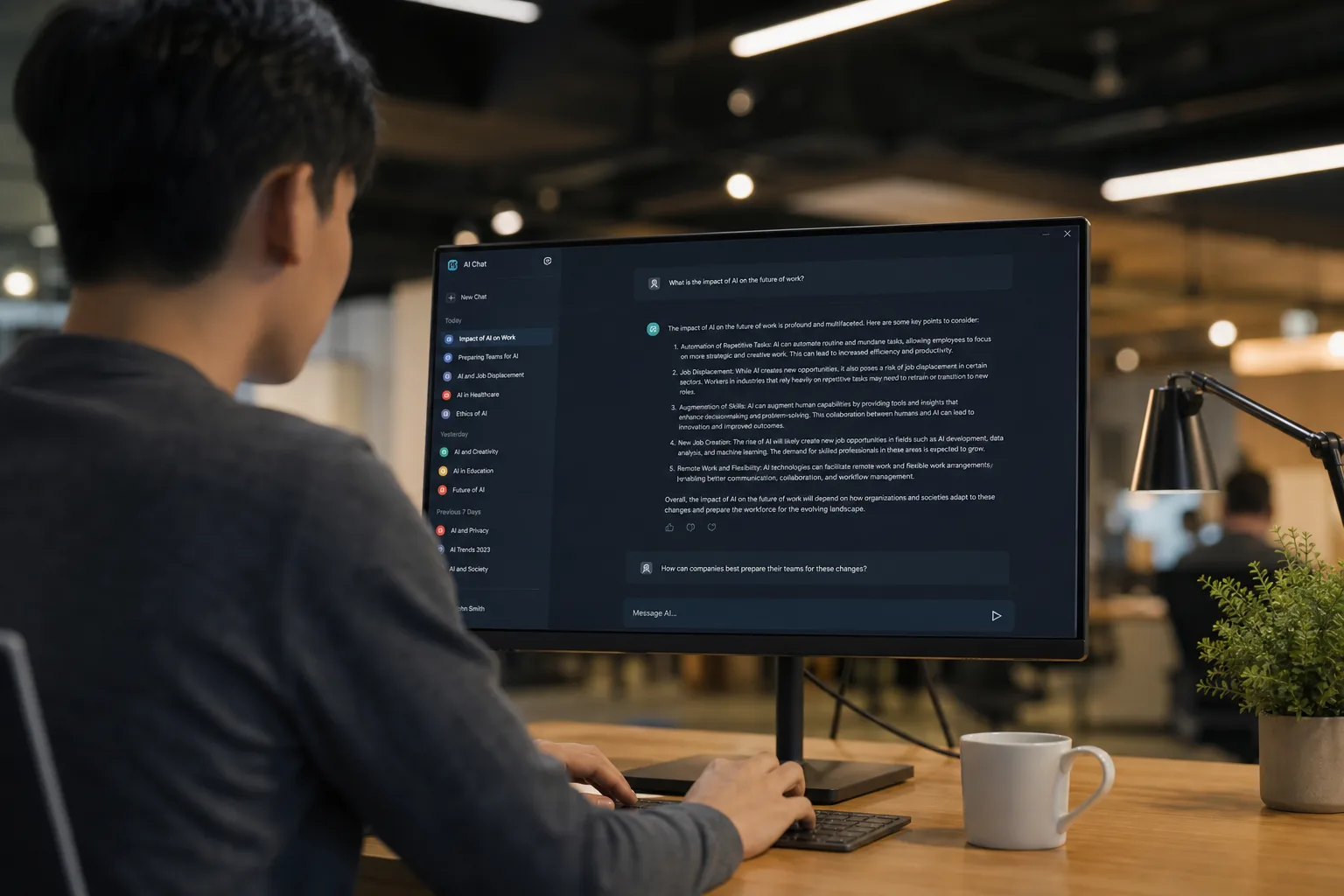
Anthropic has released Claude Sonnet 5, a mid-tier AI model the San Francisco lab says punches close to flagship-level performance while carrying a price tag that won’t make enterprise finance teams wince. It’s a deliberate positioning play — and the timing, coming as Anthropic barrels toward a high-stakes IPO, is anything but coincidental.
- Claude Sonnet 5 is Anthropic’s most capable mid-tier model yet, delivering near-flagship performance at significantly lower cost.
- Claude Sonnet 5 is now the default model for Anthropic’s Free and Pro plan users, giving broad access to its agentic features.
- The launch comes as Anthropic accelerates toward an IPO that will put its sky-high private valuation under public market scrutiny.
- Anthropic’s pricing move reflects a wider industry trend of pushing powerful AI capabilities further down the cost curve.
Table of Contents
What Claude Sonnet 5 Actually Is
Anthropic is calling Claude Sonnet 5 ‘the most agentic Sonnet model yet’ — which, translated out of marketing language, means it’s built to handle complex, multi-step workflows with less hand-holding. Agentic AI is where the real enterprise money is right now. Businesses don’t just want a chatbot that answers questions; they want AI that can reason through a process, take sequential actions, and deliver a finished result. That’s what Anthropic is going after here.
The model is now the default for users on Anthropic’s Free and Pro plans — a move that simultaneously expands Claude Sonnet 5’s reach and signals that Anthropic considers it capable enough to be the face of the product for most of its user base. That’s not a small vote of confidence. For API customers, Claude Sonnet 5 also slots in as the obvious choice when flagship model costs would otherwise price a use case out of viability.
Anthropic hasn’t published every benchmark detail in its announcement, but the core pitch is clear: near-top-tier capability at mid-tier cost. If that claim holds up in real-world enterprise deployments, it changes the calculus for a lot of development teams who’ve been sitting on the fence about which AI provider to build on.
The Pricing Strategy Behind the Launch
AI model pricing has become one of the most competitive battlegrounds in tech. OpenAI’s tiered pricing set the template, and since then every serious lab has had to think carefully about where each model sits on the cost-performance curve. Anthropic is clearly thinking hard about this too.
By positioning Claude Sonnet 5 as a steep discount to its flagship, Anthropic is essentially running a classic good-better-best strategy — except the ‘better’ option now performs close enough to ‘best’ that many customers won’t bother stepping up. That’s a calculated risk. It might suppress some upsell revenue in the short term, but it builds volume, developer loyalty, and platform stickiness. All of which matters enormously if you’re planning to go public.
The broader industry context here is that the cost of intelligence is falling fast. Google, Meta, Mistral, and a growing list of open-source projects are all pushing capable models further down the price curve. Anthropic can’t afford to have Claude feel expensive relative to the competition. Claude Sonnet 5 is partly a product launch and partly a competitive defense.
Claude Sonnet 5 and the IPO Calculus
Let’s be direct about what’s happening in the background. Anthropic is racing toward an IPO, and by most accounts it’s one of the most anticipated public offerings in the AI sector. The company has attracted billions in investment — most notably from Amazon and Google — and its private valuation has climbed to levels that would have seemed absurd just three years ago.
Public markets are a different audience than venture capitalists. Institutional investors and retail buyers will want to see revenue growth, a credible path to profitability, and evidence that Anthropic’s models are genuinely preferred by enterprise customers at scale. Every product launch between now and the IPO is, at least in part, a prospectus for that story.
Claude Sonnet 5 fits neatly into that narrative. It shows Anthropic can ship competitive models at multiple price points, that it’s winning on agentic capability — a genuinely differentiated technical direction — and that its user base is broad enough to justify making an improved model the free-tier default. That’s a company trying to demonstrate both technical credibility and commercial momentum simultaneously.
Whether the public market buys that story is the real question. AI valuations have been built on extraordinary expectations, and scrutiny will be intense. Anthropic’s IPO won’t just price one company — it’ll serve as a reference point for how investors value the entire sector.
Why Agentic AI Is the Right Bet Right Now
It’s worth paying attention to Anthropic’s specific emphasis on agentic performance, because it reflects where enterprise AI spending is actually heading. The initial wave of enterprise AI adoption was dominated by text generation and summarization — essentially automating writing tasks. That market has largely been captured, and the differentiation is narrowing.
The next frontier is AI that acts. Systems that can browse the web, execute code, manage files, fill out forms, coordinate across APIs, and complete multi-step business processes without a human in the loop for every decision. That capability demands models that are not just fluent but reliable, careful about errors, and capable of knowing when to ask for clarification versus when to proceed.
Anthropic has leaned into this harder than some competitors. The company’s constitutional AI approach and its ongoing safety research aren’t just ethical positioning — they translate, at least in theory, into models that are less likely to go off the rails in an agentic context. That’s a real selling point when a model is being asked to do things autonomously inside a company’s internal systems.
Claude Sonnet 5 landing as the flagship agentic mid-tier model puts Anthropic in a strong position for that conversation. The question is how quickly competitors respond — and with OpenAI, Google DeepMind, and others all investing heavily in the same territory, the window for any one model to hold a meaningful lead is shorter than it used to be. Anthropic knows this, which is probably exactly why they’re moving as fast as they are.