The David Brin podcast appearance that space and science fiction fans have been waiting for dropped this week — and it’s the kind of conversation that doesn’t stay neatly inside any single category. Episode 215 of This Week in Space brings together host Rod Pyle, guest co-host Susan Karlin, and one of sci-fi’s most reliably interesting thinkers for a discussion that moves from Steven Spielberg’s Disclosure Day to the sociology of AI belief without ever losing momentum.
- The David Brin podcast appearance on This Week in Space episode 215 covers Spielberg’s Disclosure Day and human belief in AI.
- David Brin podcast host Rod Pyle is joined by guest co-host Susan Karlin for this wide-ranging conversation.
- Brin is known for his contrarian takes on technology and storytelling, and this episode reportedly doesn’t disappoint.
- Estes has released a launchable Falcon 9 scale model for $149.99, available with a 10% discount via collectSPACE.
Table of Contents
David Brin Podcast Deep Dive: What Episode 215 Actually Covers
If you’ve already seen Disclosure Day or its companion piece Age of Disclosure, this David Brin podcast episode is essentially required listening. Brin isn’t the kind of guest who sits back and validates whatever the host says — he’s built a reputation over decades for challenging assumptions, and that trait is apparently very much present here. The conversation spans his reaction to Spielberg’s take on extraterrestrial disclosure all the way to why so many people have transferred something resembling religious faith onto artificial intelligence. That’s a lot of intellectual ground to cover in a single episode, and yet the combination makes a strange kind of sense coming from Brin.
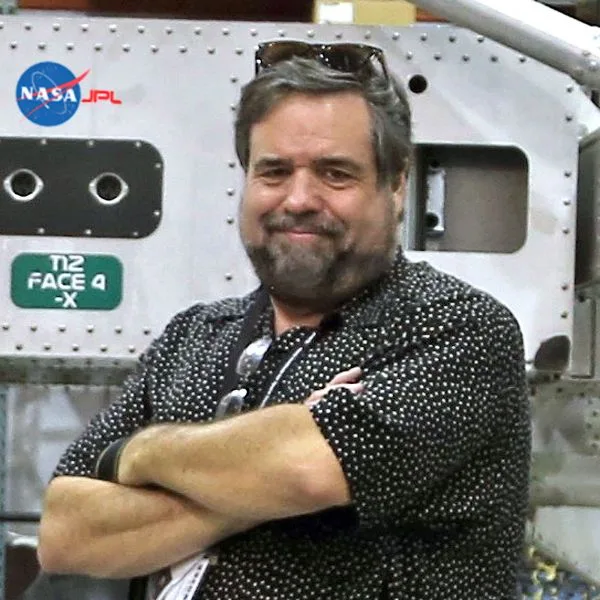
Brin is best known for his Uplift universe novels and for The Transparent Society, his nonfiction argument for radical transparency as a check on power — a thesis that reads almost prophetically now, in an era when surveillance capitalism and government data collection dominate headlines. When someone with that particular intellectual background appears on a David Brin podcast and starts talking about why humans believe in AI, you should probably pay attention.
Why ‘Disclosure Day’ Is the Right Moment for This Conversation
The timing here isn’t accidental. UFO and UAP discourse has gone from fringe territory to congressional testimony in the space of about five years. The U.S. government’s official UAP reports from the Director of National Intelligence have done something genuinely strange to the cultural conversation — they’ve made it harder to dismiss and simultaneously easier to sensationalize. Into that environment, Spielberg and the Disclosure Day project land with considerable weight. Spielberg has always had an instinct for when a cultural moment is ready for a particular story — think back to Close Encounters of the Third Kind in 1977, which arrived precisely when Cold War anxieties and post-Watergate distrust needed somewhere to project themselves.
Any David Brin podcast discussion of disclosure benefits from Brin’s contrarian instincts, which are probably well-suited to unpacking whether the current disclosure wave represents genuine epistemological progress or just a new flavor of mass belief formation. That’s the kind of distinction he tends to care about — and the kind that gets lost when a topic becomes this culturally charged.
The AI Belief Problem Brin Has Been Warning About
Perhaps the most forward-looking part of this David Brin podcast episode is the discussion of AI belief. Brin has been skeptical of the more utopian projections around artificial intelligence for years, and his concern isn’t really about the technology itself — it’s about what humans do with it psychologically. People have always needed something to believe in, and when traditional institutions lose credibility, that need doesn’t disappear. It finds new objects.
Right now, a significant portion of the tech-literate population has effectively transferred that belief-energy onto AI systems — treating models like GPT-4 or Gemini as oracles, or alternatively demonizing them as existential threats. Both responses share the same underlying structure: they’re emotional and quasi-religious rather than empirical. Brin’s framework, developed long before the current AI boom, actually gives you useful tools for thinking about this. He’s been arguing since at least the 1990s that transparency and accountability — not faith in systems, whether those systems are governments, corporations, or algorithms — are what keep complex societies functional.
That’s not a comfortable message in 2025, when the entire business model of most major AI companies depends on user trust that borders on the devotional. But discomfort is kind of Brin’s brand, and this David Brin podcast conversation makes that clear.
Rod Pyle, Susan Karlin, and the Format That Makes It Work
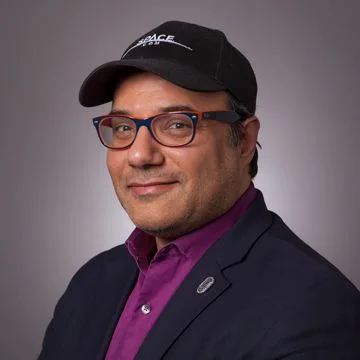
This Week in Space has built its audience on the strength of Pyle’s credentials — he’s written 18 books on space history and exploration, produced documentaries for History Channel and Discovery, and worked in visual effects on Star Trek: Deep Space Nine and the Battlestar Galactica reboot. That background means he can talk to a figure like Brin as a genuine peer rather than a wide-eyed interviewer, and the conversations tend to reflect that.
Bringing in Susan Karlin as guest co-host for this particular David Brin podcast episode is a smart move. Different co-hosts shift the dynamic in ways that regular listeners notice — new angles get opened up, comfortable conversational ruts get avoided. The regular co-host, Tariq Malik, is Space.com’s Editor-in-Chief and brings deep space journalism credentials to the table most weeks. Karlin’s presence here likely pushes the conversation in directions it wouldn’t otherwise go, particularly on the cultural and speculative dimensions that Brin’s work tends to occupy.
This Week’s Space News: A Falcon 9 You Can Actually Launch
Alongside the main interview, the episode runs its usual space news segment — and this week’s standout item is genuinely fun. Estes, the model rocket company that introduced generations of kids to rocketry, has released a launchable scale model of SpaceX’s Falcon 9. At $149.99 retail, it’s a detailed recreation of the most-flown orbital rocket in history, and it’s the kind of product that sits at a perfect intersection of nostalgia and contemporary space enthusiasm.
Listeners can grab 10% off using the code IN-COLLECTSPACE at checkout through the show’s partners at collectSPACE.com. It’s a minor detail in the broader context of the episode, but it’s also a neat illustration of where the space hobby market has gone — SpaceX’s Falcon 9 is now iconic enough that it occupies the same cultural space that Saturn V and Space Shuttle models held for earlier generations.
Why the David Brin Podcast Moment Matters Right Now
Brin’s particular combination of hard science fiction chops, genuine scientific literacy, and willingness to push back on consensus narratives makes him unusually valuable as a public intellectual in the current moment. Most people who engage seriously with questions about extraterrestrial intelligence and artificial intelligence tend to land in one of two camps — true believers or committed skeptics. Brin has spent his career occupying a more uncomfortable third position: taking the questions seriously without pre-loading the answers.
That disposition is increasingly rare. As AI companies push narratives of inevitable superintelligence and UAP discourse gets absorbed into both government hearings and streaming entertainment, the people willing to say “slow down, let’s think about this more carefully” are in short supply. If this David Brin podcast episode delivers on its promise, it’s the kind of conversation that gives listeners better tools for navigating a cultural landscape that’s moving faster than most people’s frameworks can keep up with. That’s not a small thing.
Frequently Asked Questions
What does the David Brin podcast episode on This Week in Space cover?
Episode 215 features David Brin discussing reactions to Spielberg’s Disclosure Day film, why people believe in AI, and more. Host Rod Pyle and guest co-host Susan Karlin guide the conversation across a wide range of topics.
Who is David Brin?
David Brin is a bestselling science fiction and science fact author known for universe-spanning storytelling and occasionally contrarian viewpoints. The source does not detail specific titles beyond his general description as a sci-fi and sci-fact author.
What is Disclosure Day and who made it?
Disclosure Day is a film referenced in the episode, with Spielberg connected to it. The episode also references a related film called Age of Disclosure.
Where can I listen to This Week in Space?
This Week in Space is available through TWiT.tv and all major podcast platforms. Ad-free episodes are accessible through Club TWiT, a subscription service offered at twit.tv/clubtwit.