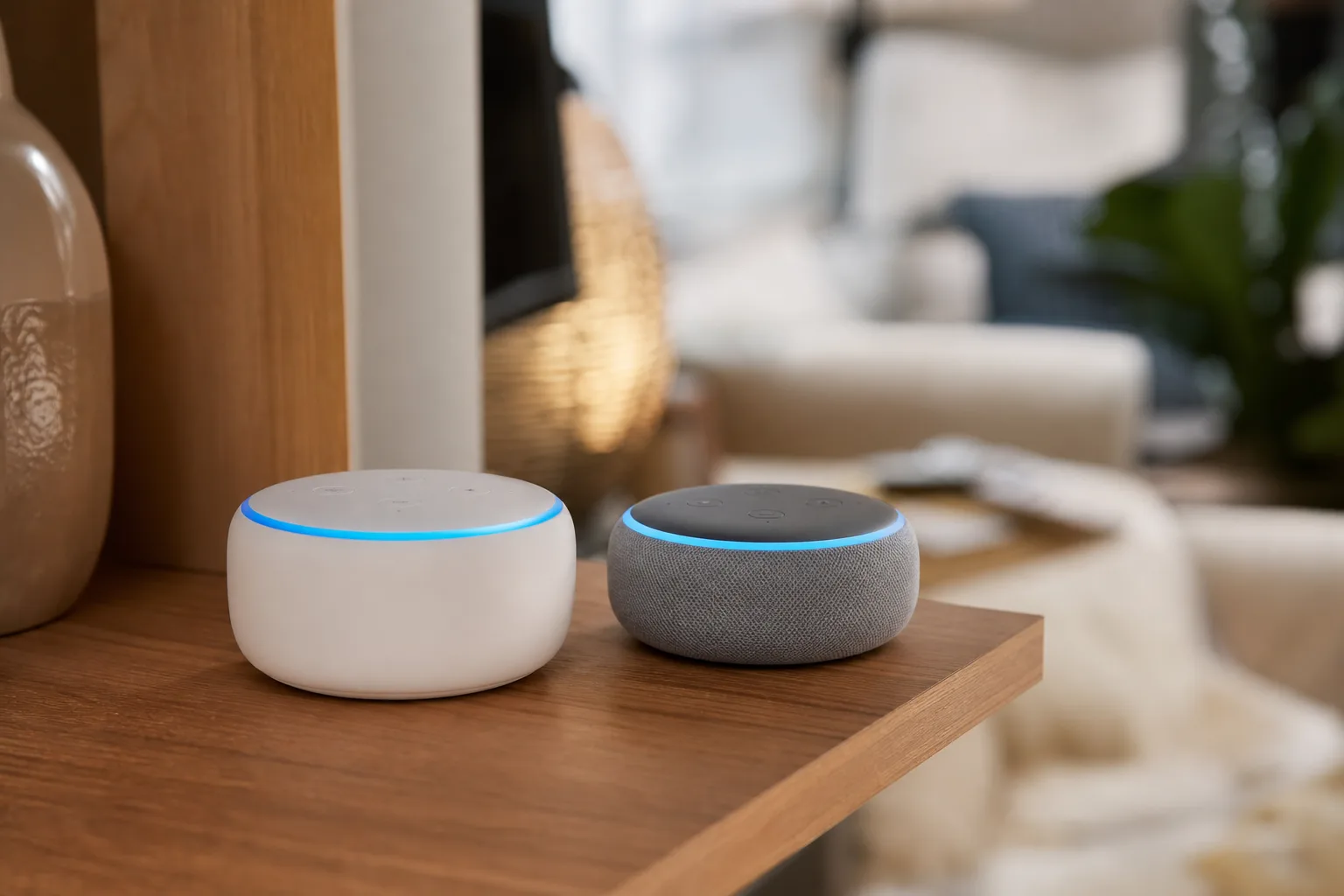
The Google Home Speaker arrived at an interesting moment. Google finally has a $99 smart speaker designed from the ground up for Gemini, its most capable AI to date. Sitting right across from it on the shelf — and matching it dollar for dollar — is Apple’s HomePod Mini, a speaker that launched back in 2020 and hasn’t changed much since. On paper, this should be a lopsided contest. In practice, it’s a lot messier than that.
- The Google Home Speaker costs $99 — the same as HomePod Mini — but delivers noticeably louder, room-filling sound.
- Despite its age, the HomePod Mini outperforms the Google Home Speaker on audio clarity, with crisper vocals and better detail.
- Gemini on the Google Home Speaker is significantly smarter than Siri on HomePod Mini for answering questions and home control.
- Apple hasn’t confirmed whether HomePod speakers will ever receive its upgraded Siri AI, putting the platform’s future in question.
Table of Contents
Two Orbs, One Price: What You’re Actually Getting
Before comparing them, it’s worth being clear about what the Google Home Speaker actually is — because Google’s own marketing has muddied the waters. This is not a successor to the Nest Audio. It’s smaller, built around a single 58mm full-range driver, and clearly positioned as a HomePod Mini rival rather than a mid-range room speaker. Google appears to have made a deliberate choice to shrink the hardware footprint and double down on intelligence instead.
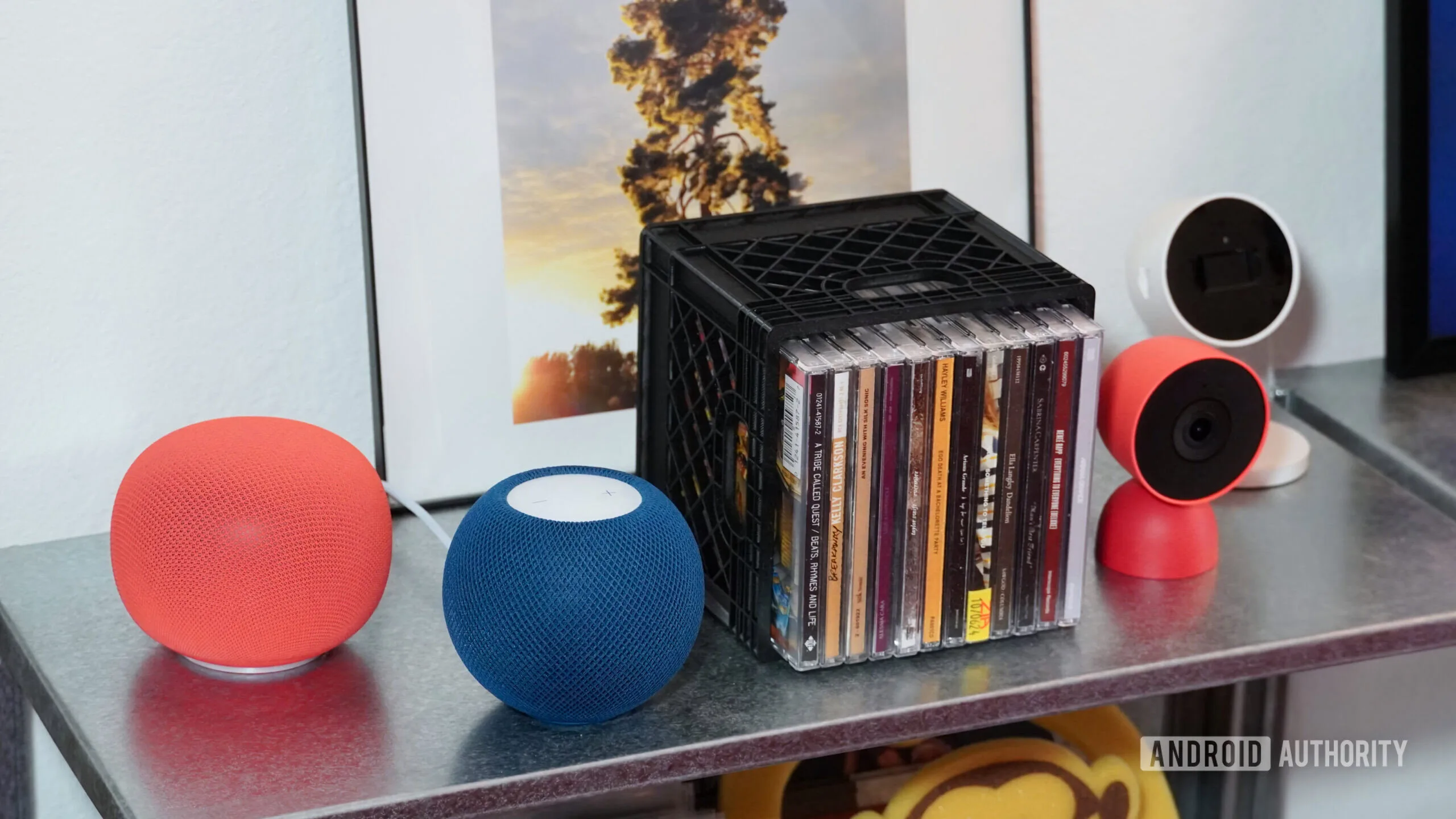
The HomePod Mini, by comparison, uses a driver that’s reportedly around 50mm — Apple doesn’t publish the spec officially. Both speakers are compact enough to sit on a desk, nightstand, or kitchen counter without demanding attention. The 360-degree omnidirectional sound design on both means placement is flexible, which matters in real-world living spaces where you’re not going to spend 20 minutes finding the acoustic sweet spot.
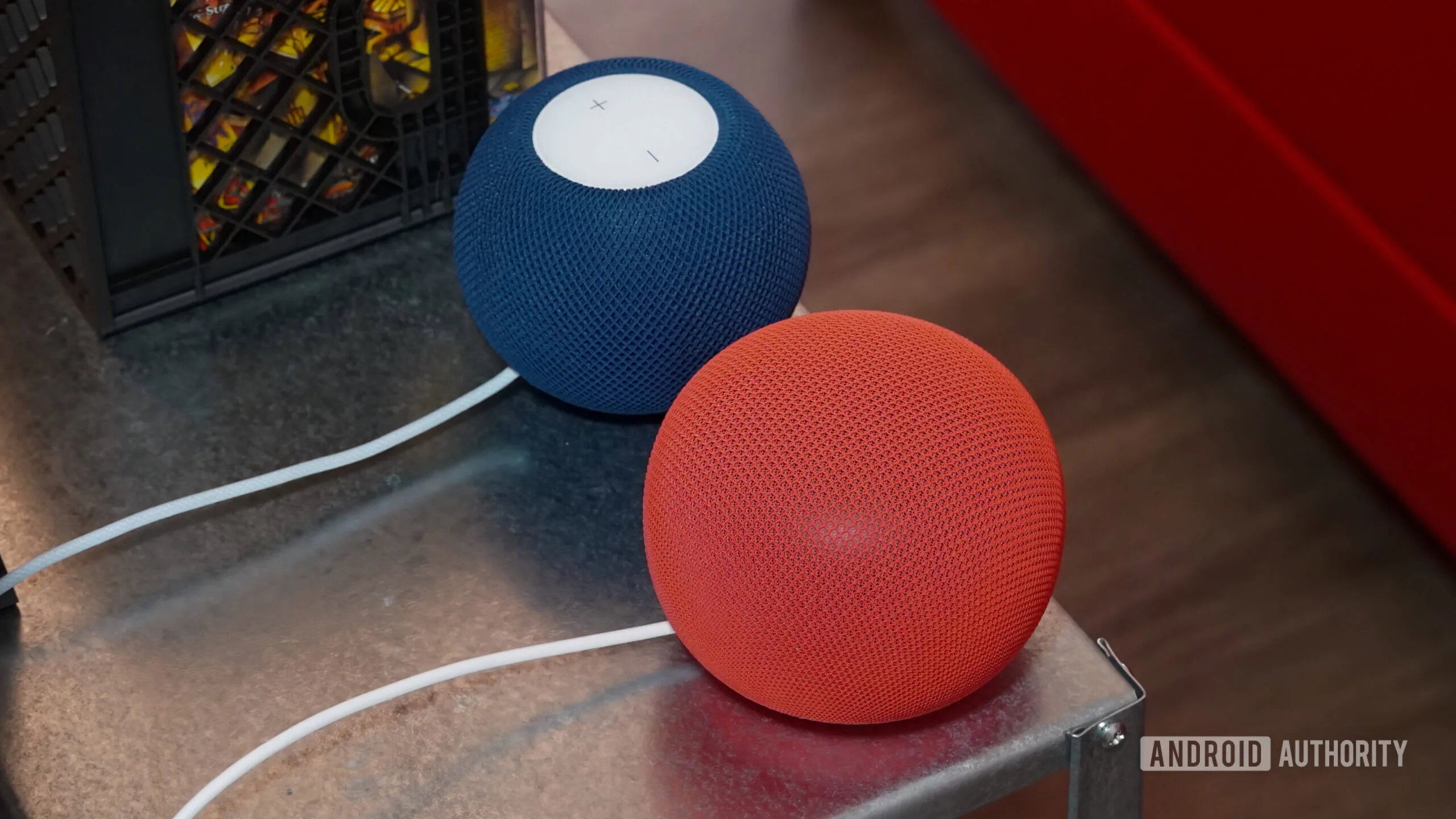
Physically, they’re closer than most people expect. But turn them on, and the similarities start to break down fast.
Google Home Speaker vs HomePod Mini: The Sound Quality Gap
The Google Home Speaker is louder. Meaningfully, impressively louder. At just 10–20% volume, it can fill a mid-sized living room without strain. Push it toward 75% and it’ll carry across an entire one-bedroom apartment. For casual background listening — a podcast in the kitchen, a playlist during a dinner party — that kind of effortless volume projection is genuinely useful.
The HomePod Mini tells a different story. You’ll need to push it to 50–75% just to reach a comfortable listening level in the same room. A single unit works well as a desk speaker, but it struggles to adequately fill anything larger. Apple’s own solution to this is a stereo pair, which doubles your cost to $198. Two Google Home Speakers at the same price would actually be louder and fuller — which says something about where each company has focused its engineering.
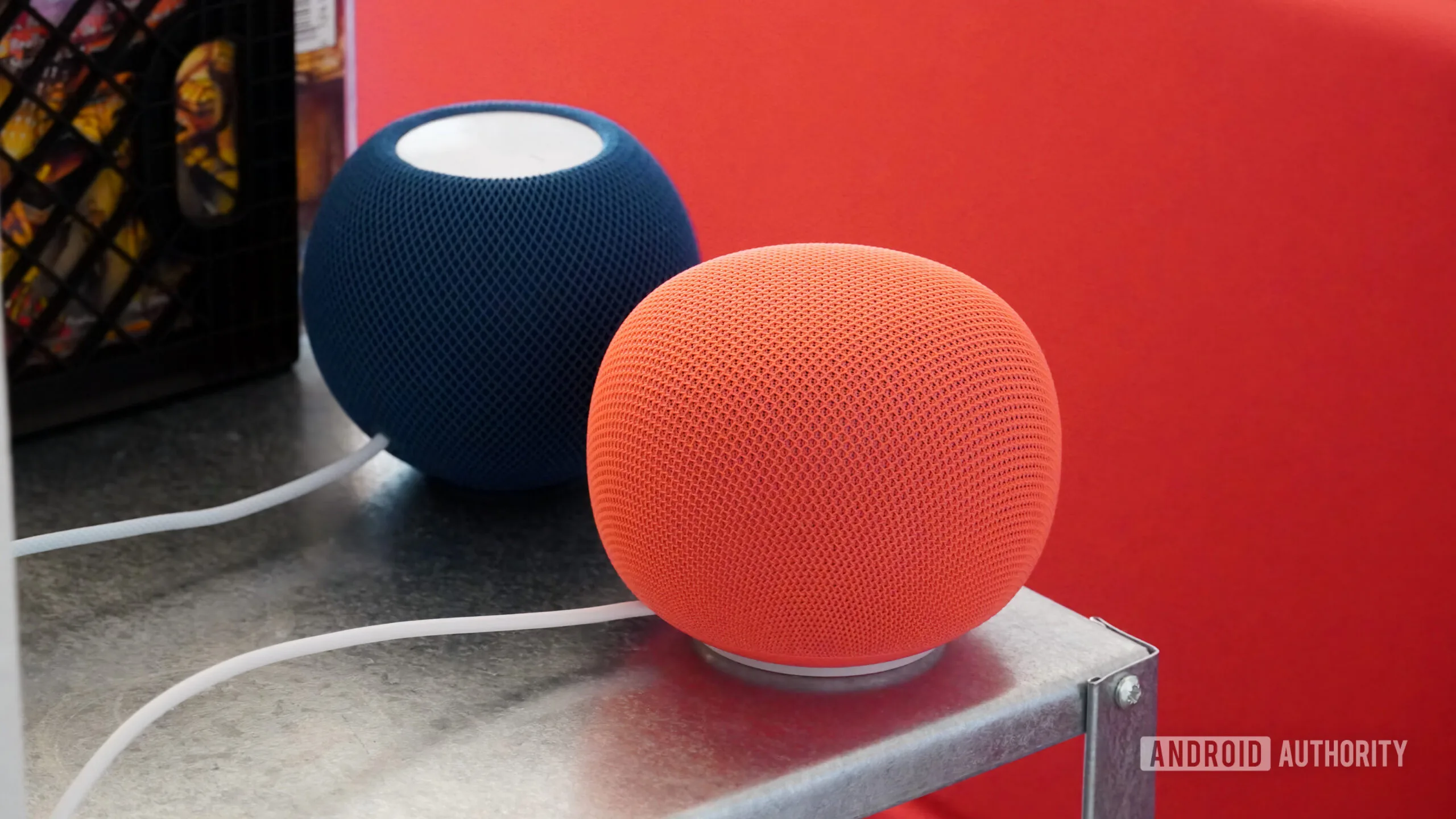
But volume isn’t everything, and this is where the HomePod Mini reasserts itself. The tonal quality — particularly in the mids and highs — is noticeably better. Vocals are cleaner, cymbals have more definition, and snare drums crack with real crispness. The Google Home Speaker, by contrast, sounds tinny through that frequency range, and the low end is a weak point for both speakers — though the Home Speaker’s kick drum reproduction gets muddy in a way the HomePod Mini’s doesn’t.
Worst of all for the Home Speaker, its distortion threshold is concerningly low. Push it past 80% and the audio quality deteriorates sharply into uncomfortable territory. That’s a real design constraint. You’re getting volume, but you’re not getting clean volume.
The honest summary: if you want a speaker to fill a room, the Google Home Speaker wins. If you want one that sounds good while doing it, the HomePod Mini — a six-year-old product, lest we forget — still has the edge.
Gemini vs Siri: The Smarts Aren’t Even Close
This is where the Google Home Speaker pulls decisively ahead, and where Apple’s stagnation becomes genuinely difficult to defend. The Home Speaker is built around Google’s Gemini assistant, and the difference in real-world capability is stark.
Ask both speakers a question that requires any depth — explaining the difference between a tornado watch and a tornado warning, for example — and the contrast is immediate. The Google Home Speaker answers clearly and directly. The HomePod Mini either fails to respond usefully or punts to a web result that you’d have to view on your iPhone. That’s a deeply unsatisfying experience for a product that’s supposed to make information hands-free.
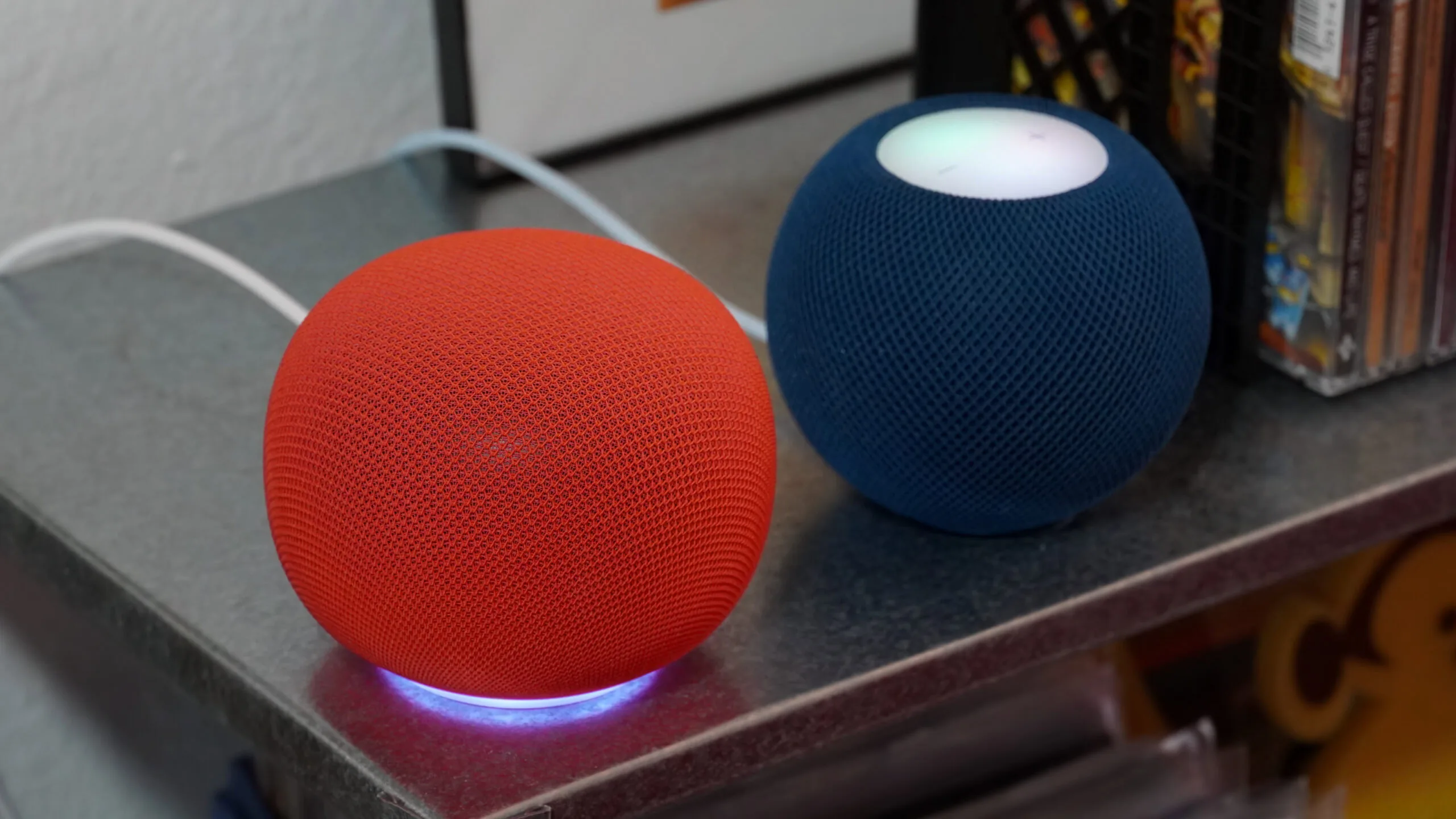
The technical gap explains a lot. The HomePod Mini still runs on Apple’s S5 chip — the same processor found in the Apple Watch Series 5, introduced in 2019. It’s not getting Apple’s new Siri AI, and Apple hasn’t said publicly whether any HomePod model will. That’s a worrying position to be in as competitors push ahead. The Google Home Speaker, meanwhile, runs on a quad-core A55 2.0GHz processor with a dedicated neural processing unit (NPU), giving it proper on-device processing muscle.
To be fair, Gemini on the Home Speaker isn’t perfect. There’s a noticeable pause — a few seconds — before it responds to complex queries. And for basic questions, both speakers sometimes return similar answers. But the ceiling of what the Home Speaker can do is dramatically higher. It handles smart home control more reliably, answers follow-up questions more coherently, and generally feels like a product that’s keeping pace with where AI assistants are heading. Siri on HomePod feels frozen in 2021.
Ecosystem Fit Matters More Than the Spec Sheet
No smart speaker exists in a vacuum. Both of these devices are deeply tied to their respective ecosystems, and that’s probably the single biggest factor in choosing between them.
If you’re an iPhone and Apple TV household, the HomePod Mini slots in cleanly. AirPlay works flawlessly, Handoff feels natural, and two HomePod Minis paired as a stereo set with Apple TV 4K deliver a genuinely solid home theater experience with low latency and spatial audio. The Google Home Speaker offers the same setup with the Google TV Streamer — two units connected as stereo output with spatial audio support — which is a compelling option for Android-first homes.
The Google Home app has also come a long way. Earlier versions were notoriously clunky, but recent updates have made device management and routine configuration far more approachable. Apple’s Home app remains polished but increasingly limiting, particularly as Google and Amazon continue to push the boundaries of what voice-first home control can do.
Which One Should You Actually Buy?
At $99 each, neither speaker is expensive enough to cause serious buyer’s remorse. But they’re solving slightly different problems, and knowing which one is right for you comes down to one question: do you want a smart speaker, or a speaker that happens to be smart?
The HomePod Mini is the better speaker. Its audio signature is cleaner, more detailed, and more enjoyable to listen to — particularly if you’re using it on a desk or in a smaller room. If you’re an Apple household and sound quality is your priority, it remains a respectable choice even at its age.
The Google Home Speaker, though, is the better smart speaker. Gemini runs circles around Siri for anything requiring intelligence, the volume projection is superior, and it’s better positioned for where voice assistants are going over the next few years. Apple’s silence on Siri AI for HomePod devices is a genuine long-term liability — and it’s hard to recommend a platform without a clear upgrade path.
For most buyers — especially anyone who isn’t already embedded in Apple’s ecosystem — the Google Home Speaker is the more future-proof $99 purchase. Apple needs to either upgrade the HomePod Mini’s silicon or commit publicly to bringing its new Siri AI to existing hardware. Until that happens, Google’s got the smarter orb.
Frequently Asked Questions
Is the Google Home Speaker worth buying over the HomePod Mini?
It depends on your priorities. The Google Home Speaker wins on volume, smart assistant capability, and ecosystem flexibility. But if sound quality and Apple ecosystem integration matter more, the HomePod Mini — despite its age — still edges it out on audio clarity.
Can the Google Home Speaker be used as a stereo pair with a TV?
Yes. Two Google Home Speakers can be set as the default stereo output for the Google TV Streamer, offering low-latency audio and spatial audio support — similar to how two HomePod Minis pair with Apple TV 4K.
Does the HomePod Mini support the new Siri AI?
Not yet — and Apple hasn’t confirmed it ever will. The HomePod Mini runs on the Apple S5 chip, the same silicon found in the Apple Watch Series 5, which isn’t compatible with Apple’s new Siri AI features.
How does the Google Home Speaker handle distortion at high volumes?
The Google Home Speaker produces noticeable distortion above 80% volume. While it’s impressively loud for its size, the sound quality degrades significantly at near-maximum levels, which is a meaningful trade-off for a single-driver speaker.