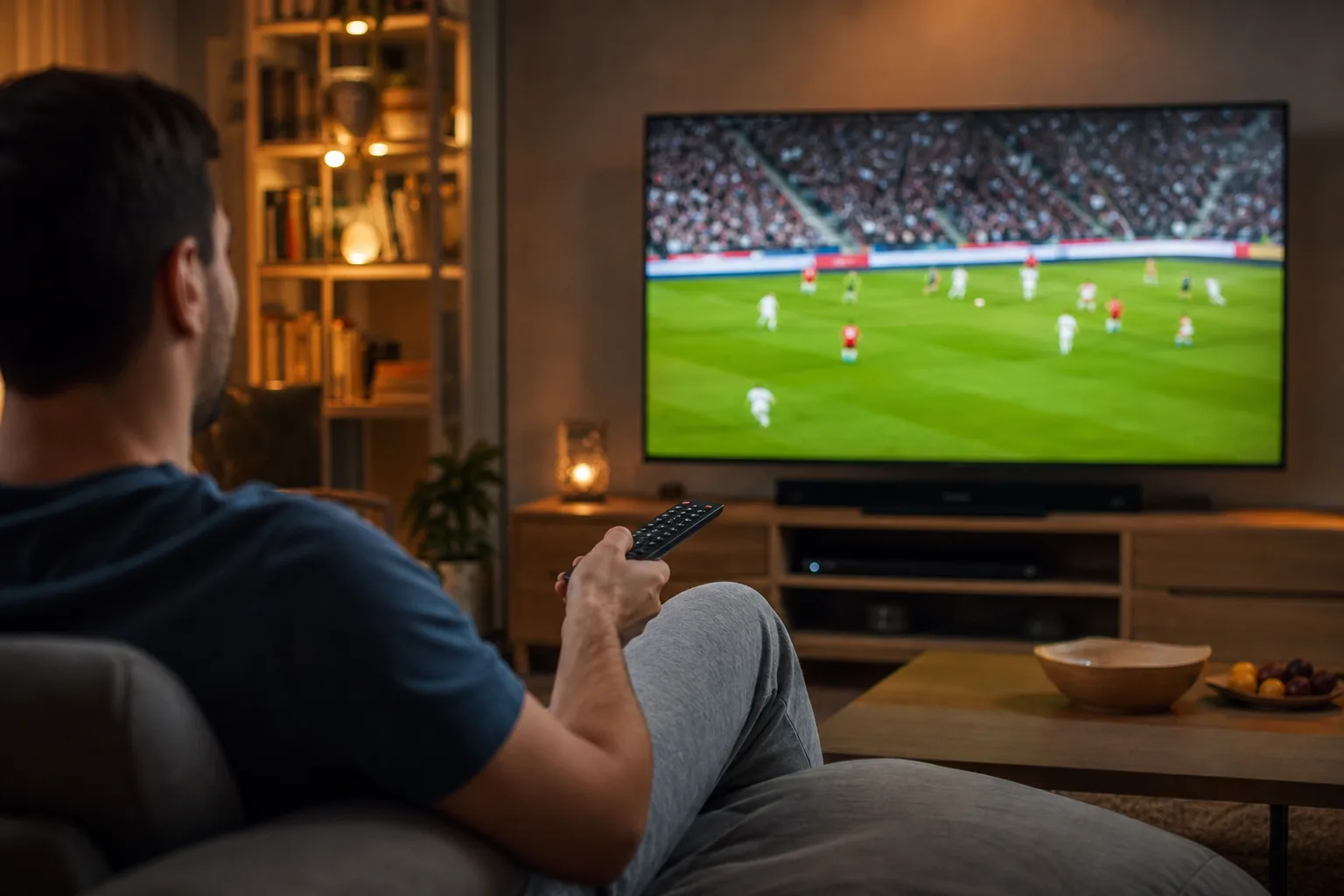
- The Google TV World Cup update surfaces live matches and schedules directly on the homescreen from June 11 through July 19.
- Google TV World Cup coverage pulls content from Fox One, Tubi, and YouTube into a single dedicated Sports topic page.
- Highlights, post-game analysis, and expert commentary are available on YouTube for anyone who missed a live broadcast.
- The Sports page is accessible via the featured carousel, making it easier than ever to find what’s on without digging through apps.
Table of Contents
Google TV World Cup Update Is Live Now
The Google TV World Cup 2026 integration started rolling out on June 11, and if you’ve got a Google TV device, there’s a decent chance you’ve already noticed something different on your homescreen. Google has pushed a Sports topic page into the featured carousel that aggregates live matches, upcoming fixtures, highlights, and post-game content — all without requiring you to open a single app first. It’s a meaningful quality-of-life improvement for anyone who’s ever stared at a cluttered streaming homescreen wondering where to find kick-off times.
The timing is hard to argue with. The 2026 FIFA World Cup is the biggest edition of the tournament in history, co-hosted across the United States, Canada, and Mexico, with 48 teams competing instead of the traditional 32. That’s more matches, more broadcast slots, and a lot more ways for a casual fan to feel lost in the fragmented streaming landscape. Google is clearly betting that being the friendly guide through that chaos is worth something.
What’s Actually on the Sports Page
Google has broken down the Google TV World Cup experience into four distinct content categories, and each one serves a different kind of viewer. The first is live match access — tap into currently airing games directly from the homescreen row without hunting through individual apps. The second is an ‘Upcoming Games’ row showing match dates, kick-off times, and the full schedule, which is genuinely useful when you’re trying to plan around a 9 a.m. group stage kick-off.
The third pillar is highlights. If you missed a live broadcast — maybe you were at work, maybe you just couldn’t stay awake for a late South American fixture — Google TV surfaces match highlights and game summaries via YouTube. That’s a smart choice: YouTube already hosts an enormous volume of official FIFA and broadcaster highlight clips, so there’s a real content library behind the promise. The fourth category is post-game content: expert commentary, team analysis, and post-match breakdowns for the people who want more than just a scoreline.
Fox One and Tubi Are the Key Streaming Partners
On the broadcaster side, Google TV is pulling content from Fox One and Tubi, among other sources. That’s the right partnership to have in the US context. Fox Sports holds the English-language broadcast rights for the 2026 World Cup in the United States, making Fox One the primary live destination for American viewers. Tubi, Fox’s free ad-supported streaming service, broadens that reach significantly — and positioning it alongside a paid tier gives Google TV the ability to serve both cord-cutters and subscribers from the same interface.
The broader point here is that Google TV isn’t hosting any of this content itself. It’s an aggregator, not a broadcaster — and that distinction actually makes this feature more useful, not less. Google doesn’t have to negotiate broadcast rights or spin up production infrastructure. It just needs to surface the right content at the right moment from the apps its users already have installed. Done well, that’s a powerful thing.
Why the Homescreen Strategy Makes Sense Right Now
The Google TV World Cup push isn’t happening in a vacuum. It fits into a broader trend of smart TV operating systems positioning themselves as the intelligent layer between users and an increasingly fragmented content ecosystem. Roku, Amazon Fire TV, and Apple TV have all invested heavily in sports discovery features, and live sports remains one of the last content categories where appointment viewing still drives real urgency.
Google has been progressively building out the Google TV homescreen as a content discovery hub rather than just a launcher. The Gemini integration that lets users control settings through voice is one thread of that. The Sports topic page is another. Together they point toward a vision of Google TV as an active, context-aware platform — one that knows there’s a World Cup on and puts the relevant content in front of you before you even think to look for it.
That’s not a trivial thing to pull off. The hard part of sports aggregation isn’t displaying a schedule — it’s keeping real-time match data accurate, surfacing the right app deep-link for a given match, and handling the inevitable edge cases when broadcasts shift or streams go down. Google has the infrastructure to manage most of that at scale, but the quality of the experience on launch day will tell us a lot about how seriously the team has thought through the details.
What It Means for Viewers During the Tournament
For the average Google TV user, the practical impact is straightforward: less friction, faster access. Instead of opening the Fox One app, navigating to the World Cup section, and checking kick-off times, you can get that information from the homescreen itself. For casual fans who aren’t tracking every fixture — the kind of person who watches the quarterfinals and the final but not every group stage game — that discoverability could genuinely shift how they engage with the tournament.
The update runs through July 19, which covers the entire competition including the final. That’s a 39-day window where the Google TV World Cup Sports page will be surfaced prominently. After that, presumably, the featured carousel returns to its standard programming — at least until the next major tournament gives Google a reason to do this again.
Whether this becomes a template for future sporting events — the Super Bowl, the Olympics, the Champions League final — feels like the real question. A one-time World Cup feature is nice. A persistent, well-maintained sports discovery layer that activates around major events would be genuinely compelling as a platform differentiator. Google has the sports data relationships and the streaming partnerships to make that happen. The 2026 World Cup looks like the test run.