- Guadalajara World Cup 2026 marks the city’s third time hosting FIFA matches, spanning five decades of football history.
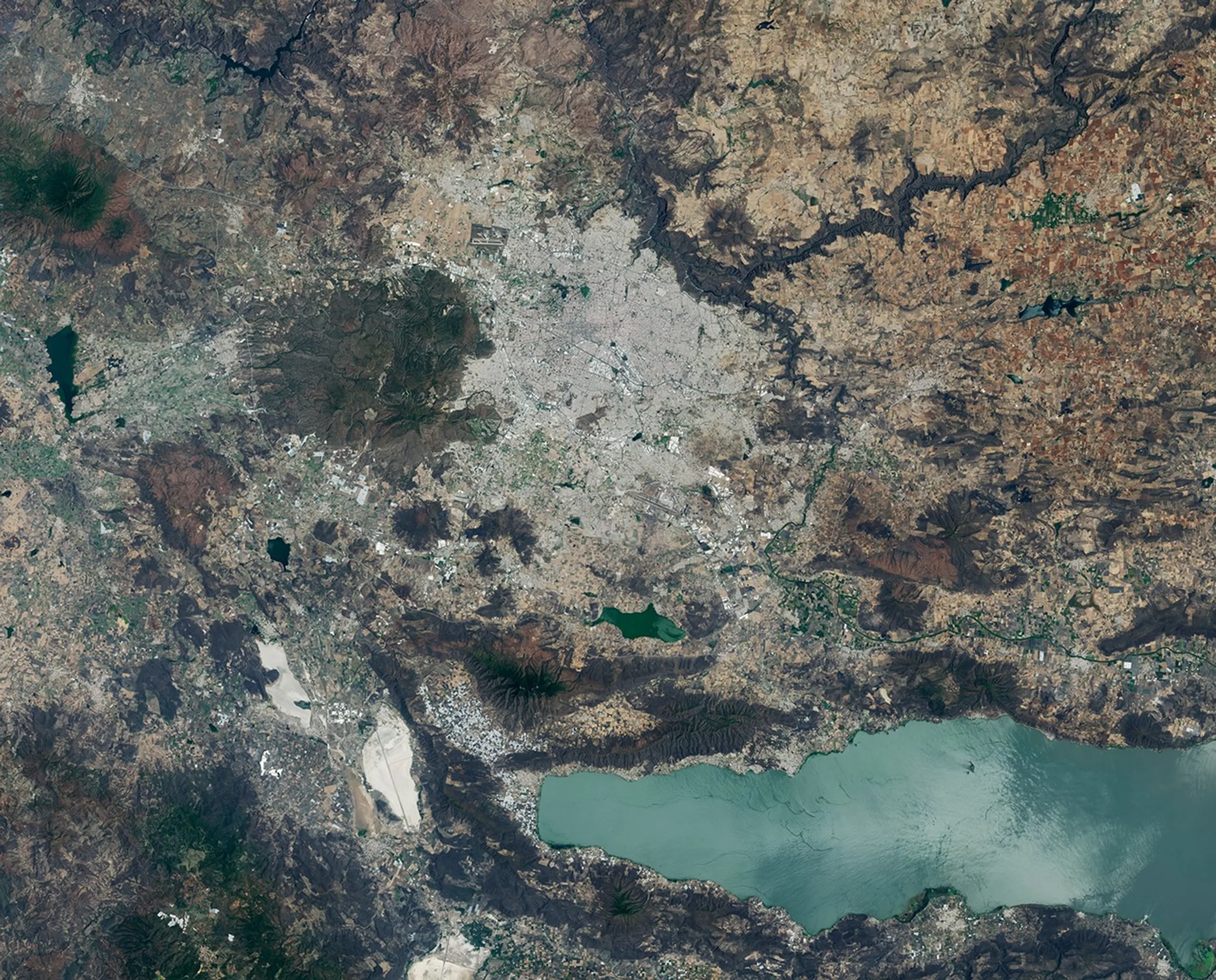
- NASA Landsat images show the Guadalajara World Cup stadium site was open farmland just 40 years ago.
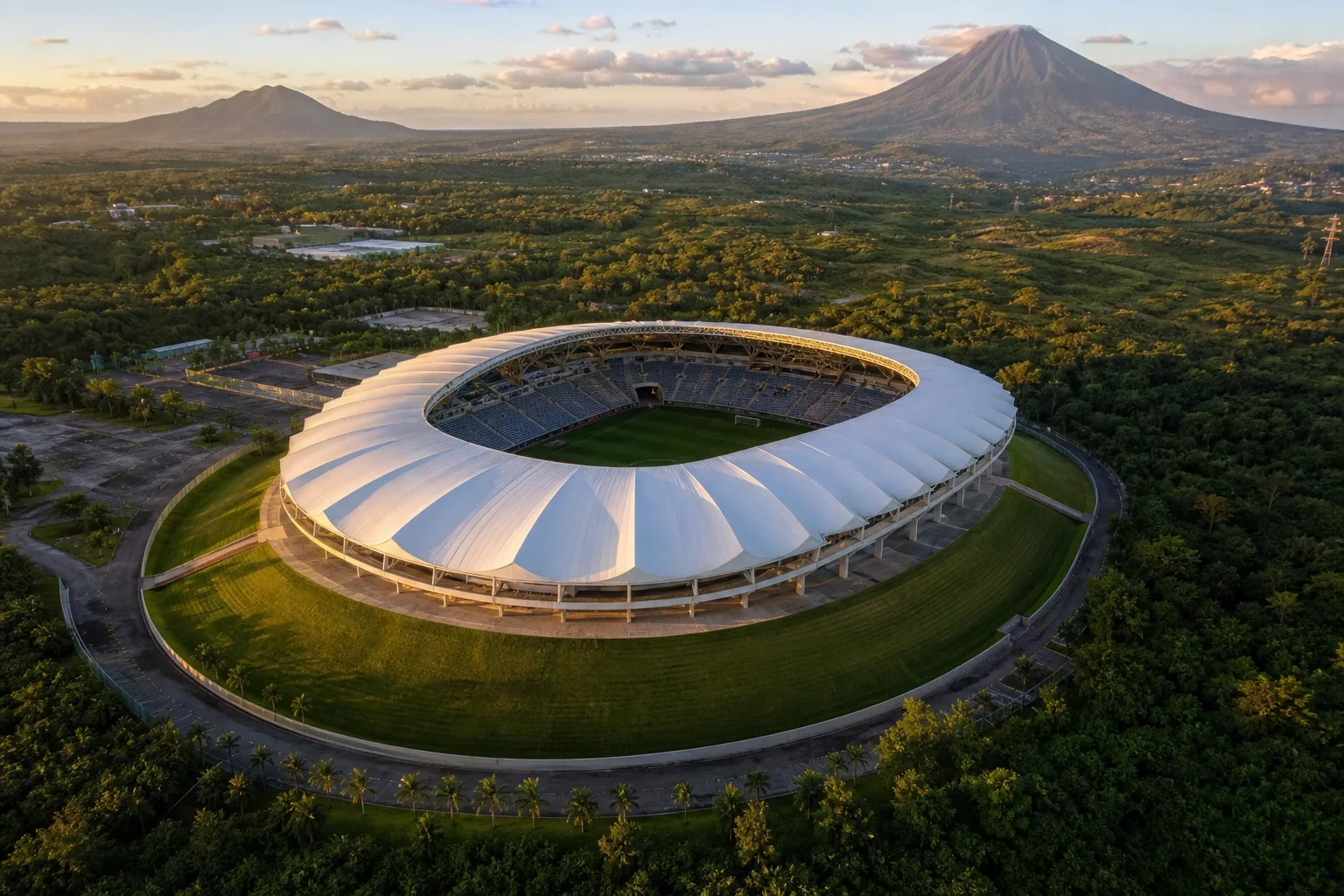
- Estadio Akron was deliberately designed to echo the volcanic terrain of the nearby Sierra la Primavera caldera.
- Guadalajara’s metro population has doubled since 1986, with Zapopan now billing itself as Mexico’s Silicon Valley.
Table of Contents
The Guadalajara World Cup Returns — and the City Looks Nothing Like It Did
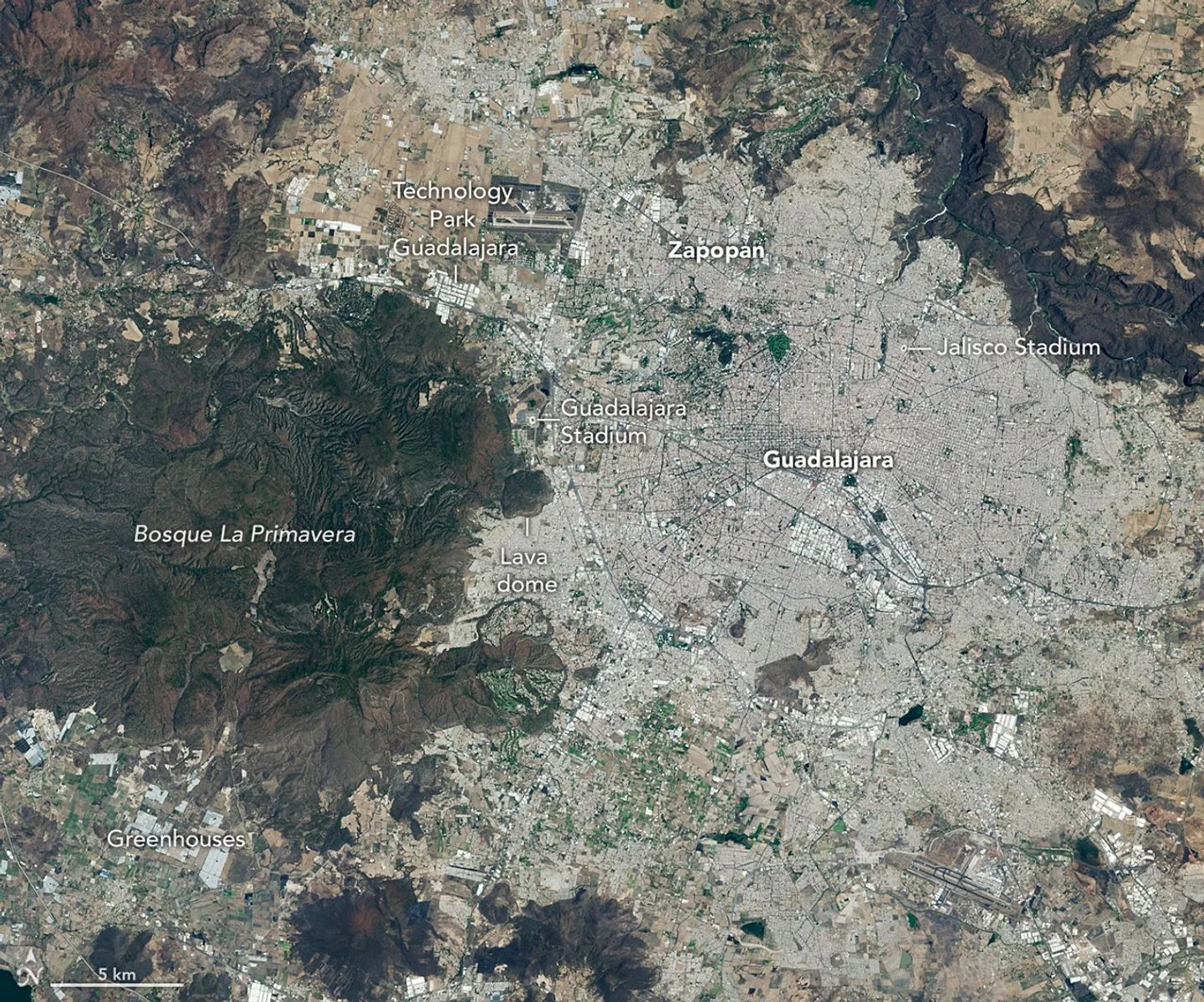
When the Guadalajara World Cup kicked off in June 2026, with South Korea facing Czechia at Estadio Akron on June 12, most football fans were thinking about lineups and group-stage drama. But zoom out — literally — and a far bigger story comes into focus. NASA’s Earth Observatory published Landsat satellite images comparing Guadalajara in 1986 and 2026, and the transformation is stark. A city that housed around 2.7 million people forty years ago now holds more than 5.5 million. The land where the stadium stands today? It was farmland.
That’s the kind of context that gets lost in the spectacle of a World Cup. Guadalajara is hosting FIFA matches for the third time — it was a venue in 1970 when Pelé’s Brazil swept through on their way to a legendary title, and again in 1986 during one of the most emotionally charged tournaments in the competition’s history. Four decades on, the city that welcomes these Guadalajara World Cup matches is almost unrecognisable from the one that last did so.
What Happened in 1986 — and Why It Still Matters
The 1986 Guadalajara World Cup matches were hosted at Jalisco Stadium, in the northeastern part of the city. Estadio Akron — now the centrepiece of the 2026 hosting — didn’t exist yet, and the land it would eventually occupy was agricultural. But Jalisco Stadium’s place in football history is secure. It’s where France knocked out Brazil in a penalty shootout in the quarterfinals, a match FIFA itself describes as one of the most memorable in World Cup history. A generation of football fans still talks about it.
That game also marked a turning point for Brazilian football — the end of an era defined by flair and artistry, and the beginning of a more pragmatic style that would characterise the Seleção for years afterward. Guadalajara wasn’t just a backdrop; it was the stage for something genuinely significant.
In 2026, the city honoured its own football legacy in a tangible way. In May, Guadalajara unveiled a 9.5-metre bronze statue of Pelé — 31 feet of cast tribute to the man who helped make Jalisco Stadium famous during Brazil’s 1970 title run. It’s a city that knows its football history, and it’s not shy about celebrating it.
A Stadium Built From a Volcano’s Blueprint
Estadio Akron opened in 2010, built for Club Deportivo Guadalajara — Chivas — by architects Jean-Marie Massaud and Daniel Pouzet. Its location in Zapopan, just northwest of the city centre, placed it squarely in the shadow of the Sierra la Primavera volcanic complex. The design team didn’t ignore that. They leaned into it. As a Guadalajara World Cup venue, the stadium’s architectural dialogue with its surroundings gives it a character few tournament grounds can match.
The stadium rises from a grassy earthen berm engineered to resemble the slopes of a volcano. Its distinctive white roof is meant to evoke the cloud that sits atop a volcanic peak. It’s one of those architectural decisions that sounds almost too on-the-nose until you see the surrounding landscape and realise it’s genuinely apt. Sierra la Primavera is not a dormant footnote — it’s a geologically active complex dotted with lava flows, volcanic domes, steam vents, and hot springs.
The geological backstory here is extraordinary. About 95,000 years ago, the volcanic system beneath Sierra la Primavera produced an eruption large enough to collapse a caldera 11 kilometres in diameter. Water filled that depression for tens of thousands of years. Eventually, tectonic uplift and sediment accumulation drained it, and erosion stripped away the softer surrounding rock — leaving the harder volcanic material standing high above the landscape. Starting around 60,000 years ago, a series of lava domes erupted along the caldera’s southern edge. The youngest of them, Cerro del Colli, formed about 30,000 years ago. It sits just south of the stadium, a dome-shaped hill that gives the whole area its distinctive topography.
Much of the original caldera is now preserved as La Primavera Biosphere Reserve — a forested sanctuary that development has increasingly encircled over the past four decades. Satellite imagery makes that encroachment visible in a way that a ground-level visit simply can’t convey.
Zapopan’s Second Identity: Mexico’s Silicon Valley
The Guadalajara World Cup spotlight lands on a municipality that has been quietly transforming into something quite different from a football suburb. Zapopan — where Estadio Akron sits — has emerged as one of Mexico’s most significant technology and manufacturing hubs. The moniker ‘Mexico’s Silicon Valley’ gets thrown around, but it has real substance behind it: Guadalajara Technology Park is one of several industrial developments visible in the NASA Landsat imagery, and major multinational tech and electronics firms have established operations in the region.
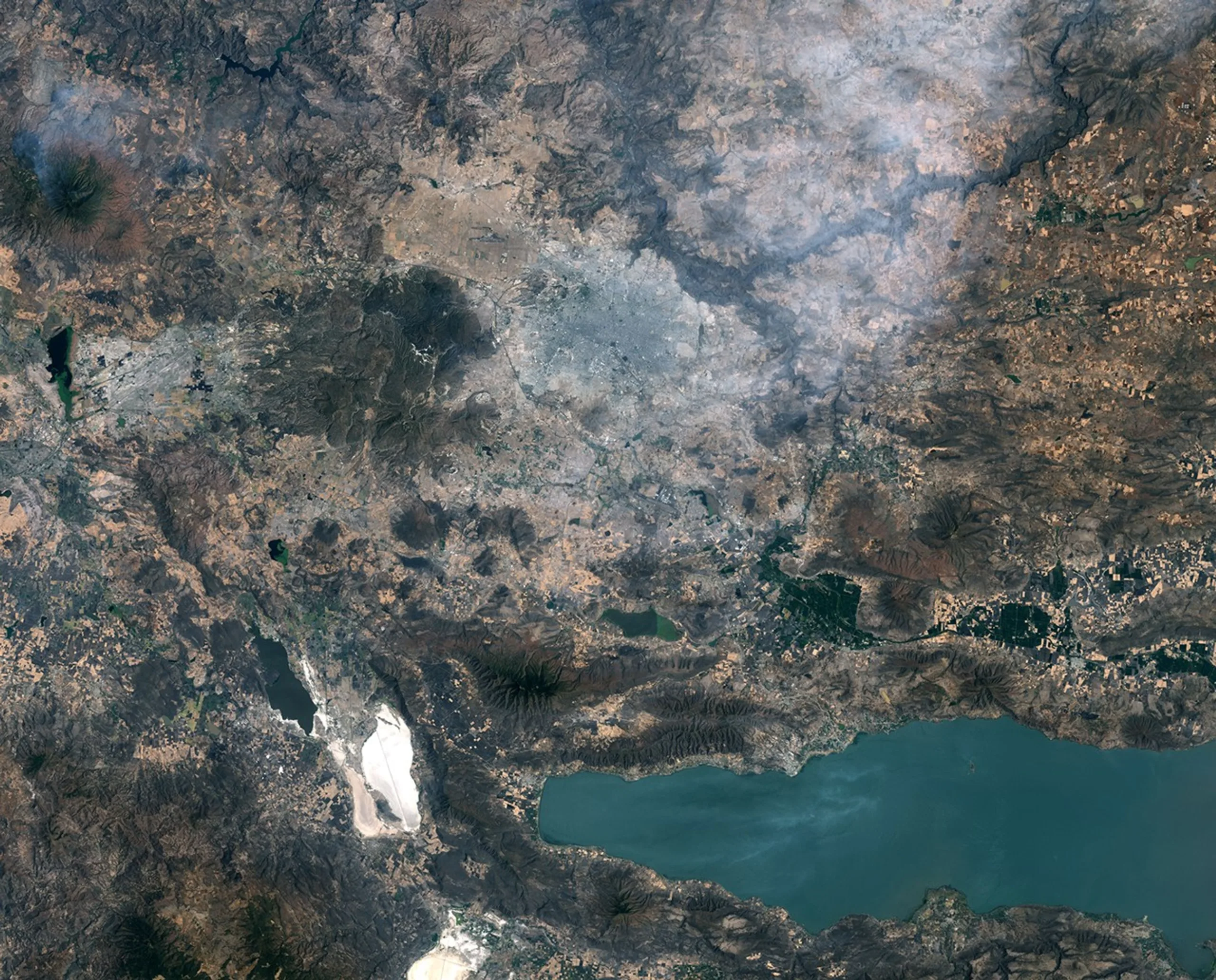
The population growth figures tell that story plainly. Guadalajara’s metro area went from 2.7 million in 1986 to more than 5.5 million today, with Zapopan accounting for a disproportionate share of that expansion. New greenhouse operations have also spread across the region, particularly south of La Primavera Biosphere Reserve, growing fruits and vegetables for domestic and export markets. From above, the Landsat images capture all of it — the stadiums, the tech parks, the greenhouses, the creeping urban edge pressing against the protected volcanic reserve.
That tension between development and preservation is one the city will have to keep navigating. La Primavera is geologically alive and ecologically important. The satellite data doesn’t editorialize, but the images are quietly telling.
World Cup 2026 Matches and a Puma Named Muluk
On the lighter side of the Guadalajara World Cup story: the local zoo is apparently in the prediction business. Guadalajara Zoo’s residents — elephants, gorillas, giraffes, capybaras, pumas, and macaws — have been ‘forecasting’ match results by choosing between food items, shirts, boxes, and footballs. A puma named Muluk reportedly predicted South Korea’s win over Czechia by sniffing and nudging a ball. It’s the kind of sideshow that every major tournament generates, and frankly, Muluk’s methodology is about as reliable as some pundit models.
The four first-round Guadalajara World Cup matches scheduled at Estadio Akron are South Korea vs. Czechia (June 12), Mexico vs. South Korea (June 18), Colombia vs. Democratic Republic of the Congo (June 23), and Uruguay vs. Spain (June 26). That last fixture alone — two South American footballing giants meeting in the group stage — would fill any stadium in the world twice over.
What the NASA imagery ultimately offers is a rare long-view perspective on a city that the world briefly pays attention to every few decades. The Guadalajara World Cup in 2026 is larger, more technologically significant, and more architecturally interesting than it was in 1986. The stadium at its heart was shaped by the landscape beneath it. And that landscape, built by volcanic forces 95,000 years in the making, isn’t finished yet.
Frequently Asked Questions
Which matches will be played at the Guadalajara World Cup 2026 venue?
Guadalajara is hosting four first-round matches: South Korea vs. Czechia on June 12, Mexico vs. South Korea on June 18, Colombia vs. DR Congo on June 23, and Uruguay vs. Spain on June 26, all at Estadio Akron in Zapopan.
Why is Estadio Akron designed to look like a volcano?
The stadium, built in 2010, sits near the Sierra la Primavera volcanic complex. Architects built a grassy earthen berm around the structure to mimic a volcano’s flanks, with a white roof intended to evoke a volcanic cloud.
How old is the volcanic system beneath Estadio Akron?
The Sierra la Primavera system produced a massive eruption roughly 95,000 years ago, creating an 11-kilometre-wide caldera. The youngest lava dome in the area, Cerro del Colli — visible just south of the stadium — formed approximately 30,000 years ago.
What is Zapopan’s connection to the tech industry?
Zapopan, the fast-growing municipality northwest of Guadalajara where Estadio Akron sits, has emerged as a significant tech manufacturing and services hub. It’s frequently described as ‘Mexico’s Silicon Valley’ and is home to Guadalajara Technology Park, one of several new industrial zones visible in satellite imagery.