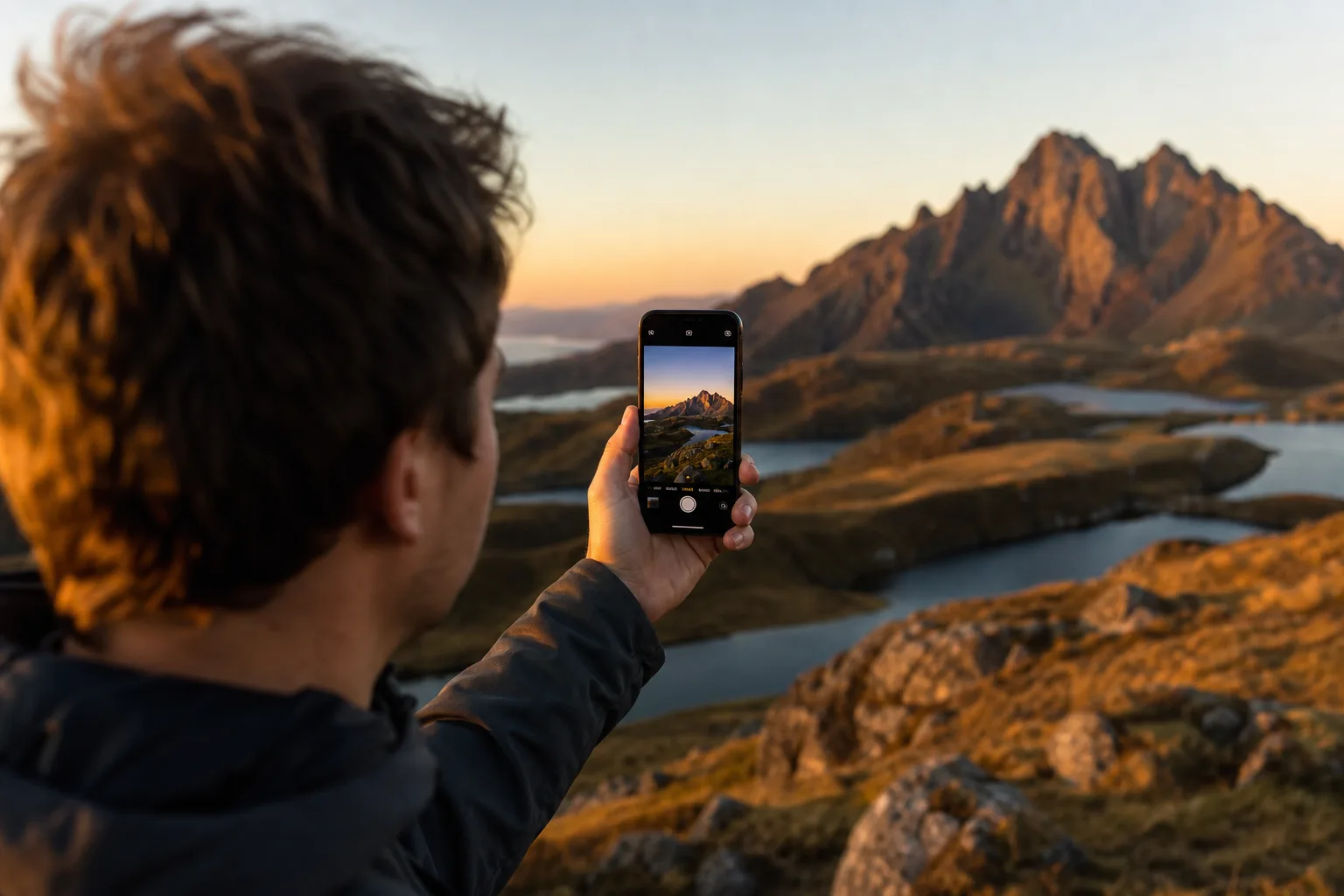
The iPhone Photography Awards have just announced their 2026 winners — and if you need proof that a phone in the right hands can produce world-class photography, this year’s collection makes the case better than any spec sheet ever could.
- The iPhone Photography Awards 2026 Grand Prize went to Robyn Jensen for a dramatic volcanic eruption shot in the Cayman Islands.
- The iPhone Photography Awards 2026 Gold Prize was captured on an iPhone X — proving raw hardware isn’t everything in photography.
- Winners spanned 14 categories including landscape, portrait, and travel, with prizes taken on iPhone 15 Pro through iPhone 16 Pro Max.
- The 20th annual iPhone Photography Awards opens for submissions with a March 31, 2027 deadline — and Apple devices as prizes.
Table of Contents
iPhone Photography Awards 2026: What Took the Top Prizes
The Grand Prize this year went to Robyn Jensen for an image that stopped the judging panel cold: a volcano erupting dramatically in the Cayman Islands, captured on an iPhone 15 Pro. It’s the kind of photograph that raises the question most people have stopped asking — is this really a phone photo? The answer, increasingly, is that the question itself is becoming irrelevant. The iPhone Photography Awards have spent 19 years making that point, and the 2026 Grand Prize is one of their strongest arguments yet.
The Gold Prize is arguably even more interesting. Gellért Gombai shot two children napping on grass, framed in the shadow of a badminton racket, rendered entirely in black and white. The phone he used? An iPhone X. Not a 15 Pro Max. Not a newer flagship with the latest sensor and computational photography running in the background. An iPhone X — a device that Apple stopped selling years ago. It’s a quiet rebuke to the idea that better cameras automatically mean better photos.

Silver, Bronze, and a Field of 14 Categories
The Silver and Bronze prizes were taken on more recent hardware — an iPhone 16 Pro and iPhone 16 Pro Max respectively — which makes sense given how dramatically Apple upgraded that generation’s camera system. It shows in the winning images.
Beyond the top-tier prizes, the iPhone Photography Awards recognise winners across 14 distinct categories: abstract, animals, architecture, children, cityscape, landscape, lifestyle, nature, people, portrait, series, still life, travel, and a catch-all ‘other’ bucket. That breadth matters. It means the competition isn’t just rewarding dramatic once-in-a-lifetime moments — it’s also celebrating careful still life composition, patient wildlife photography, and the kind of quiet street portraiture that defines a great photographer’s eye. The full collection is available on the official IPPA website and is genuinely worth an hour of your time.

Why the IPPA Still Matters After 19 Years
The iPhone Photography Awards launched back in 2007 — the same year Apple shipped the original iPhone. There’s something fitting about that. When Steve Jobs introduced the device, nobody was seriously discussing whether it could replace a camera. Now, nearly two decades later, the IPPA is one of the most respected photography competitions in the world, full stop, not just within the ‘shot on a phone’ category.
That trajectory reflects a broader shift in photography. Professional photographers now routinely carry iPhones as backup cameras. Photojournalists in conflict zones use them when carrying a DSLR would attract dangerous attention. Wedding photographers use them for candid behind-the-scenes work. The line between ‘phone camera’ and ‘camera’ has essentially dissolved — and the iPhone Photography Awards have documented that dissolution in real time, year by year, prize by prize.
Apple, for its part, has leaned into this heavily with its long-running ‘Shot on iPhone’ marketing campaign, which has featured IPPA-winning and finalist images on billboards globally. The relationship between Apple’s hardware ambitions and the cultural legitimacy that competitions like IPPA provide is genuinely symbiotic. Apple needs photographers to push the hardware to its limits; photographers need the platform and the validation.
The iPhone X Gold Prize Is the Real Story Here
Let’s come back to Gellért Gombai’s Gold Prize image for a moment, because it deserves more attention than it’s getting. The iPhone X launched in 2017. Its camera — by today’s standards — is modest. No ProRAW. No Photonic Engine. No Action mode or Cinematic mode. The computational photography pipeline that Apple has since built up simply didn’t exist on that device in any meaningful form.
And yet the image is stunning in the most literal, un-hyped sense: technically accomplished, emotionally resonant, compositionally clever. The shadow of a badminton racket as a framing device for two sleeping children is the kind of idea that comes from a photographer’s brain, not from a camera manufacturer’s R&D lab. It’s a timely reminder, as the smartphone industry obsesses over sensor size and AI-processing algorithms, that the most important piece of photography equipment is still the person holding the phone.
How to Enter the 20th Annual iPhone Photography Awards
The iPhone Photography Awards are open to anyone shooting on an iPhone or iPad, anywhere in the world. Photos can be edited using iOS apps before submission — so Lightroom Mobile, VSCO, Darkroom, and similar tools are all fair game. There is an entry fee to submit, which helps fund the competition and the prize pool, but the awards themselves come in the form of Apple devices rather than cash.
The 20th annual competition — a genuinely significant milestone for any photography contest — opens submissions with a deadline of March 31, 2027. If you’ve been sitting on a photo you think is genuinely strong, that’s your window. The IPPA’s track record of surfacing images that would hold their own in any photography competition makes it worth the submission fee.
As Apple prepares to push its camera systems further still — the rumoured iPhone 17 Pro is already generating chatter about sensor upgrades and a redesigned ultra-wide — the raw material available to entrants will only improve. Whether the best image of 2027 is shot on the latest hardware or on a five-year-old device that someone refused to trade in will be, as always, entirely beside the point.