

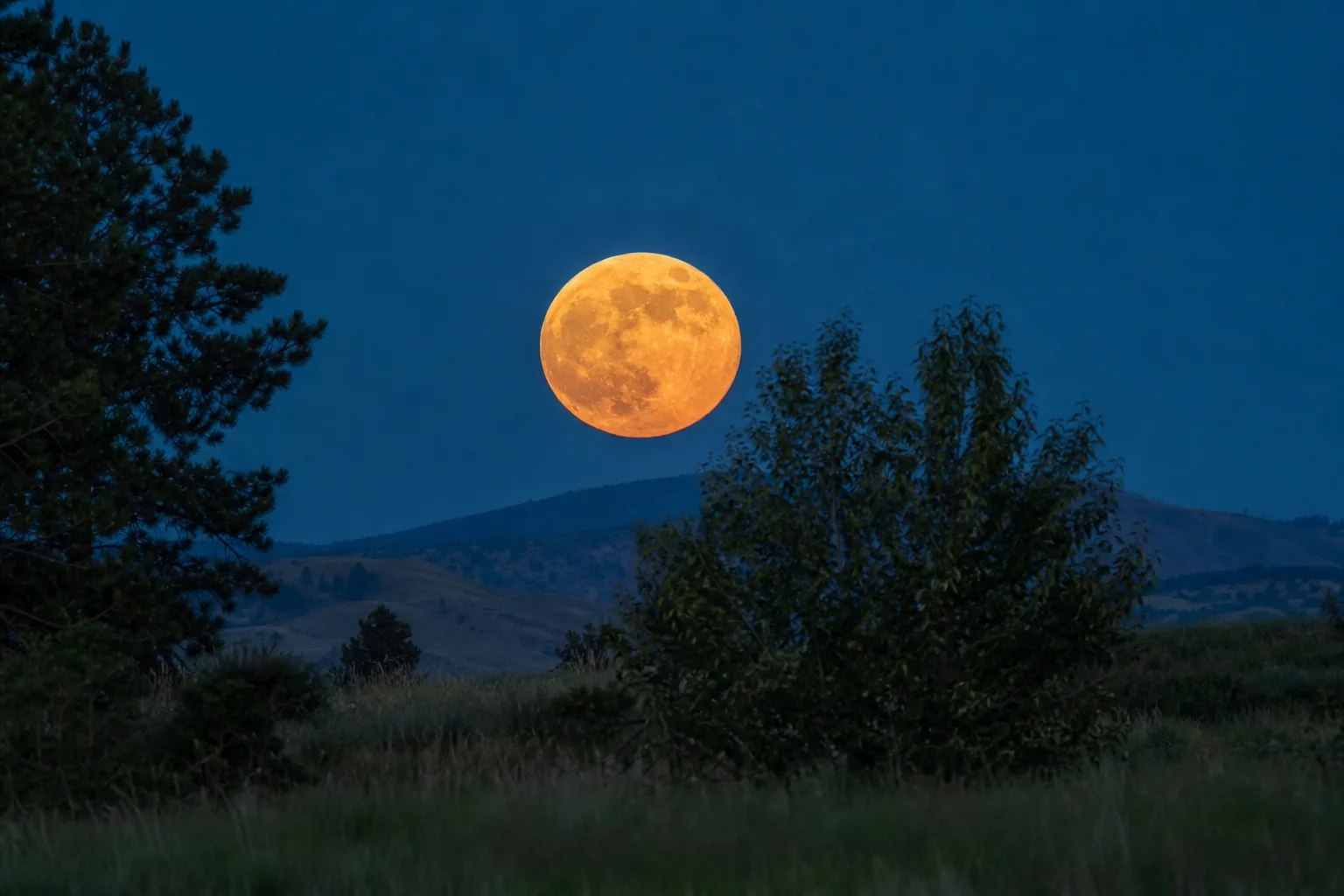
The July full moon 2026 arrives on July 29, peaking at 10:36 a.m. EDT — and while that’s technically a daytime event, the real show kicks off at sunset, when the so-called Buck Moon clears the eastern horizon and begins its climb through a sky still glowing with summer warmth. It’s one of those natural calendar moments that rewards almost zero effort: step outside, face east, and there it is.
- The July full moon 2026 reaches peak illumination at 10:36 a.m. EDT on July 29, rising in the east at sunset.
- The July full moon 2026 is traditionally called the Buck Moon, named after young deer growing antlers in summer.
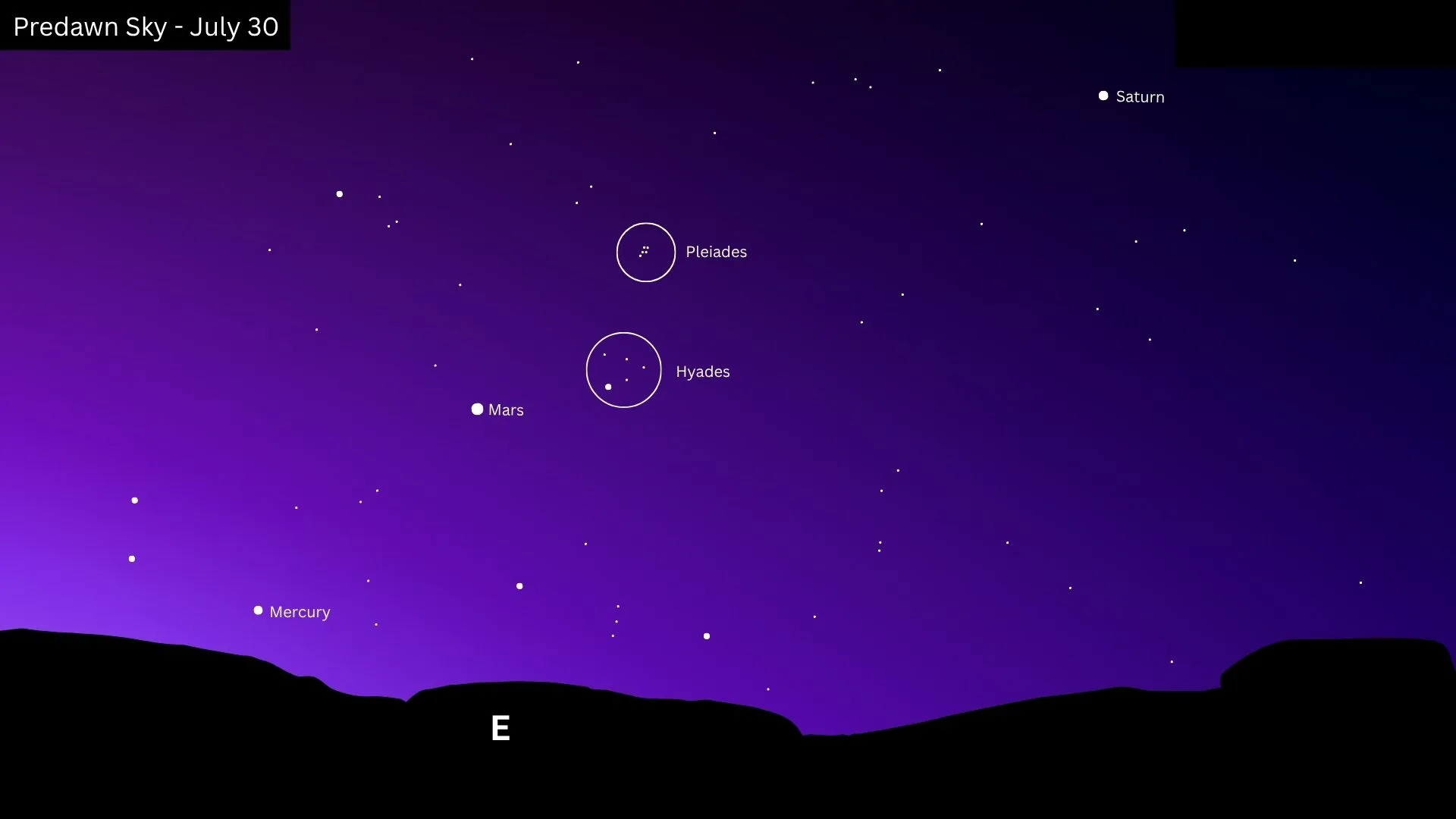
- Saturn, Mercury, and Mars form a rare predawn arc near the setting moon in the early hours of July 30.
- The southern delta Aquarid meteor shower peaks July 30–31, though moonlight will wash out all but the brightest fireballs.
Table of Contents
When and Where to See the July Full Moon 2026
The July full moon 2026 rises due east at sunset on July 29, positioning itself against the backdrop of Capricornus — a relatively faint constellation that will be completely drowned out by moonlight. Peak illumination happens mid-morning EDT, so by the time evening rolls around, the moon is already fractionally past full, though your eyes will never know the difference.
Timing varies depending on your latitude. Observers in the northern hemisphere will see the July full moon 2026 sit relatively low across the sky throughout the night, while those closer to the equator will watch it arc higher. Regardless of where you’re standing, the geometry is the same: the full moon always rises at roughly the same time the sun sets, because by definition it’s sitting almost directly opposite the sun in Earth’s sky.
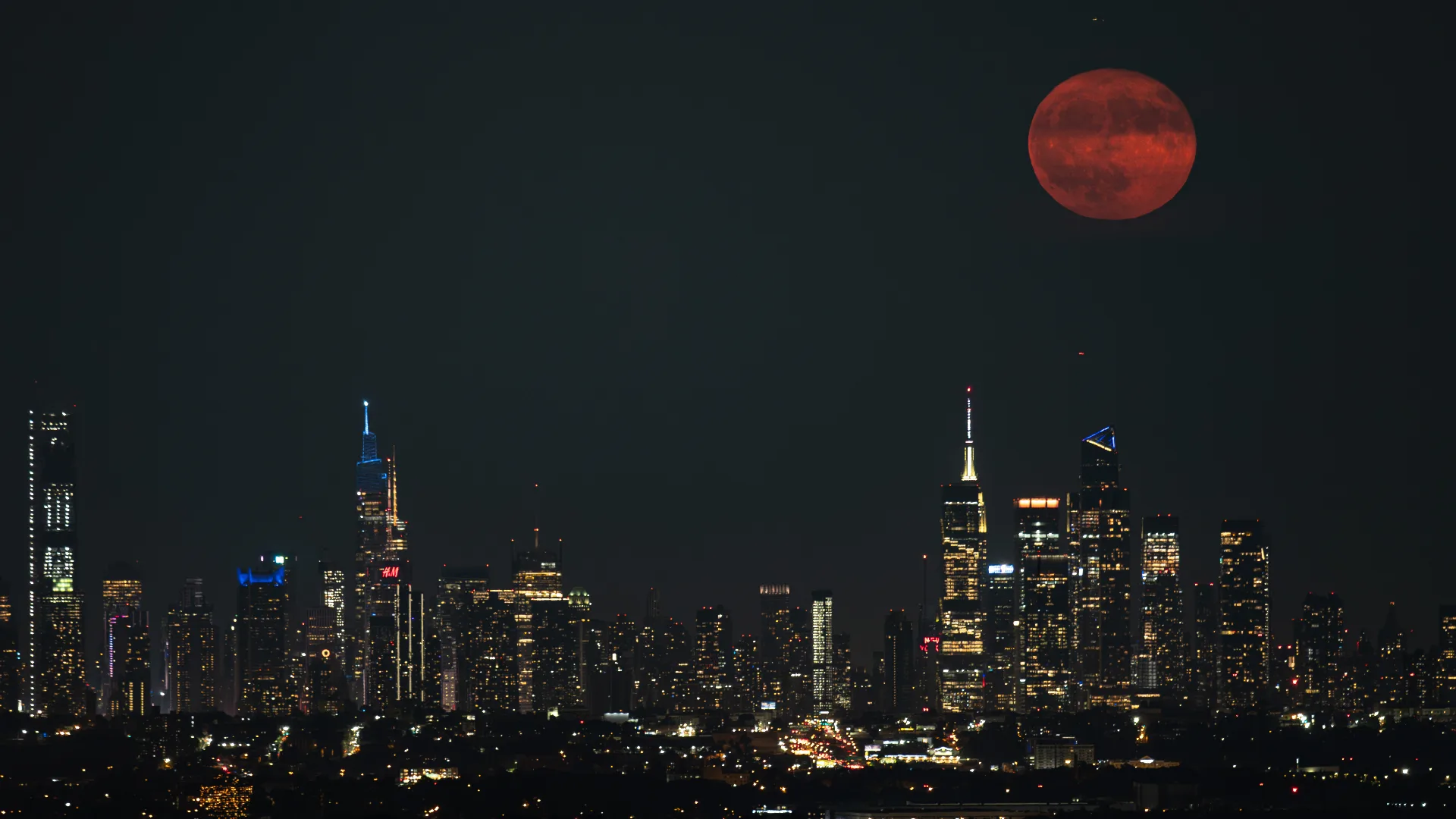
One thing worth watching in the first hour after the July full moon 2026 rises is the Moon Illusion — that familiar and slightly disorienting trick where the moon appears much larger hugging the horizon than it does once it’s climbed overhead. Despite centuries of observation, it’s still fundamentally a brain thing rather than an atmospheric one. Your visual cortex uses trees, rooftops, and hilllines as reference objects and decides the moon must be enormous by comparison. As it rises higher and loses that context, it seems to shrink back to ‘normal.’ It hasn’t moved an inch in terms of actual angular size.
The orange-yellow tint you’ll see when the July full moon 2026 is low is a separate, real physical effect: Rayleigh scattering, the same process that turns sunsets red. Shorter blue wavelengths of light get scattered away by the thick column of atmosphere you’re looking through near the horizon, leaving the longer red and orange wavelengths to reach your eyes. As the moon climbs higher, the path through the atmosphere shortens, and the disk whitens back toward its familiar silver-grey.
The Name Behind the Moon: Buck, Thunder, and Hay
The ‘Buck Moon’ label traces back to Native American traditions — specifically Algonquin communities — who named each month’s full moon after whatever was happening in nature at the time. In July across the northern hemisphere, young male deer are in the process of regrowing their antlers, the velvet-covered bone structures that’ll harden off by autumn. It’s a practical naming system built from direct ecological observation, not mythology.
But the July full moon 2026 is just one of several names this moon carries. The Algonquin people also called it the Raspberry Moon, timed to when that fruit ripened across North America. The Cree knew it as the Feather Moulting Moon. The Thunder Moon is another common alias, nodding to the violent afternoon and evening thunderstorms that roll through much of the northern hemisphere in high summer. Meanwhile, European traditions — particularly Anglo-Saxon ones recorded in sources like the Royal Museums Greenwich — gave it agricultural names: the Hay Moon, tied to the haymaking season, or occasionally the Corn Moon.
What’s interesting about these naming traditions is how independently parallel they are. Across completely separate cultures, people converged on naming this moon after summer abundance and summer storms. The season was just that obvious in its character.
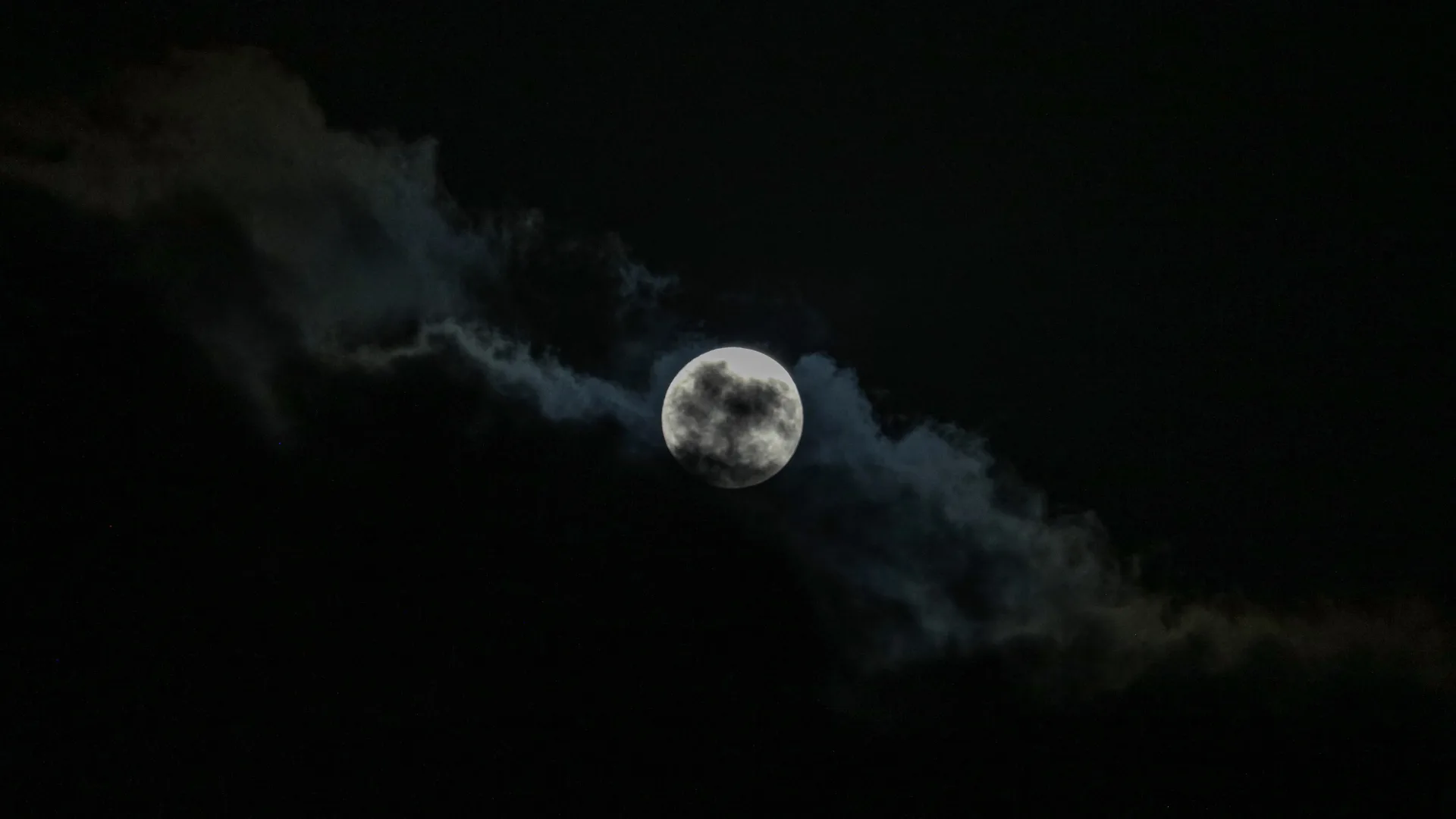
Cultural Significance: Guru Purnima and Asalha Puja
The July full moon 2026 isn’t just notable for skywatchers. For followers of Hindu and Buddhist traditions, the full moon carries deep religious meaning. Guru Purnima — celebrated on the full moon of the Hindu month of Ashadha — is a day dedicated to honoring teachers and spiritual guides. Observants fast, visit temples, and engage in acts of gratitude toward those who’ve shaped their spiritual path. It’s one of the more quietly profound observances in the Hindu calendar, without the fireworks and festivals that mark bigger occasions.
Theravada Buddhists mark the same date as Asalha Puja, commemorating the Buddha’s first sermon delivered at Sarnath, India — the teaching in which he laid out the Four Noble Truths and set the Dharma wheel in motion. According to the University of Birmingham, this is considered one of the most significant events in the entire Buddhist tradition. The convergence of both observances on the same full moon in 2026 gives July 29 an unusual weight across multiple faith traditions simultaneously.
What Else to Watch: Planets, Stars, and Meteors
The July full moon 2026 is, admittedly, a mixed blessing for astronomers. The lunar glare washes out faint deep-sky objects like nebulae and galaxies, making it a poor night for anything requiring a truly dark sky. But the brighter features of the summer sky hold up just fine.
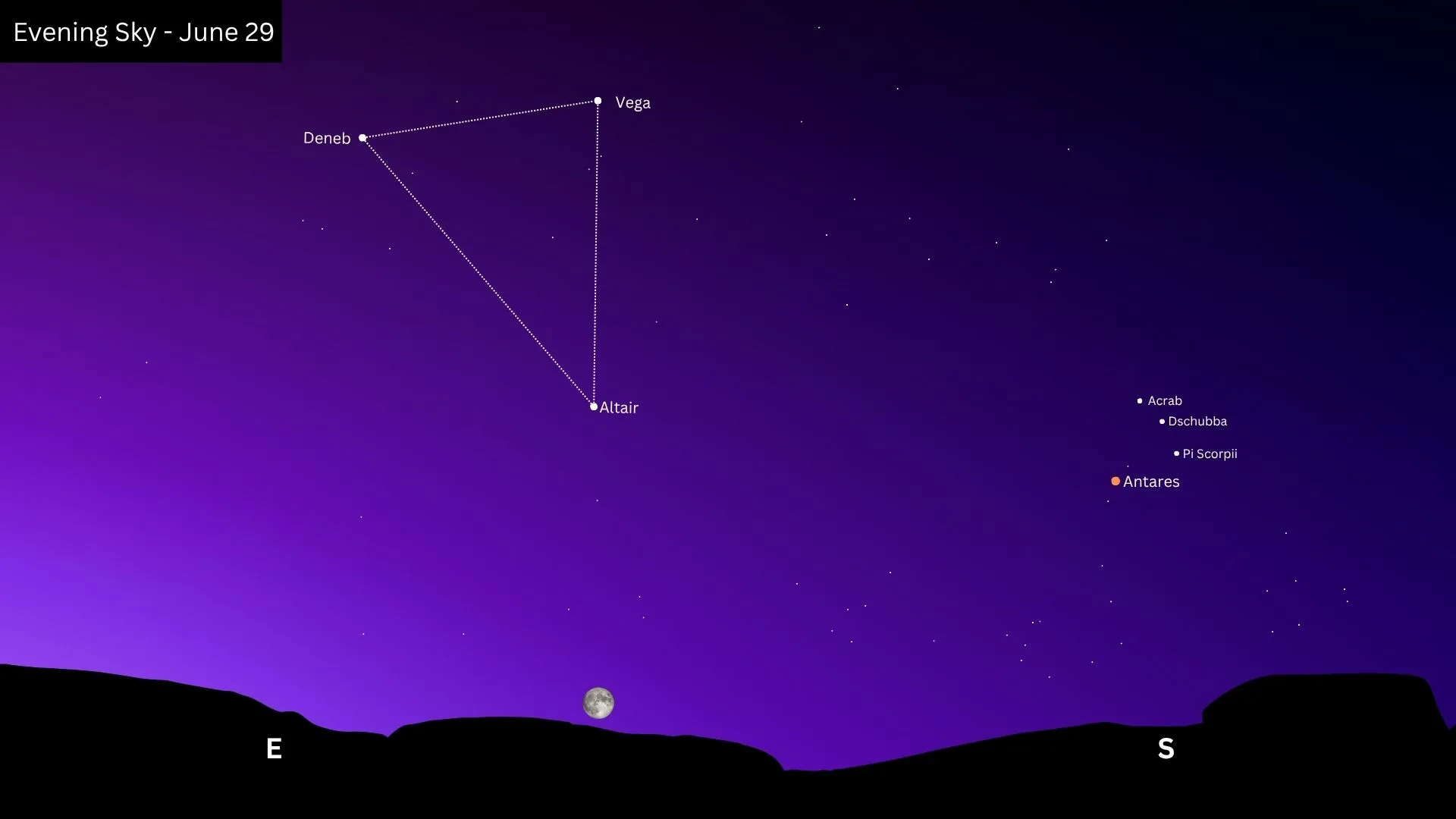
Look roughly 30 degrees above the moon and you’ll spot Altair, the brightest star in Aquila and the closest vertex of the Summer Triangle asterism. Scanning upper-left from Altair brings you to Vega (in Lyra) and then Deneb (in Cygnus) — one of the most recognizable star patterns of the northern summer. The Milky Way threads directly through this triangle, though on Buck Moon night its diffuse glow will be lost in moonlight. Save that view for a moonless night later in August.
Swing your gaze to the right of the moon and you’ll land on Antares, the red supergiant at the heart of Scorpius. Antares is one of those stars that genuinely looks red to the naked eye — a rusty, distinctive point compared to the blue-white shimmer of most bright stars nearby. Above it, Acrab, Dschubba, and Pi Scorpii trace out the scorpion’s claws.
The southern delta Aquarid meteor shower peaks overnight July 30–31 — frustratingly close to the July full moon 2026‘s peak. The shower isn’t the most prolific on the calendar to begin with, producing around 20 meteors per hour under ideal conditions. With a nearly full moon flooding the sky, most of those will be invisible. The exception would be a genuine fireball: a large enough impacting fragment can produce a flash bright enough to compete with Venus, which itself will be visible low in the west shortly after sunset on July 29 before setting within two hours of the sun.
The predawn hours of July 30 offer the most compelling planetary viewing of the July full moon 2026 weekend. As the Buck Moon descends toward the western horizon, Saturn, Mercury, and Mars form a sweeping arc to its left — three planets strung out along the ecliptic, that imaginary line marking the plane of our solar system. It’s a neat visual reminder that all the planets orbit in roughly the same flat plane, and moments like this make that geometry almost intuitive.
July 2026 and the Apollo 11 Legacy
July 2026 marks the 57th anniversary of Apollo 11’s lunar landing on July 20, 1969 — the first time humans walked on another world. That makes the July full moon 2026 something of a natural commemorative occasion. With a decent pair of binoculars or a small telescope, you can actually pick out the general regions of the Apollo landing sites on the lunar surface. The Sea of Tranquility, where Apollo 11 touched down, sits in the moon’s equatorial region and is plainly visible as one of the large dark plains.
The moon’s surface is, in a real sense, a preserved record. There’s no weather, no plate tectonics, no erosion — the boot prints Neil Armstrong and Buzz Aldrin left in 1969 are almost certainly still there. The July full moon 2026 rising over city skylines around the world on July 29 is the same moon humanity first reached nearly six decades ago, and that’s a perspective that doesn’t wear thin.
Tips for Photographing the Buck Moon
If you want to capture the July full moon 2026 on camera, planning matters more than gear. The ‘big moon’ shot — that classic image of an enormous lunar disk looming behind a cityscape or mountain range — requires being far away from your foreground subject. The telephoto compression effect that makes the moon look massive next to a distant skyline only works if you’re standing hundreds of metres or even kilometres back from whatever you’re framing it against. A phone app like Stellarium or PhotoPills can help you plot the exact moonrise azimuth for your location in advance.
A few practical pointers for photographing the July full moon 2026:
- Use a tripod — the moon moves faster than you think, and any shake becomes obvious at telephoto focal lengths.
- A remote shutter release or the camera’s built-in timer eliminates the vibration from pressing the shutter button.
- For landscape-with-moon shots, a focal length of 12–50mm captures the full scene. For surface detail, you’ll need at least 400mm.
- Expose for the moon itself, not the landscape — the lunar surface in full sunlight is about as bright as a sunlit beach on Earth.
- The warm orange colour near the horizon makes for dramatic images, but if you want a crisp, detailed shot of the lunar surface, wait until it’s higher and the light path through the atmosphere is shorter.
The July full moon 2026 isn’t a rare event — it comes around every year — but 2026’s edition lands at an interesting astronomical moment, with a solid planetary display in the predawn hours and a historically resonant anniversary adding a layer of context that goes beyond the purely visual. It’s a good excuse to spend an hour outside after sunset, away from a screen, looking up at something that’s been marking human time for as long as there have been humans to mark it.
Frequently Asked Questions
When exactly is the July full moon 2026?
The July full moon 2026 reaches 100% illumination at 10:36 a.m. EDT (1436 GMT) on July 29. For skywatchers, the best time to view it is at sunset on July 29, when it rises above the eastern horizon in the constellation Capricornus.
Why does the Buck Moon look so large near the horizon?
That apparent size boost is called the Moon Illusion — a well-documented psychological effect where the brain perceives a low-horizon moon as larger because nearby landscape objects give it scale. The moon’s actual angular size doesn’t change as it climbs higher.
Why is the July full moon called the Buck Moon?
The name comes from Native American traditions, with some tribes observing that young male deer — bucks — begin growing their antlers around this time of year. It’s one of several traditional names for July’s full moon, alongside the Thunder Moon and Hay Moon.
Will the 2026 meteor shower be visible during the Buck Moon?
The southern delta Aquarid meteor shower peaks overnight July 30–31, but the bright moonlight from the Buck Moon will obscure most shooting stars. Your best chance is spotting an unusually bright fireball, which could outshine even Venus in the night sky.

