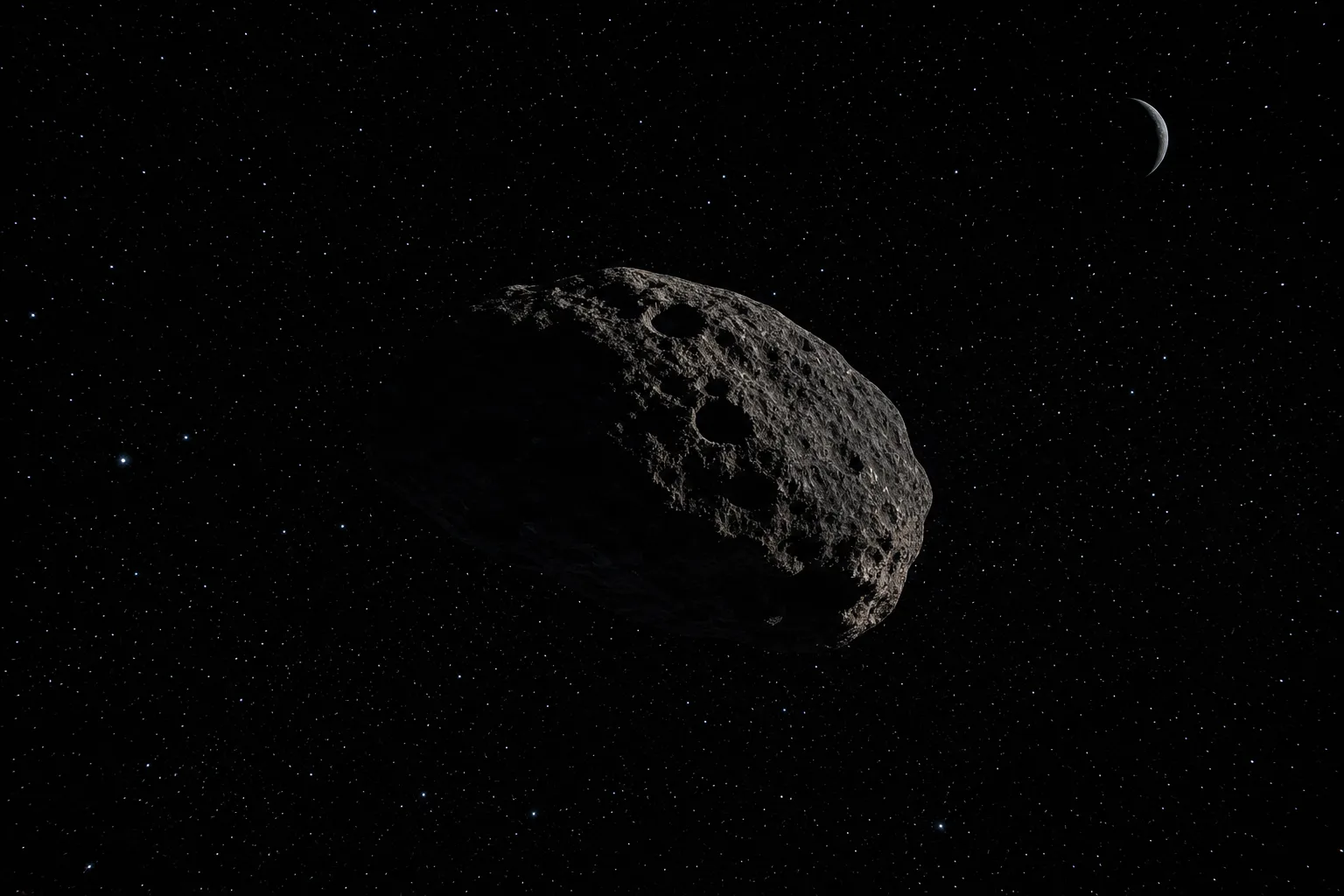
- A new Nature Communications study challenges the Kamo’oalewa asteroid origin story — it may not be lunar debris after all.
- China’s Tianwen-2 spacecraft is already en route, making the Kamo’oalewa asteroid origin question even more consequential.
- Tianwen-2 left Earth in May 2025 and is expected to deliver samples back to scientists by late 2027.
- If the lunar origin theory is wrong, those returned samples could completely rewrite what we know about near-Earth asteroids.
Table of Contents
A Mission Already in Motion — and a Theory Already in Doubt
China’s Tianwen-2 spacecraft is cruising through deep space right now, locked onto a target whose very nature is suddenly in question. The Kamo’oalewa asteroid origin — long assumed to be a chunk blasted off the Moon by some ancient impact — has been challenged by a new study published in Nature Communications. The timing couldn’t be more awkward, or more fascinating: the spacecraft launched in May 2025, and by late 2027 it’s supposed to come home with physical samples of this space rock. Whatever scientists thought they were chasing may not be what they’re actually going to get.
Kamo’oalewa is a quasi-satellite of Earth — it orbits the Sun in a resonant dance with our planet, never straying too far, never fully captured by Earth’s gravity either. It’s small, probably no more than 50 to 100 metres across, and it was only discovered in 2016 by the PanSTARRS telescope in Hawaii. What made it immediately interesting was its spectrum. When astronomers analysed its reflected light, it looked remarkably similar to lunar silicates — minerals found on the Moon’s surface. That set off a wave of speculation and, eventually, scientific consensus: Kamo’oalewa asteroid origin was probably tied to a fragment of the Moon, kicked into space by a large impact millions of years ago. It was a genuinely compelling idea.
What the Original Lunar Theory Was Built On
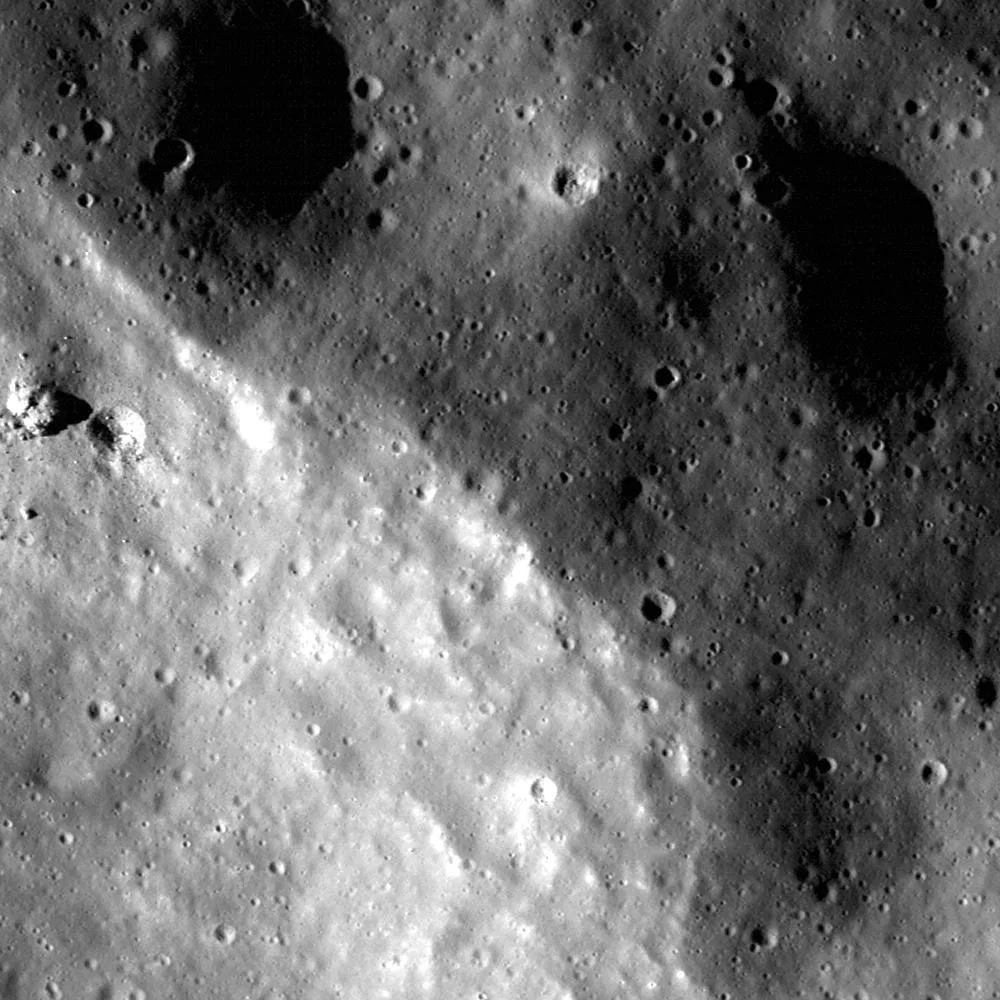
The lunar hypothesis wasn’t pulled out of thin air. A 2021 paper in the journal Communications Earth & Environment made a strong case for it, pointing to the spectral match between Kamo’oalewa and samples returned from the Apollo missions. The spin rate and orbital characteristics also seemed consistent with an origin near the lunar surface. For a few years, this was essentially settled science — interesting settled science, but settled nonetheless.
The Moon’s surface is heavily cratered, as anyone who’s looked up on a clear night can see. Large impacts routinely eject material at speeds that can escape the Moon’s weak gravity. Some of that material falls back; some of it reaches Earth as lunar meteorites; and some of it, in principle, could be captured into stable solar orbits nearby. The idea that the Kamo’oalewa asteroid origin lay in one such lunar fragment fitted neatly into a well-understood physical framework. That’s part of why it was so widely accepted so quickly.
Why Scientists Are Now Questioning Kamo’oalewa Asteroid Origin
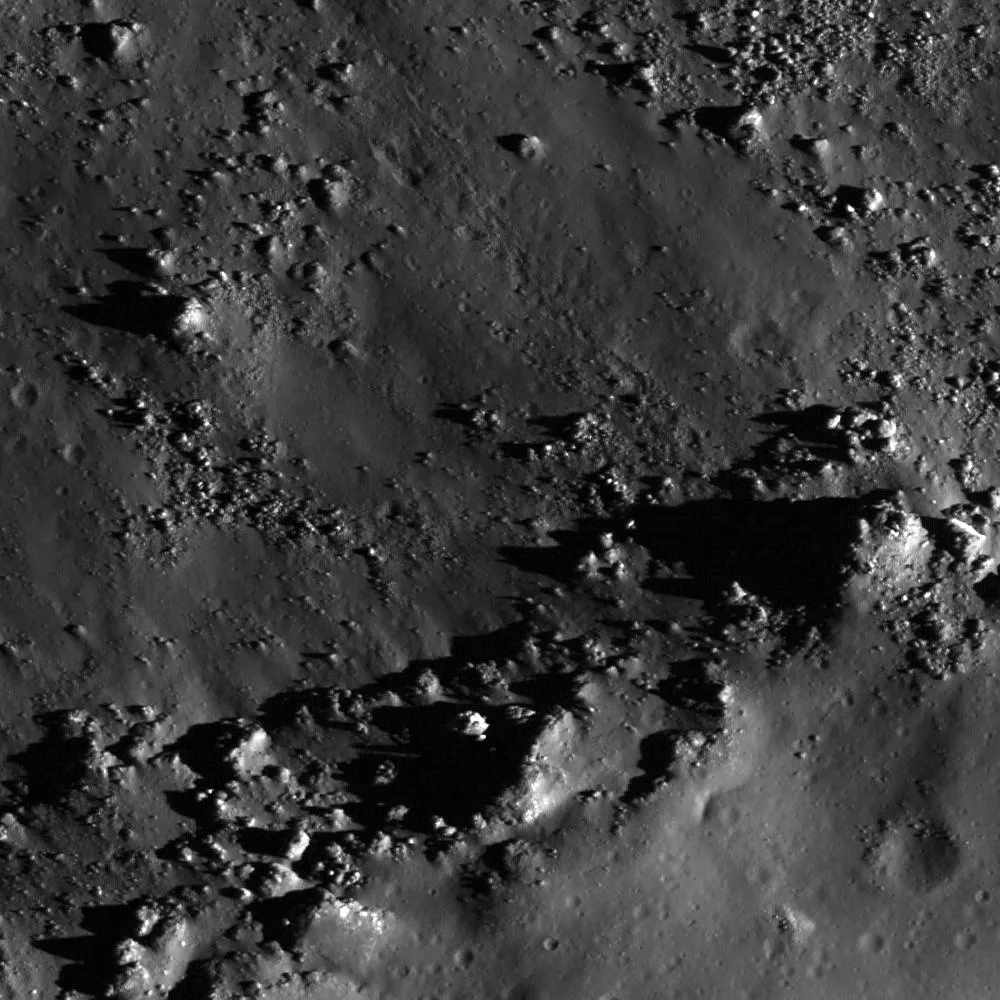
The new Nature Communications study doesn’t appear to contest the spectral data — it interrogates the assumptions built around it. Spectral matching is a powerful tool, but it’s not infallible. Space weathering, the process by which solar radiation and micrometeorite bombardment alter a surface over millions of years, can make very different types of rock look spectrally similar. A rocky body that started life as something else entirely could, after enough time in the solar wind, end up looking a lot like lunar material.
The researchers behind the new study have proposed alternative scenarios for the Kamo’oalewa asteroid origin, suggesting it may instead belong to a class of near-Earth objects with a more conventional asteroidal background — potentially from the inner main belt, perhaps related to a known asteroid family. The orbital dynamics, they argue, can be explained without invoking a lunar ejection event. If that’s right, then the spectral similarity to Moon rocks is a coincidence of weathering, not a genealogical signature.
This matters more than it might seem. The entire scientific rationale for choosing Kamo’oalewa as Tianwen-2’s target was built substantially on the Kamo’oalewa asteroid origin hypothesis pointing to the Moon. Chinese space scientists wanted to sample what they believed was the Moon, delivered to a convenient near-Earth address. If the premise turns out to be flawed, the samples are still valuable — they just won’t be what anyone expected.
What This Means for Tianwen-2
Here’s the practical reality: Tianwen-2 is not turning around. That’s not a criticism — it’s just physics and mission economics. Interplanetary trajectories are planned years in advance, burn windows are narrow, and the spacecraft is already deep into its journey. China’s National Space Administration has committed enormous resources to this mission, and Kamo’oalewa remains a scientifically interesting target regardless of where it came from. The mission will proceed, and the samples will come back.
But what those samples reveal is now genuinely unpredictable in a way it wasn’t before. If the rocks look like pristine lunar material — similar mineralogy, matching isotope ratios, comparable regolith structure — then the Kamo’oalewa asteroid origin story survives the new challenge. The Nature Communications paper becomes a footnote. If, on the other hand, the samples look more like a carbonaceous or silicaceous ordinary chondrite, or something else entirely, then the lunar hypothesis is dead and scientists will have to account for why its spectrum was so misleading.
That second scenario would be genuinely significant for planetary science. It would raise serious questions about how reliably spectroscopy alone can pin down asteroid origins — a method that’s central to how we classify and prioritise near-Earth objects. With missions like NASA’s OSIRIS-REx already returning samples from Bennu and JAXA having twice visited the Ryugu asteroid system, the community is accumulating real ground-truth data about how spectral predictions hold up. Kamo’oalewa could become another critical data point in that calibration.
China’s Broader Ambitions in Deep Space
Tianwen-2 is not China’s only ambitious deep-space project in the pipeline. It’s part of a broader programme that includes lunar base planning, the Tianwen-3 Mars sample return mission, and the Chang’e lunar missions. The country is methodically building the technical capability — and the institutional experience — to compete directly with NASA and ESA on complex, multi-year planetary science missions.
Choosing Kamo’oalewa was itself a statement of intent. Rather than targeting a straightforward near-Earth asteroid, Chinese space planners selected a scientifically contentious object with a potentially unique origin story. The Kamo’oalewa asteroid origin debate, awkward as it is arriving mid-mission, actually reinforces why sending a spacecraft there was worth doing in the first place. Whether or not the lunar hypothesis holds, that choice reflects a programme willing to take on harder problems.
The Wait Until 2027
Sample-return missions run on their own clock, and there’s nothing to do but wait. The Nature Communications study will generate debate in the planetary science community — follow-up spectral observations, fresh orbital modelling, competing theoretical papers. By the time Tianwen-2’s return capsule enters Earth’s atmosphere in late 2027, the Kamo’oalewa asteroid origin question will likely have been argued over from every angle short of actually holding a piece of it.
And then scientists will hold a piece of it. That’s the remarkable thing about sample-return missions — they have the power to settle arguments that remote observation never can. Whatever Kamo’oalewa turns out to be, China’s mission is about to give the field something no telescope or spectrometer can match: physical evidence. The debate over the Kamo’oalewa asteroid origin is actually a preview of just how much we still don’t know about the small bodies drifting through our cosmic neighbourhood — and how much a few grams of rock can change the picture.