

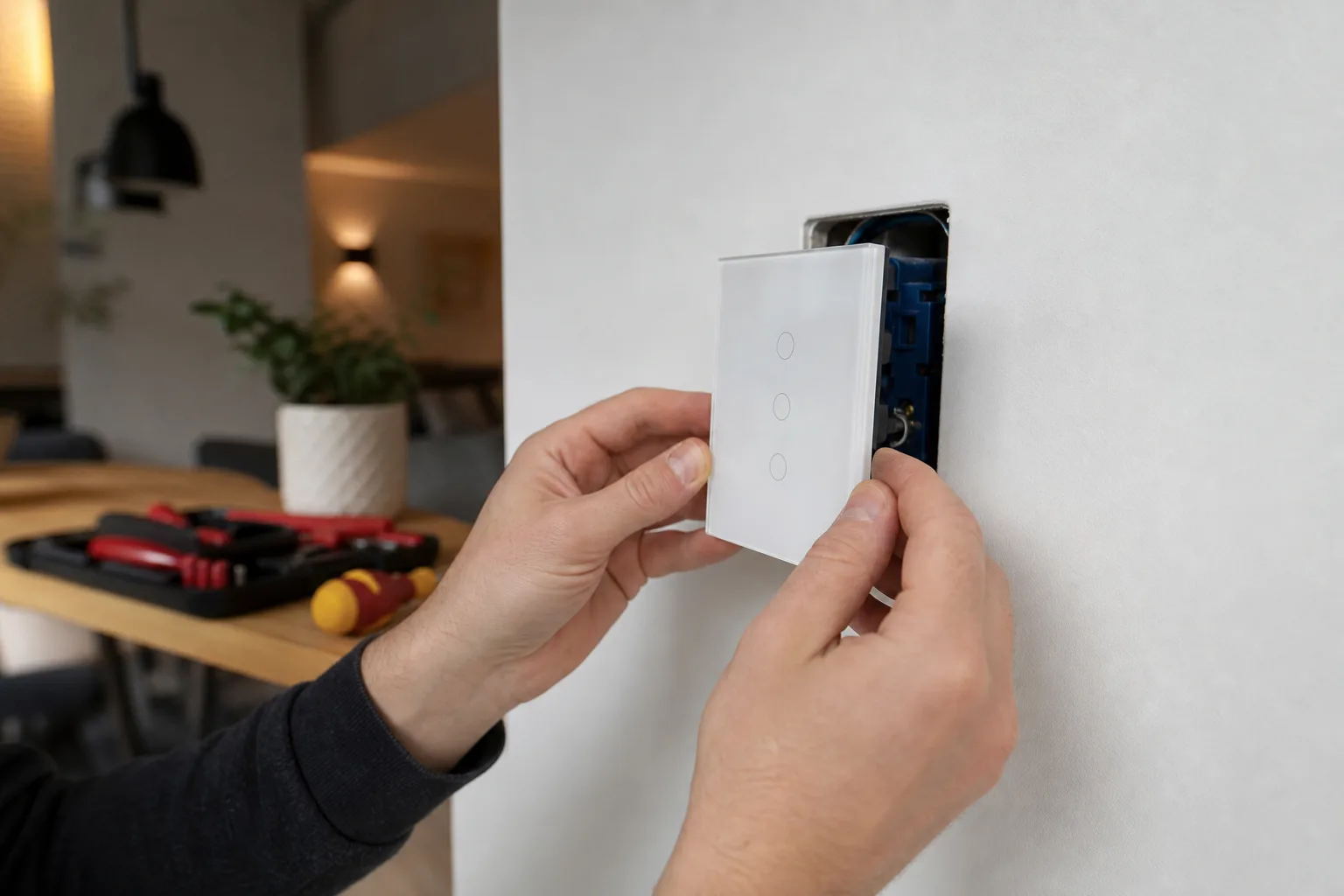
Philips Hue has quietly solved one of the most persistent frustrations in smart home lighting. The company’s new Philips Hue wired wall modules install behind your existing wall switches and bring any standard, non-smart light fitting into the Hue ecosystem — no bulb swap required. It’s the kind of feature that should have existed years ago, and it’s finally here. With a catch, of course.
Table of Contents
What the Philips Hue Wired Wall Modules Actually Do
The core idea is straightforward. The Philips Hue wired wall modules are in-wall relay devices that sit in the back-box behind a standard wall switch, intercepting the circuit and handing control over to the Hue app. Your light switch still physically works — you haven’t ripped anything out — but now that ceiling light or pendant fitting you’ve lived with for years can be scheduled, dimmed (with the right module), and automated alongside your Hue smart bulbs.
There are four variants in the lineup. Three are relay modules: a single-channel version for one-rocker switches, a two-channel version for double-rocker setups, and a dimmer variant. The fourth is slightly different — it’s a wired version of Hue’s existing battery-powered wall module, letting your physical switch control Hue smart bulbs rather than a dumb fitting. That last one also integrates with Hue’s MotionAware system and can participate in Hue’s new whole-home motion sensing, which makes it arguably the most capable of the four for households already deep in the Hue ecosystem.
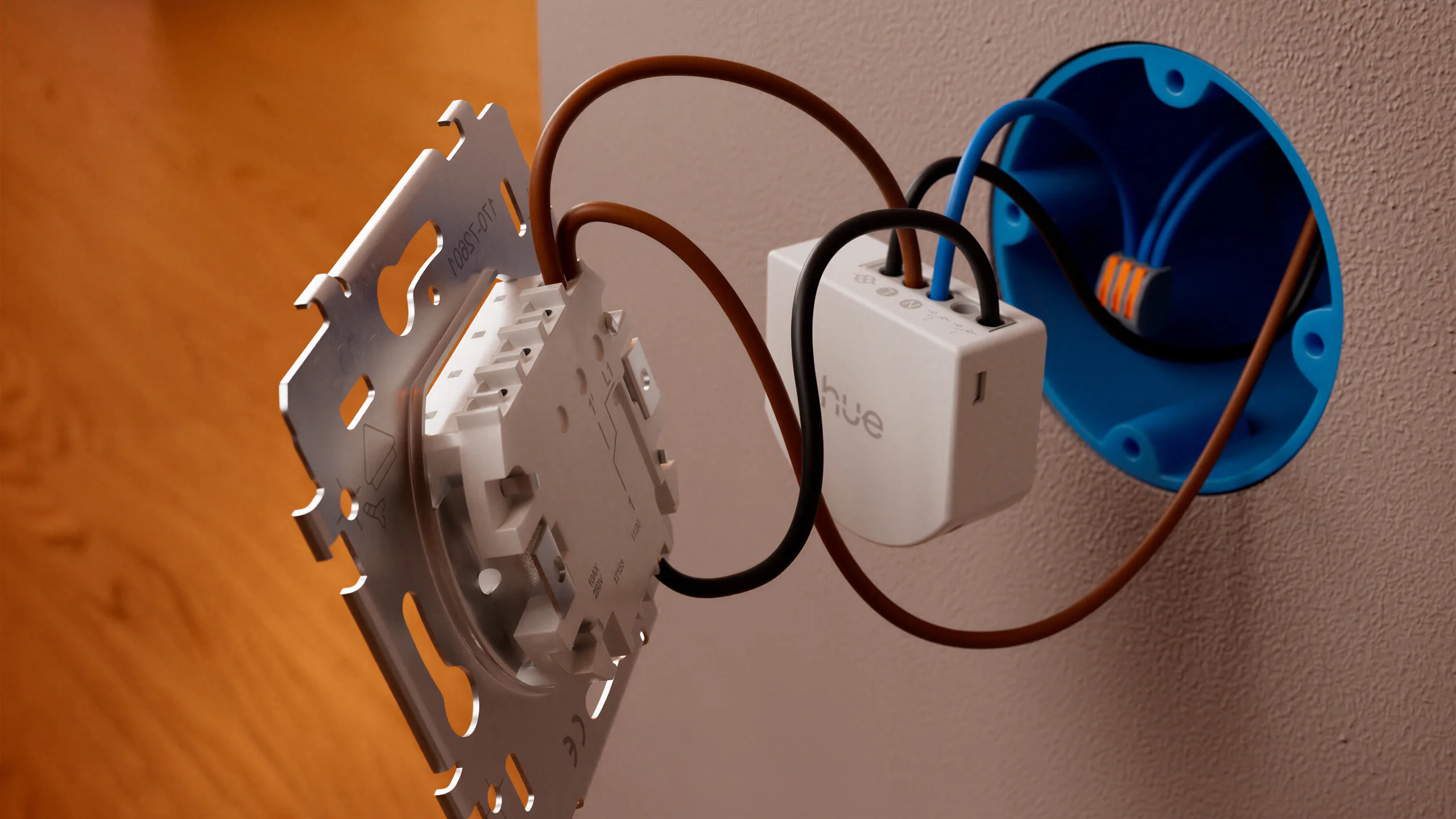
Pricing for the Philips Hue wired wall modules starts at €44.99 for the basic single-channel module. That’s not exactly impulse-buy territory, but it’s competitive when you consider what you’re getting: smart control over lights that would otherwise require a full rewiring job or a complete bulb replacement — neither of which is always practical with fixed fittings.
The US Situation — and Why It Matters
Here’s the frustrating part for American readers: the Philips Hue wired wall modules are Europe-only for now. Signify CTO George Yianni was candid with The Verge about why. ‘DIY modules are not such an established category in the US; it’s more fully integrated switches,’ he said. ‘If people really want these in the US, then maybe we’ll look at it. I think the modules are quite exciting; it’s something that we’ve talked about doing for a long time.’
That explanation makes sense from a market-structure standpoint — in the US, the dominant smart switch model is a full replacement unit like those from Lutron, Leviton, or Lutron’s Caseta line. The idea of tucking a module behind an existing switch is more common in European electrical installations, where back-box depths and wiring norms differ. But there’s clearly an appetite in the US for exactly this kind of retrofit solution, and Yianni’s comments read as an implicit invitation to make that demand audible.
It’s also worth putting this in a broader competitive context. Aqara and Shelly both offer in-wall relay devices that retrofit dumb lights with smart control, and both have US availability. What the Philips Hue wired wall modules offer that those products don’t is native integration with the Hue app — for households already invested in Hue’s ecosystem, that’s the critical differentiator. Being able to see your living room pendant light sitting right next to your Hue Play bars in the same app, controlled with the same automations, is a meaningfully different experience from managing a separate Shelly app or building custom automations in Home Assistant.
New Play Lamps: Signe Performance at a Lower Price
Alongside the Philips Hue wired wall modules, Hue has launched two new lamps that fill a gap in its entertainment lighting range. The Play Table Lamp ($79.99 / €79.99) and Play Floor Lamp Large ($149.99 / €149.99) are designed as more accessible alternatives to the premium Signe series, which has always been excellent but priced accordingly.
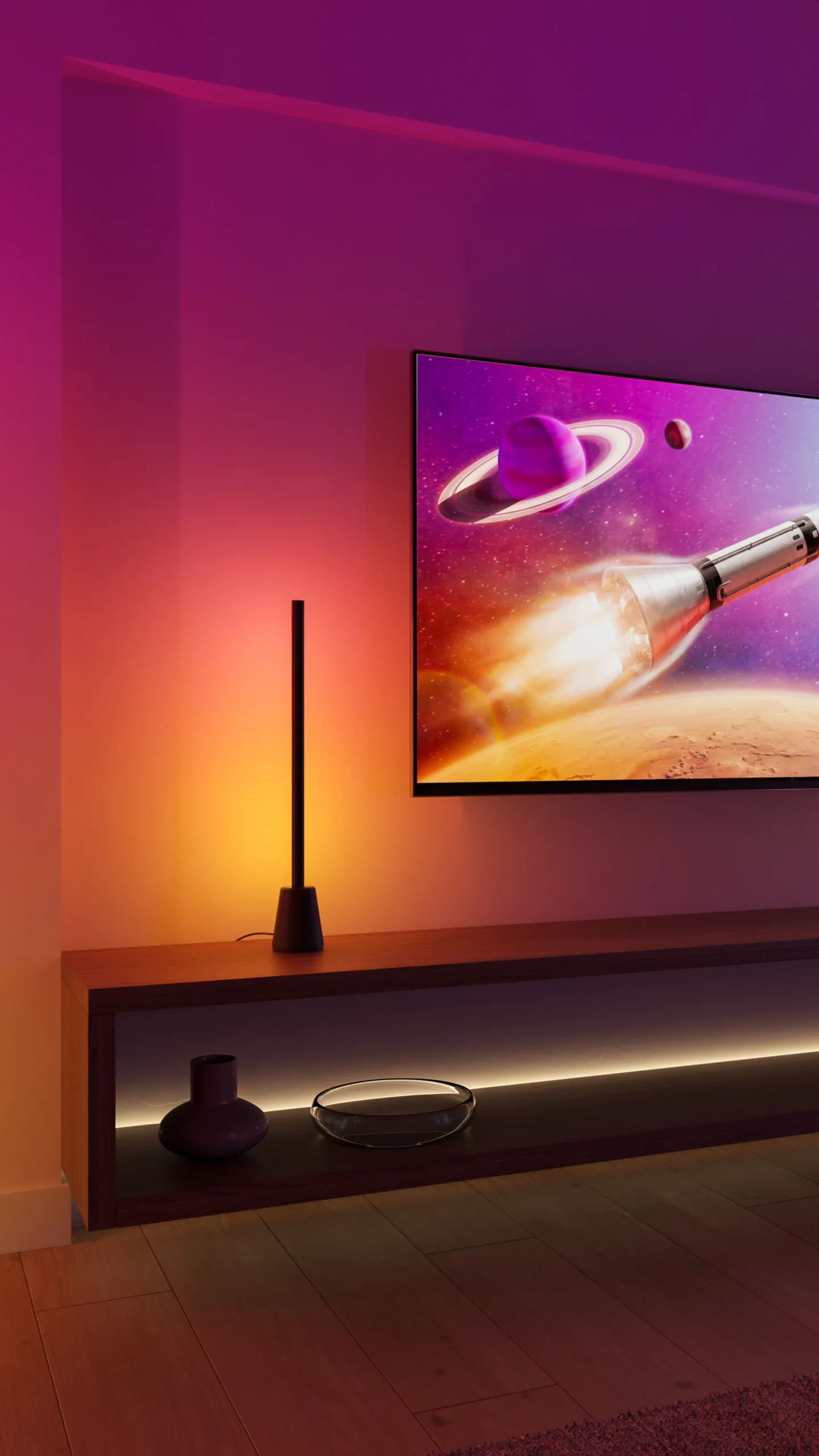
Both new lamps are built for Hue’s entertainment ecosystem — they’ll sync with movies, music, and games via the Philips Hue Sync Box or the Hue Sync desktop app. The Play Table Lamp is practical for a side table or desk setup behind a monitor. The floor lamp version is designed for background ambient lighting placement — the kind of placement that makes a real visual difference in a dim living room during a film.
Functionally, these sit in the same product family as the Hue Play light bars that became popular with PC gamers and home cinema enthusiasts. The key difference is form factor — a floor or table lamp blends into a room in a way that a wall-mounted light bar simply doesn’t. For people who want Ambilight-style reactive lighting without it looking like a gaming setup, this is a meaningful option.
Candle Bulbs Get a Serious Upgrade
The third announcement is arguably the most technically interesting: updated E14 candle bulbs ($109.99 / €109.99 for a two-pack) that bring a significantly expanded white light range and Matter-over-Thread support.
The white light spectrum on the new candle bulbs runs from 1,000K to 20,000K — that’s an enormous range, from a warm candlelight tone all the way up to a very cool, blue-white daylight simulation. Hue’s Chromasync color technology is also included, and the bulbs dim down to 0.2%, which is meaningfully lower than most smart bulbs on the market. For decorative fixtures — chandeliers, wall sconces, bedside lamps — that near-zero dim capability makes a real difference in creating atmosphere without just turning the light off entirely.
The Matter-over-Thread addition is significant from an ecosystem perspective. It means these bulbs can pair directly with Apple Home or Google Home without requiring a Hue Bridge as a middleman. For buyers who aren’t already Hue users, that removes one of the bigger friction points in adopting Hue products. Thread’s mesh networking also tends to be more reliable than Zigbee in dense environments, though Hue’s Zigbee implementation has historically been solid. As Matter gains wider adoption across platforms, having Thread support baked into new products is the right move — it positions these bulbs to remain compatible with whatever direction the smart home market consolidates around.
What This Tells Us About Hue’s Strategy
Taken together, these three announcements reveal a Hue that’s simultaneously expanding its ecosystem reach and lowering the barriers to entry. The Philips Hue wired wall modules bring in lights that were previously off-limits to Hue’s platform. The Play lamps make entertainment lighting more affordable. The candle bulb update makes Hue’s decorative tier both technically superior and more platform-agnostic.
The brand has spent years as a premium-only play, and while it hasn’t abandoned that positioning, it’s clearly aware that the smart lighting category is getting crowded from below. IKEA’s Dirigera ecosystem, Nanoleaf’s expanding range, and Tuya-based budget options have all put pressure on Hue to justify its price points with tangible capability advantages. The Philips Hue wired wall modules, in particular, do something none of those competitors currently offer with native Hue integration — and if Signify does eventually bring the Philips Hue wired wall modules to the US, that could be a genuinely compelling reason for new buyers to choose Hue as their lighting foundation rather than starting somewhere cheaper.

