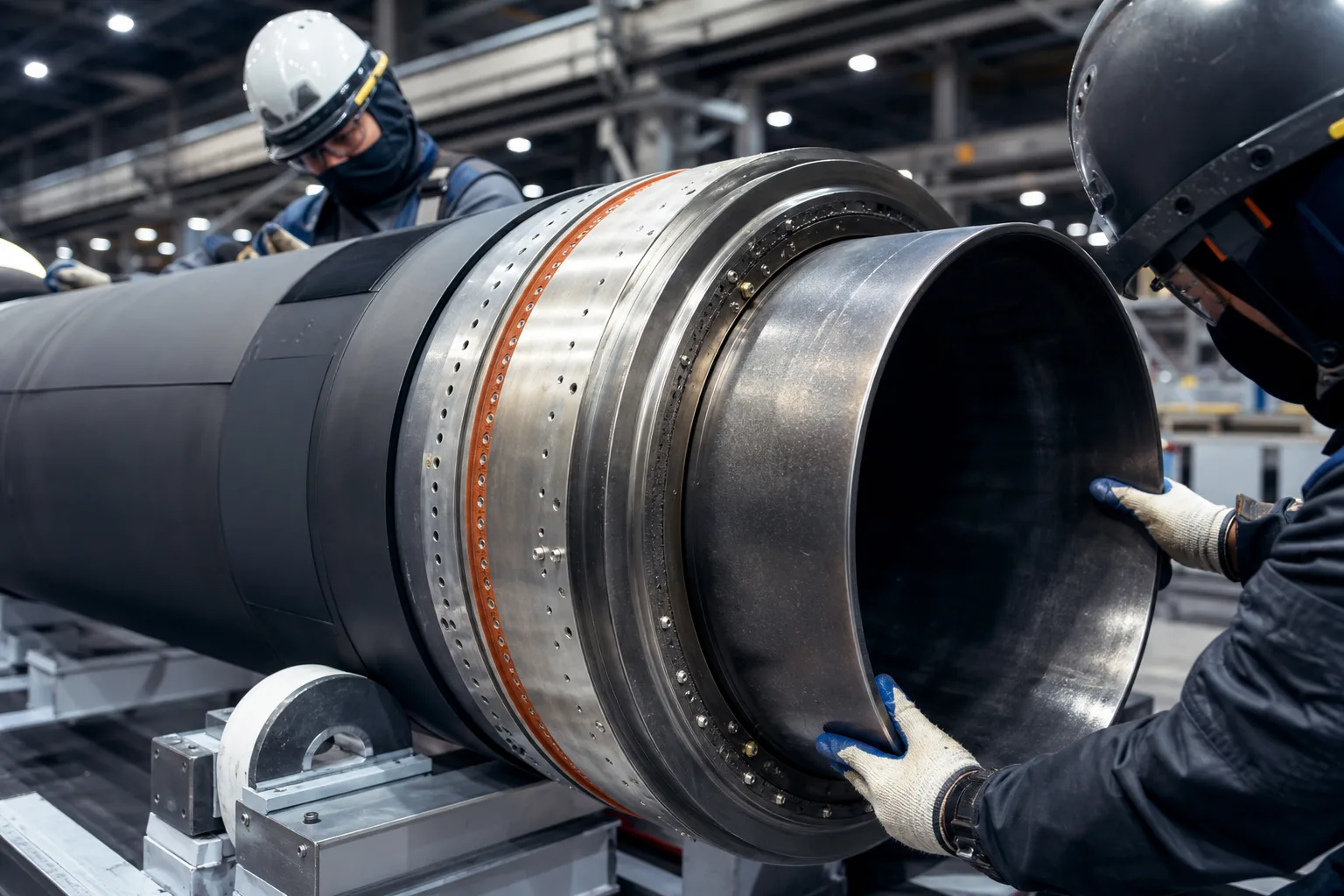
The United States is spending more on missiles than at any point in its modern history — and it still can’t build them fast enough. A new report from the Center for Strategic and International Studies makes the case that solid rocket motors are the single most consequential constraint in the U.S. missile defense industrial base, a structural problem that no amount of emergency Pentagon spending can fully solve on its own.
- Solid rocket motors are the single biggest bottleneck holding back U.S. missile defense interceptor production goals.
- The Pentagon wants 5,000 interceptors a year, but solid rocket motors supply can’t keep pace with that target.
- Two decades of industry consolidation reduced domestic solid rocket motor suppliers from six companies down to just two.
- A $1 billion Pentagon investment in L3Harris production helps, but CSIS says it won’t fix structural supply chain weaknesses.
Table of Contents
A $73 Billion Problem With a Supply Chain at Its Core
The scale of the Pentagon’s missile ambitions is genuinely striking. The Defense Department’s fiscal year 2027 budget request includes more than $73 billion for missile programs — spanning both mandatory and discretionary funding — up from a prior peak of just $29 billion in 2024. That’s not an incremental increase. That’s a fundamental rethinking of what the U.S. needs to deter and, if necessary, fight a high-intensity conflict.
The targets are equally ambitious. The Pentagon wants to deliver more than 2,100 air and missile defense interceptors in calendar year 2027 alone, which represents roughly a 70% jump from the approximately 1,300 delivered in 2021. Still, even that accelerated pace leaves the department well short of its stated goal: around 5,000 interceptors per year across Army, Navy, and Air Force programs. Every one of those interceptors depends on solid rocket motors at its core.

The CSIS report — sponsored by Raytheon Technologies, Ursa Major, and X-Bow Systems — is blunt about the gap. ‘Achieving these goals will require dealing with myriad challenges to increasing interceptor production,’ it states. And critically, those targets were set before Operation Epic Fury, a recent military operation that burned through interceptors in early 2026 and has now added replenishment pressure on top of already strained production lines. That replenishment demand falls squarely on solid rocket motors manufacturers.
Why Solid Rocket Motors Are the Chokepoint
To understand why solid rocket motors matter so much, it helps to think of them as the engine underneath almost every major U.S. missile. From the Missile Defense Agency’s interceptors to Navy ship-launched missiles to Army battlefield weapons, the propulsion system is almost always a solid rocket motor. That means any disruption in production — whether it’s a shortage of propellant ingredients, manufacturing defects in nozzles, limited inspection capacity, or simply not enough skilled workers — doesn’t just delay one missile program. It hits multiple weapon lines at once.
That interdependency is what makes the current situation genuinely worrying. The U.S. isn’t dealing with a problem in one corner of its defense manufacturing base. It’s dealing with a problem at a shared foundation that nearly everything else depends on. The production of solid rocket motors sits at the intersection of nearly every major interceptor program the Pentagon runs.
Two Decades of Consolidation Left the Industry Dangerously Thin
The roots of the current shortage trace back to decisions made over the past two decades. Between 2000 and 2015, the domestic solid rocket motor industry contracted sharply — from six independent suppliers down to just two. Aerojet Rocketdyne and Orbital ATK absorbed or outlasted the rest. Those two companies have since been absorbed themselves: Aerojet Rocketdyne is now part of L3Harris, and Orbital ATK became part of Northrop Grumman.
That kind of consolidation isn’t unique to solid rocket motors — it’s a pattern that played out across the entire U.S. defense industrial base during the post-Cold War drawdown. The logic at the time was efficiency and cost reduction. The consequence, now painfully visible, is fragility. When your entire national missile production capacity depends on two legacy suppliers of solid rocket motors, any disruption — a factory fire, a workforce shortage, a supply chain snag — becomes a national security problem almost immediately.

A newer cohort of companies is now trying to change that picture. X-Bow Systems, Ursa Major, Firehawk, Castelion, Anduril, Nammo, Avio USA, and Prometheus Energetics have all moved into the solid rocket motors space with varying degrees of progress. CSIS acknowledges their potential but is careful not to overstate it: most haven’t yet demonstrated they can scale from prototype or limited production runs into the kind of large production lots the Pentagon actually needs. They’re promising, but they’re not yet a solution.
The Space Industry Used to Help — Now It Doesn’t
There’s an underappreciated dimension to this story that CSIS surfaces: the commercial space industry used to act as a stabilizing source of demand for solid rocket motor manufacturers. During the Space Shuttle era, commercial launch activity helped keep factories running and workforces employed between defense contracts. That buffer has largely disappeared. As commercial launch has shifted decisively toward liquid propulsion — SpaceX’s Falcon 9 and Merlin engines being the defining example — the space sector no longer props up demand for solid rocket motors the way it once did.
That matters because defense procurement is inherently lumpy. Contracts get delayed, programs get stretched, and budgets fluctuate. In the past, commercial launch demand helped smooth those valleys. Today, solid rocket motors suppliers are more exposed to the peaks and troughs of Pentagon buying cycles than they’ve been in decades. That makes long-term investment in factory capacity harder to justify — and harder to finance.
Money Alone Won’t Fix This
The Pentagon has made direct investments to try to address the bottleneck. A $1 billion commitment to expand L3Harris’s solid rocket motor production capacity is the most visible example. CSIS describes this as useful — but insufficient on its own. The report argues that direct-to-supplier interventions like this ‘cannot substitute for more proactive supply chain management by both the government and prime contractors.’
The deeper problem is that these investments are reactive. They address the bottlenecks in solid rocket motors that are already visible and already causing pain. They don’t prevent the next bottleneck from forming. And without sustained, predictable demand from the government, suppliers don’t have the forward visibility they need to invest in new capacity ahead of the requirement — which is precisely when that investment would be most useful.
CSIS’s recommendations cut across several dimensions. The report calls for stable, long-horizon demand signals so that suppliers can make capital investments with confidence. It pushes for multiyear procurement contracts rather than the year-by-year buying that makes planning nearly impossible. It calls for direct investment in suppliers further down the supply chain — not just the primes — and for reforms to acquisition rules that currently make it harder, not easier, to introduce new materials and manufacturing processes.
That last point deserves attention. The report notes that cost-focused acquisition requirements can actually slow innovation in the supply base, making it harder for established suppliers to modernize and harder for newer entrants to break in. In an environment where the U.S. is trying to rapidly scale missile production, procurement rules designed for an era of steady-state buying can become an obstacle in their own right.
The Bigger Picture: Industrial Capacity as a Strategic Question
What this report really describes is a reckoning that’s been building for years. The United States optimized its defense industrial base for cost and efficiency across a long period of relatively low-intensity conflict and deterrence-through-dominance. That optimization came at the price of resilience and surge capacity.
Ukraine changed the calculus. The rate at which missiles, artillery rounds, and air defense interceptors are consumed in a modern high-intensity conflict has forced defense planners to confront just how quickly stockpiles can be depleted — and how slowly industrial production can respond. The solid rocket motors bottleneck is, in many ways, a microcosm of that broader problem.
The good news is that the gap between where production is and where it needs to be is now clearly understood. The harder challenge is bridging it. If the CSIS analysis is right, the path forward requires not just more money, but a fundamentally different relationship between the Pentagon, prime contractors, and the suppliers who actually make the solid rocket motors burn.
Frequently Asked Questions
Why are solid rocket motors such a critical bottleneck for U.S. missile defense?
Solid rocket motors sit at the foundation of nearly every major U.S. missile program. Any disruption in motor production — whether in propellant ingredients, nozzles, inspection capacity, or workforce — cascades across multiple weapon lines simultaneously, making them the single most consequential chokepoint in the defense supply chain.
How many missile defense interceptors does the Pentagon plan to produce by 2027?
The Defense Department expects deliveries of more than 2,100 air and missile defense interceptors in 2027, a roughly 70% increase from around 1,300 in 2021. However, that figure still falls well short of the Pentagon’s stated goal of approximately 5,000 interceptors per year.
Which companies now dominate the solid rocket motor market?
After consolidation between 2000 and 2015, the U.S. market shrank to two primary suppliers: Aerojet Rocketdyne, now part of L3Harris, and Orbital ATK, now part of Northrop Grumman. A wave of newer entrants — including X-Bow, Ursa Major, Firehawk, and Anduril — is attempting to diversify the supply base.
What does CSIS recommend to fix the solid rocket motor supply problem?
CSIS calls for stable long-term demand signals, multiyear procurement contracts, direct investment in suppliers, reforms to acquisition rules, and broader acceptance of newer manufacturers. The report argues that emergency funding alone can’t substitute for proactive, sustained supply chain management.