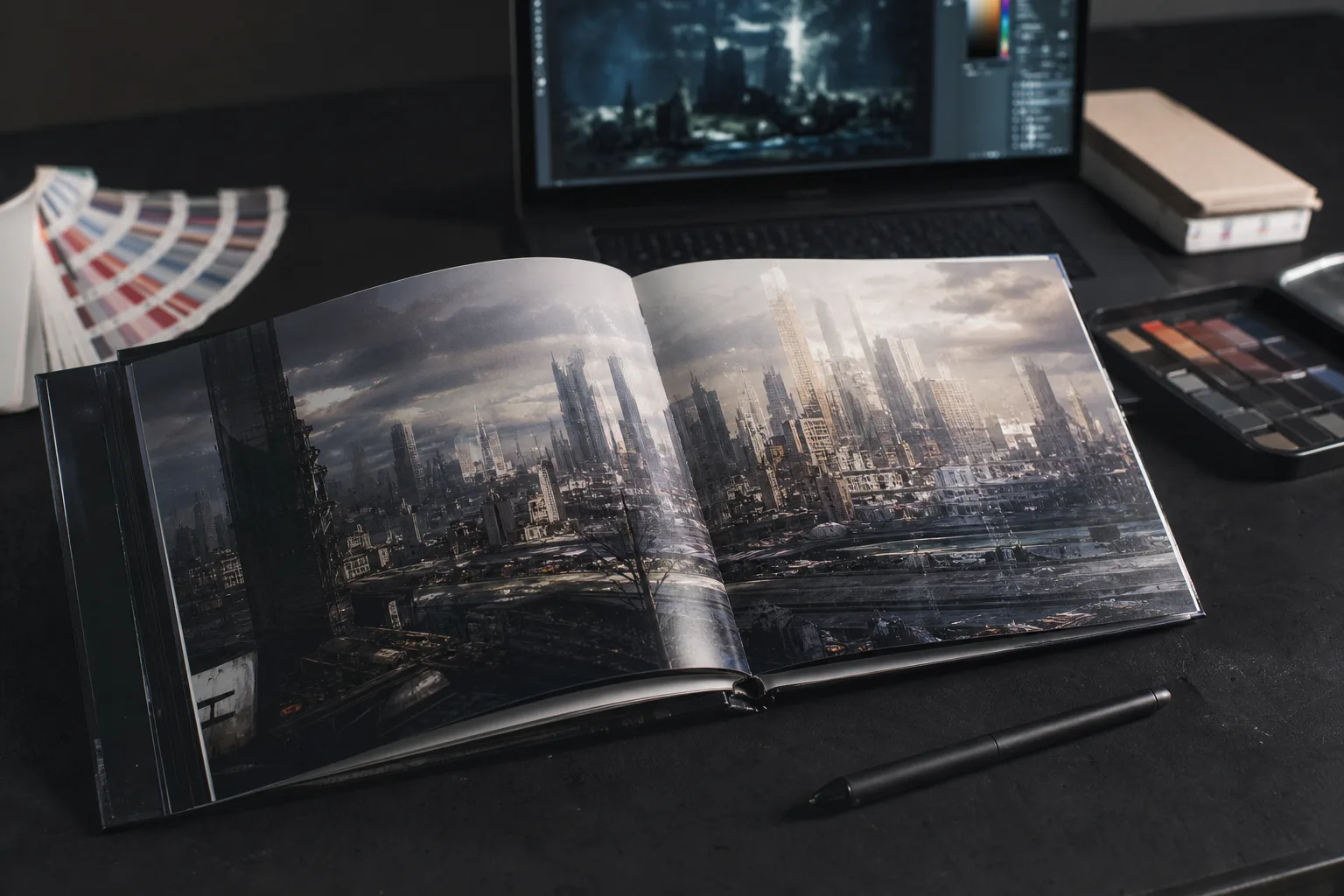
Spider-Man AI art is the latest flashpoint in Hollywood’s increasingly messy argument over where digital production ends and generative AI begins. A page of New York concept art in the recently released Spider-Man: Brand New Day art book has drawn scrutiny from fans, who noticed taxis and buildings that appear to melt into one another. In 2026, that kind of visual weirdness has become a familiar tell. It may also be a false positive.
- Spider-Man AI art claims erupted after fans spotted distorted taxis and buildings in a New York concept-art page.
- A designer associated with the book says Spider-Man AI art was removed or never supplied for the published layout.
- The dispute shows how ordinary Photoshop edits can now be mistaken for generative-image artifacts.
- Disney and Marvel reportedly require artists to submit wholly original work, partly because AI ownership remains legally unsettled.
Table of Contents
Spider-Man AI art allegations began with a familiar visual glitch
The disputed image looks less like a polished piece meant for a gallery wall and more like what it probably is: a working visual-development asset. But the odd overlaps in its background gave online viewers immediate reason to wonder whether an image generator had been used to fill out a city scene.
That reaction is understandable. Generative image tools are notorious for treating architecture, vehicles and street furniture as loose suggestions. A taxi can become two taxis. Windows lose their allegiance to a single building. Perspective quietly gives up and goes home. New York is a particularly funny place for a studio to take that shortcut, if that is what happened, because reference photography of the city is not exactly scarce.
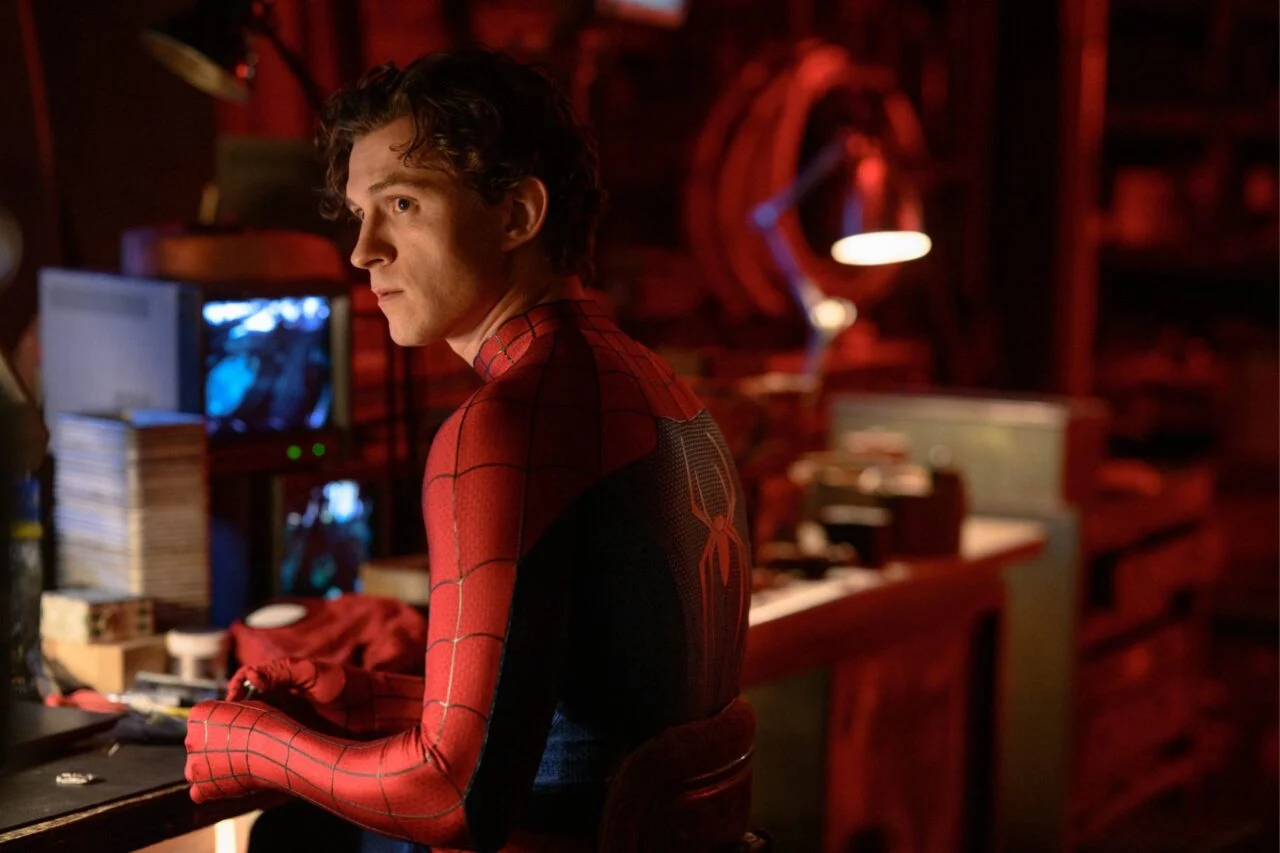
Still, a strange-looking background is not proof of Spider-Man AI art. The current debate has landed in a production world where artists routinely combine reference photos, 3D blockouts, painted elements, texture overlays and standard editing tools. The finished image may be a few clicks away from a concept artist’s original sketch, but that does not automatically make it machine-generated.
A book designer says the published pages were checked
A Reddit user posting as StingRe, who said they handled layout and design work on the book, offered a direct counterpoint to the allegations. They said that, to their knowledge, no AI-made images appeared in the published volume and that artwork was supplied by the film’s visual-development team.
The account came with an important complication: StingRe said some freelancers had used AI in background elements within their individual submissions. According to their description, images that raised AI concerns either were not delivered for the art-book layout or were removed before publication. They also said Marvel Studios visual development chief Ryan Meinerding was highly exacting in reviewing pages.
That is not a formal statement from Disney, Marvel or Meinerding, and it does not settle every question around the specific image. The comments were reportedly later deleted, and an anonymous production-adjacent account is not the same as documentary evidence. But it does point to a more believable version of modern studio workflow than the simplistic claim that Marvel pressed a button and called it concept art.
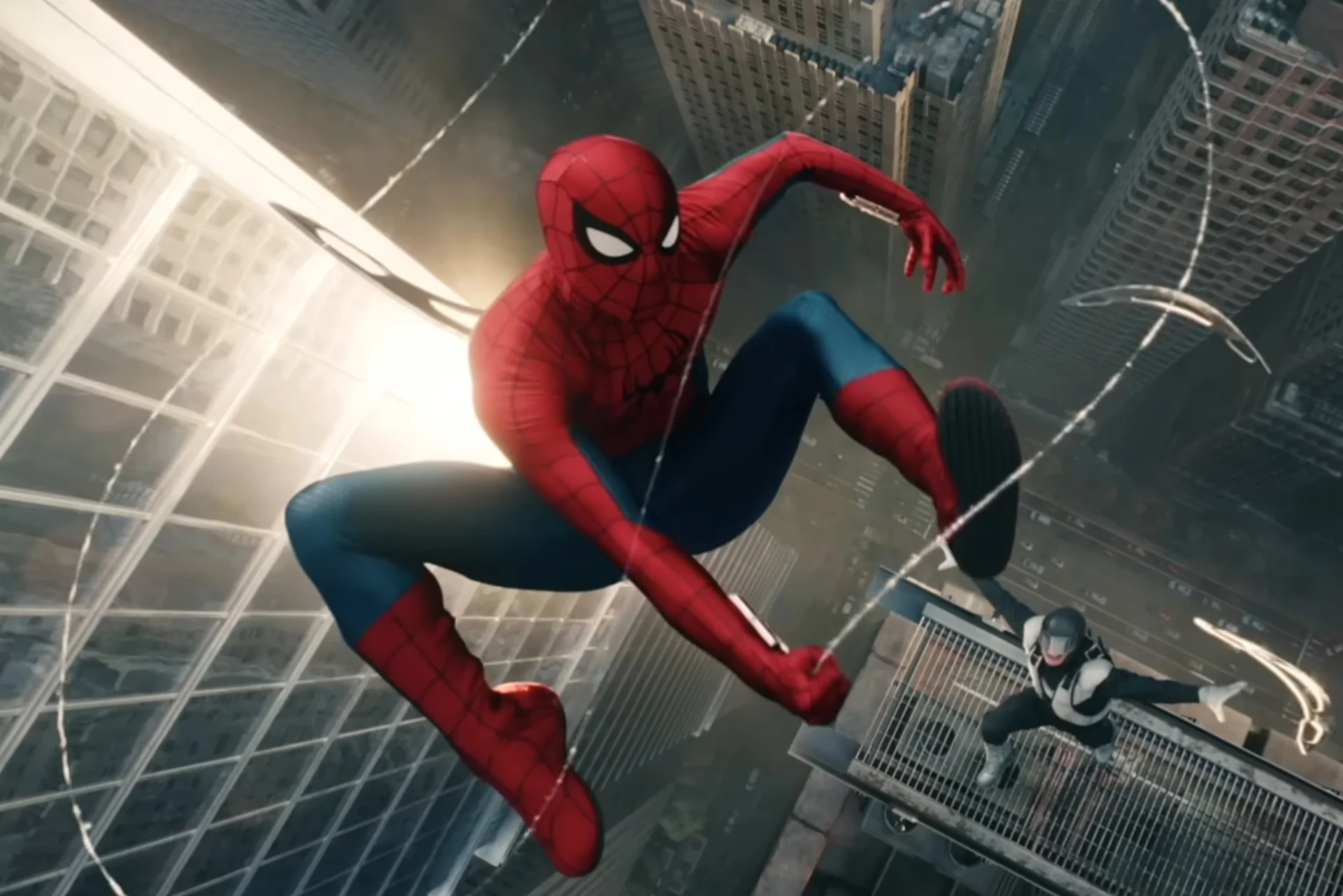
The most revealing part of the account is that it allows for individual misuse while rejecting a corporate mandate. That distinction matters. Big studios employ sprawling networks of staff artists, vendors and freelancers. A policy can say one thing; a rushed artist facing a deadline can do another. Anybody who has watched a gigantic credits roll knows how many hands touch a blockbuster before it reaches a theater.
Why Photoshop is muddying the Spider-Man AI art conversation
StingRe speculated that the questionable taxi may have resulted from a conventional Photoshop repair, perhaps after a watermark or unwanted element was removed. Photoshop’s cloning and healing tools can sample nearby pixels to cover an area, and careless use can create a warped duplicate or a clumsy seam. Photobashing, meanwhile, has been a normal concept-art practice for decades: artists assemble photographic material, then paint and alter it into a new composition.
This is where the Spider-Man AI art controversy gets genuinely useful rather than merely accusatory. People are learning to spot visual defects, but we are increasingly treating every defect as an AI fingerprint. That is a poor standard. Old-fashioned digital editing has produced ugly artifacts for years. Anyone who has zoomed into a rushed movie poster, or spent too long cleaning up a bad clone stamp in Photoshop, has seen the evidence.
The distinction is hard to judge from a flattened page in an art book, where viewers cannot inspect the edit history. They are looking at the culinary result, not the kitchen. Adobe’s Generative Fill documentation offers a reminder of how much ordinary-looking image work can now happen inside Photoshop.
Studios have a legal reason to draw a hard line
According to the designer’s account, Disney and Marvel contracts require contributed art to be the artist’s “wholly original work.” The practical reason is not hard to see. Questions of ownership and rights around AI-generated material remain unsettled. For an entertainment company whose business runs on controlling characters, images and licensing rights, that is not a philosophical footnote. It is the whole house.
Marvel has plenty of reasons to avoid Spider-Man AI art in official materials even beyond copyright. Artists and their unions are watching studios closely. Audiences have made it clear that they care about human authorship, especially when a franchise has the money to hire skilled illustrators. And if a studio’s internal materials contain outputs trained on unknown datasets, it creates a rights-management headache nobody wants attached to a tentpole release.
Frankly, the stronger story here is not whether one warped taxi proves a Spider-Man AI art scandal. It is that the visual language of generative AI has become so recognizable, and so distrusted, that a dodgy retouch can set off a public investigation. Studios can complain about armchair forensic analysis, but they helped create this climate by experimenting with the tools behind closed doors and offering vague policies in public.
Marvel and Disney should address this particular image directly if they can. A source-file explanation, an artist credit or a simple statement about the production process would go much further than letting Reddit threads do the fact-finding. If these companies want audiences to trust that human artists remain central to blockbuster filmmaking, “trust us” is no longer enough. They will need a paper trail—and perhaps fewer suspiciously cloned taxis.