
- Teaching gestures shift toward two-handed, visually rich forms in both Italian and Dutch adults when explaining new concepts to children.
- Despite Italians using more gestures overall, teaching gestures converge across cultures when the audience is a child rather than an adult.
- The study supports folk pedagogy theory — the idea that humans carry innate instincts for making information accessible to young learners.
- Researchers say the findings open questions about how gestural strategies actually affect children’s comprehension and retention of new information.
Table of Contents
When Words Aren’t Enough: The Hidden Language of Teaching Gestures
Watch someone explain how to crack an egg, thread a needle, or solve a jigsaw puzzle to a child, and you’ll notice something almost universal: their hands do a lot of talking. A new study from researchers at the University of Catania and the Max Planck Institute for Psycholinguistics has put hard data behind that instinct, finding that teaching gestures — specifically the kind that visually depict meaning — follow strikingly similar patterns across cultures that differ quite a bit in how expressive they typically are.
The research, published in Royal Society Open Science, compared how Italian and Dutch adults gestured when demonstrating unfamiliar logic puzzles to two different audiences: children aged 9 to 10, and other adults. Italian speakers are widely considered to come from a more gesture-rich communicative tradition. Dutch speakers, by contrast, tend to be more restrained. Given that gap, you’d expect their teaching styles to look pretty different. They didn’t — at least not where it counted.
What the Study Actually Found
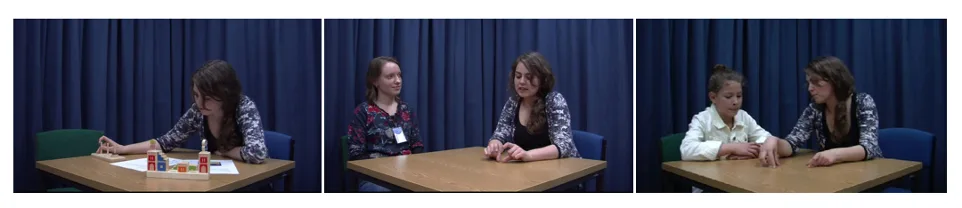
Sixteen Italian and sixteen Dutch adults took part. Each person demonstrated two novel logic puzzles — deliberately chosen because participants would have no pre-formed way to explain them — to both a child and an adult. The researchers tracked representational gestures: those that visually depict an action, shape, or spatial relationship, rather than just punctuating speech rhythmically.
As expected, Italians produced more representational gestures overall. That part surprised no one. The interesting result was what happened when either group faced a child rather than an adult: neither simply produced more gestures in total. Instead, both groups shifted the type of gestures they used, increasing the proportion of two-handed representational gestures. These are gestures where both hands actively contribute to illustrating the concept — think miming the shape of a container with both palms, or tracing a path with both index fingers simultaneously.
The researchers believe this shift is about iconicity: two-handed gestures are richer and more visually informative, which makes abstract or unfamiliar information easier to parse for a younger audience still building its interpretive toolkit. The finding held regardless of whether participants were Italian or Dutch — a result that cuts across a well-documented cultural divide in communicative expressiveness.
Teaching Gestures and the Theory of Folk Pedagogy
This is where the study gets genuinely interesting from a cognitive science perspective. The findings align with what researchers call folk pedagogy — the idea that humans don’t need formal training to become reasonably effective teachers. We carry intuitive assumptions about what learners need, and we adjust our communication accordingly. You don’t have to be a schoolteacher to instinctively slow down, simplify your vocabulary, or — apparently — change the physical shape of your explanations when you’re talking to a child.
What’s striking here is that teaching gestures are part of that instinctive toolkit, not just an add-on. As lead researcher Emanuela Campisi puts it:
“Humans are natural teachers, and our bodies are part of the lesson. Even when cultures differ in how much people gesture overall, adults seem to share intuitive strategies for making demonstrations clearer and more engaging for children.”
That’s a meaningful claim. It suggests the adaptation isn’t about conscious choice — nobody in the study was told to gesture differently for children. It happened spontaneously, in a semi-naturalistic setting where adults were simply doing what felt natural. That’s a much harder result to dismiss than one produced in a lab under formal instruction conditions.
Bracketed Gestures: A Subtler Signal
The study also examined what the researchers call bracketed gestures — a less flashy but conceptually interesting category where one hand stays still as an anchor while the other moves. Think of holding one palm flat (representing a surface or reference point) while the other hand demonstrates movement above it.
Dutch adults used these significantly more than Italians when talking to other adults — possibly as an organizational strategy, a way of anchoring information spatially for a peer who can handle more abstraction. Italians were less inclined toward them in adult-directed speech.
But when both groups switched to a child audience, their rates of bracketed gestures converged. Another instance of teaching gestures pulling communicators toward common ground, regardless of their default style. Whether that convergence reflects a genuinely shared cognitive instinct or a kind of pragmatic problem-solving that happens to look the same is a question the study raises without fully resolving — and that’s fine. It points the way for future research rather than overclaiming.
Why This Matters Beyond the Lab
Cross-cultural research in developmental psychology has a well-known blind spot: it tends to draw its big comparisons between Western industrialized societies and non-Western ones, framing the contrast as broadly as possible. This study does something more granular. It looks at two European cultures that sit on the same continent, share many social norms, and yet have measurably different gestural habits. Finding convergence in teaching gestures even at that scale makes the result harder to explain away as a Western-vs-the-world artifact.
The implications stretch into how we think about cultural transmission — the process by which humans pass knowledge, skills, and practices across generations. The published paper frames gesture as part of what the team calls multimodal scaffolding: a flexible system that combines speech, gesture, gaze, and body movement to tailor information to a learner’s needs. That framing has real relevance for education technology, human-computer interaction, and even the design of AI tutoring systems, which are increasingly being asked to communicate complex ideas to novice users.
If humans are wired to make their teaching gestures more iconic and visually rich for younger or less experienced learners, that’s a design principle worth paying attention to. Video-based learning platforms, AR/VR educational tools, and AI-generated instructional content all make choices — often implicitly — about how visual and embodied their explanations are. Research like this gives those choices a more principled foundation.
What Comes Next
The team at the Max Planck Institute for Psycholinguistics, working with Campisi at the University of Catania, is open about the study’s limits. Thirty-two participants across two cultures is a starting point, not a definitive picture. The researchers want to expand to a wider range of cultures and teaching scenarios, and — crucially — they want to measure whether different gestural strategies actually improve children’s learning and comprehension. Showing that adults change their teaching gestures for children is one thing. Demonstrating that those changes make a measurable difference in what children retain is the next, harder question.
It’s also worth asking how these instincts interact with digital communication. Video calls, screen sharing, and recorded tutorials have become the default mode for a huge slice of informal teaching and knowledge transfer. Hands are visible on video, but the spatial richness of in-person gesture is flattened. Whether adults compensate — and how — is an open and increasingly practical question as remote education continues to grow. The instinct to adapt teaching gestures for a child may be deeply rooted, but the environments we’re asking it to operate in are changing fast.