

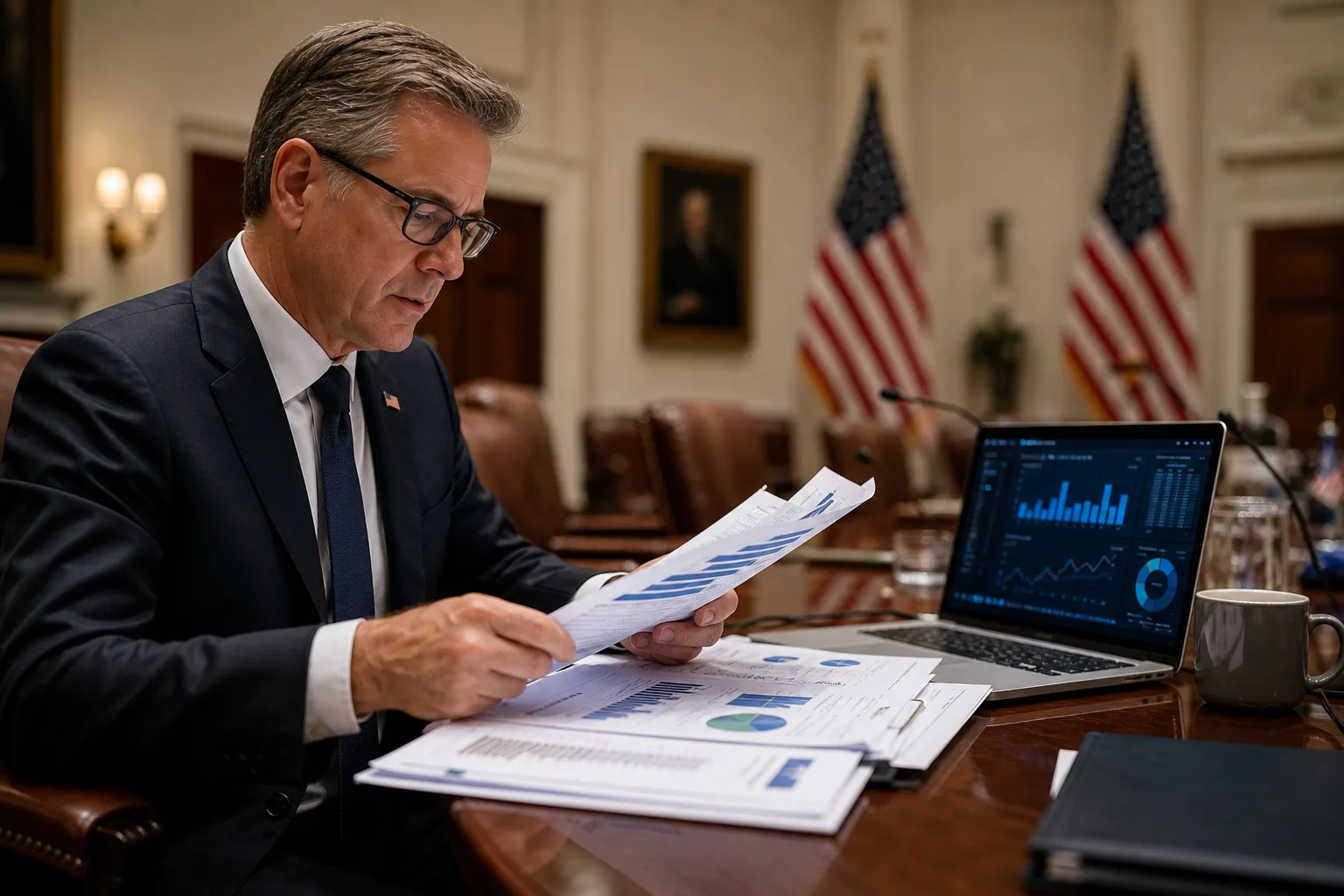
The White House has issued a new executive order that puts AI safety reviews at the center of America’s approach to frontier artificial intelligence — and the details are more complicated than the headline suggests. On the surface, it’s a pro-innovation move that deliberately avoids mandatory approvals. Dig a little deeper, and a pattern of quiet government pressure on the AI industry starts to emerge.
- Trump’s executive order creates a voluntary framework for AI safety reviews of frontier models before public release.
- Major labs including OpenAI, Anthropic, and Google DeepMind are already participating in AI safety reviews with federal agencies.
- The order stops short of mandatory approvals, but the line between voluntary and compelled may be thinner than it looks.
- Federal agencies including the Pentagon and CISA are getting expanded roles in AI cybersecurity defense within 30 days.
Table of Contents
What the Executive Order Actually Does
The order moves on several fronts simultaneously. Federal agencies have 30 days to shore up cyber defenses across government systems and deploy AI-powered security tools — a tight timeline that signals urgency. The Department of Defense, the Cybersecurity and Infrastructure Security Agency (CISA), and the Treasury Department are being directed to build a joint clearinghouse for software vulnerabilities, developed in collaboration with the private AI sector. That’s a meaningful structural move: a centralized, government-industry hub for tracking and sharing information about security flaws in AI systems.
Then there’s the centerpiece: a voluntary framework for what the order calls “covered frontier models.” Under this framework, AI developers can choose to submit their most powerful models to the government for safety testing before those models go public. The operative word is can. The order explicitly rules out any mandatory pre-release approval process, and the White House has been careful to frame this as protecting innovation rather than constraining it. The order’s language promises not to “stifle this innovation with overly burdensome regulation.”
Rounding out the order: a push for tougher criminal prosecution of AI-assisted cyberattacks and faster hiring pipelines for cybersecurity professionals across the federal government. The talent gap in government cyber roles is real and well-documented, so that last point is overdue regardless of anything else in the order.
The Industry Was Already Moving in This Direction
Here’s the thing — the voluntary AI safety reviews framework didn’t arrive in a vacuum. Several of the biggest names in AI had already signed up for similar arrangements before this executive order landed. Google DeepMind, Microsoft, and Elon Musk’s xAI had previously agreed with the US Center for AI Standards and Innovation (CAISI) to submit new frontier models for pre-release review. OpenAI and Anthropic had entered an analogous agreement back in 2024.
So in a sense, the executive order is partly codifying something that was already happening — at least among the labs with the most to gain from staying in Washington’s good graces. Whether smaller AI developers or those further outside the mainstream will participate is a different question entirely. Voluntary frameworks tend to attract the already-compliant and give cover to those who’d rather not participate.
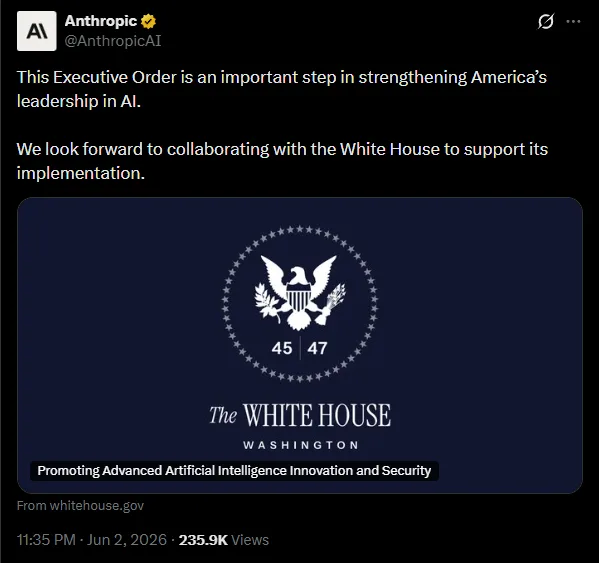
Anthropic’s response to the order was telling. The company — which makes Claude and has been vocal about AI risk — called it “an important step in strengthening America’s leadership in AI.” That’s a notably warm reception from a company that’s spent years arguing for careful, safety-conscious development. Whether that enthusiasm reflects genuine alignment with the policy or a pragmatic decision to stay on the right side of the current administration is impossible to know from the outside. Probably some of both.
How Voluntary Is This, Really?
The word “voluntary” is doing a lot of heavy lifting in this executive order, and it’s worth examining how much weight it can actually bear. The history here isn’t entirely reassuring. The tension between the Pentagon and Anthropic over AI capabilities and government contracts has already demonstrated that the federal government is willing to apply pressure when it wants access to AI advantages — particularly in the context of competition with China. When your biggest potential customer is also the entity asking you to participate in AI safety reviews, “voluntary” starts to look a lot like a polite way of saying “strongly encouraged.”
This isn’t unique to AI. The cybersecurity industry has been through variations of this dynamic before. Companies participate in government information-sharing frameworks partly out of genuine civic interest and partly because being seen as uncooperative carries its own risks — regulatory attention, contract exclusions, reputational friction. The AI industry is learning that lesson fast.
The geopolitical angle matters here too. The executive order’s focus on AI in cybersecurity is inseparable from the broader US-China technology rivalry. Washington increasingly views frontier AI as a strategic asset, not just a commercial product. That framing changes the calculus for every AI company deciding whether to participate in AI safety reviews. Opting out isn’t just a business decision — it’s a statement about where you stand in a much larger contest.
The Cybersecurity Angle Is the Sleeper Issue
Most of the coverage around this executive order will focus on the voluntary framework and what it means for big labs. But the cybersecurity provisions deserve more attention than they’re getting. The Claude Mythos debate — which centered on AI’s potential to meaningfully accelerate cyberattacks — clearly influenced the drafting of this order. The explicit push to criminally prosecute AI-assisted cyber intrusions signals that the government is preparing legal infrastructure for a threat landscape it expects to get significantly worse.
AI-powered cyberattacks aren’t hypothetical anymore. Security researchers have already demonstrated that large language models can assist with vulnerability discovery, social engineering, and even some stages of exploit development. The question isn’t whether this will be a problem — it already is. The question is whether a voluntary clearinghouse and faster federal hiring can keep pace with adversaries who don’t have to wait for interagency coordination before acting.
The 30-day deadline for agencies to strengthen their own AI-powered defenses is aggressive. Anyone who’s watched federal IT procurement move knows that 30 days is barely enough time to schedule the right meetings, let alone deploy new tools across complex government infrastructure. Whether that deadline is realistic or aspirational may say something about how seriously the administration expects the operational details to be followed through versus the signal the order is meant to send.
AI Safety Reviews in a Post-Biden Regulatory World
It’s impossible to read this order without thinking about what it’s replacing. The Biden administration’s 2023 executive order on AI was more prescriptive, more focused on mandatory reporting for powerful models, and ultimately more controversial with the AI industry. Trump’s approach flips the default — innovation first, oversight by invitation. That’s a philosophically coherent position, but it relies on the AI industry’s self-interest in safety aligning with the public’s interest. Those two things overlap more than critics sometimes admit, but they’re not identical.
The establishment of AI safety reviews as a voluntary option rather than a requirement also reflects a broader bet that competition with China is better served by speed than by caution. Whether that bet pays off depends on how safe the models that reach market actually are — and whether a voluntary testing regime can catch the failures that matter most before they cause real damage.
What’s clear is that Washington’s relationship with the AI industry is entering a new phase. The old dynamic — where AI companies operated largely outside government purview — is over. The new one, where the government is a major customer, a framework-setter, and an implicit partner in geopolitical competition, is fully underway. The frontier labs that figured that out early, like OpenAI and Anthropic, positioned themselves accordingly. The rest of the industry is going to have to decide whether the voluntary in AI safety reviews is an invitation or a warning.

