

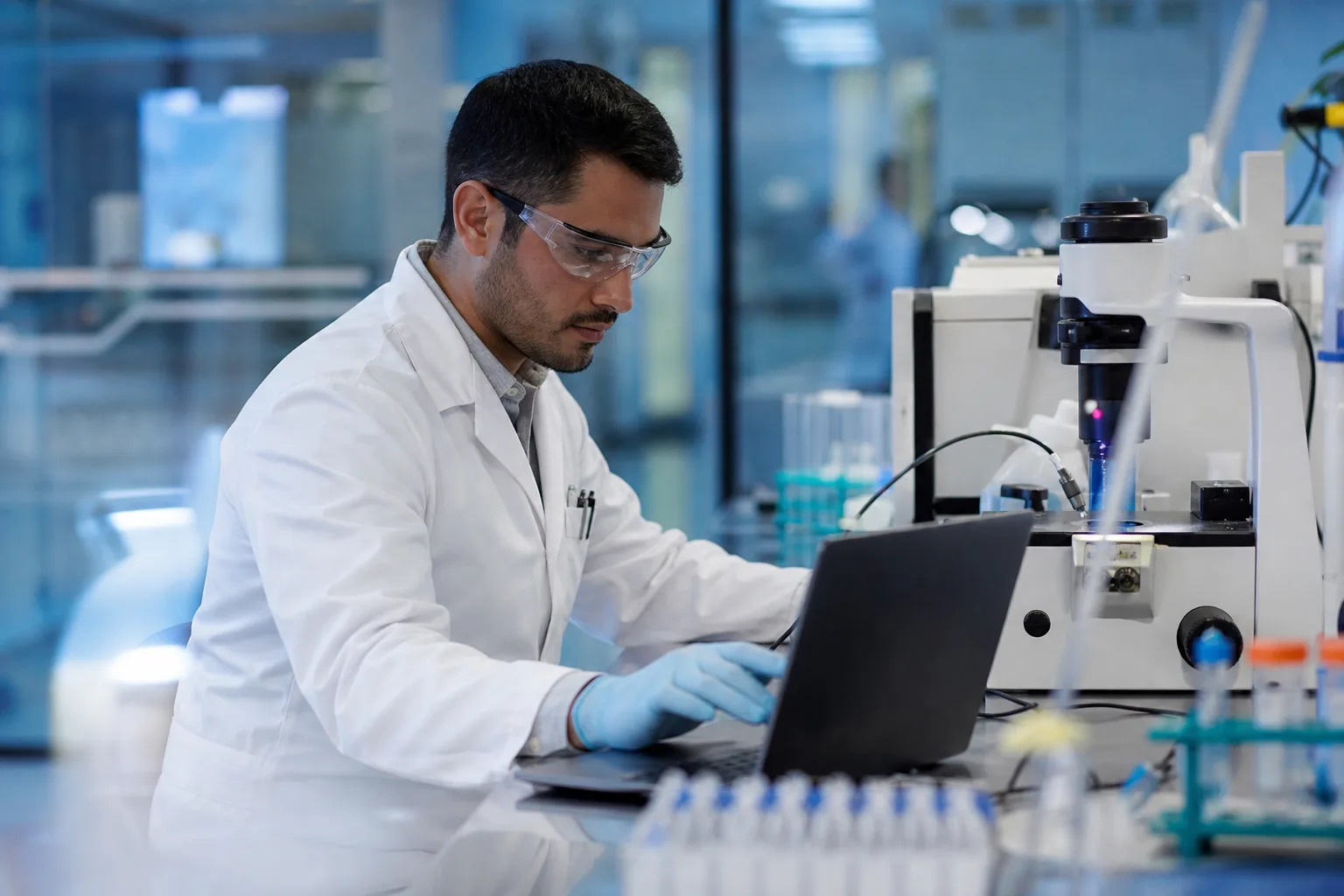
- AI biosecurity is emerging as one of the most urgent safety challenges as large language models grow more capable.
- Microsoft’s new AI biosecurity framework targets the risk of models being misused to design or synthesize biological threats.
- The move reflects growing pressure on tech companies to self-regulate before governments impose stricter mandates.
- Experts warn that without strong safeguards, AI could dramatically lower the barrier to bioweapon development.
Table of Contents
AI Biosecurity Is Now a Boardroom Problem
AI biosecurity has moved from a niche academic concern to a genuine corporate priority — and Microsoft’s latest policy push makes that shift difficult to ignore. The company, one of the world’s largest investors in AI infrastructure through its deep partnership with OpenAI, has outlined a framework for how it intends to prevent its AI systems from being used to assist in the creation or deployment of biological weapons.
That is a significant moment, though the significance lies less in any single policy document than in what it acknowledges: biological misuse is no longer a far-off edge case for the companies building increasingly capable models. It belongs alongside cybersecurity, fraud, privacy and other risks that demand executive attention, product decisions and sustained investment rather than a short safety statement buried in a launch announcement.
The timing matters. Frontier AI models are capable enough to synthesize and explain complex scientific processes — including ones that responsible researchers would rather keep out of the wrong hands. The same capabilities that make an AI useful for accelerating drug discovery or genomics research can, in theory, be probed for information about pathogens, toxins or synthetic biology techniques that could cause mass harm.
This is the central difficulty in AI biosecurity. Biology is not inherently suspicious. Researchers, clinicians, students and public-health teams all need access to scientific knowledge. A useful system should be able to discuss legitimate research without becoming a shortcut for someone trying to turn scattered technical information into an actionable harmful plan. Drawing that line is much harder than blocking an obvious request.
That distinction also explains why conventional content moderation is an incomplete analogy. Moderation often focuses on a discrete piece of content: a prohibited phrase, image or instruction. Biological risk can emerge through accumulation. One answer may be harmless in isolation; a chain of answers can be something else entirely. A model that understands context and follows a long conversation can be more helpful to legitimate users, but that same ability can make misuse harder to spot.
Security researchers have already demonstrated that large language models can be coaxed — with varying degrees of difficulty — into providing technically useful information about dangerous biological agents. The issue is not that a chatbot independently creates a biological threat. Rather, it may reduce the time, search effort or specialist knowledge required for a person already seeking harmful information. Even a partial reduction in those barriers deserves scrutiny when the potential consequences are so severe.
The World Health Organization’s biosafety and biosecurity guidance underscores precisely how seriously the international community regards the deliberate misuse of biological knowledge. AI does not replace the longstanding need for biosafety practices, institutional oversight and responsible handling of biological materials. It adds a new layer: control over how knowledge is generated, combined and delivered at scale.
What Microsoft’s AI Biosecurity Framework Actually Does
Microsoft’s approach to AI biosecurity centers on a few interlocking strategies. First, there is model-level filtering — training and fine-tuning AI systems to recognise and refuse queries that edge toward dangerous biological territory. This is not new in principle; content moderation has existed in various forms since the earliest chatbots. What has changed is the sophistication required.
Modern models are capable of reasoning across disciplines, so a bad actor does not need to ask, “how do I make a bioweapon?” They might instead construct a series of seemingly innocuous technical questions that cumulatively yield dangerous knowledge. An effective safeguard therefore cannot rely only on detecting a small set of obvious words or prompts. It has to consider intent, context and the way separate requests fit together.
That creates unavoidable trade-offs. Filters that are too loose can miss dangerous requests. Filters that are too broad can obstruct legitimate scientific discussion and frustrate users whose work has nothing to do with misuse. For a company such as Microsoft, the challenge is not simply to make a model say no more often. It is to make refusals informed enough to block harmful assistance without treating ordinary scientific inquiry as suspect.
Microsoft is also investing in what it calls an AI biosecurity framework. A framework matters because this problem is not solved at one layer of an AI product. Model training can shape what a system is willing to answer, but it cannot carry the entire burden. The companies operating these systems also have to think about testing, deployment choices, abuse monitoring and what happens when safeguards fail. A policy that exists only at the point of refusal is vulnerable to workarounds and blind spots.
The strongest reading of Microsoft’s move is that AI biosecurity must become an ongoing operating discipline. Models change, users find new ways to prompt them, and capabilities improve. A safety approach that works for one generation of systems may be inadequate for the next. That makes periodic evaluation at least as important as the initial design of filters.
There is also a competitive dimension. Tech companies have spent years presenting powerful AI as a productivity tool and a research accelerator. Those claims are not incompatible with safety, but they do create pressure to release more capable systems quickly. Biosecurity asks companies to accept that some forms of assistance should remain deliberately difficult to obtain, even when providing them would make a model appear more capable.
The move reflects growing pressure on tech companies to self-regulate before governments impose stricter mandates. Self-regulation can move faster than formal rulemaking, particularly in a technical field where capability shifts can outpace policy. But it also leaves companies setting many of the practical boundaries themselves. That is why broad commitments will be judged by their implementation: whether systems resist indirect harmful requests, whether protections remain effective as models evolve, and whether safety receives the same seriousness as product performance.
Microsoft’s framework does not remove the underlying risk. No single company policy can do that. What it does is put the risk where it belongs: inside the decisions about how advanced AI is trained, deployed and governed. As large language models become more capable, treating biological misuse as somebody else’s problem is no longer credible.

