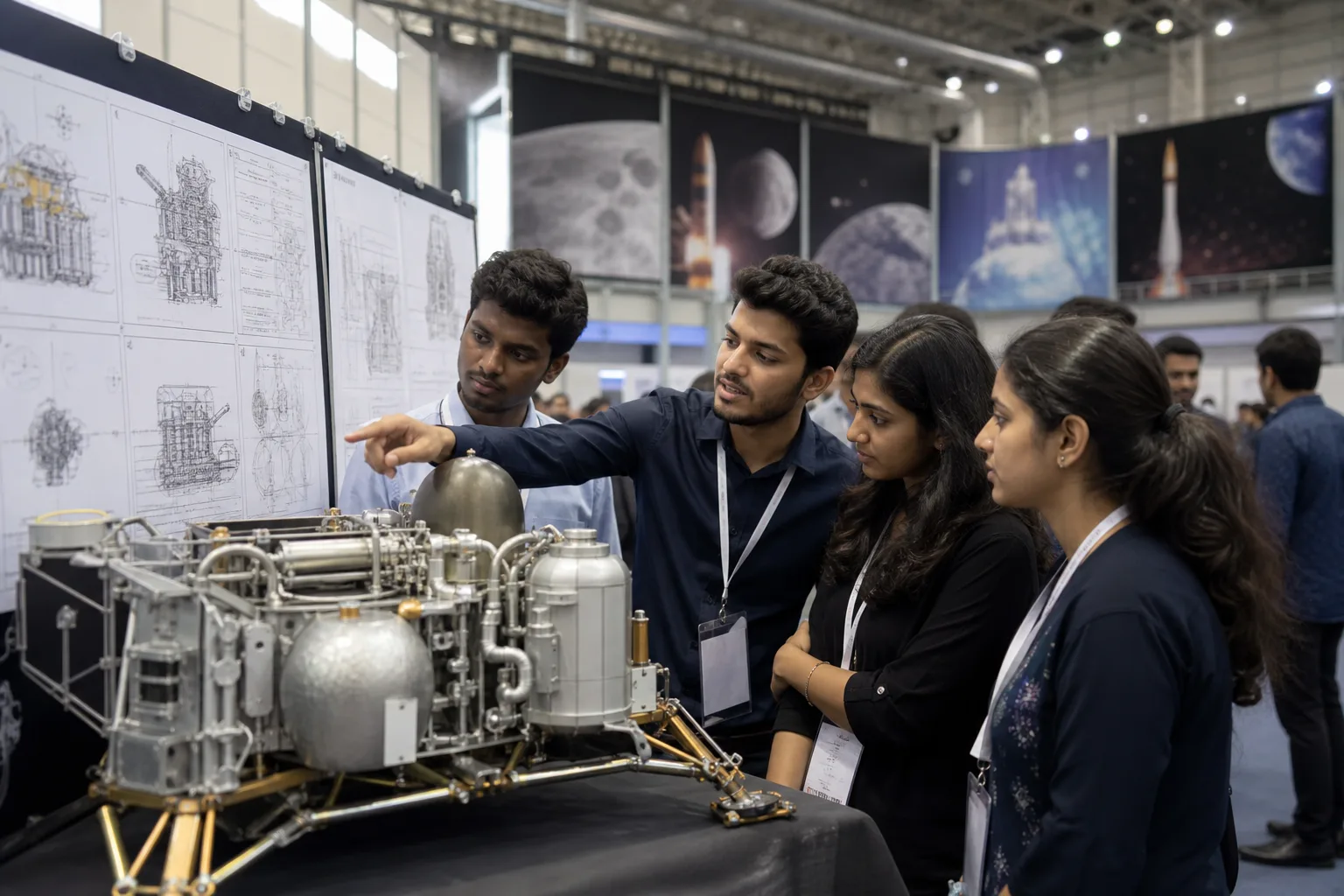
NASA’s Human Lander Challenge has wrapped up its 2026 edition, and the results are in. California Polytechnic State University walked away with the $10,000 top prize, beating out 11 other finalist university teams with a water recovery system designed for the brutal constraints of deep space. The competition, which concluded June 25 near NASA’s Marshall Space Flight Center in Huntsville, Alabama, isn’t just a student science fair — it’s a genuine pipeline for ideas that could end up aboard crewed lunar landers within the decade.
- NASA’s Human Lander Challenge 2026 concluded June 25, with Cal Poly claiming the $10,000 top prize for a Peltier-based hydration system.
- The Human Lander Challenge tasked university teams with designing life support solutions for future crewed lunar landers under the Artemis program.
- Purdue University took second place with an Enhanced Potable Water Dispenser, while Embry-Riddle Aeronautical University finished third.
- Winning student designs could feed directly into NASA’s next-generation Artemis lander development work.
Table of Contents
What the Human Lander Challenge Actually Asks Students to Solve
The premise sounds deceptively simple: design better life support systems for the landers that will carry astronauts to the Moon. But the engineering reality is anything but. Environmental control and life support systems — ECLSS in NASA shorthand — are among the most unforgiving engineering domains in aerospace. Every kilogram counts. Every failure mode needs a backup. And the systems have to work reliably in an environment where you can’t exactly call a technician.
Since September 2025, teams from universities across the country have been grinding through exactly this kind of systems-level thinking. The Human Lander Challenge isn’t asking students to build a widget — it’s asking them to reason about how components interact, how failures cascade, and how design choices ripple through crew safety. That’s a significantly harder problem than most undergraduate engineering coursework ever touches.
Natalie Martinez-Vlasoff, who serves as mission capabilities and risk reduction advanced capabilities integration lead at NASA Marshall, put the stakes plainly: “As NASA continues preparing for sustained lunar exploration and future human missions to Mars, the development of robust, efficient, and reliable life support systems remains a critical focus area.” She added that this year’s teams showed a strong grasp of design trade-offs and how a well-considered, systems-level approach can meaningfully improve reliability and crew safety on future human landing systems.
The 2026 Human Lander Challenge Winners, Ranked
Twelve finalist teams made it to Huntsville for the final round, presenting their work to a panel of NASA engineers and aerospace industry experts at the U.S. Space & Rocket Center on June 22. The Human Lander Challenge format combined formal technical presentations with a collaborative poster session — which means teams weren’t just defending their work to judges, they were also pressure-testing their ideas against each other. That peer dynamic is arguably as valuable as the prize money.
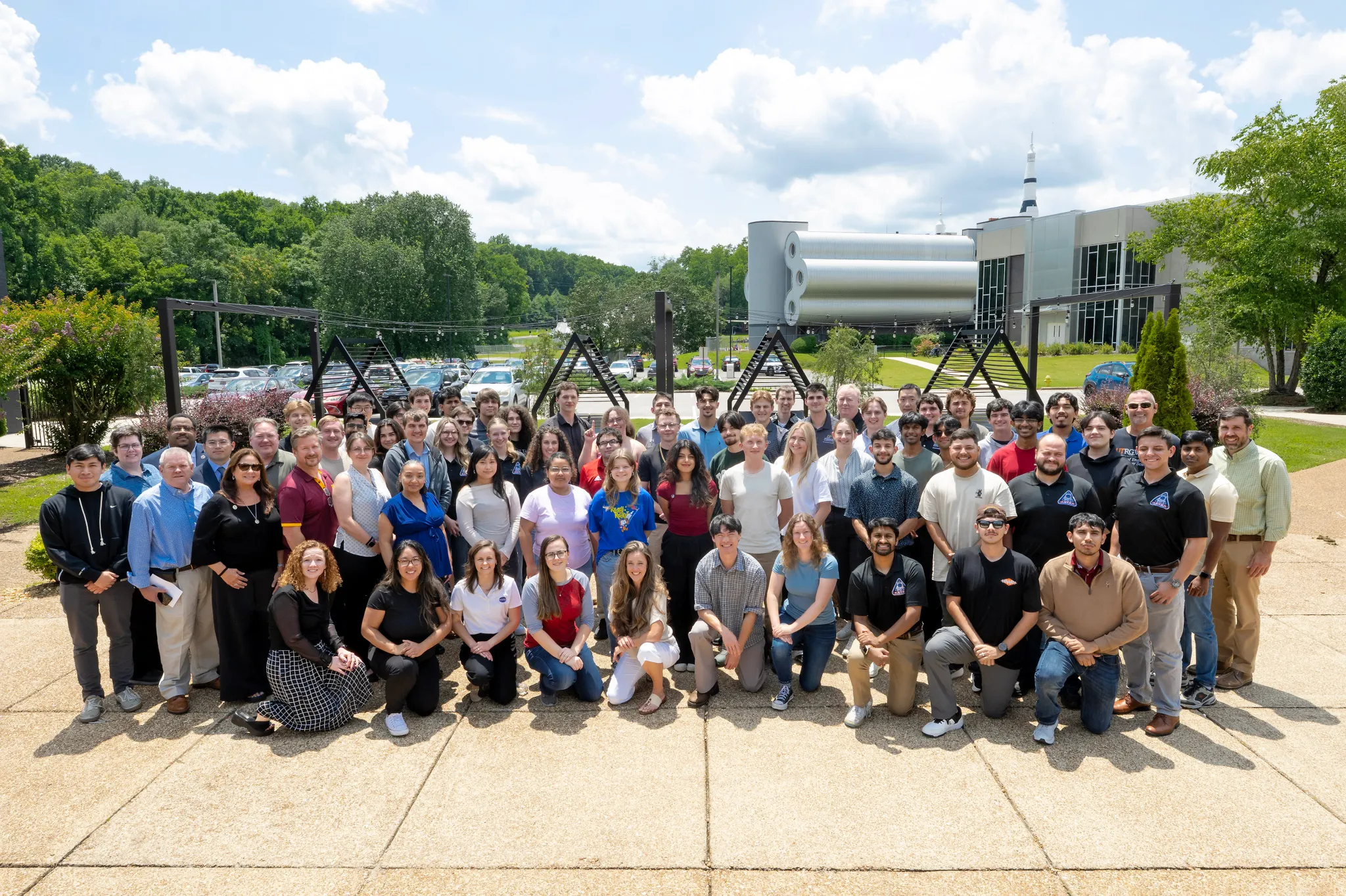
The top three finishers were:
- California Polytechnic State University — 1st Place ($10,000): Cal Poly’s winning entry was the Peltier-based Hydration Accumulation Terminal. Peltier devices — solid-state heat pumps that move thermal energy when current passes through them — are already used in consumer cooling applications, but adapting them for moisture recovery in a spacecraft life support loop is a genuinely interesting engineering angle. The approach offers the appeal of no moving parts, which matters enormously when reliability is paramount and maintenance is impossible.
- Purdue University — 2nd Place ($5,000): Purdue’s team focused on an Enhanced Potable Water Dispenser, targeting improvements to how astronauts actually access and consume water in microgravity and low-gravity environments. Purdue has deep aerospace roots — it’s produced more astronauts than any other university — so this result tracks.
- Embry-Riddle Aeronautical University, Daytona Beach — 3rd Place ($3,000): Embry-Riddle’s Advanced Quality Orbital Rehydration Assembly rounded out the podium, another entry zeroing in on water quality and delivery — a recurring theme across the top finishers that says something about where NASA sees the real engineering gaps in current lander life support designs.
The fact that all three top entries deal with water — recovery, dispensing, and rehydration — isn’t a coincidence. Water is arguably the most critical consumable for a crewed lunar mission. NASA’s existing life support systems on the International Space Station already recover roughly 93% of crew water from humidity, urine, and other sources. For a lunar lander, which won’t have the ISS’s mass budget or permanent infrastructure, pushing that efficiency higher and making the hardware lighter and more reliable is a genuine priority — and exactly the engineering gap the Human Lander Challenge is designed to close.
Why This Competition Matters Beyond the Prize Money
There’s a tempting instinct to view university design challenges as purely symbolic — a way to generate good PR and engage students without actually moving the needle on real mission hardware. The Human Lander Challenge is structured to resist that framing. NASA has explicitly stated that student solutions from this competition could be incorporated into development work for next-generation Artemis landers. Whether that means a concept gets picked up directly, inspires a NASA engineer’s approach, or simply validates a design direction — the pathway from campus to mission hardware is real, if not guaranteed.
The Human Lander Challenge is sponsored by NASA’s Human Landing System Program, managed out of Marshall, and administered by the National Institute of Aerospace. That structure matters: NIA has a long track record of bridging academic research and agency engineering priorities, and Marshall is the center actually overseeing Artemis lander development. This isn’t a competition run by a marketing team — it sits inside the actual program office.
The Artemis Context: Moon by 2028, Mars Beyond That
All of this sits inside a larger arc. NASA’s Artemis program has had a turbulent few years — budget pressures, shifting timelines, and the ongoing reconfiguration of the commercial lander strategy after SpaceX’s Starship Human Landing System became the primary vehicle for the initial crewed lunar surface missions. The current target for returning American astronauts to the Moon is 2028.
But the agency is already thinking past that first landing. Martinez-Vlasoff’s comments about Mars weren’t rhetorical filler — sustained lunar presence is the explicit test bed for the life support architectures that will eventually have to keep a crew alive on a six-month transit to Mars and on the Martian surface itself. The distances involved make resupply essentially impossible; the systems have to be self-sufficient in a way that no human space mission has yet required. The lessons emerging from each Human Lander Challenge cycle feed directly into that long-range planning.
That’s the long game the Human Lander Challenge is playing. Teaching a generation of engineers to think in closed-loop systems, reliability margins, and mass budgets — not just component performance — builds the institutional knowledge NASA will need when Mars stops being a planning document and becomes a launch target.
Whether Cal Poly’s Peltier hydration terminal ever flies on a lander, the students who built it now understand something most engineering graduates never encounter: what it actually takes to keep a human being alive, far from home, with no margin for failure. That knowledge doesn’t stay on the shelf.