

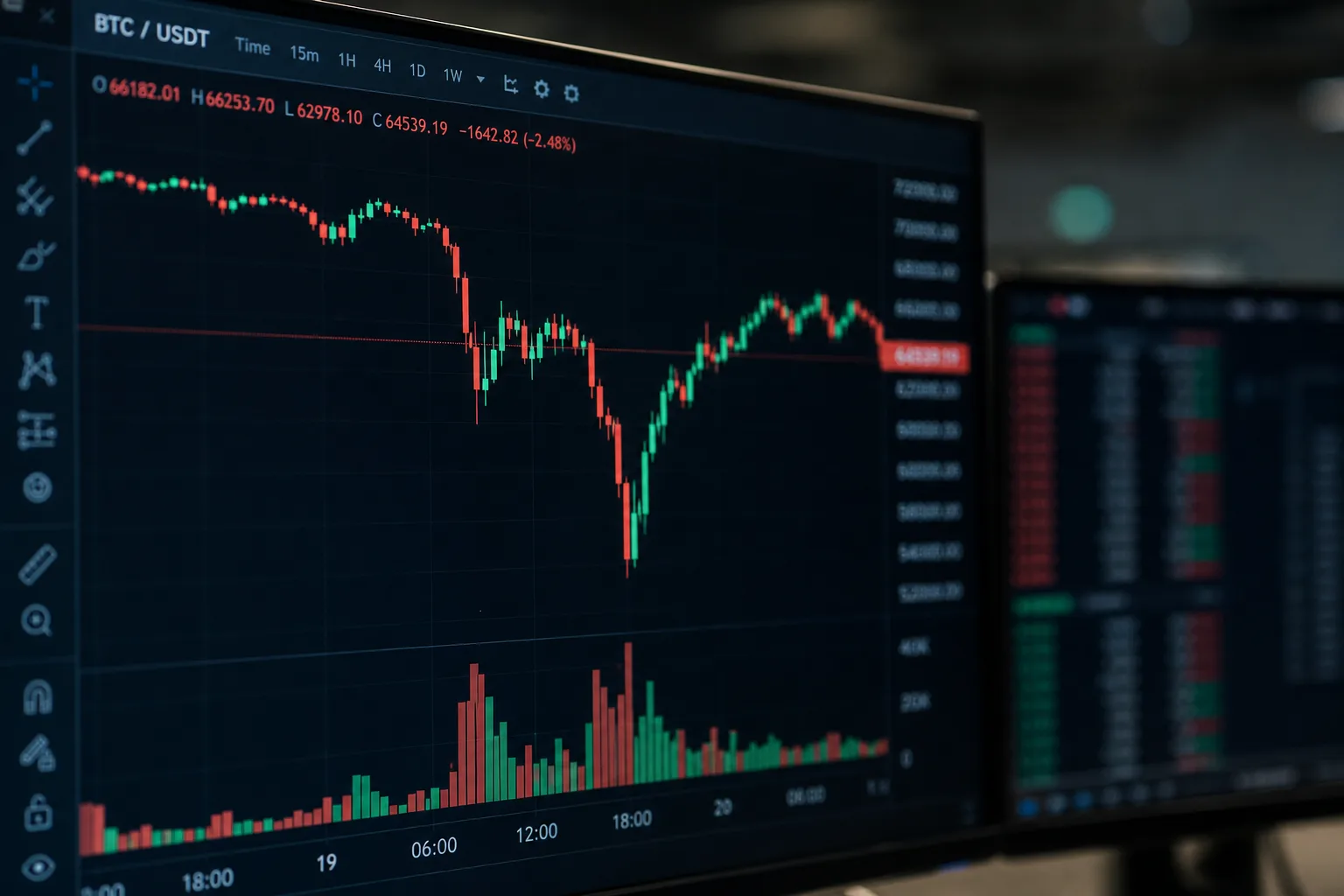
Bitcoin’s price drop to a 21-month low of $57,737 rattled markets earlier this week — but within a single trading session, bulls had clawed the price back above $60,000. Whether that bounce means anything, or whether it’s just a temporary reprieve before another leg down, is the question every crypto trader is wrestling with right now.
- The Bitcoin price drop to $57,737 hit a 21-month low before bulls pushed it back above $60,000 within hours.
- The Bitcoin price drop triggered $4.5 billion in spot ETF outflows during June alone — the largest since those funds launched.
- Long-term holders added roughly 270,000 BTC over two weeks, suggesting bigger investors see the dip as a buying opportunity.
- Leverage data shows most forced-liquidation risk sits between $57,000 and $60,500, keeping volatility risk high in the short term.
Table of Contents
The Bitcoin Price Drop in Context
At its worst point this week, Bitcoin was sitting at levels not seen since late 2022 — deep in the aftermath of the FTX collapse, when the entire sector was in a state of open crisis. That’s the uncomfortable benchmark the market just revisited. The Bitcoin price drop to $57,737 and the subsequent recovery to $60,200, a gain of roughly 2.7% in 24 hours, provides some relief, but it doesn’t erase the bigger picture: BTC is still down approximately a third from where it started 2024. For an asset that was trading above $70,000 just months ago, that’s a significant retrenchment.
Ether and Solana followed Bitcoin higher, with ETH gaining around 3% and SOL up nearly 5% at the time of writing. Altcoins tend to amplify Bitcoin’s moves in both directions, so their participation in the bounce isn’t surprising — but it also doesn’t guarantee the move has legs.

Fear Is Dominating Sentiment
The Crypto Fear and Greed Index tells you everything you need to know about the current mood. At 11 out of 100, the market is deep in ‘Extreme Fear’ territory — the kind of reading that historically appears near market bottoms, but can also persist for weeks or months when the macro environment isn’t cooperating. It’s a contrarian indicator at its best, but it’s not a timer. Plenty of markets have spent extended periods at these levels before finding genuine footing.
The Bitcoin price drop has sharpened this fear considerably, and what’s interesting is how it’s showing up differently across different types of investors. The data isn’t telling a single clean story — it’s pulling in two directions at once, which is part of what makes the current setup tricky to read.
ETF Outflows vs. On-Chain Accumulation
On one hand, US spot Bitcoin ETFs — the products that were supposed to usher in a new era of institutional adoption after finally receiving SEC approval in January 2024 — have been haemorrhaging capital. June alone saw a reported $4.5 billion in net outflows, the largest monthly exit since those funds launched. That’s not a trivial number. It suggests that whatever enthusiasm drove early inflows has cooled considerably, and that some investors are actively reducing their Bitcoin exposure rather than buying the dip. The Bitcoin price drop appears to have accelerated that rotation out of ETF positions rather than attracting fresh inflows.
On the other hand, on-chain data points in the opposite direction. Long-term holders — generally defined as wallets that have held Bitcoin for at least 155 days — added roughly 270,000 BTC over the past two weeks. That’s a meaningful accumulation signal. This cohort doesn’t tend to panic-buy; they move deliberately, and their purchases during drawdowns have historically aligned with periods that, in hindsight, looked like attractive entry points. They’re not always right, but their behaviour carries weight.
So you’ve got institutional money exiting through ETFs while longer-horizon holders quietly accumulate on-chain. The divergence is telling. The ETF crowd skews toward shorter-term, sentiment-driven allocation; the on-chain accumulators are making a different kind of bet — one measured in years, not weeks. Each Bitcoin price drop of this magnitude tends to clarify which camp an investor belongs to.

What Leverage Data Is Warning About
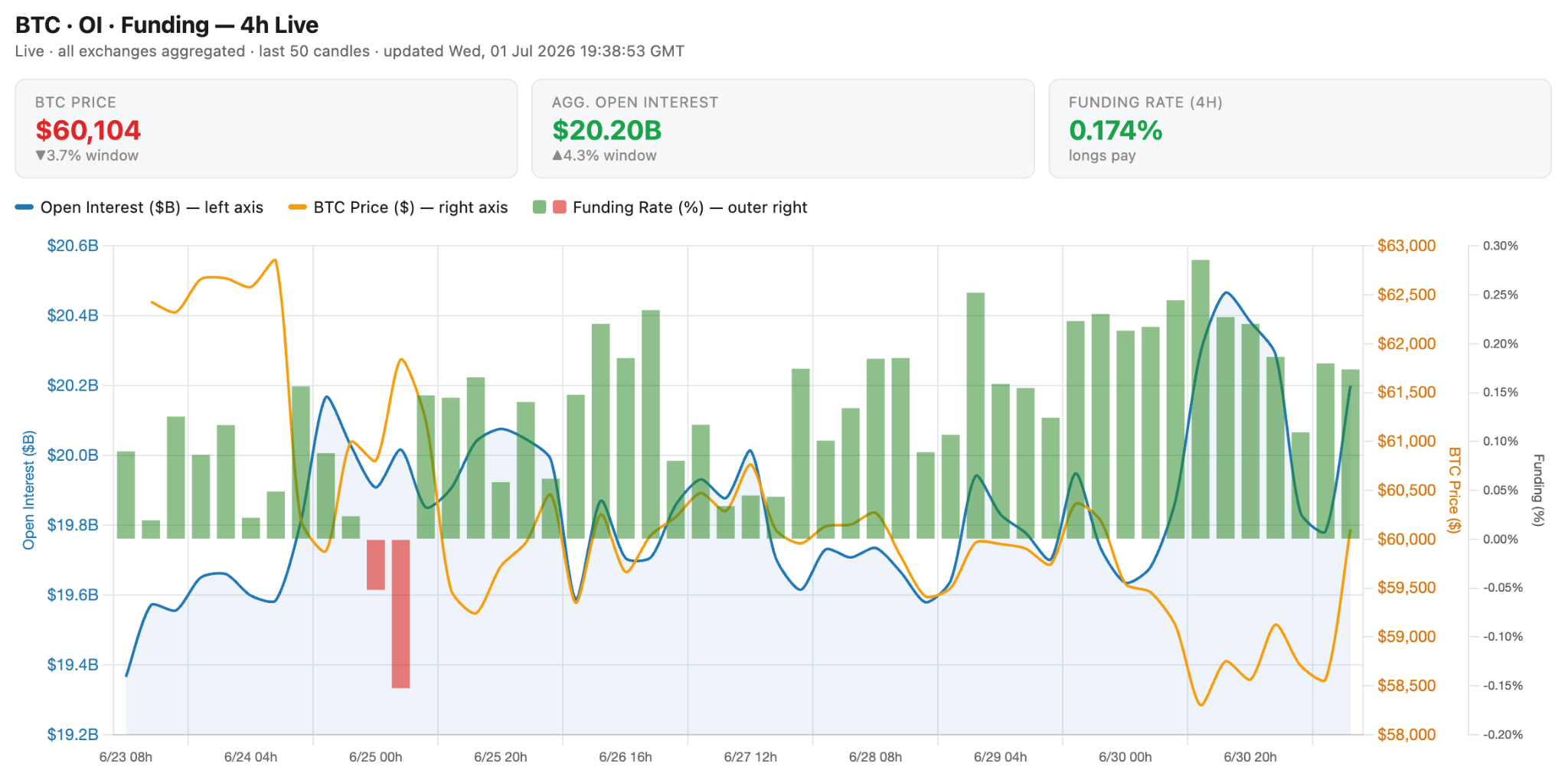
The Bitcoin price drop didn’t flush out the bulls the way a clean capitulation usually does. That’s the concern hiding in the funding rate data. For three consecutive days — even as Bitcoin was falling to new lows — the funding rate stayed positive. In derivatives markets, a positive funding rate means traders holding long positions are paying a premium to those holding shorts. It’s a signal that bullish bets remain crowded, that traders are still wagering on a recovery rather than cutting their losses.
That’s a problem. When leverage builds up on the bullish side while price is struggling, it creates a coiled spring — except the spring can release in either direction. If the Bitcoin price drop continues, those leveraged longs will face forced liquidations, which mechanically push the price lower and trigger more liquidations in a cascade. It’s one of the mechanisms that turned the 2022 drawdowns into such brutal, fast-moving events.
Looking at combined liquidation data from three major exchanges over the past week, the heaviest concentration of open leveraged positions sits between $57,000 and $60,500 — almost exactly the range Bitcoin has been trading in since late June. Above roughly $61,000 to $62,000, the positioning thins out noticeably. The same is true below $55,000 to $56,000. What this means practically is that a decisive break in either direction — genuinely clearing one of those zones — could accelerate rapidly once the forced closures start kicking in.
What Would a Real Recovery Look Like?
The 24-hour outlook is, at best, neutral. A single day’s bounce doesn’t constitute a trend change, and the leverage picture makes a clean recovery harder to trust on its own. What analysts and traders will be watching for is a specific combination: rising Bitcoin price alongside rising open interest and a shift in funding dynamics. That combination would suggest new money is flowing in with conviction rather than existing leveraged positions just bouncing around inside a tight range. So far, that combination hasn’t appeared in the data.
The Bitcoin price drop also invites a broader question about where this cycle stands relative to previous ones. In past bear-market-to-recovery transitions, the most durable bottoms have tended to arrive when sentiment was at its worst and the weakest hands had already sold. The Fear and Greed Index at 11 suggests sentiment is certainly wretched. But the positive funding rate tells you there are still plenty of leveraged optimists in the market who haven’t been fully washed out yet — and that’s typically a sign that the cleansing process isn’t complete.
If the $57,737 level holds and becomes a reference point that the market respects on any subsequent test, it could retroactively earn the label of ‘the bottom.’ Historically, each major Bitcoin price drop has eventually resolved into a fresh accumulation phase — but calling it that in real time requires either a faster deterioration in leverage positioning, or a meaningful acceleration in price — ideally both. Until one of those arrives, the safest read is that the market remains in a fragile equilibrium, capable of moving sharply in either direction with relatively little provocation.
Frequently Asked Questions
Was the Bitcoin price drop to $57K the bottom?
It’s too early to say definitively. While long-term holders added roughly 270,000 BTC during the dip, funding rates stayed positive even as price fell — a sign that leveraged bulls remained crowded. A sustained move above $61,000–$62,000 would be a stronger signal the bottom is in.
Why did Bitcoin spot ETFs see such large outflows in June?
US spot Bitcoin ETFs recorded a reported $4.5 billion in net outflows during June, the largest since the funds launched. Broader investor caution, with the Crypto Fear and Greed Index reading around 11 out of 100, likely drove participants to reduce exposure during the selloff.
What does the funding rate tell us about Bitcoin’s next move?
A persistently positive funding rate means traders are paying a premium to hold long positions, signalling crowded bullish bets. When this happens alongside falling prices, it raises the risk of forced liquidations — a cascade that can accelerate a downward move rather than support a recovery.
Where are the key liquidation levels for Bitcoin right now?
Data from three major exchanges shows the heaviest leverage concentration sits between $57,000 and $60,500. A decisive break above $61,000–$62,000 or below $55,000–$56,000 is where cascading forced liquidations would most likely amplify the next significant price move.

