
Apple’s 2027 hardware pipeline is filling up fast. According to a new report from Bloomberg, the company is actively testing four iPad Pro 2027 models and is preparing a redesigned entry-level MacBook Pro — and that’s before you factor in the M7 chip, which Apple apparently wants to ship earlier than anyone expected.
- Apple is testing four iPad Pro 2027 models keeping 11-inch and 13-inch sizes, with faster chips and possible vapor chamber cooling.
- The iPad Pro 2027 lineup is expected to arrive in spring, alongside a redesigned entry-level 14-inch MacBook Pro codenamed K104.
- Apple is targeting an M7 chip debut as early as the first half of 2027 to handle more demanding AI workloads.
- Ongoing memory and chip shortages could still disrupt Apple’s schedule, despite what’s shaping up to be a massive product year.
Table of Contents
iPad Pro 2027: Four Models, Same Sizes, Faster Everything
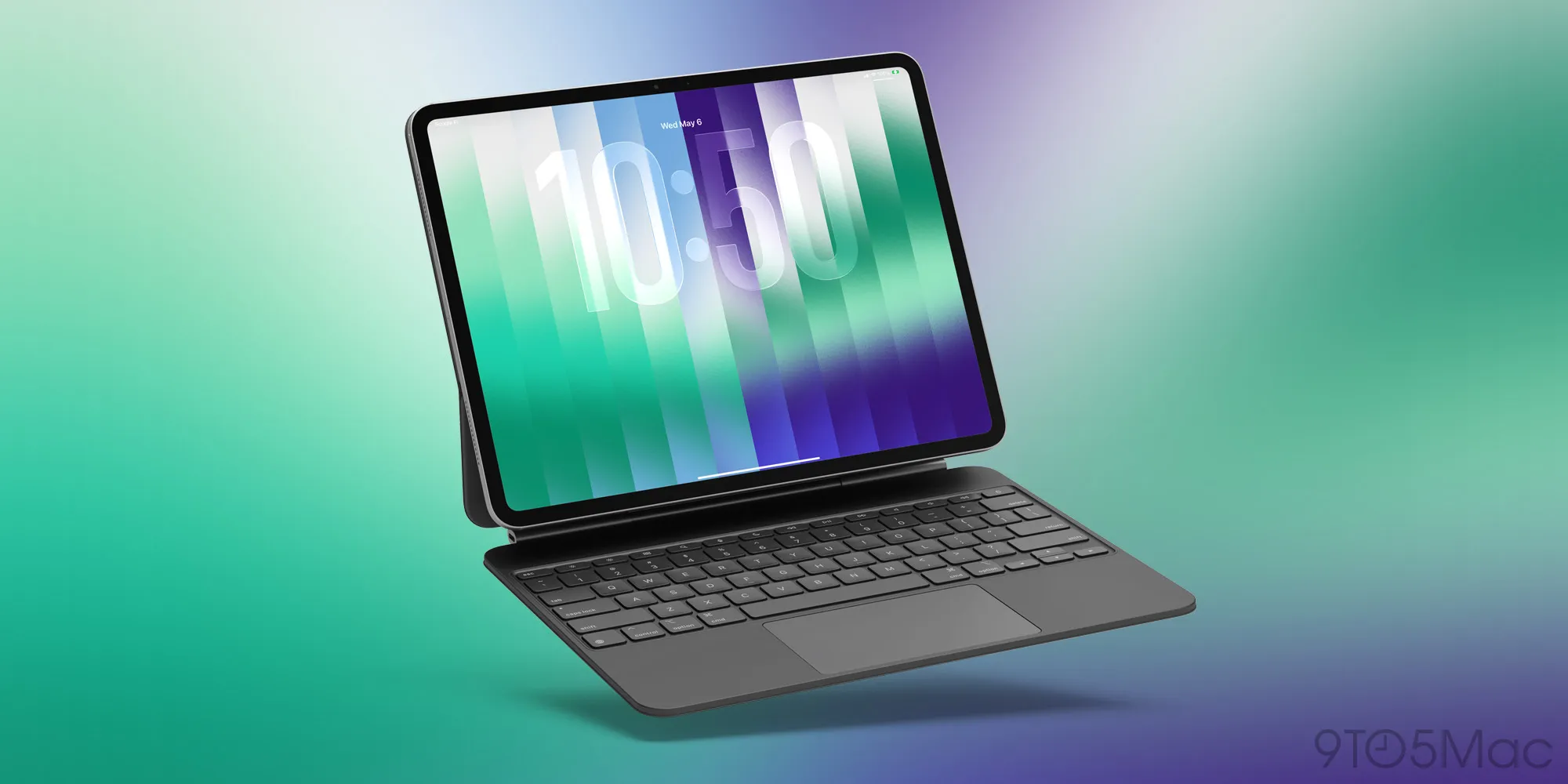
The iPad Pro 2027 slate consists of four models — almost certainly two configurations of each display size, the familiar 11-inch and 13-inch variants. Bloomberg says the updates are largely internal, with faster chips being the headliner. That fits the pattern Apple has followed with iPad Pro for years: keep the industrial design mostly intact, pour the engineering effort into what’s under the glass.
One detail worth paying attention to is the vapor chamber cooling system. Bloomberg had previously reported that Apple was experimenting with the technology for iPad Pro, and it appears those tests are still in play. If Apple does ship vapor chamber cooling in the iPad Pro 2027, it would be a meaningful shift for the tablet — not so much for casual browsing or video playback, but for sustained workloads like video editing, 3D rendering, and the kind of AI inference tasks that are starting to define what a ‘pro’ device actually needs to do. Thermal throttling is the quiet enemy of productivity on any thin device, and a vapor chamber would give the M-series silicon more room to run at full speed for longer.
Apple last refreshed the iPad Pro in October 2025, slotting in the M5 chip. A spring 2027 launch would put roughly 18 months between generations — a comfortable cadence, though Apple has occasionally stretched it further. The more interesting number might be the price. Apple quietly raised the entry point for the 11-inch iPad Pro from $999 to $1,199 and the 13-inch from $1,299 to $1,499 in a recent update. If those prices hold for the iPad Pro 2027 models, Apple is signalling that the iPad Pro is firmly a premium professional tool, not a stepping stone to a Mac.
The Foldable Question
There’s a shadow hanging over the conventional iPad Pro 2027 story: the rumoured foldable. Previous reports have described an 18.8-inch foldable iPad Pro potentially arriving in 2027, which would be a genuinely different product category — closer in concept to Samsung’s Galaxy Z Fold series but at a far larger scale. The four models Bloomberg is now reporting appear to be a standard refresh, not that device. That’s not necessarily a contradiction. Apple could be running both programmes in parallel, with the foldable on a different, likely later, timeline.
It’s the kind of product Apple has been methodically working toward for years. The company has been sourcing foldable display panels, filing related patents, and reportedly testing hinge mechanisms — but Apple’s history shows it won’t ship a foldable until the durability and software story are airtight. Samsung has taken the arrows on early foldable reliability so Apple doesn’t have to. For now, the four conventional models look like the 2027 iPad Pro story. The foldable is a different chapter.
A Redesigned Entry-Level MacBook Pro Is Coming
The MacBook Pro news is arguably more interesting from a design standpoint. Bloomberg reports that Apple has a redesigned 14-inch MacBook Pro, codenamed K104, targeting the first half of 2027. The key detail: it will adopt a new design ‘in line with what Apple is preparing for higher-end MacBooks with touch screens,’ which are expected between the end of this year and early next year.
That phrasing suggests the touchscreen MacBook Pro — long rumoured and reported by Bloomberg’s Mark Gurman as far back as 2025 — is now close enough to production that its design language is already filtering down to the entry-level tier. Apple tends to unify design families quickly once a new visual language is established, so an entry-level MacBook Pro that looks like the new touchscreen models makes sense as a follow-on product.
There’s also a transitional model in the picture. Bloomberg notes that Apple ‘had already finished work months ago on a refreshed entry-level MacBook Pro codenamed J804,’ planned for 2026 with the current design and a new M6 chip. So the roadmap appears to be: J804 ships this year with M6 and the existing chassis, then K104 arrives in early 2027 with a fresh design. Buyers who need a new MacBook Pro in late 2025 or 2026 won’t be getting the new look — but they will get a genuine chip upgrade.
The M7 Chip and Apple’s Accelerating Silicon Cadence
Perhaps the most striking element of Bloomberg’s report is the M7 timeline. Apple is reportedly aiming to debut the M7 processor as early as the first half of 2027 — meaning it could arrive before the M6 has even had a full year in the market. That’s a noticeably compressed generational gap, and the reason cited is direct: Apple wants the silicon to keep pace with increasingly demanding AI workloads.
This is a real pressure point across the entire industry right now. Qualcomm, Intel, and AMD are all racing to put more capable neural processing units into their chips precisely because on-device AI inference — running large language models, image generation, and real-time translation locally rather than in the cloud — requires significantly more compute and memory bandwidth than the tasks chips were designed around even three years ago. Apple’s Neural Engine has been a competitive advantage since the A11 Bionic in 2017, but the requirements are moving fast enough that even Apple apparently feels the need to accelerate its cadence.
An M7 chip in the first half of 2027 would likely debut in the MacBook Pro K104 and the iPad Pro 2027 lineup simultaneously, giving Apple a consistent silicon story across its pro products. It would also put Apple well ahead of any Windows PC rival shipping equivalent AI performance, at least on a per-watt basis — which has been Apple Silicon’s defining advantage since the M1 in 2020.
Supply Chain Risk Is Still Real
Bloomberg’s report includes a caveat that shouldn’t be glossed over: ongoing memory and chip shortages could still disrupt Apple’s roadmap. The global semiconductor supply chain has been in a state of managed chaos since 2020, and while leading-edge production at TSMC — Apple’s exclusive chip manufacturer — has stabilised, memory supply (particularly the high-bandwidth LPDDR5X and next-generation variants needed for AI-capable devices) remains tight. Apple’s scale gives it priority access that smaller vendors can only dream of, but no company is immune to yield problems or packaging bottlenecks at the leading edge.
If everything stays on track, the combination of four iPad Pro 2027 models, a redesigned entry-level MacBook Pro, and an M7 chip debut in the first half of the year would make 2027 genuinely extraordinary for Apple hardware. Add to that the anticipated touchscreen MacBook Pro, a refreshed Mac Pro, and whatever the foldable situation turns out to be, and you have a product pipeline unlike anything Apple has attempted in a single calendar year. The pressure is on the supply chain to keep up — and on Apple’s software teams to make sure the hardware ambition lands with equally polished experiences on the other side of the glass.
Frequently Asked Questions
What’s new in the iPad Pro 2027 lineup?
The iPad Pro 2027 is expected to retain its 11-inch and 13-inch display sizes while gaining faster chips and potentially a vapor chamber cooling system for better sustained performance. Apple last refreshed the iPad Pro in October 2025 with the M5 chip.
What is the MacBook Pro K104 and how is it different from J804?
K104 is Apple’s codename for a redesigned entry-level 14-inch MacBook Pro due as early as the first half of 2027. It will adopt a new design aligned with higher-end touchscreen MacBooks. The earlier J804 refresh uses the current design with an M6 chip and was planned for this year.
When will Apple release the M7 chip?
Bloomberg reports Apple is aiming to debut the M7 processor as early as the first half of 2027, faster than its usual generational cadence. The accelerated timeline is driven by the need to handle increasingly demanding AI workloads on-device.
Is a foldable iPad Pro still coming in 2027?
Earlier rumours pointed to a foldable iPad Pro with an 18.8-inch display arriving in 2027, but the four models currently in testing appear to be a conventional refresh. The foldable device may still exist on Apple’s roadmap separately from these models.