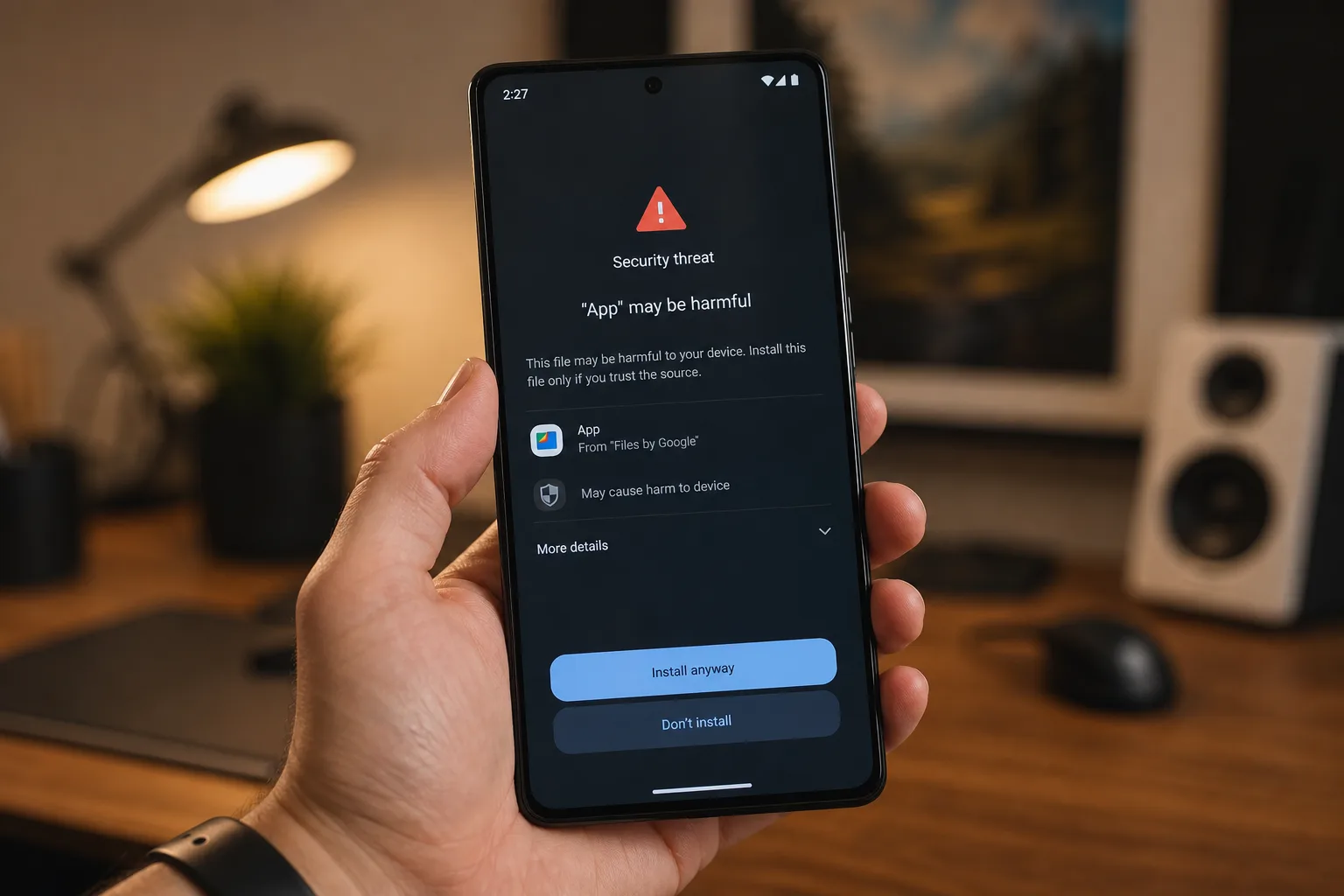
Google has finally put a concrete date on its plans to reshape how Android handles app installs from outside the Play Store. The Android sideloading changes the company has been building toward will start affecting real users on September 30, 2026 — and while most people won’t feel a thing at first, the implications for Android’s open ecosystem are worth understanding now.
- Android sideloading changes begin on September 30, 2026, rolling out first across Brazil, Indonesia, Singapore, and Thailand.
- Android sideloading changes won’t block installs entirely — unregistered apps will require extra steps, not a hard ban.
- Google plans a global expansion to all certified Android devices in 2027, following a feedback period.
- A new limited-distribution developer account launching in August will let hobbyists share apps with up to 20 devices fee-free.
Table of Contents
What Google Is Actually Doing Here
At the heart of this initiative is a developer verification system. Google wants every app distributed on Android to be tied to a registered developer identity — someone who has gone through a verification process, not just an anonymous account that can vanish after distributing malware and reappear the next day under a different name.
It’s a problem the company has been fighting for years. Malicious actors have historically used Android’s openness against it, spinning up throwaway developer accounts to push harmful apps, getting flagged, and simply starting over. Verification ties accountability to distribution. According to Google, millions of apps have already been registered since the programme launched in March, covering the vast majority of installs both on and off the Play Store. The Android sideloading changes are a direct response to this long-running abuse of the platform’s open model.
The mechanism for enforcing this is a new system service Google is already pushing to Android devices via Google System Updates. Right now it’s dormant — it won’t actively affect how apps install. Think of it as the infrastructure being laid down before the rules go live.
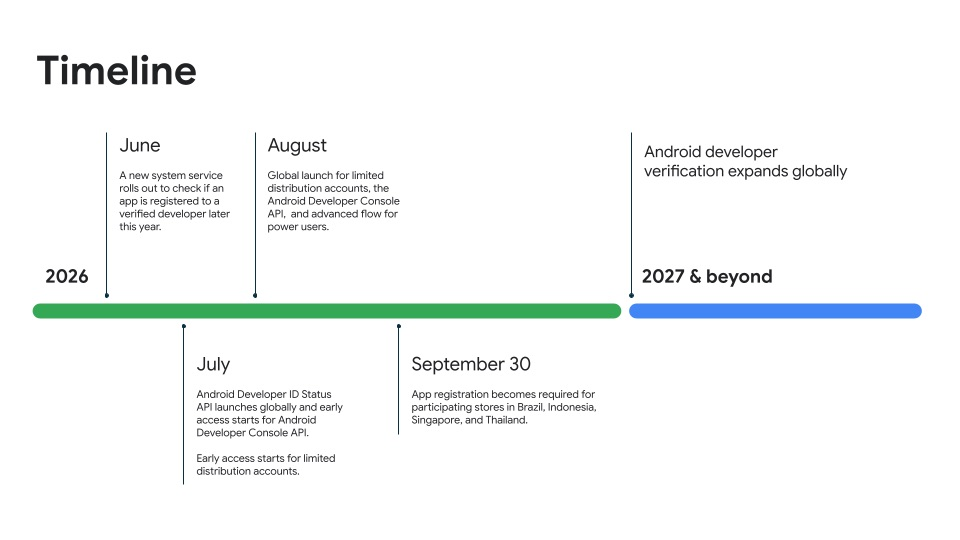
The Android Sideloading Changes Timeline, Step by Step
Google has mapped out a phased rollout that deliberately avoids a sudden, disruptive cutover. Here’s how the Android sideloading changes play out:
- Now (mid-2025): The verification system service rolls out silently to Android devices through Google System Updates. No impact on installs yet.
- August 2025: Google launches a new limited-distribution developer account — more on that below.
- September 30, 2026: Developer registration requirements go live for users in Brazil, Indonesia, Singapore, and Thailand. Apps from unregistered developers will trigger a new advanced sideloading flow.
- Rest of 2026: The rollout stays limited to those four markets while Google collects feedback from users, developers, and app store partners.
- 2027: The verification requirement expands globally across all certified Android devices.
The choice of initial markets isn’t arbitrary. Brazil, Indonesia, Singapore, and Thailand collectively represent a massive and diverse slice of Android’s global user base — high sideloading activity, significant mobile commerce, and a mix of regulatory environments. If problems emerge, Google wants to find them there before a global rollout.
Notably, the Android sideloading changes will apply across several major third-party app stores from day one, not just Google Play. Samsung Galaxy Store, Xiaomi GetApps, HONOR App Market, OPPO App Market, vivo V-Appstore, and Palm Store are all included in the initial scope. That’s a significant detail — it signals that Google is treating this as a platform-level standard, not just a Play Store policy.
What Happens If an App Isn’t Registered?
Here’s where the Android sideloading changes get practical. Google isn’t flipping a switch that makes unregistered apps uninstallable — that would be a PR disaster and an antitrust headache in markets like the EU, where the Digital Markets Act explicitly protects users’ right to install software from outside official stores. Instead, unregistered apps will go through what Google calls an ‘advanced sideloading flow.’
The company revealed earlier this year that this flow includes a mandatory 24-hour waiting period and multiple confirmation steps during installation. The intent is clear: slow things down enough that users have time to reconsider, and surface enough information about the app’s origins that an informed decision is possible.
Apps from verified developers, meanwhile, should install exactly as they do today. No extra friction, no delays. The burden falls on unverified sources, not on the experience as a whole.
Power users and developers who know what they’re doing can still bypass all of this using ADB — Android Debug Bridge — the command-line tool that’s been the sideloading method of last resort since Android’s early days. That escape hatch remains open, meaning the Android sideloading changes stop well short of locking down the platform entirely.
A Lifeline for Hobbyists and Students
One of the quieter but more interesting announcements buried in Google’s timeline is a new limited-distribution developer account, set to launch in August. It’s aimed squarely at people who build apps for fun, for learning, or for small personal projects — the kind of developer who has no intention of publishing to the Play Store but might want to share an app with friends, family, or classmates.
Currently, distributing an app outside the Play Store means either going through the full developer verification process — which requires a government-issued ID and a developer fee for a Play developer account — or distributing an APK file that, under the new rules, would trigger the advanced sideloading flow for recipients. Understanding the Android sideloading changes is especially important for this group, as the new account type is specifically designed to protect them from unnecessary friction.
The limited-distribution account changes that. It lets developers share apps with up to 20 devices without the ID requirement or any fee. It’s a sensible carve-out. The last thing Google wants is to be seen as killing indie development or hobbyist experimentation in the name of security. This makes the policy feel less like a crackdown and more like a maturation of the platform.
Is This Android Becoming More Like iOS?
It’s the obvious question, and the honest answer is: partially, but not in the way that should alarm most users. Apple’s iOS has always required App Store distribution for consumer apps, with alternative marketplaces only recently unlocked in the EU under regulatory pressure. Google is moving in a different direction — towards verified identity rather than centralised distribution control.
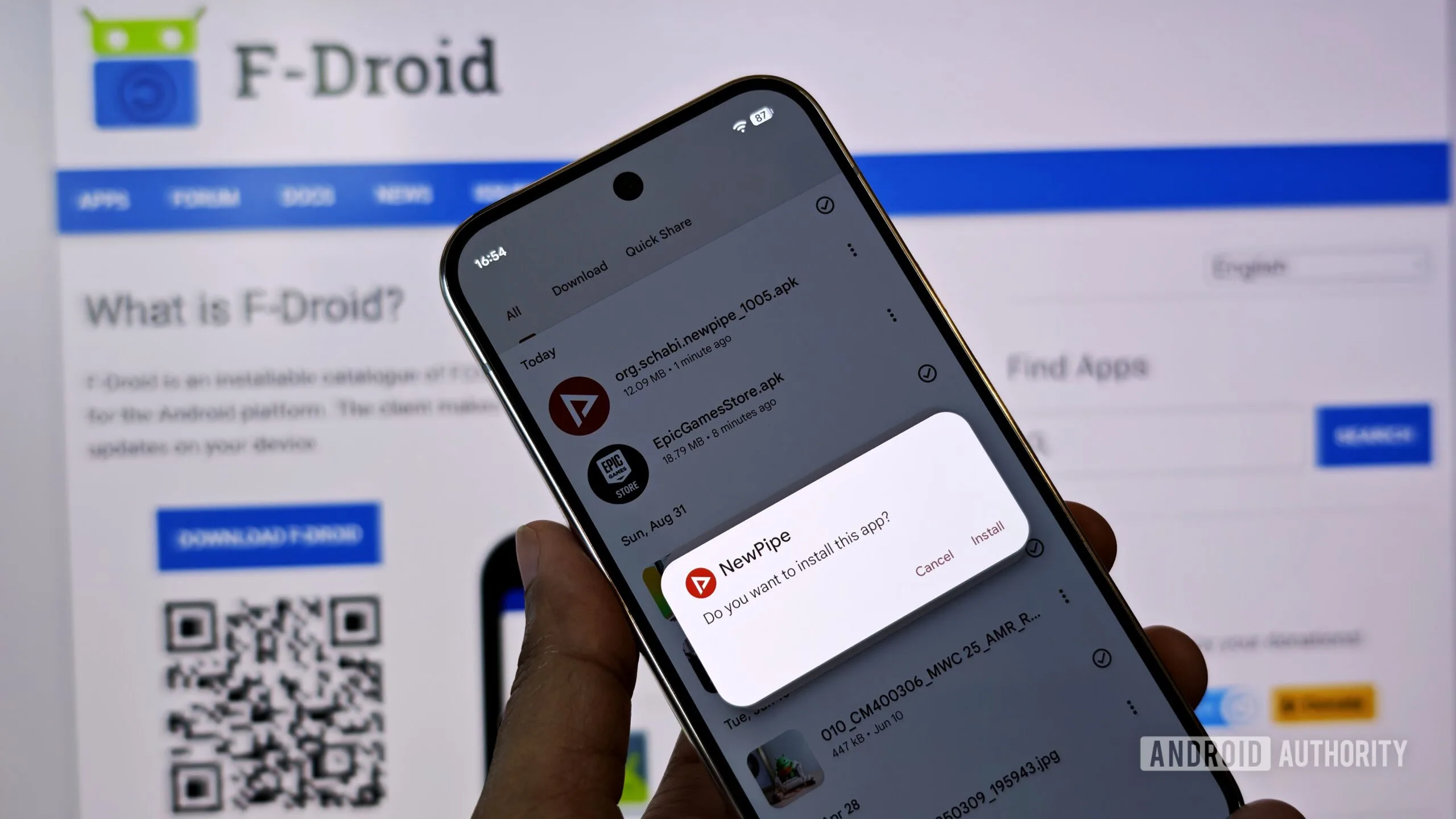
That’s a meaningful distinction. You can still install anything you want on Android. You can still run F-Droid, download APKs from developer websites, or build your own apps. The Android sideloading changes don’t alter the fundamental openness of the platform. What they do is attach accountability to that openness.
It’s also worth seeing this in the context of what Google has been dealing with. Android malware distributed through sideloading and third-party stores has been a persistent problem — banking trojans, stalkerware, fraudulent versions of popular apps. Every time a major incident makes headlines, it’s a reputational hit for Android as a platform. Verification is Google’s attempt to reduce that attack surface without a heavy-handed clampdown that would alienate the developer community and attract regulatory scrutiny.
Whether it works depends heavily on execution. The 2026 rollout in four markets is essentially a large-scale test. If the advanced sideloading flow turns out to be confusing for users, or if legitimate developers face unexpected friction in the verification process, Google will have time to recalibrate before the 2027 global expansion. That’s the advantage of a slow rollout — but it also means the full impact of the Android sideloading changes won’t be fully understood for at least another two years.
Frequently Asked Questions
What exactly are the Android sideloading changes and when do they take effect?
The Android sideloading changes introduce a developer verification system. Apps from unregistered developers will trigger an advanced install flow — including a mandatory 24-hour lock — rather than installing normally. User-facing effects begin September 30, 2026 in four countries, expanding globally in 2027.
Will sideloading apps be completely banned on Android?
No. Google has been explicit that sideloading isn’t going away. Power users can still install apps from any source. The difference is that apps from unverified developers will require additional steps, while apps from registered developers should continue to install without interruption.
Which app stores are included in the initial rollout?
The September 2026 rollout covers apps distributed through Google Play, Samsung Galaxy Store, Xiaomi GetApps, HONOR App Market, OPPO App Market, vivo V-Appstore, and Palm Store.
What is the new limited-distribution developer account Google is launching?
Launching in August, it’s designed for hobbyists and students. It lets developers share apps with up to 20 devices without requiring a government-issued ID or paying a developer fee — lowering the barrier for casual or experimental app distribution.