

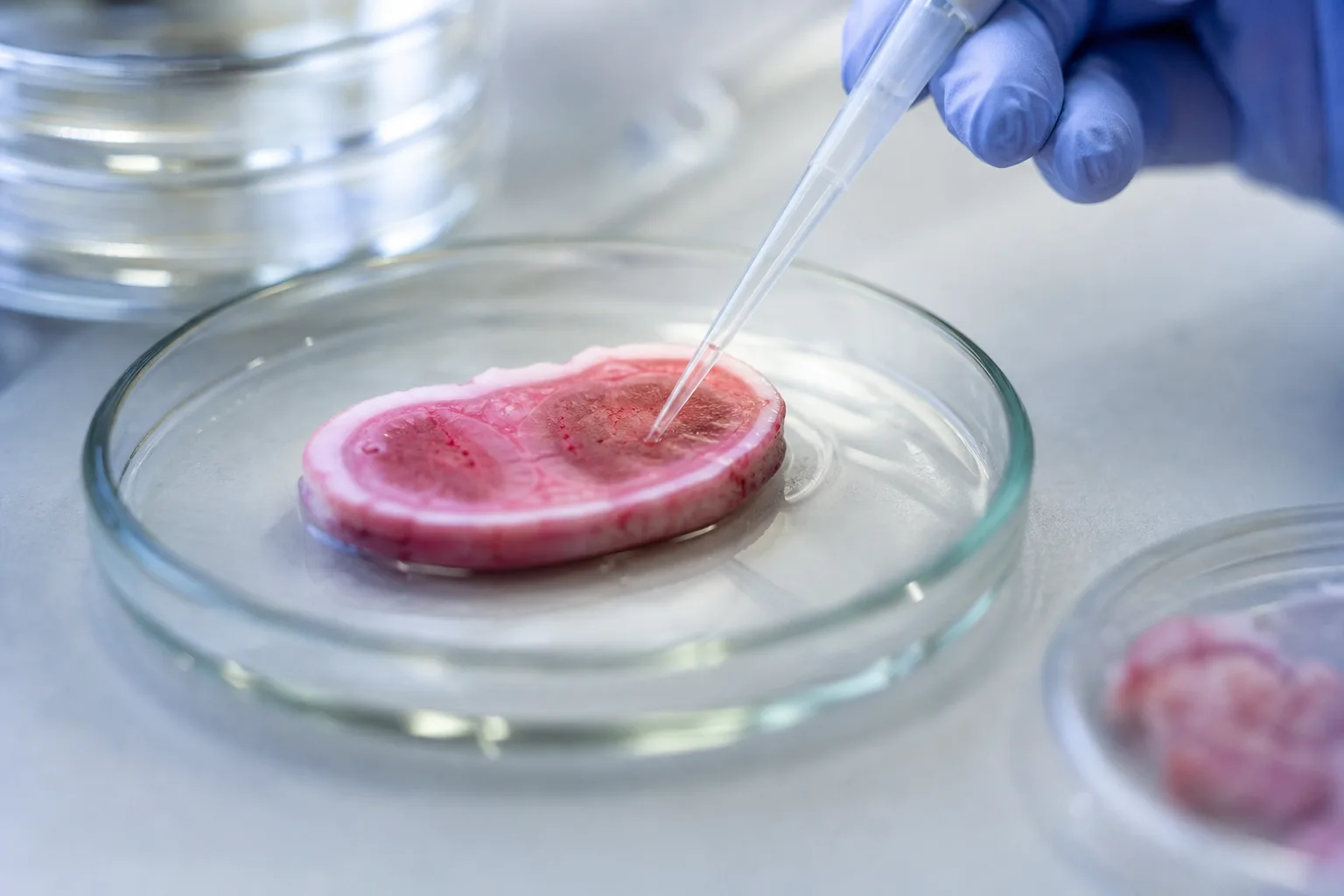
For as long as medicine has grappled with amputation and severe injury, the assumption has been firm: humans can’t regrow what they lose. Scar tissue is the body’s compromise — fast, functional, and final. But new research into mammal regeneration from Texas A&M University is challenging that assumption in a serious way, suggesting the machinery for regrowth was never removed from our biology. It may simply have been switched off.
- Mammal regeneration may be dormant rather than absent, according to new Texas A&M research published in Nature Communications.
- Scientists triggered mammal regeneration using a two-step growth factor treatment — FGF2 followed by BMP2 — without adding external stem cells.
- Researchers successfully regrew bone, joints, ligaments, and tendons after amputation in animal studies, though tissues weren’t perfect replicas.
- Even a partial shift away from scar formation toward regrowth could offer real clinical benefits well before full mammal regeneration is achievable.
Table of Contents
The Question Scientists Have Been Asking Since Aristotle
It sounds like something from science fiction, but the question of why some animals can regenerate and others can’t is genuinely ancient. Salamanders regrow entire limbs. Axolotls rebuild their hearts. Humans get scar tissue. Dr. Ken Muneoka, a professor at Texas A&M’s College of Veterinary Medicine and Biomedical Sciences (VMBS), has spent his career trying to figure out why that gap exists — and whether it can be closed.
‘Why some animals can regenerate and others, particularly humans, can’t is a big question that has been asked since Aristotle,’ Muneoka said. ‘I’ve spent my career trying to understand that.’
The answer his team has arrived at, published in Nature Communications, is less about what humans are missing and more about what’s being suppressed. The capability for mammal regeneration, they argue, isn’t absent. It’s latent.
How Normal Healing Becomes the Enemy of Regrowth
When you cut yourself badly — or lose a finger — your body launches a rapid, well-organised damage-control response. Fibroblast cells rush to the site, seal the wound, and lay down collagen. The result is scar tissue: structurally sound enough to close the gap, but a far cry from the original anatomy. It’s evolution’s pragmatic choice — fast healing over complex reconstruction.
In animals that are capable of true mammal regeneration, the same type of cell makes a different choice. Rather than committing to scar formation, fibroblasts aggregate into a structure called a blastema — essentially a cluster of cells that behaves like a developmental reset button, capable of rebuilding whatever was lost. The Texas A&M team’s central insight is that mammalian fibroblasts aren’t fundamentally different from these regeneration-capable cells. They’re just being pushed in the wrong direction by the body’s default healing signals.
‘It’s as if these cells can move in two different directions,’ Muneoka explained. ‘They could either make a scar or make a blastema. Our research focused on redirecting the behavior of fibroblasts already present at the injury site.’
A Two-Step Treatment That Rewrites the Healing Script
The approach the team developed is elegant in its logic. Rather than disrupting normal healing entirely — which would risk infection and other complications — the researchers let the body do its usual thing first. They waited for the wound to seal over naturally. Then they intervened.
Step one: apply fibroblast growth factor 2 (FGF2) to the healed wound site. This signal encouraged cells at the injury site to form a blastema-like structure — something that doesn’t normally happen in mammals after this kind of trauma. Essentially, it told the fibroblasts to stop thinking about scar tissue and start acting like they’re building something new.
Step two, several days later: apply bone morphogenetic protein 2 (BMP2) to give those reorganised cells their construction orders. BMP2 is a well-understood protein in bone biology, already used in some clinical settings for bone repair, but here it was being deployed as part of a sequential mammal regeneration strategy rather than a standalone fix.
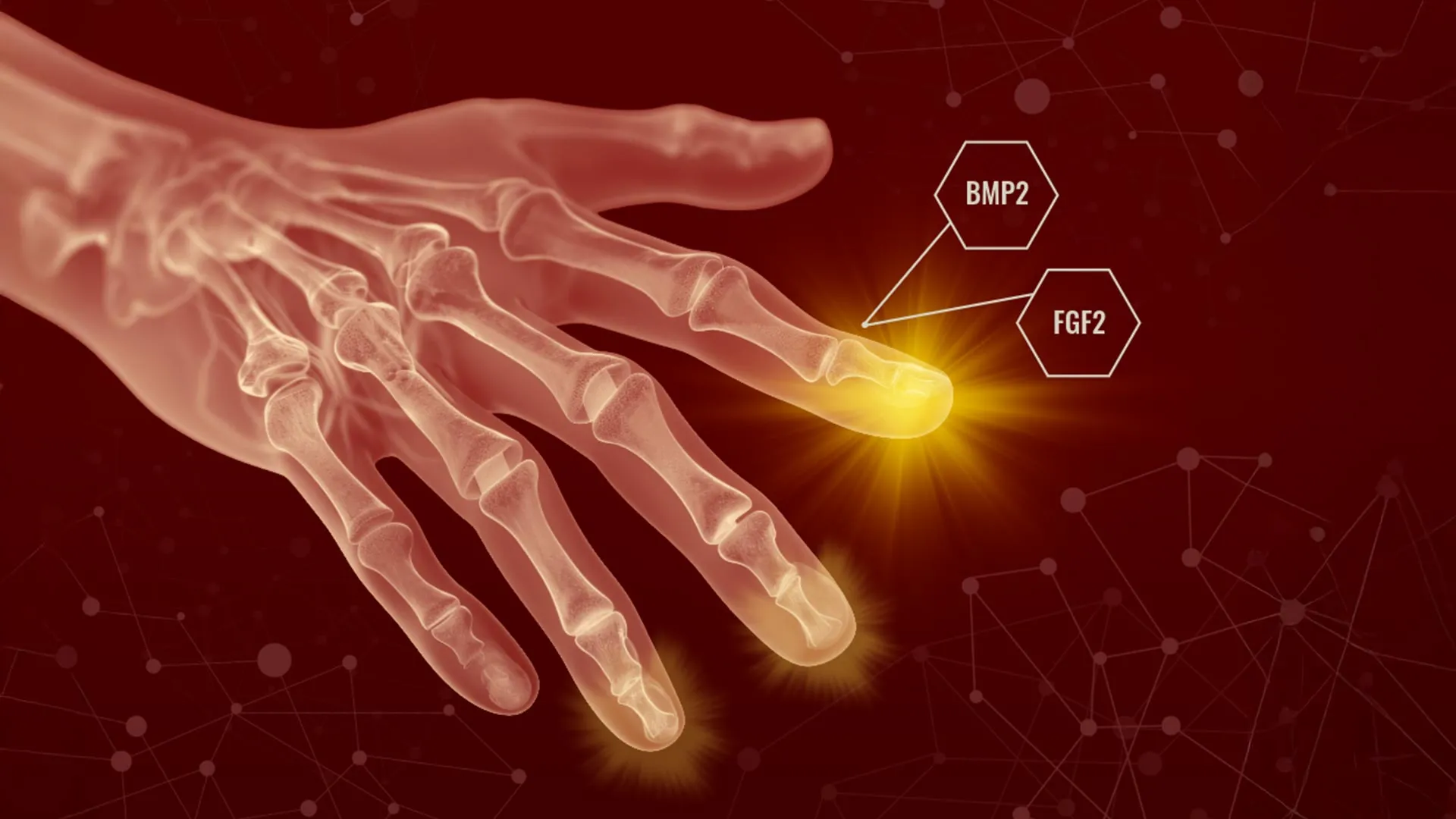
‘This is really a two-step process,’ Muneoka said. ‘You first shift the cells away from scarring, and then you provide the signals that tell them what to build.’
The results were notable. In animal studies involving amputation, the team successfully restored bone, joint structures, ligaments, and tendons — the full suite of complex tissues that make up a functioning limb segment. The regrown structures weren’t anatomically perfect, but they were real, organised tissue in arrangements that mirrored natural anatomy. That’s a meaningful threshold to cross in the study of mammal regeneration.
Mammal Regeneration Doesn’t Require Outside Stem Cells
One of the more striking conclusions from this work is what it says about stem cells — or rather, what it says about the assumption that you need to import them. Regenerative medicine has long been focused on stem cell therapies: extracting cells, modifying them, reintroducing them to injury sites. It’s a complex, expensive, and still-developing field. The Texas A&M findings suggest that for at least some mammal regeneration applications, you may not need to go through that process at all.
‘You don’t have to actually get stem cells and put them back in,’ Muneoka said. ‘They’re already there — you just need to learn how to get them to behave the way you want.’
Dr. Larry Suva, a fellow VTPP professor on the research team, put it even more directly: ‘The cells that we thought to be unprogrammable, in fact are. The capacity is not absent — it’s just obscured.’
That reframing matters enormously for the field. If the regenerative potential is already embedded in the cells at an injury site, the problem shifts from ‘how do we deliver the right cells’ to ‘how do we send the right signals.’ That’s a fundamentally different — and potentially more tractable — challenge. Signal delivery is a well-understood space in drug development. Targeted growth factor application is far less logistically complex than reliable stem cell transplantation.
Positional Re-Specification: Cells That Learn New Jobs
Beyond the headline results, the study revealed something called positional re-specification — a process where cells are redirected to build structures outside their usual anatomical location. In normal development, cells have positional identities: a cell that helps form a tendon ‘knows’ where it is and what it’s doing. The Texas A&M treatment appears to be able to override that positional memory, instructing cells to rebuild structures they wouldn’t ordinarily be responsible for.
This matters because real-world injuries aren’t surgically tidy. Amputations and traumatic wounds destroy multiple tissue types simultaneously, in ways that don’t respect the body’s normal developmental boundaries. A treatment that can redirect cells across those boundaries is far more useful clinically than one that can only restore a single tissue type in isolation.
The researchers were also clear that mammal regeneration at this scale isn’t the product of a single biological switch. Multiple pathways appear to be working together — signalling networks interacting in ways that are still being mapped. That complexity is both a challenge and a reason for cautious optimism: it suggests the system has depth, and that further refinement of the treatment protocol could yield increasingly complete mammal regeneration.
What This Means Before Full Regeneration Is Possible
It’s easy to read a headline about regrowing limbs and immediately picture soldiers returning from combat with fully restored hands, or accident survivors walking out of hospitals with new ankles. That’s not where this research is right now. These are animal studies. The path from a successful animal model to a validated human therapy is long, expensive, and littered with failures across virtually every area of medicine.
But Muneoka’s team is making a more immediate argument too. Even before complete mammal regeneration becomes clinically practical, the principles behind their approach could change how wound care is managed. Scar tissue is a major source of long-term disability — it limits mobility, causes chronic pain, and often requires surgical revision. Any treatment that nudges the healing process even slightly toward regeneration, even if it doesn’t produce perfect tissue, would be a meaningful clinical advance.
‘People should start thinking about using these signals during the healing process,’ Muneoka said. ‘Even shifting the response slightly away from scarring could have real benefits.’
That’s a pragmatic, near-term pitch that doesn’t require waiting for the full mammal regeneration problem to be solved. FGF2 and BMP2 are both known compounds. Their safety profiles are relatively well-characterised. The question of whether a modified application protocol — timed and sequenced the way the Texas A&M team describes — could improve outcomes in human wound care is the kind of question that clinical trials are designed to answer.
The broader implication of this research is that the boundary between ‘animals that can regenerate’ and ‘animals that can’t’ is not biological destiny. It’s regulatory biology — a set of signals and suppressors that evolution landed on for reasons that had nothing to do with modern medicine’s priorities. Understanding those signals well enough to selectively override them in humans is still a distant goal, but Texas A&M’s work makes a credible case that the destination exists. The path there just runs through decades of careful science.
Frequently Asked Questions
What is mammal regeneration and why has it been so difficult to achieve?
Mammal regeneration refers to rebuilding complex tissues like bone, joints, and tendons after injury or amputation. Mammals typically form scar tissue instead of regrowing structures — a fast, infection-resistant response that unfortunately shuts down the more complex rebuilding process seen in animals like salamanders.
How does the two-step FGF2 and BMP2 treatment work?
After the wound seals naturally, researchers apply FGF2 to redirect fibroblast cells away from scar formation toward a blastema-like structure. Days later, BMP2 is applied to signal those cells to begin building new tissue — bone, ligaments, tendons, and joints.
Do you need stem cell transplants for this type of tissue regeneration?
No. One of the study’s key findings is that external stem cells aren’t required. The necessary cells are already present at the injury site. The treatment works by reprogramming those existing cells to behave differently, rather than introducing new ones from outside the body.
When could this research lead to treatments for humans?
The research is still in early animal study stages. However, scientists believe partial benefits — like reduced scarring during healing — could arrive sooner than full regeneration. Researchers have suggested that using these signals during the healing process, even in a limited way, could have real benefits.

