

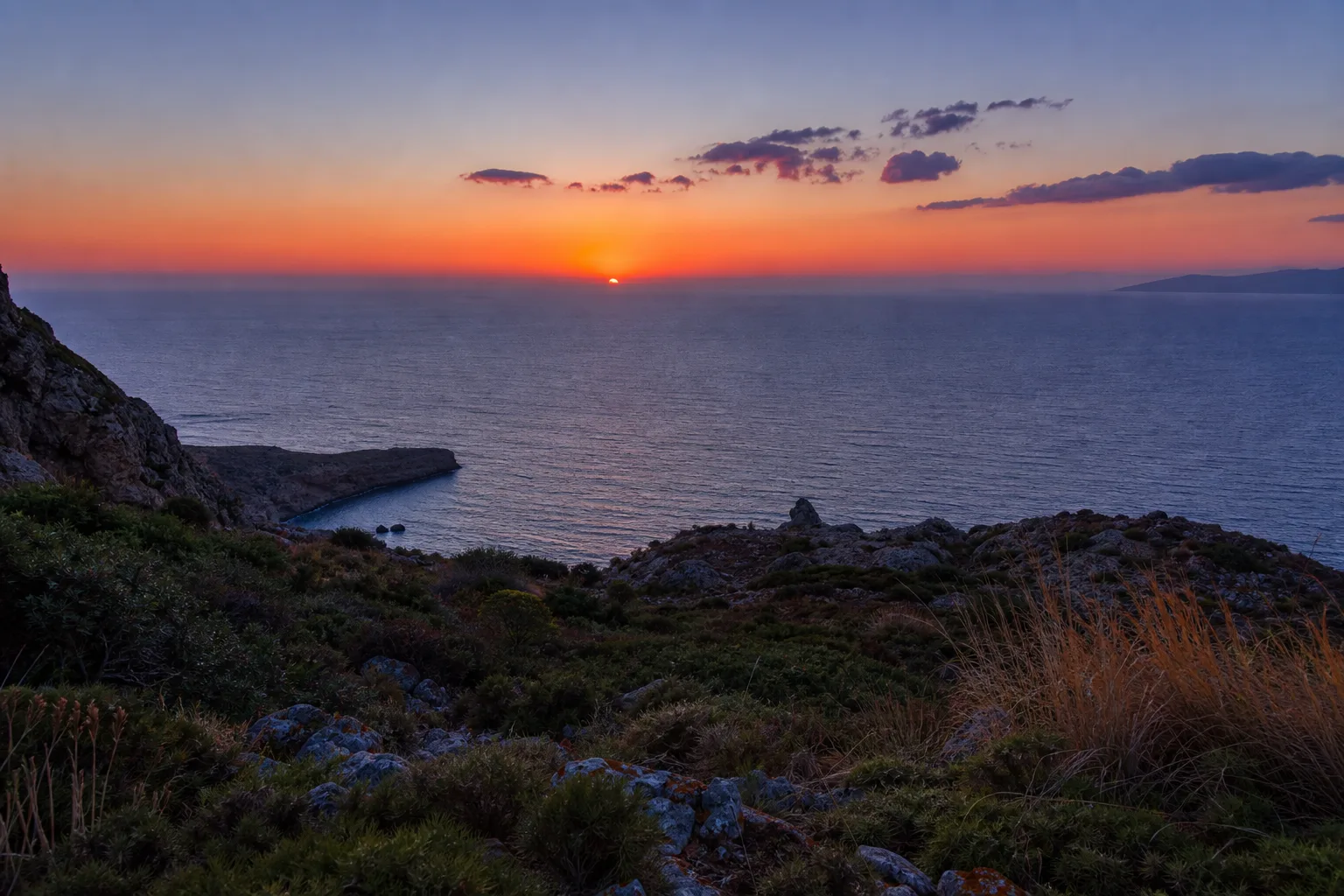
The 2026 solar eclipse on August 12 is shaping up to be one of the most widely witnessed astronomical events in recent memory — not just because of the narrow path of totality cutting through Greenland, Iceland, and Spain, but because tens of millions of people across Europe and northwest Africa will get a front-row seat to something genuinely rare: the sun setting while it’s still being eaten by the moon.
- The 2026 solar eclipse on August 12 will treat millions across Europe and northwest Africa to a rare partially eclipsed sunset.
- Spain hosts its first path of totality since 1905, with the 2026 solar eclipse reaching totality across the Meseta region.
- Corsica, Venice, and the Algerian coast are among the best spots to photograph the deep partial eclipse at sunset.
- Atmospheric refraction means eclipse maps are slightly off — observers can stand a little east of the sunset line and still see the event.
Table of Contents
What Makes the 2026 Solar Eclipse Different
Total solar eclipses are always headline events, but they’re inherently exclusive. The path of totality is narrow — roughly 182 miles (293 km) wide in Spain’s case — and most of the planet watches from the sidelines. What makes the 2026 solar eclipse unusual is the scale of the supporting act. Across virtually the entire European continent, the partial eclipse will be deep enough to be genuinely dramatic. And for a large swathe of those observers, the sun will still be partially obscured when it hits the horizon.
That combination — a crescent sun melting into a sunset sky — is far rarer than totality alone. It requires you to be in a specific geographical corridor at a specific time of year when sunset aligns with the eclipse’s peak phase. It doesn’t happen often. When it does, photographers and astronomers lose their minds over it, and for good reason.
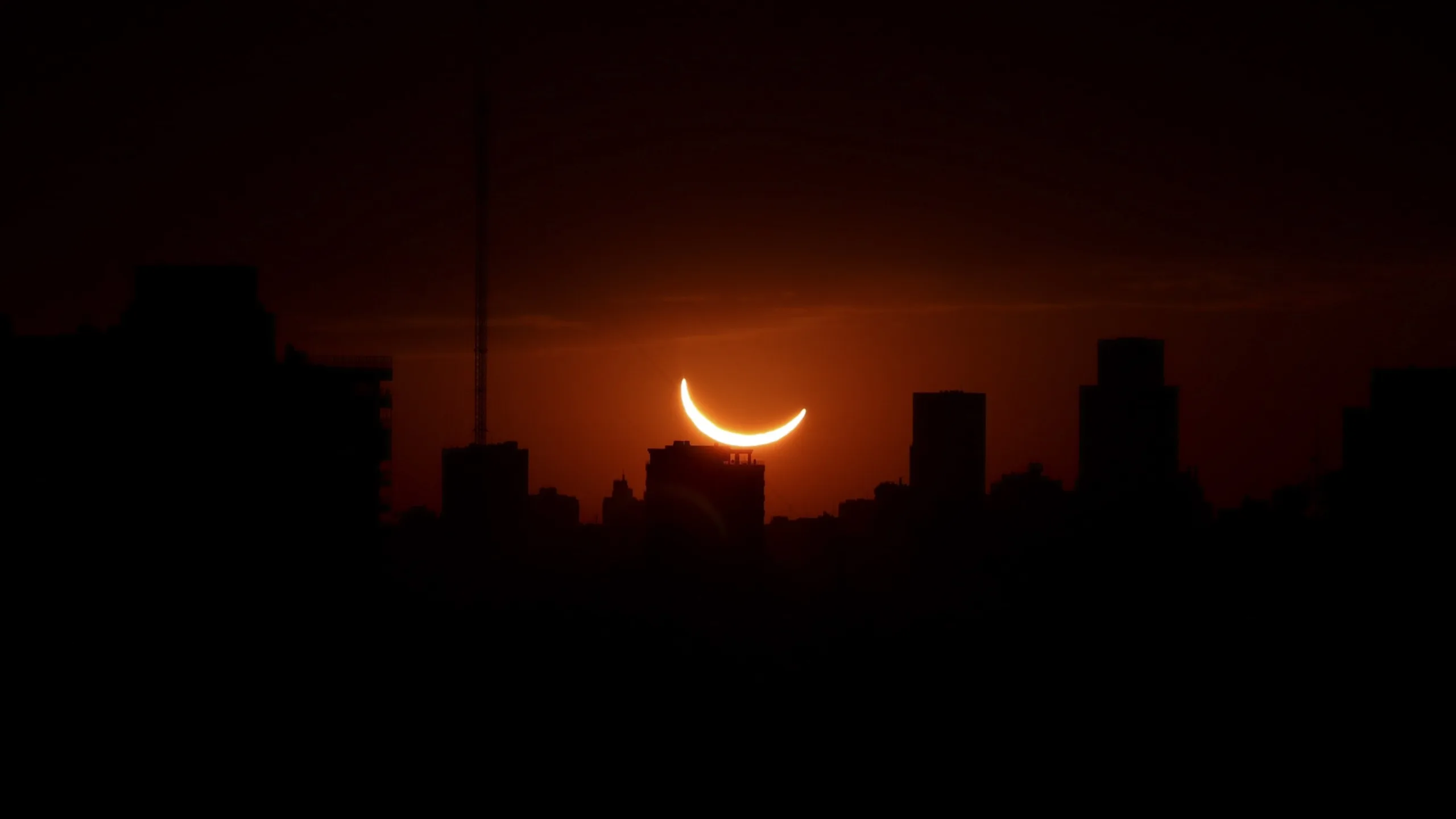
Eclipse cartographer Michael Zeiler put it plainly: ‘People living along the black sunset line will experience a beautiful deep partial eclipse at sunset. Some ideal locations to see this over water are Algiers, Corsica, the Italian coast by the Ligurian Sea, and Venice, while High Alpine spots in eastern Austria will also have a dramatic sunset — a photographer’s dream.’
How to Read the Eclipse Sunset Map
If you’re planning to chase the 2026 solar eclipse‘s partial eclipsed sunset, understanding the map is half the battle. The black line drawn across Europe and Africa marks where the maximum partial eclipse occurs exactly at geometric sunset. East of that line, the sun sets before the partial eclipse reaches its deepest point. West of the line, you’ll catch sunset while the eclipse is still intensifying — which is the sweet spot.
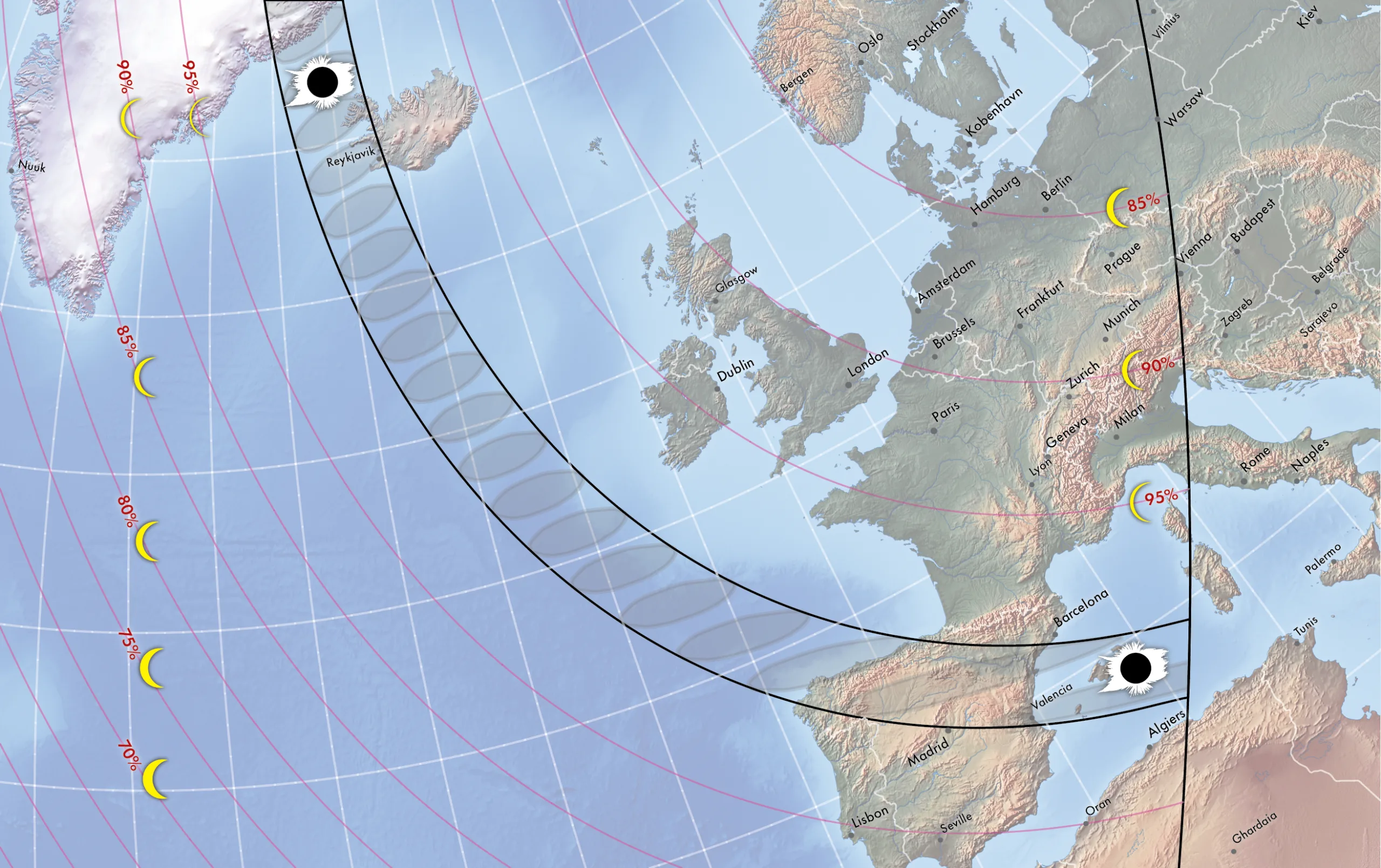
There’s an important caveat here, though. Stephen Trainor at The Photographer’s Ephemeris flagged something most eclipse maps don’t account for: atmospheric refraction. ‘All the eclipse maps are calculating those lines for geometric sunset, which is when the middle of the sun is at the true horizon, ignoring refraction,’ Trainor told Space.com. ‘What you tend to find is that actually the line isn’t the line because refraction lifts the sun a little bit up — so you can usually creep a little bit the ‘wrong’ side of the line and you’ll still be able to get the sun.’
In plain terms: don’t stress too much if you’re slightly east of the published line. The atmosphere bends light in your favour. That’s a rare piece of good news in 2026 solar eclipse planning, which is otherwise an exercise in meticulous logistics and anxious weather-watching.
Best Locations in Europe for the 2026 Solar Eclipse Sunset
For observers chasing the deepest partial eclipse at sunset within Europe, here’s where the numbers look best. Maximum obscuration at these locations occurs roughly 10 to 15 minutes before sunset, and from Europe the crescent sun will set ‘horns down’ — what enthusiasts describe as a ‘sad face’ orientation.
- Village d’Occi, Corsica, France — 96% obscuration at 8:25 p.m. CEST, with just a 24% cloud probability. The clear winner on paper.
- La Spezia, Ligurian Sea, Italy — 94% at 8:22 p.m. CEST, with a 43% cloud chance. Stunning coastal backdrop.
- Venice, Italy — 91% at 8:19 p.m. CEST. Iconic skyline, 43% cloud risk. The aesthetics are unbeatable if the sky cooperates.
- Kitzsteinhorn, Austria — 89% at 8:16 p.m. CEST. High Alpine elevation could place you above cloud cover, though the 68% cloud probability is the highest of the prime European sites.
- Prague, Czechia — 86% at 8:11 p.m. CEST. A major European city with excellent viewing infrastructure and a 65% cloud risk.
- Warsaw and Wrocław, Poland — 83–84% obscuration, accessible for millions of central European observers.
- Kaunas, Lithuania and Gulf of Riga, Latvia — 80–81%, further east and later in local time, extending the eclipse corridor into the Baltic states.
Corsica’s combination of high obscuration and relatively low cloud probability makes it the rational choice for dedicated photographers seeking the best 2026 solar eclipse sunset views. The question is whether ‘rational choice’ and ‘August holiday crowds’ survive contact with each other — expect accommodation in prime Corsican viewpoints to be extremely tight well ahead of the date.
Northwest Africa: An Underrated Viewing Zone
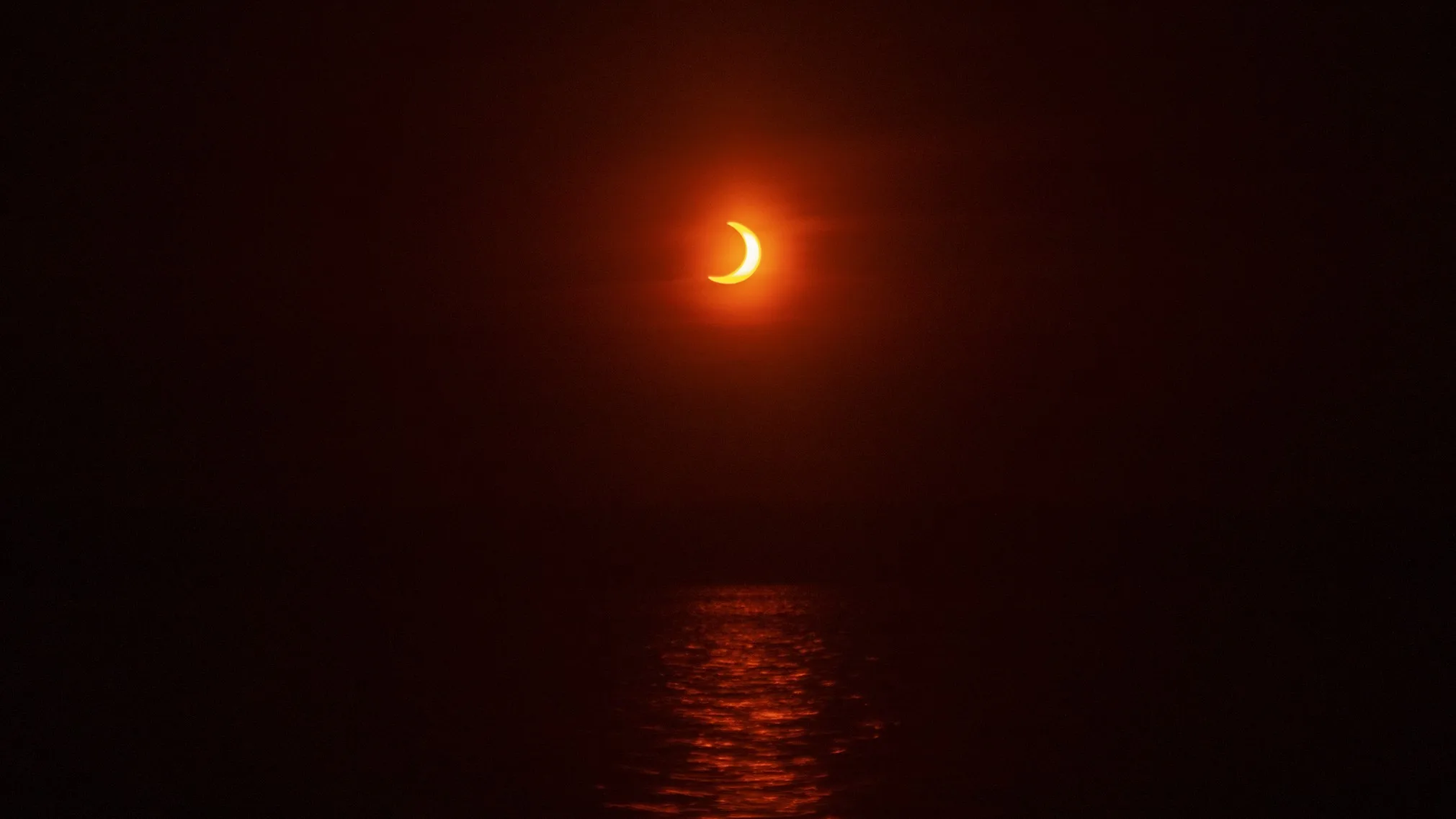
While European observers dominate most eclipse coverage, northwest Africa offers some of the most dramatic 2026 solar eclipse viewing on the planet — particularly along the Algerian coast. From this latitude, the crescent sun sets in the shape of the letter ‘C’ rather than the inverted crescent seen from Europe, giving photographers a completely different compositional opportunity.
Cape Matifou in Tamentfoust, Algeria leads with a staggering 98.5% obscuration at 7:42 p.m. CET — that’s about as close to totality as you can get without actually being in the path. The cloud probability sits at 49%, which is manageable. Essaouira on Morocco’s Atlantic coast offers 81% obscuration with a remarkably low 15% cloud chance, making it arguably the most reliable clear-sky bet of any prime viewing location on either continent. Further south, Dakar in Senegal and Banjul in Gambia offer only 34–37% obscuration, but the combination of a crescent sunset over the Atlantic could still be visually striking for those already in the region.
Spain: Totality and Then Some
For those who can travel to the path of totality, Spain is the place. The last time mainland Spain hosted a total solar eclipse was 1905 — that’s 121 years without one. The path, roughly 182 miles wide, narrowly misses both Barcelona and Madrid, which means serious eclipse chasers will need to position themselves deliberately rather than just booking a city hotel.
What’s particularly interesting about Spain during the 2026 solar eclipse is the layered experience available depending on your exact position. Observers in the Meseta region — cities like Burgos and León — will witness totality followed by a partial eclipse that ends just minutes before sunset. Move further east into Soria, Sigüenza, Zaragoza, and Teruel, and you’ll see totality and then watch the partially eclipsed sun sink into the horizon. The further east you stand, the more eclipsed the sun will be at that moment.
On the Balearic Islands — Mallorca, Ibiza, Menorca, Formentera — eclipse chasers can witness the totally eclipsed sun sitting just a couple of degrees above the western horizon, minutes from sunset. If the horizon is clear, that’s an almost absurdly cinematic image: a black disc ringed with corona, hovering at the edge of the sea just before it vanishes. It’s the kind of thing people fly 10,000 miles to see. Here, you could theoretically reach it with a budget flight and a hire car.
Planning Ahead: Why You Shouldn’t Wait
August 2026 is still over a year away, but that’s not as much runway as it sounds. Prime coastal locations along the Italian Riviera and Corsica fill up quickly for summer travel even in a normal year. Add a 2026 solar eclipse and the photography community descends in force. Historical eclipse events have seen accommodation in totality-adjacent towns sell out 18 months in advance.
Weather is the variable nobody can control, but you can hedge against it by choosing locations with historically lower August cloud cover. Corsica and Morocco’s Atlantic coast both have strong track records for clear late-summer evenings. Alpine sites like Kitzsteinhorn are a gamble — altitude can mean you’re above the clouds, or inside them.
What the 2026 solar eclipse really illustrates is how an astronomical event’s appeal isn’t limited to the narrow corridor where totality occurs. Across dozens of countries and two continents, hundreds of millions of people will be within reach of a sky spectacle they won’t see again for decades. The real challenge is making sure they know it’s coming — and that they look west when the time comes.
Frequently Asked Questions
Where is the best place in Europe to see the 2026 solar eclipse?
For a deep partial eclipsed sunset, Village d’Occi in Corsica tops the list with 96% obscuration and only a 24% cloud chance. Italy’s Ligurian coast and Venice are also excellent options, offering views over water with obscuration above 90%.
Will the 2026 solar eclipse be visible across all of Europe?
Almost the entire European continent will experience a significant partial solar eclipse. Countries from western Europe to Russia will see a large chunk of the sun obscured, though only a narrow path through eastern Greenland, western Iceland, and Spain will experience full totality.
Why does atmospheric refraction matter for eclipse viewing on Aug. 12, 2026?
Eclipse maps calculate sunset lines based on geometric sunset, ignoring atmospheric refraction, which slightly lifts the sun above the true horizon. This means observers standing just on the wrong side of the published sunset line may still be able to catch the eclipsed sun before it dips below the horizon.
What will the eclipsed sun look like from Africa during the 2026 solar eclipse?
From northwest Africa, the crescent sun will set in the shape of the letter ‘C’ rather than the upside-down crescent seen from Europe. Cape Matifou in Algeria offers the deepest partial eclipse in the region at 98.5% obscuration.

