

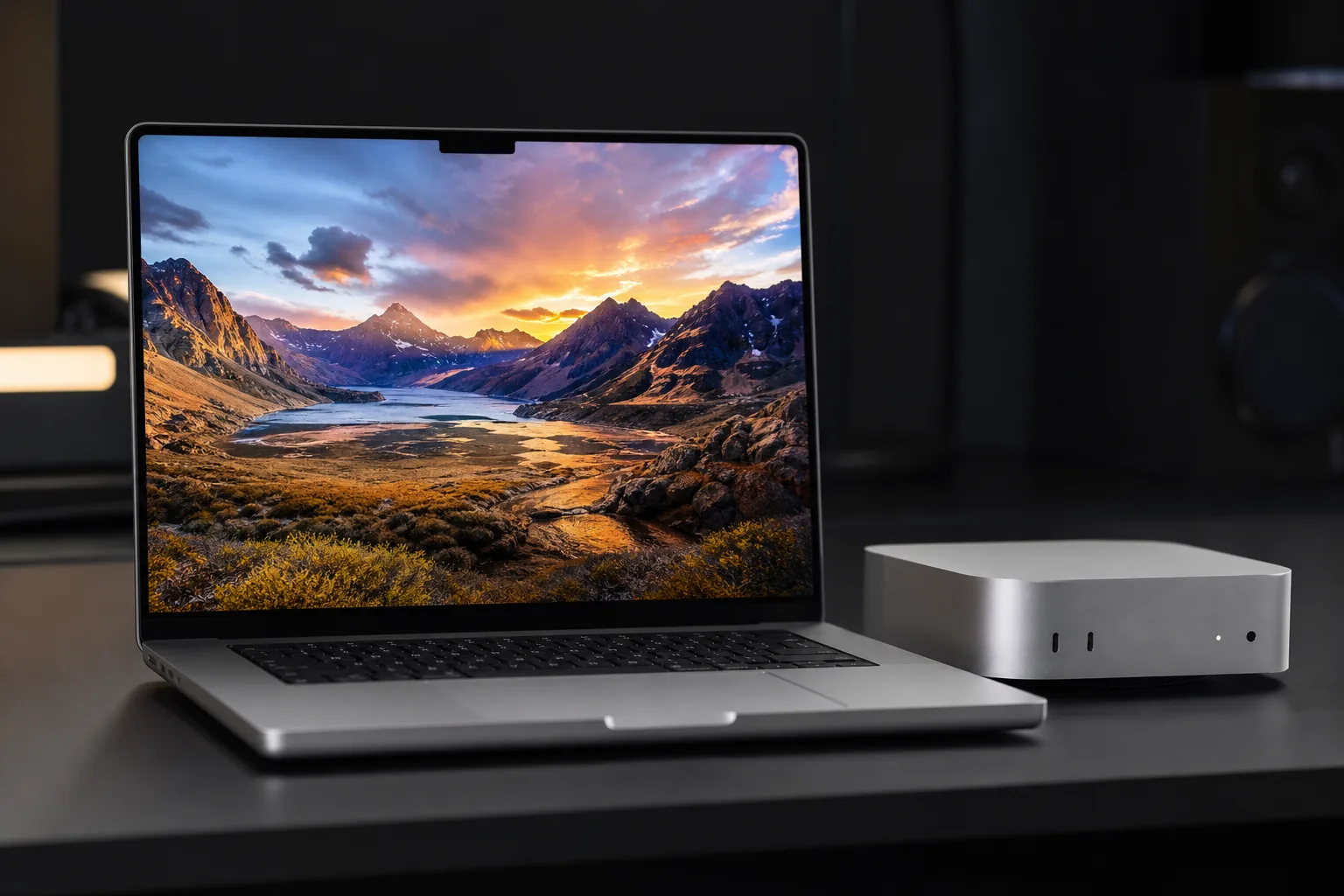
- The Surface Laptop Ultra pairs Nvidia RTX Spark with a 2,000-nit mini LED panel — the brightest display Microsoft has ever shipped on a Surface.
- Surface Laptop Ultra targets creators and developers who want to run demanding AI workloads locally, without paying cloud token fees.
- Microsoft’s companion Surface Dev Box packs 100 watts of thermal headroom and 1,000 teraflops of compute in a miniature aluminum chassis.
- Both devices arrive later in 2025, with pricing and full specs still to be confirmed by Microsoft.
Table of Contents
Surface Laptop Ultra Is Microsoft’s Most Ambitious Laptop Yet
Microsoft pulled back the curtain on the Surface Laptop Ultra at its Build 2025 conference this week, and if the early impressions are anything to go by, this is a very different kind of Surface machine. Powered by Nvidia’s new RTX Spark chip, it’s a laptop built without compromise — at least where performance, battery life, and display quality are concerned. Everything else, including weight, was apparently negotiable.
Microsoft corporate VP of Surface product Andrew Hill didn’t mince words about where the team’s priorities sat. “When we went through the priority order of what we’re going to design for, performance, performance, performance, battery life, battery life, battery life, display, display, display,” Hill told The Verge. “If other tradeoffs have to be made, so be it, but let’s make sure we nail the fundamentals that are really what people care about.” That’s a rare admission of deliberate trade-offs from a company that usually tries to have it every way at once.
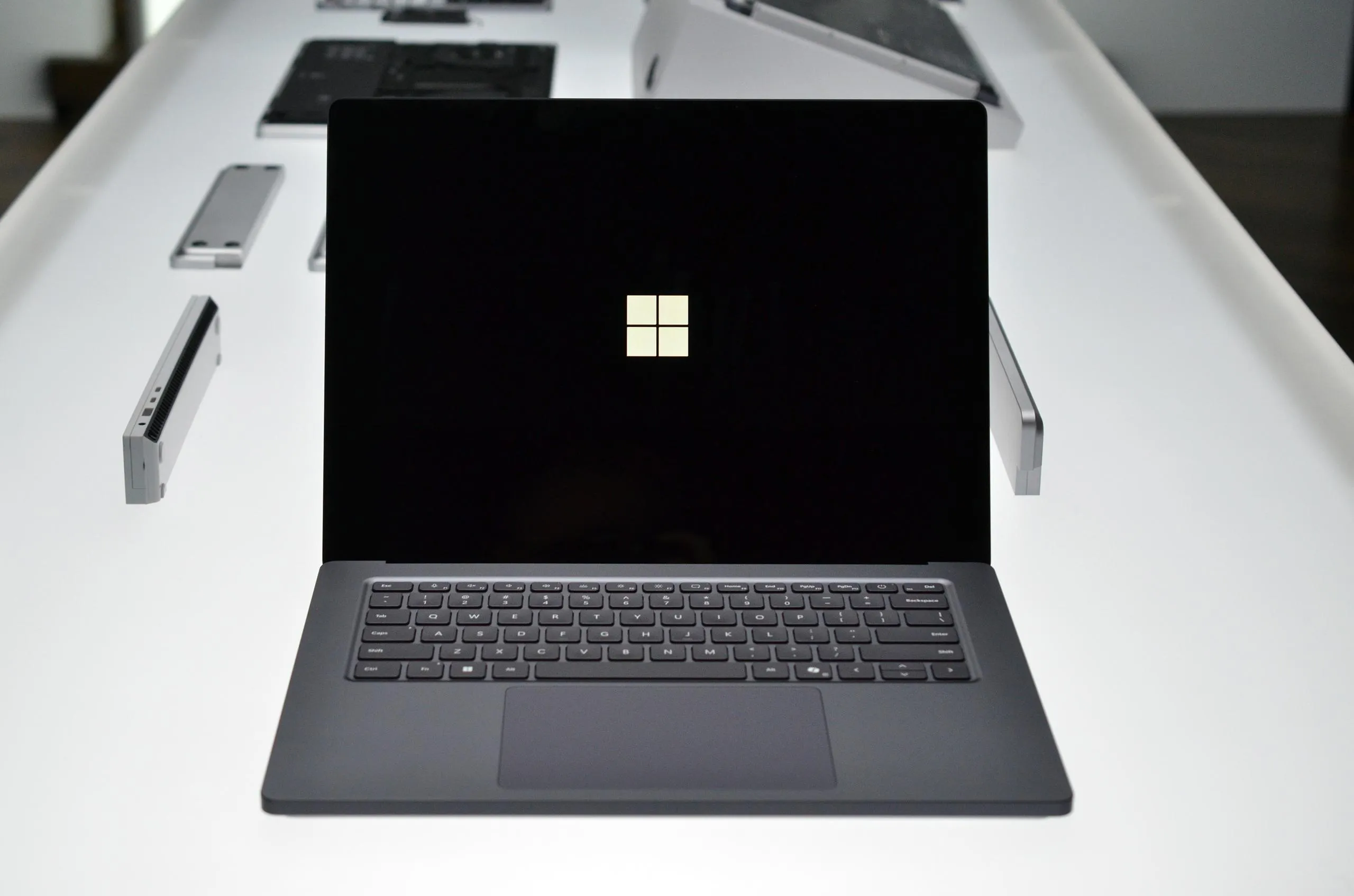
What that philosophy produces is a 15-inch clamshell laptop that, by all accounts, looks and feels more like a 16-inch MacBook Pro than anything Microsoft has shipped before. No detachable display, no 360-degree hinge — just a well-built, performance-focused machine aimed squarely at professionals, creators, and developers. The Surface Laptop Ultra reportedly feels heavier than the 15-inch Surface Laptop 7, but that’s the trade Hill’s team consciously accepted.
The Display and Trackpad Changes Everything
The screen on the Surface Laptop Ultra is a genuine standout. Microsoft has gone with a 15-inch mini LED panel capable of hitting 2,000 nits of peak HDR brightness — the highest the company has ever put in a Surface device. Anyone who’s spent time comparing displays knows that number isn’t just marketing: at 2,000 nits in a darkened room, HDR content genuinely pops in a way that conventional laptop screens simply can’t match. It positions the Surface Laptop Ultra in direct competition with Apple’s ProMotion XDR panels and Samsung’s top-tier OLED offerings in the professional laptop space.
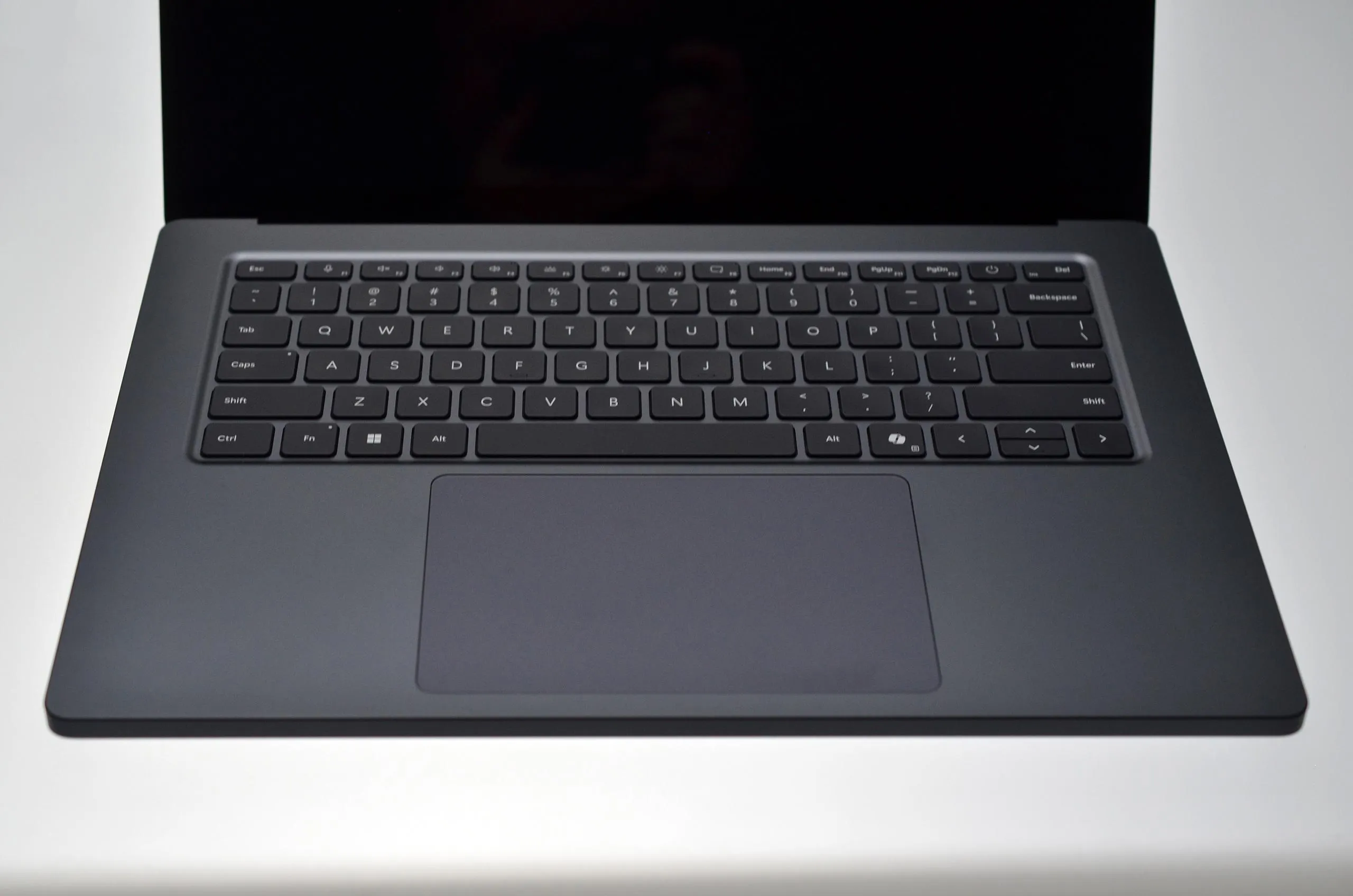
But the more quietly interesting hardware story might be the trackpad. Microsoft has made it larger than any previous Surface trackpad, and it ships with new haptics support built into Windows 11. This isn’t the blunt vibration feedback you get on budget laptops. According to hands-on reports, the system delivers subtle patterns when you hover near a close button, and alignment cues when dragging, scaling, or rotating objects. It’s the kind of feature that sounds trivial until you’ve used it — then it becomes something you immediately miss on every other machine. Apple has been doing sophisticated haptic trackpads on MacBooks since 2015, so Microsoft is catching up here, but the Windows 11 integration hints at something that could scale across the entire PC ecosystem if other manufacturers adopt it.
Local AI Compute — Not Cloud Tokens
Here’s where the Surface Laptop Ultra gets genuinely interesting from a broader industry perspective. Microsoft is equipping it with 128GB of unified memory — the same pool available in Nvidia’s RTX Spark configuration — and the demo shown at Build involved running a local AI model that was consuming a significant portion of that memory, all while Indiana Jones and the Great Circle ran simultaneously. That’s not a modest workload.
The pitch Microsoft is making to developers and creators is straightforward: stop paying per-token to run AI in the cloud when you can own the compute outright. “What you have here is an option where you’ll be able to do a lot of work locally on a thing you own, and if you want to let it rip, cool, you’re not on a meter,” Hill said. It’s a direct shot at the growing cost anxiety around cloud AI APIs — and a smart one. As model sizes creep down and inference gets more efficient, local compute is becoming genuinely viable for production workloads, not just tinkering.
Perhaps most telling: Microsoft is barely mentioning Copilot Plus PC in relation to the Surface Laptop Ultra. The device technically qualifies for every Copilot Plus feature, but the marketing is aimed at professionals, not consumers hunting for AI-assisted photo editing. Hill confirmed Microsoft isn’t abandoning the Copilot Plus brand, but the deliberate repositioning signals that the company knows its AI PC messaging hasn’t fully landed with the power-user audience it now wants to court.
Repairability, Ports, and a Mysterious USB-C Slot
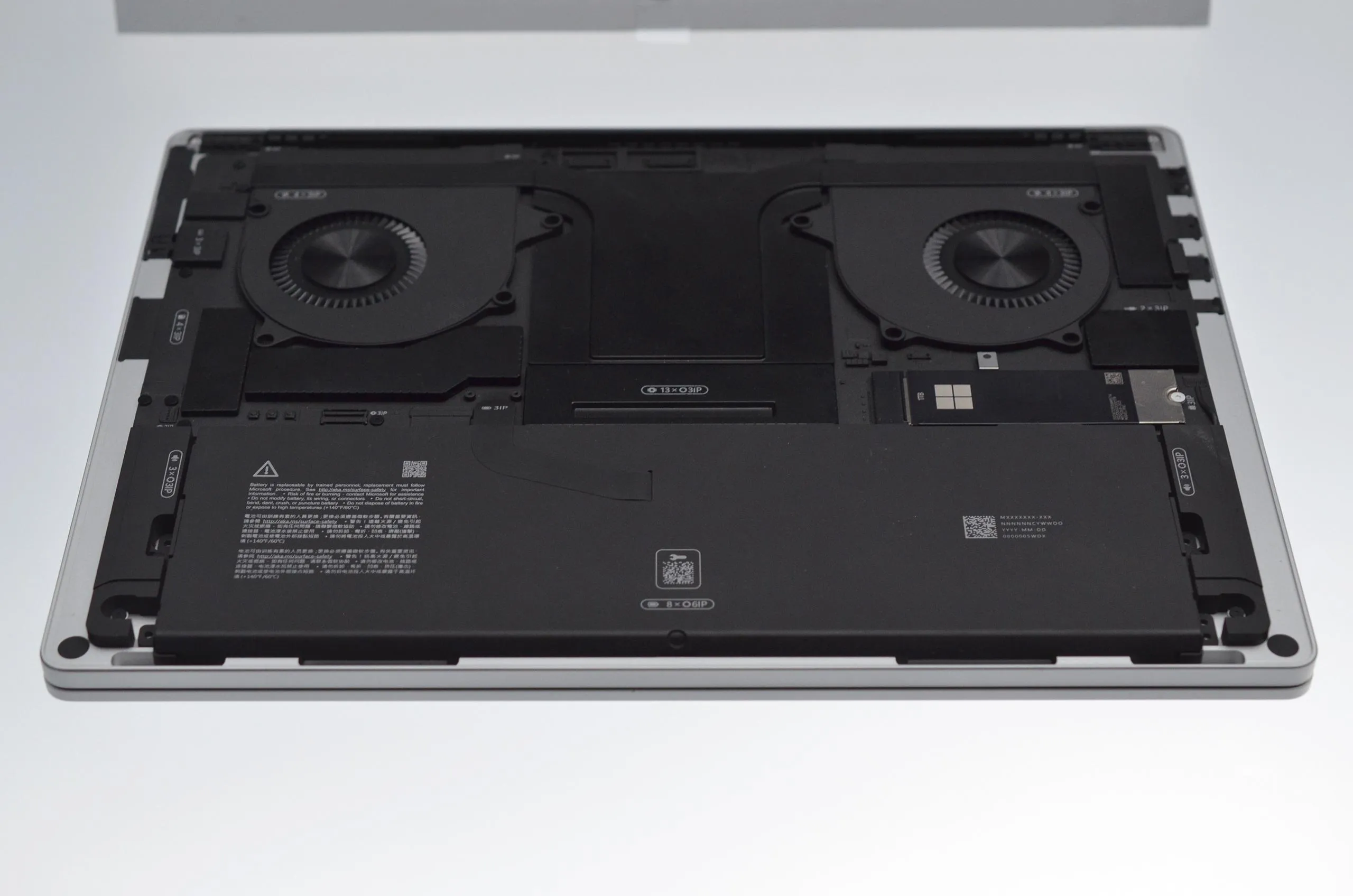
The Surface Laptop Ultra continues Microsoft’s recent commitment to repairability. The interior is described as almost elegant in its organisation — clearly labelled components arranged in a structured black grid. Microsoft took its Surface Laptop line from an iFixit score of 0/10 in 2017 to 8/10 by 2024, and the internal design of the Laptop Ultra suggests the company is serious about maintaining or improving that trajectory.
Port selection is generous for a thin-and-light: two USB-C ports and an HDMI on the left, a USB-A, a third USB-C, and a full-size SD card reader on the right. The SD slot alone will make photographers and videographers very happy — it’s a feature Apple controversially removed from MacBooks for years before eventually bringing it back. Notably absent, though, is Microsoft’s proprietary Surface Connect magnetic charging port. It’s been a staple of the Surface line for years, and its disappearance here almost certainly means the company has engineered USB-C charging as its replacement.
There’s one deliberate mystery. The single USB-C on the right side is reportedly slightly wider than the two on the left. When pressed on it, Andrew Hill smiled, laughed, and said Microsoft would share more details later this year. That’s the kind of non-answer that suggests something more interesting than a simple spec difference — a proprietary accessory connector, perhaps, or a higher-bandwidth variant for an external GPU enclosure. Speculation, but the coyness is conspicuous.
Surface Dev Box: A Miniature Powerhouse for Developers
Alongside the Surface Laptop Ultra, Microsoft also showed off the Surface RTX Spark Dev Box — a compact desktop aimed at developers who need serious local AI compute without a full workstation footprint. The chassis is made from 3D-printed aluminum and features exactly 1,000 air vents, a deliberate nod to its 1,000 teraflops of compute performance. In person, it apparently looks like a flattened Xbox Series X, which given Microsoft’s hardware design lineage, isn’t entirely surprising.
The Dev Box runs the same Nvidia RTX Spark chip as the laptop but with a 100-watt thermal envelope versus the Laptop Ultra’s 80-watt ceiling. That extra thermal headroom matters specifically for sustained workloads — think long model training runs or continuous inference tasks that would throttle on a laptop. Microsoft says there are additional undisclosed differences between the two chip implementations, which likely points to memory bandwidth, clock speed configurations, or the specific Tensor core setup inside.
Ports are practical rather than flashy: two USB-C, USB-A, HDMI, Ethernet, and a headphone jack at the rear. It’s a developer tool, not a showpiece — and Microsoft seems to know exactly what that audience needs.
What to Watch When These Devices Actually Ship
Both the Surface Laptop Ultra and the Dev Box are due later in 2025, and Microsoft is holding back quite a bit — pricing, full specs, and that mysterious wide USB-C port all remain unanswered. The thermal performance under real sustained workloads will be the real test; a warm spot above the keyboard is acceptable, but how the dual-fan system holds up during hours of model inference is an open question.
More broadly, if the Surface Laptop Ultra lands well, it could shift how the Windows PC market thinks about high-end professional laptops. Apple’s dominance in the creative and developer segments has been built on consistent hardware quality and tight software integration — areas where Windows OEMs have historically struggled to compete. Microsoft building a premium clamshell this deliberately, with this much attention paid to the fundamentals Hill listed, is a signal that the company is done ceding that ground without a fight.

