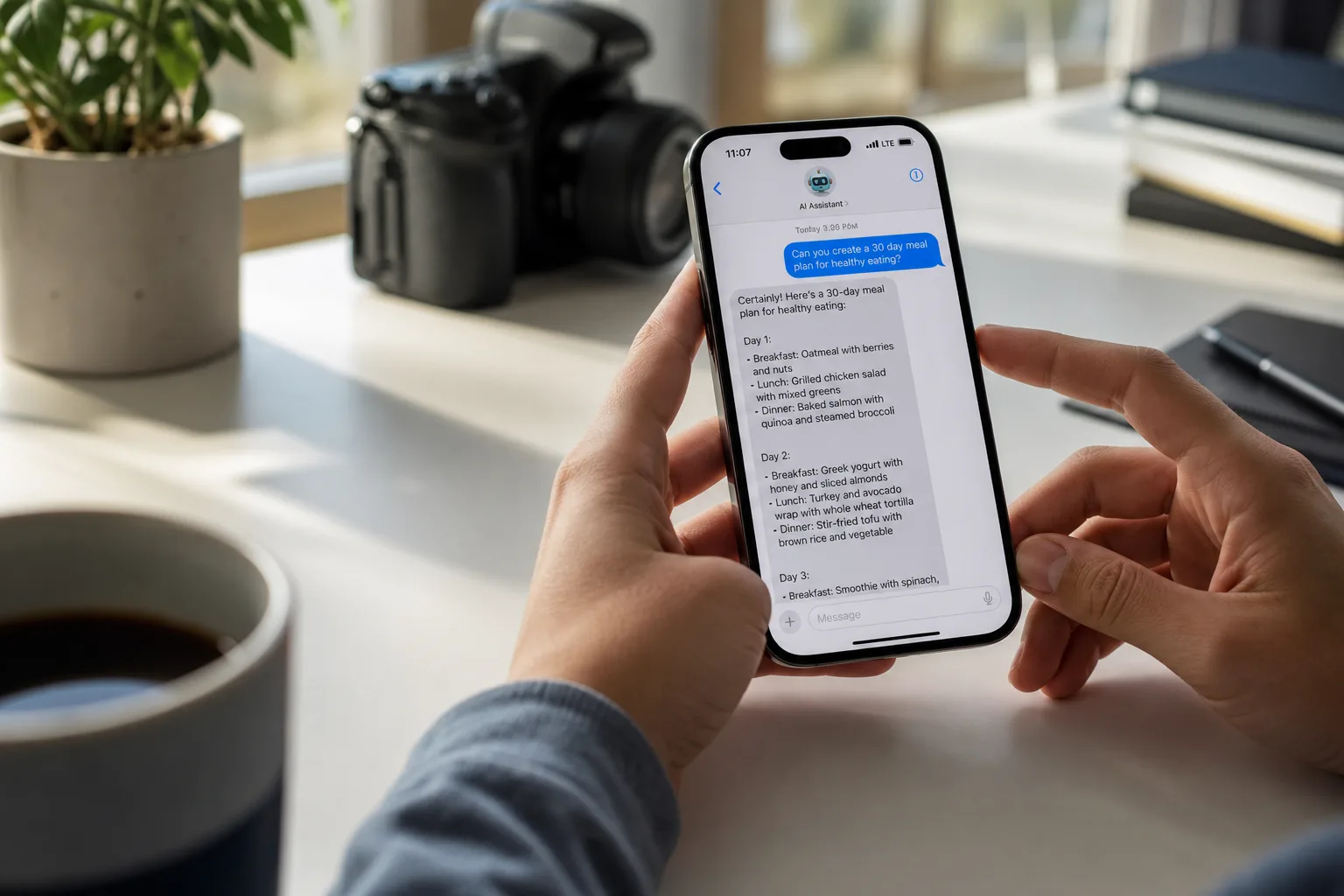
- Poke is now the first Apple iMessage AI agent approved to run on Apple’s Messages for Business platform.
- The Apple iMessage AI agent milestone arrives days before WWDC, where Apple is expected to unveil major AI announcements.
- Poke charges users on a per-user basis, giving Apple a new revenue stream from third-party AI agents.
- Getting approved took several months of compliance work — a high bar that will slow any rivals hoping to follow.
Table of Contents
The First Apple iMessage AI Agent Has Arrived — and It’s a Startup You Should Know
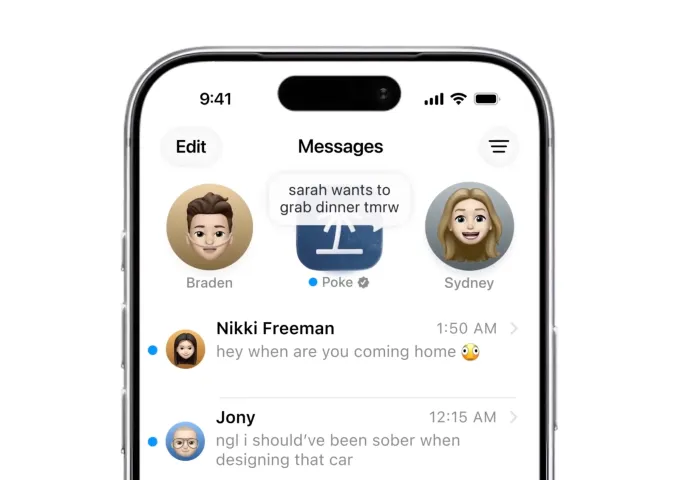
A small Palo Alto startup called Poke has just done something no AI company has managed before: it’s become the first Apple iMessage AI agent approved to operate on Apple’s Messages for Business platform. That might sound like a niche technical milestone, but it’s actually a meaningful crack in one of the most locked-down messaging ecosystems in consumer technology — and the timing, just days before Apple’s Worldwide Developers Conference, is hard to ignore.
Poke launched in March and takes a deliberately simple approach to AI. You text it. It helps you. No command-line interfaces, no API keys, no learning curve — just a conversation over SMS, Telegram, or WhatsApp depending on your market. Since launch, the service has relayed more than 100 million messages, which suggests it’s found an audience that other, more technical AI agent platforms have struggled to reach.

Now, with Apple’s approval, Poke gets to add iMessage to that list. As an Apple iMessage AI agent, it gains access to one of the most widely used messaging platforms in the world. And for a lot of people — especially in the United States, where iMessage dominates — that’s a genuinely significant upgrade in accessibility.
What Apple’s Messages for Business Actually Is
If you’ve ever tapped a “Message Us” button on a brand’s website and found yourself in an iMessage thread with an airline or a retailer, you’ve already used Messages for Business. The platform has been around for years, quietly handling customer support, appointment scheduling, and order tracking for big-name partners. It’s a slicker alternative to being put on hold, and Apple has kept it tightly controlled — only verified business partners could use it.
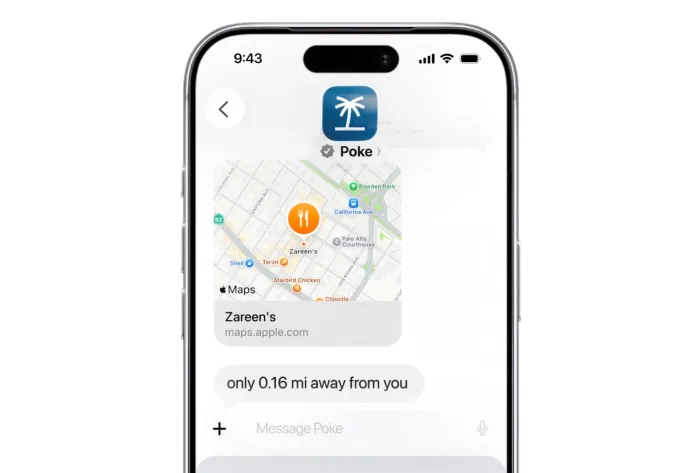
Until now, AI agents simply weren’t part of that picture. The platform was built around human live agents and scripted automated chat systems, not autonomous AI that can manage your calendar, edit your photos, or control your smart home. Poke changes that precedent entirely. As the first Apple iMessage AI agent on the platform, its interactions — user asks a question, AI responds via text — slot neatly into the same framework that airline customer service bots have used for years. Conceptually, Apple’s platform was always a natural fit. It just took someone getting through the door first.
That distinction matters. This isn’t a consumer app on the App Store — so don’t expect to search for “Poke” in App Store search results. What Apple’s Messages for Business provides is an iMessage interface that users can interact with directly, the same way they’d message a business for support. It’s a back-end integration, not a front-end download.
Why Poke’s Apple iMessage AI Agent Approval Is Harder Than It Looks
Getting this approval wasn’t quick or easy. Marvin von Hagen, co-founder of The Interaction Company of California — the startup behind Poke — says the process took a couple of months. Apple required proof that Poke could offer live human support when needed, and that the AI was clearly identified as an AI at all times. No impersonating humans, no blurring the lines.
Beyond those policy requirements, Poke had to rebuild parts of its user interface specifically for Apple’s guidelines. Link previews instead of inline links. Apple’s own style guide for buttons and interface elements. Testimonies submitted from its messaging providers. It’s the kind of friction that filters out anyone who isn’t genuinely committed to the platform. Any company hoping to launch an Apple iMessage AI agent of their own will face the same demanding checklist.
“This took a couple of months to adhere to all of these standards, and it will take anyone else who wants to build on this — it will also take them a couple of months to get through this approval process,” von Hagen said.
That’s not a complaint — it’s a competitive moat. For now, Poke is the only Apple iMessage AI agent on the platform, and the compliance overhead means it won’t be crowded out overnight. Any rival that wants in faces the same months-long gauntlet.
Von Hagen also points to something less tangible than compliance checklists: trust. Apple apparently cared about the kind of company it was letting in, not just whether the technical boxes were ticked. In his telling, a lot of consumer AI products chase growth through questionable tactics — inflated engagement numbers, dark patterns, aggressive onboarding. Poke’s pitch to Apple was essentially the opposite of that.
“We care about quality, we care to have a brand that signals trust,” von Hagen said.
Apple’s New Revenue Play — and What It Tells Us About the Company’s AI Strategy
Here’s the part that deserves more attention than it’s getting: Apple is charging Poke on a per-user basis for access to the platform. Von Hagen can’t share the exact number, but he says it’s meaningfully lower than what Meta charges for similar access on WhatsApp — a figure that went up after EU regulation forced Meta to open WhatsApp to third-party AI agents.
“I think that Apple is just noticing this is the best way to offer AI, and… actually, good for them, because they charge us. They charge us per user on the platform and actually make money with this, especially if it becomes really big,” von Hagen said.
That’s a telling quote. Apple has been conspicuously slow to monetise AI — it’s been giving Apple Intelligence features away as part of iOS updates while rivals charge subscription fees. Opening Messages for Business to an Apple iMessage AI agent on a per-user fee structure is a different model entirely: infrastructure-as-revenue, rather than features-as-product. If it scales, it’s a tidy business — Apple collects fees from every AI company that wants access to its 1.5 billion-plus active device users, without having to build the AI itself.
Apple hasn’t publicly confirmed any of this, and the company didn’t respond to requests for comment before this story published. But the structural logic is sound. Think of it less like the App Store and more like Apple Pay — Apple sits in the middle of a transaction it didn’t create, takes a cut, and keeps control of the experience.
The WWDC Shadow Hanging Over All of This
Apple’s Worldwide Developers Conference kicks off Monday, and expectations are high. The company is widely anticipated to introduce a more capable, AI-native version of Siri, along with new tools for developers building AI features into their apps. There have also been rumours — persistent ones — that Apple plans to open the App Store to AI agents as a distinct category.
Poke’s approval on Messages for Business isn’t that App Store announcement, if it ever comes. But it’s a data point that suggests Apple is actively thinking about how an Apple iMessage AI agent fits into its ecosystem, not just how its own AI features fit into iOS. Von Hagen says he isn’t privy to Apple’s WWDC plans, but he’s optimistic that the company’s appetite for AI agents will grow.
For now, Poke is rolling out invites to its existing users — those who’ve been messaging it over SMS or Telegram — giving them the option to switch to the iMessage experience. It’s an opt-in migration, not a forced one, which is the right call. The iMessage interface is cleaner and more capable, but not every Poke user is an iPhone owner.
What This Means for AI Agents Trying to Break Into Mainstream Use
One of the persistent challenges for AI agent companies is distribution. Building something smart is the easy part — getting ordinary people to actually use it, consistently, is hard. Most AI agent platforms require users to install something, sign up somewhere, learn a new interface, or remember to open a new app. The drop-off between “downloaded” and “daily active” is brutal in consumer software.
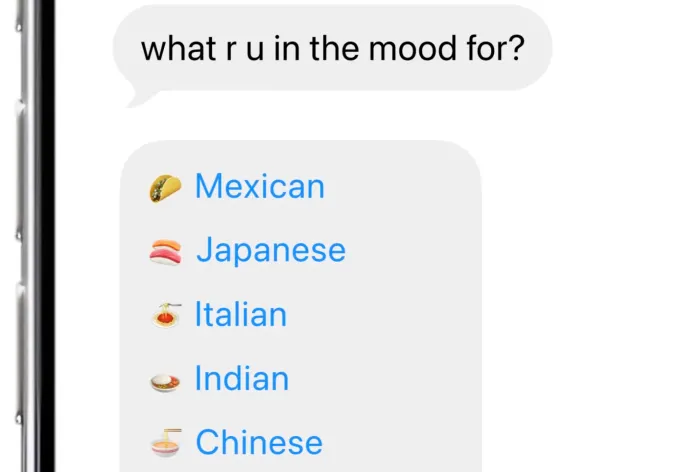
Poke’s thesis is that the answer is to live inside the communication channels people already use every day. SMS is universal. WhatsApp has over two billion users. And iMessage, for iPhone owners, is the default way they communicate with everyone they know. Deploying as an Apple iMessage AI agent means the activation energy to use it collapses to almost nothing. You don’t open a new app. You just text.
That’s a genuinely smart wedge into the market, and Apple’s approval validates it. Whether Poke can maintain its first-mover advantage as larger players inevitably eye the same Apple iMessage AI agent opportunity is another question. But for now, it’s earned something valuable: proof that Apple’s most intimate communication channel is open for AI business — and a head start that will be hard to close.