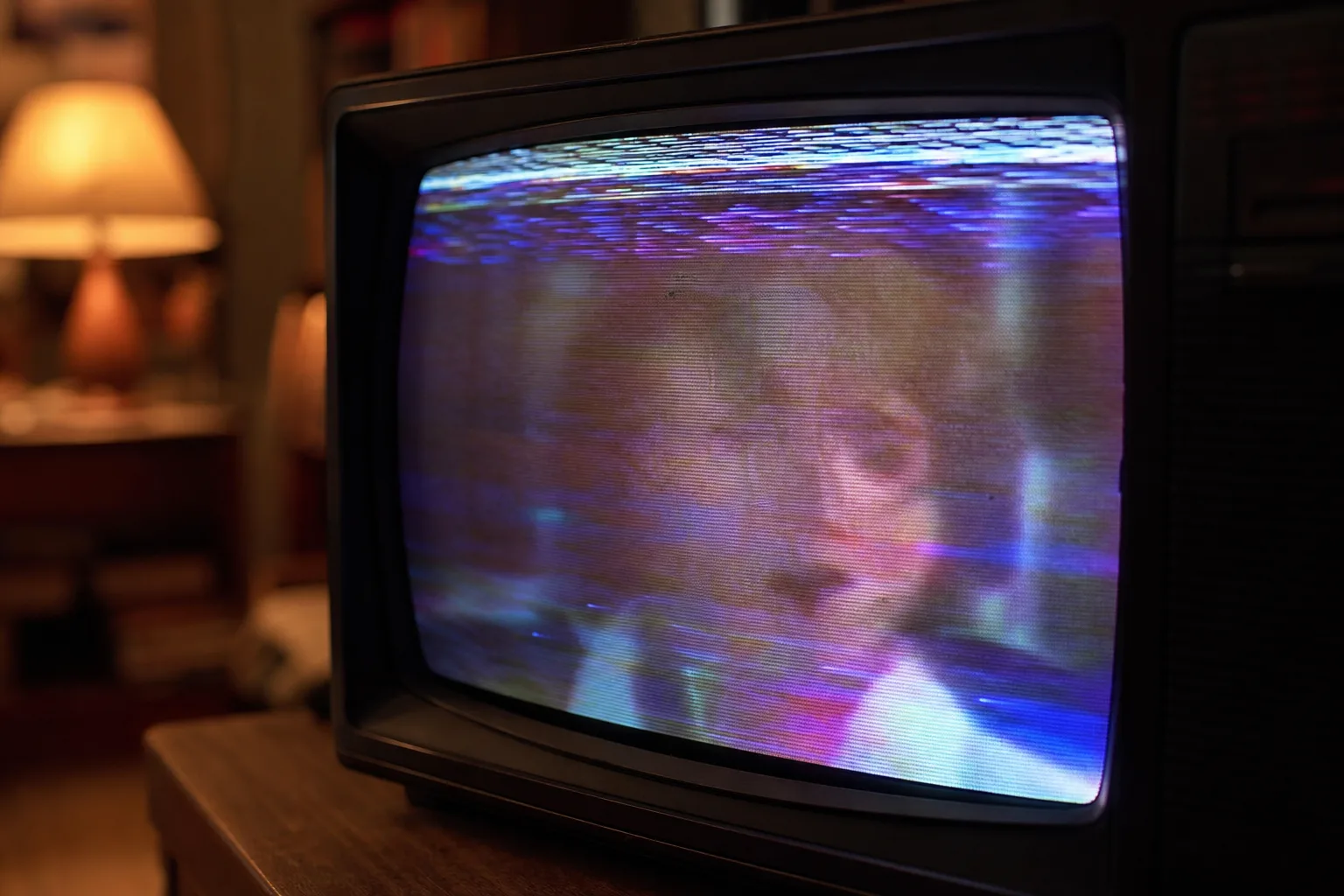
- Ntsc-rs delivers analog video emulation based on real NTSC transmission and VHS encoding algorithms, not simple color filters.
- Unlike competing tools, this analog video emulation runs in real time at resolutions far beyond original NTSC footage.
- The plugin is free, open-source, and works inside After Effects, Premiere Pro, DaVinci Resolve, Vegas, and Hitfilm.
- Written in Rust with multithreading and SIMD acceleration, ntsc-rs is built for performance from the ground up.
Table of Contents
Analog Video Emulation Gets Serious
There’s a persistent appetite in film, music videos, and social content for the washed-out, glitchy warmth of analog video — that particular visual language of late-80s and 90s television, home VHS recordings, and public-access broadcasts. The demand is real. The tools to satisfy it, until now, have mostly been cosmetic shortcuts. Ntsc-rs changes that by offering analog video emulation grounded in the actual physics and signal processing of how NTSC broadcast television and VHS recording worked, not just how they looked.
Most competing effects — including a number of paid options from well-known plugin vendors — take a relatively blunt approach. They apply a color lookup table to shift the palette toward that faded, slightly green-tinged video look, add a scanline overlay, maybe throw in some chroma noise, and call it done. It reads as ‘VHS-ish’ at a glance. Look a little closer, though, and it rarely survives scrutiny from anyone who grew up watching actual tapes.
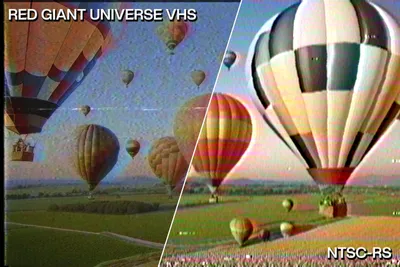
Ntsc-rs is built on a fundamentally different premise. Its algorithms model the signal chain — composite video encoding, NTSC transmission artifacts, the specific way VHS compression degrades luminance and chrominance channels differently, and the feedback loops that created those distinctive color bleeds and edge halos. The project traces its algorithmic lineage to several earlier open-source efforts: zhuker/ntsc, ntscQT, and composite-video-simulator. Ntsc-rs essentially takes that research and rebuilds it for speed and practical deployment.
What Real Signal Simulation Actually Looks Like
To understand why accurate analog video emulation is harder than it looks, it helps to know a little about how NTSC actually worked. The NTSC standard, first introduced in 1941 and revised for color in 1953, encoded video as a composite signal — meaning luminance (brightness) and chrominance (color) information were multiplexed together onto a single carrier wave. This was an elegant engineering compromise for its era, but it introduced inherent artifacts: dot crawl at color boundaries, color bleeding across high-contrast edges, and a softness to fine detail that’s completely unlike the crisp failures of digital compression.
VHS added its own layer on top. The format recorded luminance at a relatively decent bandwidth but severely restricted chrominance to around 400kHz — roughly a third of what broadcast NTSC could carry. That’s why colors on VHS footage bleed horizontally, why fine patterns create rainbow interference, and why fast motion turns into a smear of wrong colors. These aren’t random noise effects. They’re predictable consequences of specific engineering decisions made in the 1970s.
Simulating that behavior correctly requires actually running something approximating those signal processes in software — encoding a synthetic composite signal, applying bandwidth limits, introducing the right kinds of noise at the right points in the signal chain, and then decoding it back. That’s what ntsc-rs does. The difference in output is immediately visible to anyone with a trained eye, and increasingly visible to audiences primed by years of authentic archival footage appearing on streaming platforms and YouTube.
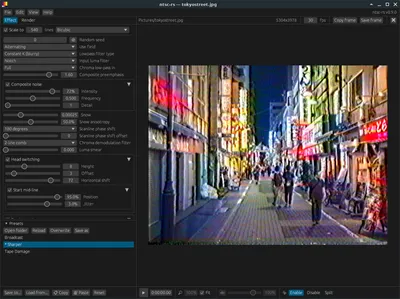
Analog Video Emulation at Real-Time Speed
Accurate simulation of a signal chain is computationally expensive. That’s historically been the core trade-off: tools like ntscQT produce genuinely convincing results, but they’re slow — processing a single frame of footage can take several seconds, which makes working interactively in an editing timeline essentially impossible. Ntsc-rs solves that by being written in Rust, a systems programming language known for performance comparable to C or C++ with stronger memory safety guarantees.
Beyond the language choice, the developers built in multithreading and SIMD acceleration — using modern CPU instruction sets that can perform the same mathematical operation on multiple data points simultaneously. The practical upshot is that ntsc-rs can run its analog video emulation in real time at resolutions well beyond the 480i that actual NTSC footage was captured at. You can apply it to 1080p or even 4K source footage and still play back your timeline without dropping to a proxy.
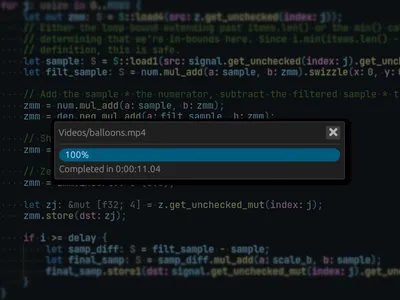
That’s a meaningful distinction for working professionals. One of the persistent frustrations with technically ambitious open-source tools is that they require baking out frames before you can evaluate whether the effect is working. Real-time feedback changes the creative workflow entirely — you can adjust parameters and see results immediately, the same way you’d work with any other plugin inside your NLE.
Plugin Support That Actually Covers the Market
Ntsc-rs ships in three forms: a standalone desktop application, a browser-based web app that requires no installation, and — most significantly for professional users — as a plugin. The plugin build supports Adobe After Effects and Premiere Pro directly, and it also implements the OpenFX standard, which covers a substantial portion of the professional video editing market. That means it works inside DaVinci Resolve, Hitfilm, and Vegas Pro without any additional work.
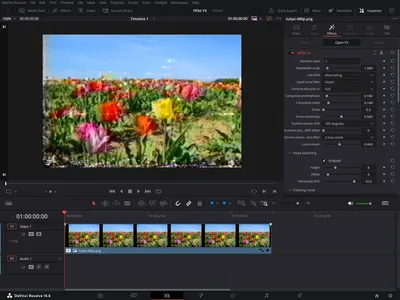
OpenFX compatibility is quietly important here. Blackmagic Design’s DaVinci Resolve has become the de facto standard for color grading across independent film, commercial production, and increasingly broadcast television — and its free tier is used by an enormous number of professionals who have no budget for expensive effect packs. Dropping an accurately simulated analog video emulation plugin into that ecosystem, for free, opens it to an audience that would never have encountered the standalone tool.
The web app is worth calling out separately. For motion graphics designers, social content creators, or anyone who wants to test the effect before committing to an install, being able to drop footage into a browser and get accurate NTSC simulation back is genuinely useful. It also makes the tool accessible to people working on machines where installing plugins is restricted — corporate workstations, shared editing suites, and so on.
Open Source in the Era of Paid VHS Packs
The commercial market for VHS and analog-era video effects is surprisingly healthy. Red Giant Universe, Boris FX, and assorted marketplace vendors have all sold VHS-look plugins for years, typically as part of larger effect bundles priced at anywhere from $50 to several hundred dollars. The results have ranged from credibly decent to obviously fake, but they’ve benefited from being easy to install, actively supported, and — crucially — fast enough to use interactively.
Ntsc-rs is now competitive on all of those fronts while being completely free. It doesn’t require a subscription, doesn’t phone home, and the source code is available for anyone who wants to understand exactly what it’s doing to their footage or contribute improvements. That’s not an insignificant thing in a creative tools market increasingly dominated by subscription-first pricing.
The project also sits within a broader pattern of high-quality open-source creative software finding serious professional traction — Blender being the most prominent example, but also Kdenlive, Krita, and the OpenFX ecosystem itself. The analog video emulation space hasn’t had a credible free contender at this technical level before. Ntsc-rs makes a strong case that it doesn’t need one anymore. Whether the commercial plugin vendors take notice — and how they respond — will be worth watching over the next year or two as the tool gains broader adoption.
Frequently Asked Questions
Is analog video emulation in ntsc-rs accurate enough for professional use?
Yes. Ntsc-rs models the actual signal behavior of NTSC transmission and VHS encoding using established algorithms, making it significantly more accurate than color-lookup-table approaches. It works as a plugin inside professional NLEs like DaVinci Resolve, Premiere Pro, and After Effects, so professional workflows are fully supported.
What software does ntsc-rs work with?
Ntsc-rs is available as a standalone app, a web app, and as a plugin for Adobe After Effects, Adobe Premiere, and any OpenFX-compatible host. That includes DaVinci Resolve, Hitfilm, and Vegas Pro.
Why is ntsc-rs faster than tools like ntscQT?
Ntsc-rs is written in Rust and takes advantage of multithreading and SIMD CPU instructions, which parallelize the most computationally expensive parts of the signal simulation. The result is real-time playback at high resolutions that older Python-based tools simply can’t match.
Does ntsc-rs cost anything?
No. Ntsc-rs is completely free and open-source. It can be downloaded as a standalone application, used directly in the browser as a web app, or installed as a plugin without any licensing fee.