

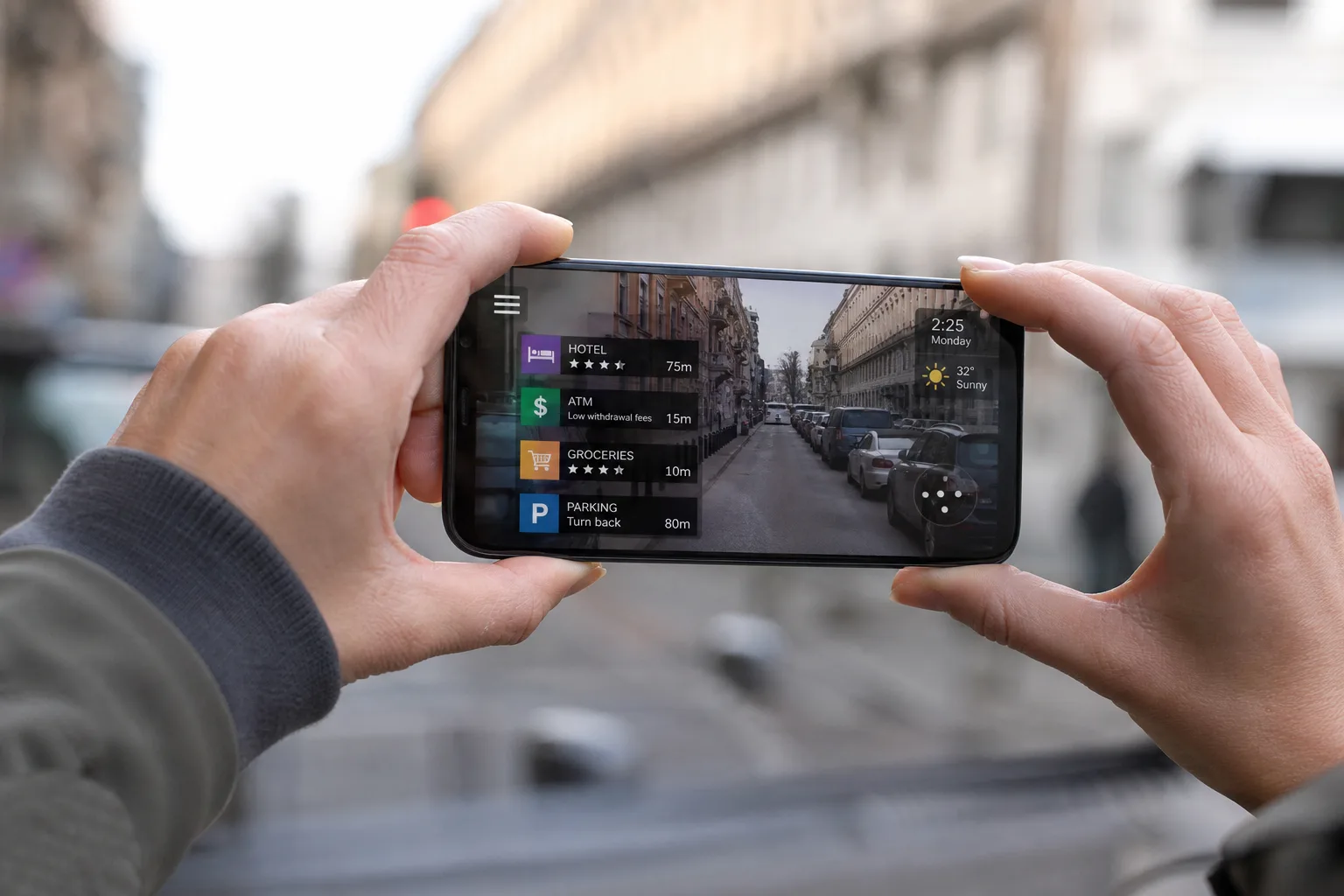
- Pokémon Go AI data was used to train object-recognition models that could help military drones identify targets.
- The Pokémon Go AI data pipeline ran through Niantic, the game’s developer, whose mapping tech proved militarily useful.
- The revelation raises serious questions about how consumer apps harvest location and visual data without users’ knowledge.
- Defense contractors reportedly used the crowdsourced imagery to improve real-time object detection in drone systems.
Table of Contents
Pokémon Go AI Data and the Military Connection Nobody Saw Coming
When millions of people wandered parks and pavements in 2016, phones raised, chasing digital creatures that didn’t exist, almost nobody was thinking about drone warfare. They probably should have been. It’s now emerged that Pokémon Go AI data — the vast trove of location-tagged imagery and spatial information generated by the game’s players — was used to train artificial intelligence systems that could assist military drones in identifying targets in conflict zones.
The story, reported by The Guardian, connects two worlds that feel almost satirically far apart: a lighthearted augmented reality game built around catching cartoon monsters, and the deadly serious business of autonomous weapons. But the through-line is data — and specifically, the kind of rich, real-world visual data that’s extraordinarily hard to collect at scale any other way.
How a Mobile Game Became an Accidental Surveillance Machine
Pokémon Go was developed by Niantic, a company that spun out of Google and brought serious geospatial expertise with it. The game’s core mechanic required players to walk through real-world locations, and its AR features meant devices were constantly capturing images of streets, buildings, parks, and public spaces. Players weren’t paid for this. They weren’t warned their surroundings were being catalogued. They were just trying to catch a Pikachu.
What Niantic quietly accumulated was one of the most detailed, crowdsourced visual maps of the physical world ever created. Millions of data points, tagged with GPS coordinates, gathered across hundreds of countries, updated constantly. For training an AI to recognise objects in real-world environments — the exact capability a targeting or navigation system on an autonomous drone would need — that dataset is genuinely valuable.
According to The Guardian’s reporting, Pokémon Go AI data fed into AI systems developed with military applications in mind. The object-recognition models trained on this kind of real-world imagery can learn to distinguish vehicles, structures, and people with the sort of contextual accuracy that purely synthetic or lab-generated training data struggles to replicate.
The Data Chain: From AR Gaming to Autonomous Weapons
The precise corporate chain here matters, and it’s deliberately murky. Niantic hasn’t been accused of directly selling data to defence contractors. The trail involves third parties, licensing arrangements, and the kind of opacity that’s become standard practice in commercial AI development. But that’s almost the point — it illustrates how consumer data can travel from an innocuous origin to a sensitive destination without any single actor making an obviously villainous choice.
This isn’t entirely new territory. The Electronic Frontier Foundation and similar organisations have documented for years how consumer apps quietly generate data flows that end up in government, military, or intelligence contexts. What’s striking here is the scale and the source. Pokémon Go AI data wasn’t scraped from a niche app used by a few thousand people — at its 2016 peak, the game had an enormous number of monthly active users. That’s a dataset of almost unimaginable density.
The Strava heatmap incident offers a useful comparison. The fitness tracking app inadvertently revealed the locations of secret military bases when its global heatmap — built from users’ workout routes — showed suspicious activity in remote areas. The mechanism is different, but the underlying dynamic is identical: consumer behaviour generates data; that data has uses its creators never intended or disclosed.
What This Reveals About AI Training Ethics
There’s a broader and deeply uncomfortable question sitting underneath this story. At what point does the passive data exhaust of everyday digital life become a resource that should require explicit informed consent before it can be fed into military systems?
Right now, the answer in most legal frameworks is: almost never. App terms of service are written to be permissive almost by design. Users click ‘agree’ without reading, and what they’re agreeing to often includes language broad enough to cover data licensing to unnamed third parties for unspecified purposes. That’s not a conspiracy — it’s just the business model of most consumer technology, applied to an outcome most users would find alarming if they understood it.
The ethics of AI training data are already under intense scrutiny in courts and legislatures around the world, largely driven by generative AI’s appetite for scraped text and images. The Pokémon Go AI data case adds a harder dimension: not creative copyright, but physical safety. If a model trained partly on data you generated without knowledge ends up powering a weapons system, the question of consent takes on a different weight entirely.
Niantic’s Position and the Silence Around It
Niantic has worked hard to cultivate an image as a responsible steward of location data. The company has a stated privacy policy and has, at various points, pushed back on data requests. But the architecture of how data flows once it enters commercial AI pipelines makes those commitments difficult to enforce in practice. Data gets licensed, aggregated, transformed, and incorporated into models in ways that detach it from its original source — legally and technically.
The company hasn’t made a detailed public statement directly addressing the Pokémon Go AI data military connection, which is itself notable. Silence in the face of a story this significant usually signals either active legal advice to say nothing or a genuine uncertainty about what was known and when.
The Bigger Picture for Consumer Tech and Military AI
The defence technology sector has been accelerating its use of commercial AI tools and datasets for several years. The U.S. Department of Defense’s Project Maven — which famously prompted a staff revolt at Google in 2018 — was an early, high-profile example of the military’s interest in machine-vision AI trained on commercial infrastructure. That episode ended with Google declining to renew its contract. But the appetite didn’t disappear; it just moved to less publicly visible contractors.
What the Pokémon Go AI data story makes vivid is that the supply chain for training data is just as ethically fraught as the end application. Debating whether tech companies should build weapons systems is one conversation. But the data that makes those systems work is already out there, already collected, already flowing through commercial pipelines — largely because players of a mobile game wanted to catch virtual creatures on their lunch breaks.
That gap between what people think they’re doing when they use an app and what their Pokémon Go AI data might eventually enable is going to become one of the defining regulatory battles of this decade. The case won’t be the last time it surfaces. It won’t even be the most significant. It’s just one of the first we’re hearing about.

