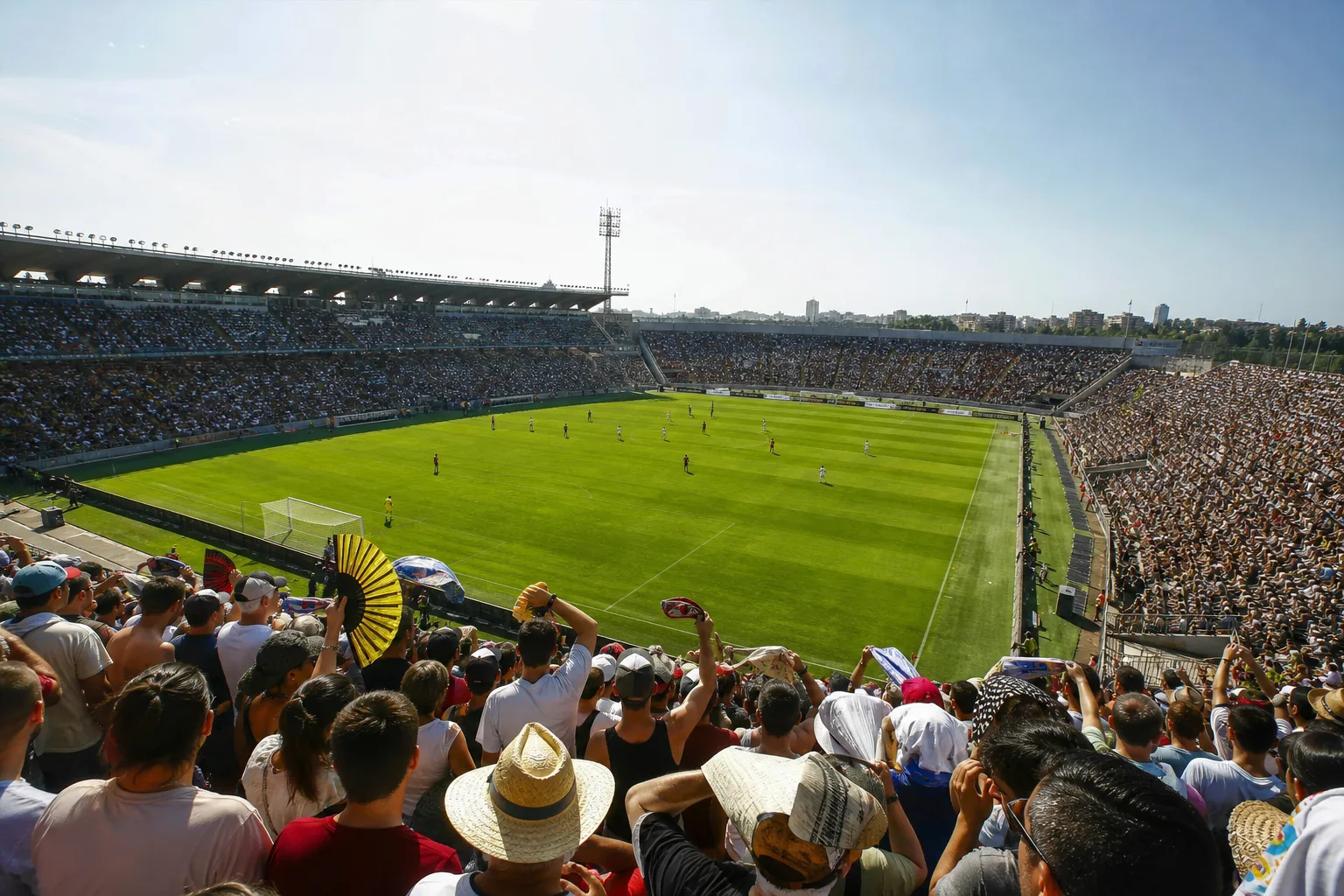
The 2026 World Cup heat risk is now a quantified, documented problem — and the numbers are hard to ignore. A new analysis from the World Weather Attribution group finds that roughly one in four of the tournament’s 104 matches could be played in conditions that breach the thermal safety limits set by the international players’ union. That’s not a worst-case fringe scenario. That’s the baseline probability, and it has nearly doubled compared to the last time the United States hosted the World Cup, back in 1994.
- The 2026 World Cup heat risk affects roughly 25% of matches, nearly double the danger seen at the 1994 US tournament.
- Scientists warn 2026 World Cup heat risk is worst in Miami, Dallas, Houston, Kansas City, and Philadelphia, where dangerous thresholds recur annually.
- FIFA has announced three-minute hydration breaks mid-half, but researchers say that alone won’t be enough to protect players and fans.
- A WBGT reading above 28°C is considered high risk — at that level, FIFPro recommends matches be delayed or suspended entirely.
Table of Contents
How Researchers Measured the Danger
The study didn’t simply look at air temperature. Instead, it used the wet-bulb globe temperature — WBGT — a composite index that factors in ambient temperature, humidity, solar radiation, and wind speed simultaneously. The result is a much more honest picture of what a human body actually experiences when it’s working hard outside. For professional footballers sprinting repeatedly for 90-plus minutes, that distinction matters enormously. Understanding the full scope of the 2026 World Cup heat risk requires exactly this kind of nuanced measurement.
The researchers built a statistical model and ran it across every host city in the United States, Mexico, and Canada, accounting for local variables like altitude, urban heat island effects, and regional climate patterns. They then measured those projections against historical daily WBGT records for the tournament window — June 11 to July 19 — and cross-referenced everything against the thresholds set by FIFPro, the global soccer players’ union.

FIFPro draws two clear lines. A WBGT of 26°C (78.8°F) is the first alert level, requiring extra hydration and active cooling measures. At 28°C (82.4°F), the union’s guidance shifts — it recommends that matches be delayed or suspended outright. The WWA analysis found that at least five matches across the tournament are projected to hit or exceed that upper threshold. Roughly one in four matches in total are expected to breach the lower one.
The 2026 World Cup Heat Risk Is Worst in These Cities
Not all host cities face equal exposure. The WWA report flags Miami, Kansas City, Philadelphia, Dallas, and Houston as the most alarming cases. These cities have what researchers describe as a ‘return period’ of just one year for conditions reaching 82.4°F on the WBGT scale — meaning extreme heat of that magnitude is likely to occur every single year during the World Cup’s scheduled dates. That’s not a rare weather event. That’s the summer. The 2026 World Cup heat risk is, in these cities, essentially a guaranteed feature of the calendar rather than a contingency to plan around.
Atlanta, Boston, and New York — alongside Mexico’s Monterrey — hit the same annual recurrence rate for the lower 78.8°F threshold. Meanwhile, cities like Los Angeles, Seattle, San Francisco, Toronto, and Vancouver have seen the probability of dangerous heat at least double since 1994. Climate change isn’t a future risk for this tournament. It’s already here, baked into the forecasts.

A separate study published in the journal Scientific Reports at the end of 2024 reinforced these findings from a different angle, looking specifically at stadium infrastructure. It identified 10 of the 16 host stadiums as presenting ‘very high’ heat risk, with the venues in Arlington and Houston, Texas — along with the BBVA Stadium in Monterrey — singled out as the most severe cases for both players and spectators. For fans traveling to these venues, the 2026 World Cup heat risk extends well beyond the pitch.
Climate Change Is Making This Measurably Worse
The link to global warming isn’t speculative — it’s explicit in the data. Rubén del Campo, a spokesman for Spain’s State Meteorological Agency, put the scale in perspective when speaking to SMC Spain: since 1994, the global average temperature has climbed by between 0.5 and 0.7 degrees Celsius. ‘It is a figure that may not seem very high,’ del Campo said, ‘but it represents approximately half of the warming observed in the last century and a half. Moreover, since the mid-1990s, when the previous World Cup was held in the United States, the effects of climate change have intensified all over the planet, especially heat waves.’
Half a degree sounds incremental. In practice, it shifts probability distributions for extreme heat events dramatically — pushing conditions that were once rare into the ‘expected’ column. The 2026 World Cup heat risk isn’t a fluke of bad timing. It’s the predictable output of three decades of warming, and the trajectory continues upward regardless of any single policy intervention. Experts stress that the 2026 World Cup heat risk will grow more acute with each successive tournament unless structural changes are made to how FIFA selects host nations and schedules fixtures.
FIFA’s Response and Why Researchers Say It Falls Short
FIFA’s official position is that the match schedule was constructed through a technical analysis of all venues, weighing average temperatures, available cooling infrastructure, public transport, and security. In response to the heat warnings, the governing body has confirmed mandatory three-minute hydration breaks at the halfway point of each half — a measure it frames as a meaningful safeguard for players.

Scientists working on the WWA report aren’t dismissing that step, but they’re clear it’s not sufficient on its own. The group is pushing for a broader suite of interventions: adjusted warm-up times for players, upgrades to stadium cooling systems, and more rigorous medical supervision across the entire matchday experience — covering not just players but the tens of thousands of fans packed into outdoor seats in sweltering conditions. Addressing the 2026 World Cup heat risk properly, researchers argue, demands a coordinated response that goes far beyond hydration breaks.
Julien Périard, director of the Institute of Sport and Exercise Research at the University of Canberra, highlighted a fundamental gap in current modeling. ‘The WBGT index only considers environmental conditions and does not incorporate sport’s own metabolic heat production or the insulating effects of clothing, which can limit heat loss,’ he told SMC Spain. ‘More advanced models and predictive tools are required to ensure the safety of athletes.’ In other words, the existing danger thresholds might actually be conservative — the real physiological stress on a footballer in full kit could exceed what WBGT alone captures.
What This Means Beyond Football
The 2026 World Cup heat risk sits inside a much wider conversation about how major outdoor sporting events can continue to function safely in a warming world. Tennis has grappled with this at the Australian Open and the French Open for years. Athletics events have faced scrutiny at world championships held in hot-weather cities. The Olympics has increasingly built heat contingency planning into its operational frameworks.
What makes the World Cup particularly complex is its scale — 104 matches, spread across 16 cities in three countries, over 40 days — combined with the fact that FIFA’s scheduling constraints are enormous. Moving kickoff times later in the evening helps in some venues but isn’t always feasible given broadcast windows worth billions of dollars. The commercial architecture of the tournament doesn’t bend easily around climate data, and that tension is only going to intensify as the planet gets hotter.
For now, the question isn’t whether dangerous heat will show up at the 2026 World Cup. According to the research, it almost certainly will. The real question is whether FIFA, host cities, and medical teams will be adequately prepared when it does — or whether the first major incident involving a player or fan will be the forcing function that finally produces the systemic changes researchers have been asking for. The 2026 World Cup heat risk demands proactive action now, not a reactive response after harm has already been done.
Frequently Asked Questions
How serious is the 2026 World Cup heat risk for players?
Researchers say it’s significant. Around 25% of the 104 matches could be played in conditions exceeding safe thermal limits set by FIFPro. At least five games are projected to hit the highest danger threshold — a WBGT of 28°C (82.4°F) — at which the players’ union recommends suspending or delaying matches.
What is the WBGT and why does it matter for football?
The wet-bulb globe temperature combines air temperature, humidity, solar radiation, and wind speed into a single measure of how much heat stress the human body experiences. It’s a more accurate gauge than air temperature alone, which is why scientists and sports bodies use it to set safety thresholds for outdoor athletic events.
Which 2026 World Cup host cities face the highest heat danger?
Miami, Kansas City, Philadelphia, Dallas, and Houston are flagged as the most worrying US cities. Atlanta, Boston, New York, and Mexico’s Monterrey also face frequent dangerous conditions. Separate research specifically singles out the stadiums in Arlington, Houston, and Monterrey’s BBVA Stadium as posing the highest risk of severe heat stress.
What is FIFA doing to address heat conditions at the 2026 World Cup?
FIFA says the match schedule was built around a technical analysis of each venue covering temperatures, cooling infrastructure, and logistics. The body has also confirmed mandatory three-minute hydration breaks at the midpoint of each half — though scientists argue additional measures, from stadium cooling upgrades to stricter medical supervision, are needed.