
Bitcoin is carving out territory that nobody in the bull camp wanted to see. The latest Bitcoin price lows in 2026 have dragged BTC back to levels last visited in September 2024, a 9% slide in just three days that erased months of hard-won gains and sent liquidation trackers into overdrive. More than $1 billion in leveraged long positions were wiped out as the $58,000 level cracked, and while a modest bounce to around $59,500 offered brief relief, the broader picture remains troubling for bulls.
- Bitcoin price lows in 2026 hit levels not seen since September 2024, triggering over $1 billion in liquidations.
- Spot BTC ETF outflows hit $469 million in a single day, signalling fading institutional confidence in Bitcoin price lows.
- A $13 billion options expiry heavily weighted toward put contracts adds more downward pressure on BTC.
- Strategy sits on massive unrealized losses after accumulating $64.1 billion in Bitcoin since 2020.
Table of Contents
How Bitcoin Price Lows Are Reshaping the Market
The selloff arrived alongside a busy macro backdrop. The US Personal Consumption Expenditures index for May came in at 4.1% year-over-year — not catastrophic, but not the soft landing reading traders were hoping for. At the same time, Brent crude oil has slid sharply, dropping from $95 to around $75 in the space of a month. That’s a meaningful shift. Lower energy costs act like a quiet tax cut, freeing up cash that tends to flow back into risk assets — specifically, into equities. The current Bitcoin price lows are unfolding against exactly this kind of shifting macro backdrop, making the timing especially difficult for bulls to navigate.
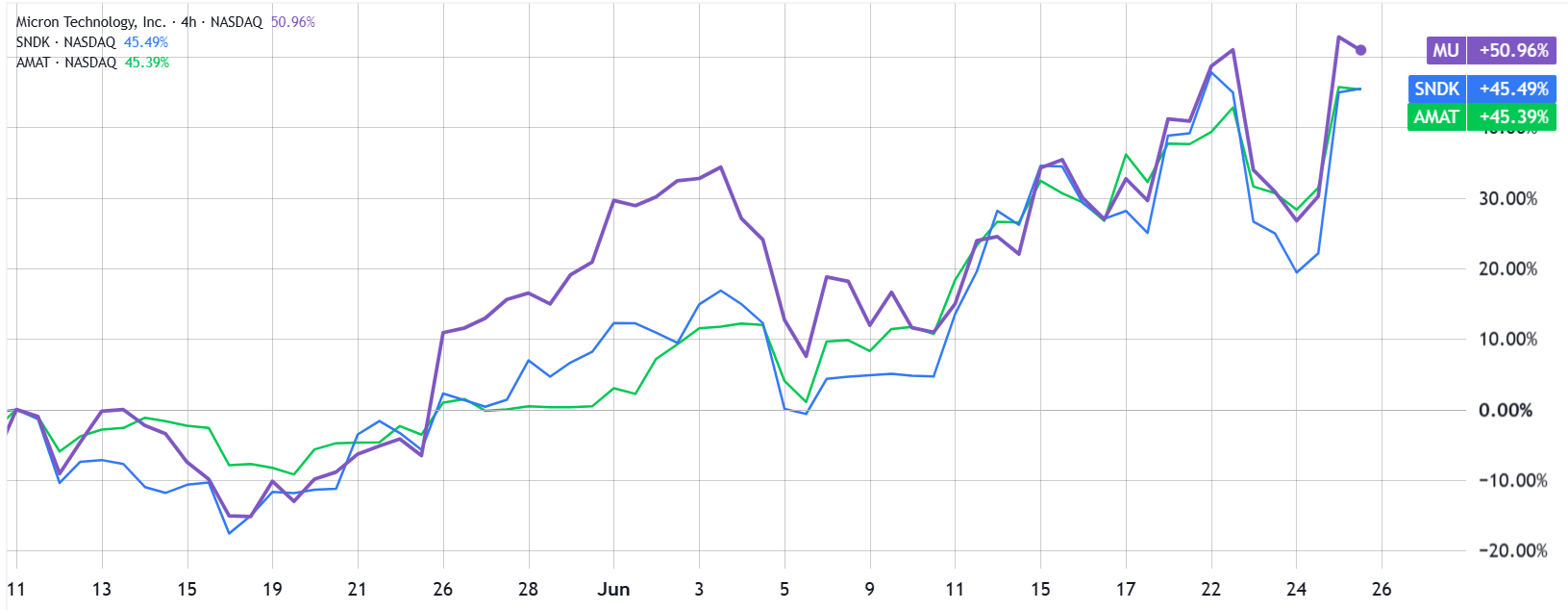
And flow it did. Micron Technology jumped 16% on the back of solid quarterly earnings. Sandisk rode that semiconductor wave for an 18% gain of its own. Applied Materials added 10% after unveiling new chipmaking tools. These aren’t minor moves — they’re the kind of numbers that make fund managers reassess their allocation spreadsheets in real time. When chipmakers are posting those kinds of returns in a single session, Bitcoin’s recent Bitcoin price lows start to look even less appealing by comparison.

The Rate Hike Shadow Hanging Over Crypto
There’s a structural problem for Bitcoin beyond just short-term sentiment, and it comes down to the rate environment. According to the CME FedWatch Tool, traders are now pricing in an 80% chance of US interest rate hikes by December — up from 68% just a month ago. That shift matters enormously for a non-yielding asset like Bitcoin. When 5-year US Treasuries are offering 4.15%, the opportunity cost of holding BTC becomes a live conversation rather than a theoretical one.
This is the macro trap Bitcoin finds itself in. It’s not simply a question of whether BTC can rally — it’s whether there’s a compelling reason to own it over assets that pay you to wait. Right now, that argument is harder to make. Investors nervous about stretched AI valuations — and SpaceX shares have fallen 32% from their peak as a cautionary data point — can park capital in government bonds and collect a meaningful yield while the dust settles. Bitcoin price lows of this depth make that alternative even more attractive, as Bitcoin offers no such cushion.
ETF Outflows Signal Fading Institutional Appetite
The spot Bitcoin ETF data is where the institutional mood becomes most visible. Wednesday’s session saw $469 million in net outflows from US-listed spot BTC ETFs — one of the larger single-day exodus readings since these products launched. That’s not noise. Spot ETF flows have become the clearest real-time gauge of what sophisticated money is doing with Bitcoin exposure, and right now it’s reducing it.
The Bitcoin price lows being registered now are partly a consequence of that institutional retreat. When the ETF products first launched, the narrative was that they’d create a permanent, self-reinforcing demand floor. The current outflow data challenges that thesis, at least in the near term. Institutional money is discretionary — it moves toward the best risk-adjusted return available, and with tech stocks and Treasuries both performing, Bitcoin is losing that argument at the moment.
Strategy’s Mounting Losses Add to the Pressure
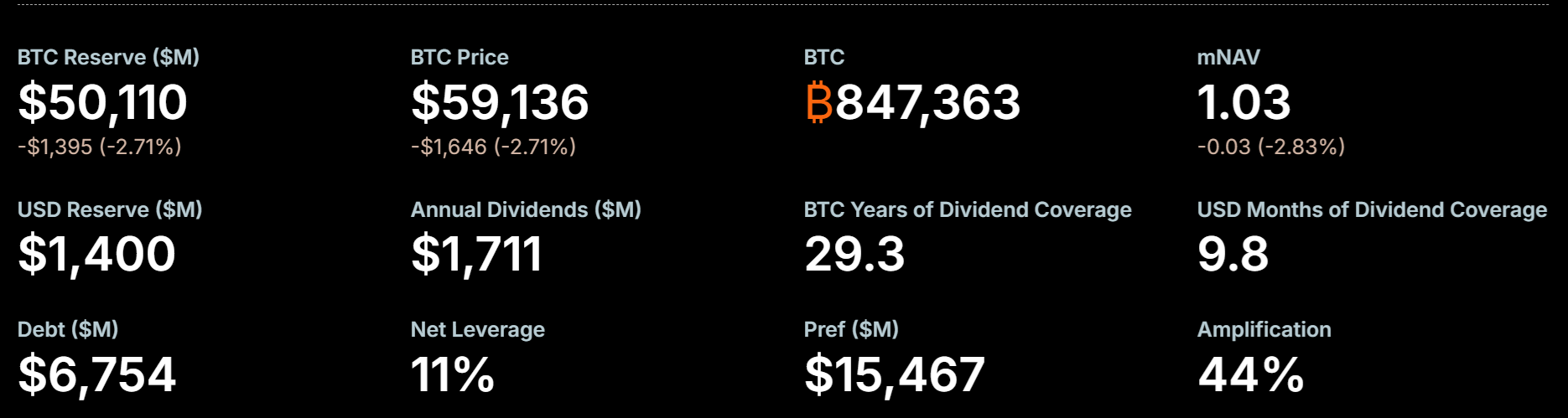
Then there’s Strategy — the company formerly known as MicroStrategy — whose Bitcoin bet has become one of the most watched positions in all of finance. Since 2020, Strategy has accumulated $64.1 billion worth of Bitcoin. At current Bitcoin price lows, that position carries a significant unrealized loss, and the psychological weight of that on broader market sentiment shouldn’t be underestimated.
Markets don’t like uncertainty around large, concentrated positions. Even if Strategy has publicly committed to a long-term hold and has no immediate obligation to sell, the mere existence of that overhang keeps a ceiling on enthusiasm. Traders know the position is there. They know what price levels would make things genuinely uncomfortable. And they factor that into their own risk management, which has the effect of suppressing appetite for new long exposure precisely when Bitcoin needs fresh buyers most.
A Brutal Options Setup Heading Into Friday
The timing of the latest drop couldn’t be much worse from a derivatives standpoint. A $13 billion Bitcoin options expiry is scheduled for Friday, and the structure is decisively bearish. Put open interest on Deribit exceeds call open interest by $3.4 billion. Roughly 78% of outstanding call options are struck at $72,000 or above — meaningless at current prices. That means the overwhelming majority of bullish bets will expire worthless, providing zero support and eliminating a potential source of short-covering that might otherwise stabilise prices. With Bitcoin price lows already testing multi-month support, this options setup compounds the difficulty of staging any meaningful recovery before the weekend.
Options expiries of this size can act as gravitational wells, pulling prices toward levels that maximise pain for the losing side. With calls so far out of the money and puts heavily in the money, the path of least resistance through Friday’s expiry doesn’t favour a dramatic recovery. Traders who were positioned for a continuation of last year’s bull run are now watching those positions evaporate.
What Bitcoin Needs to Find Its Footing
The uncomfortable reality for Bitcoin bulls is that the usual macro tailwinds — risk-on sentiment, dollar weakness, inflation fears — aren’t translating into BTC outperformance right now. The S&P 500 and gold both recovered their intraday losses on the day Bitcoin hit its new 2026 lows. That decoupling is significant. It suggests this isn’t purely a broad risk-off episode dragging everything down together. Bitcoin is underperforming on its own merits, or lack thereof at this moment.
The US government’s recent moves in the AI and semiconductor space — taking a 9.9% stake in Intel, pledging $2 billion toward quantum computing firms, opening federal lands for data centre development, and creating a regulatory framework for frontier AI models — have reinforced the narrative that tech is where policy and capital want to be. That’s a headwind Bitcoin simply can’t match with a comparable story right now.
For Bitcoin price lows to reverse into a durable recovery, something needs to change in at least one of three areas: ETF inflows need to turn positive and stay that way, the rate-hike probability curve needs to soften, or a Bitcoin-specific catalyst needs to emerge that’s compelling enough to draw capital away from the tech and bond trade. None of those look imminent. That doesn’t mean BTC is finished — every previous cycle eventually found its floor and rebuilt — but it does mean traders waiting for a quick snap-back may be in for a longer wait than they’d like.
Frequently Asked Questions
Why are Bitcoin price lows in 2026 coinciding with stock market strength?
Unlike previous cycles where Bitcoin tracked equities, the current Bitcoin price lows are happening as tech stocks rally on strong earnings and AI investment. Risk appetite is rotating toward yielding and AI-adjacent assets, leaving Bitcoin without a clear catalyst to attract fresh capital.
What is driving spot Bitcoin ETF outflows right now?
Spot BTC ETFs recorded $469 million in net outflows in a single day, reflecting institutional investors pulling back amid rising rate-hike expectations, a bearish options setup, and stronger returns available in tech stocks and US Treasuries.
How does the Bitcoin options expiry affect BTC’s price?
The $13 billion options expiry is skewed heavily toward put contracts, with put open interest exceeding calls by $3.4 billion on Deribit. Around 78% of call options are priced at $72,000 or above, meaning most bullish bets will expire worthless and offer no price support.
Is Strategy’s Bitcoin position contributing to market weakness?
Strategy has accumulated $64.1 billion in Bitcoin since 2020 and now sits on a significant unrealized loss. That overhang weighs on sentiment, as the market questions whether a forced or voluntary sell-off could add supply pressure at these levels.