

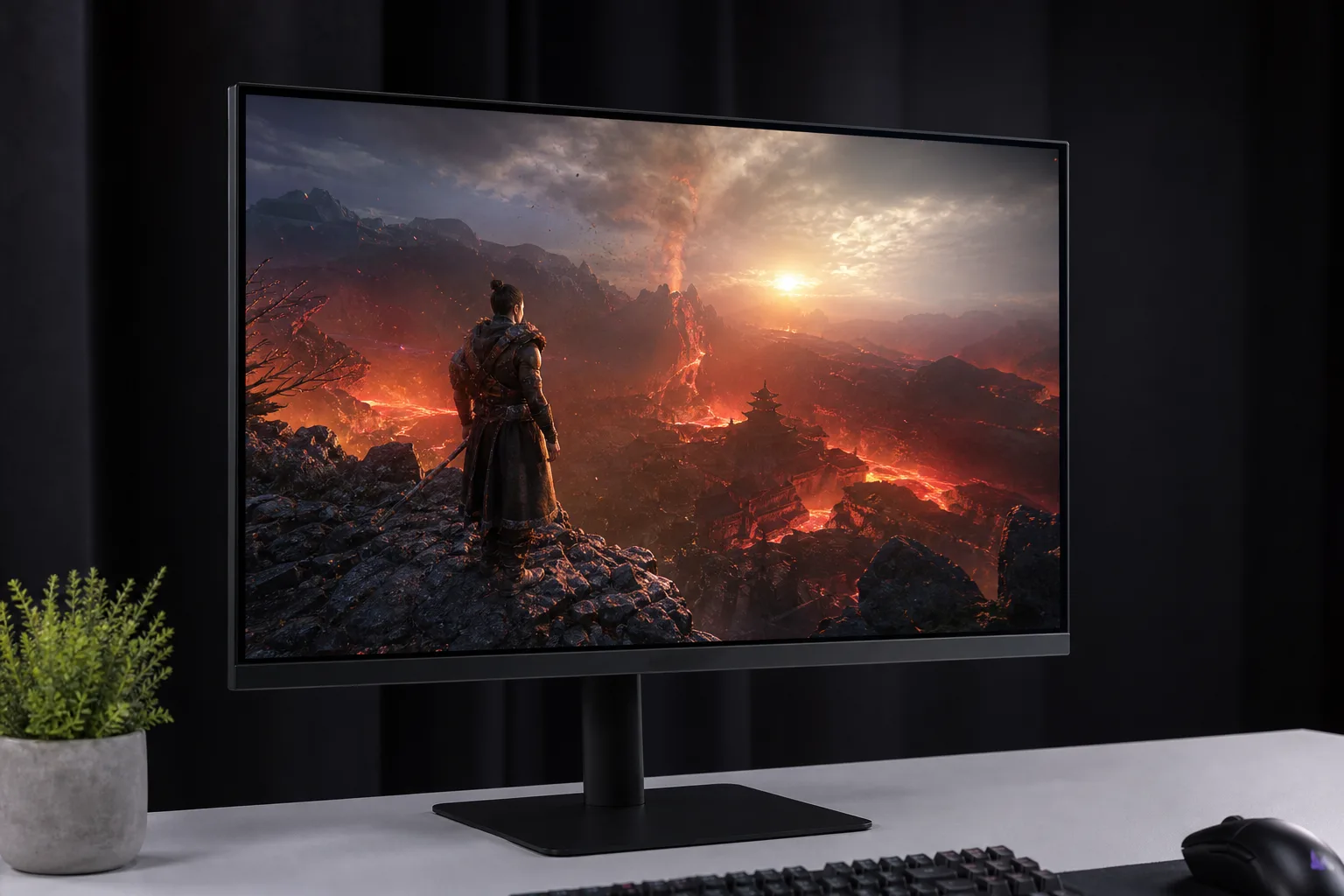
Samsung OLED monitors have been quietly reshaping what PC gamers and creators expect from a desktop display — and this Prime Day, they’re doing it at prices that would’ve seemed impossible just two years ago. The company’s Odyssey lineup is seeing discounts of up to 36 percent, with several models hitting their lowest prices on record. If you’ve been waiting for a sign to finally ditch that aging IPS panel, this is probably it.
- Samsung OLED monitors are at their lowest-ever prices this Prime Day, with the Odyssey G6 dropping 36% to $385.
- The Samsung OLED monitors lineup now starts under $334, making high-refresh OLED accessible to mainstream PC gamers for the first time.
- The Odyssey G6 delivers a 240Hz refresh rate, 1,000-nit HDR peak brightness, and a response time IPS panels simply can’t match.
- A 49-inch ultrawide Odyssey G75F is also on sale at $630, though it is not OLED.
Table of Contents
The Odyssey G6: The Star of the Sale
The headline deal is the Samsung Odyssey G6 (G61SH), a 27-inch display with a 240Hz refresh rate and a 2560×1440 resolution that’s now sitting at $385 — down from its $500 retail price, a 36 percent cut and its lowest price ever recorded. That’s a meaningful number, because even a few months ago this monitor was bouncing around the $420–$450 range during sales. The floor just dropped again.
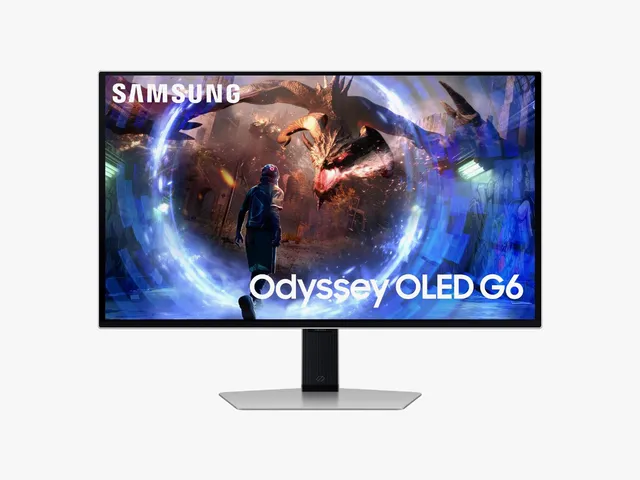
For context, Wired tested the previous-generation G6 in late 2024, when it was reportedly far more expensive. The newer G61SH trades the older model’s 360Hz refresh rate for 240Hz, which for most players is an entirely academic distinction — outside of professional-level competitive shooters, 240 frames per second is more than enough headroom. And if you genuinely need that extra ceiling, the 360Hz version of the G6 is also on sale, down to $600 from $900. That’s still serious money, but a $300 drop on a flagship gaming monitor is hard to ignore.
The panel’s performance figures tell the real story. In SDR mode, brightness tops out at 250 nits — workable, but not spectacular. Switch to HDR, though, and the display hits up to 1,000 nits peak brightness. Games designed with HDR in mind look genuinely different on Samsung OLED monitors: shadows hold detail, highlights pop without blooming, and the contrast ratio that OLED enables by default (true blacks via per-pixel light control) makes the whole image feel alive in a way that mini-LED and IPS competitors still struggle to replicate convincingly.
Why Samsung OLED Monitors Hit Different
There’s more to Samsung OLED monitors than raw specs. Response time is one of the most undersold advantages — OLED’s near-instantaneous pixel response effectively eliminates the ghosting and trailing you see in fast motion on IPS or VA panels. For competitive gaming, that translates to cleaner reads on fast-moving targets. For single-player games, it just looks better in motion. Full stop.
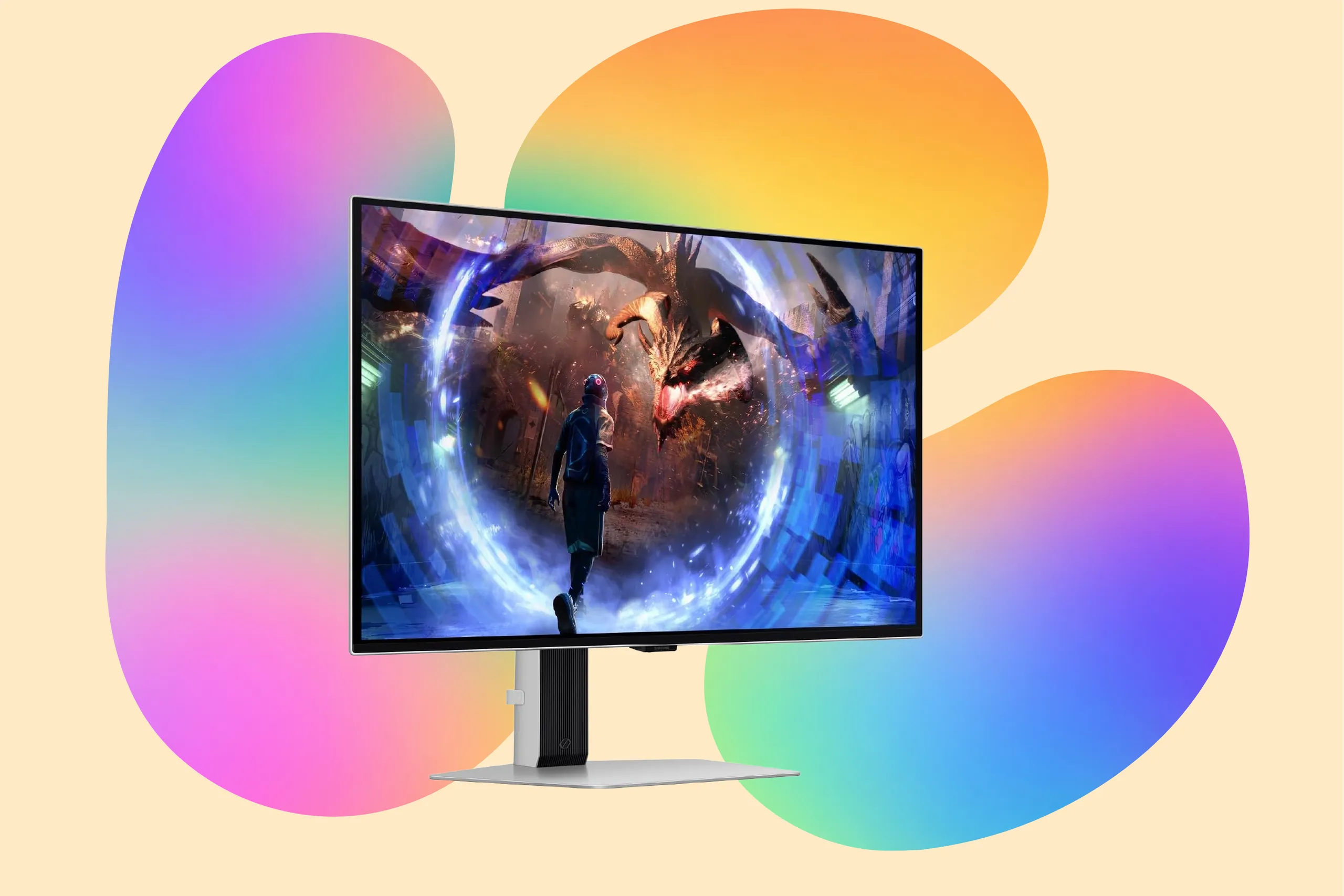
Then there’s the physical design. Samsung has done something that a lot of monitor manufacturers skip entirely: they’ve made these things look good. The Odyssey G6 is remarkably thin — the kind of profile that makes older monitors look chunky by comparison — and the base is intentionally flat and compact, so it doesn’t colonise your entire desk surface. That might sound like a minor detail, but if you’ve ever worked around a monitor stand that eats half your available space, you’ll appreciate it immediately. It also makes Samsung OLED monitors a more credible option for content creators and professionals who want a display that suits a tidy, modern workspace.
The G5: The Smarter Buy for Most People
The Odyssey G5 is also discounted, coming in at $334. It shares the OLED panel technology and the same 2560×1440 resolution as the G6, with the primary trade-off being a 180Hz refresh rate instead of 240Hz. It also uses a different stand design. At $50 less than the G6, the G5 makes a strong argument for anyone who doesn’t need the highest refresh rate and just wants an excellent OLED gaming monitor at the best possible price.
At $334, the G5 sits in a territory that simply didn’t exist for OLED desktop displays until very recently. Two or three years ago, getting into Samsung OLED monitors territory meant spending well over $1,000 — and even then, the selection was thin. The category was dominated by LG’s UltraFine OLED Pro and a handful of Korean imports that required some faith in grey-market sellers. The fact that Samsung is now shipping polished, well-supported Samsung OLED monitors at $334 represents a genuine shift in how the monitor market is stratified.
The Ultrawide and the Budget Option
Samsung’s also discounting two monitors outside the OLED lineup that deserve a mention. The Odyssey G75F — a 49-inch curved ultrawide — is down to $630, its lowest price in recent months. This one is not OLED: it is a curved display with a 180Hz refresh rate. At that size, the immersion factor is real, and $630 for a 49-inch curved display is competitive. It’s the kind of monitor that splits the difference between a multi-monitor setup and a single ultra-wide canvas, which appeals to simulation gamers and productivity users who like keeping multiple windows side by side without the bezel gap.
At the other end of the range, the Odyssey G30D slides in under $200 with a 1080p panel. It’s not OLED, it won’t win any benchmark contests, and Samsung isn’t pretending otherwise. But for a secondary display, a bedroom gaming setup, or a first monitor upgrade, under $200 gets you into the Odyssey family with all the build quality and software support that implies.
OLED Monitor Prices Are at a Tipping Point
The broader trend here matters as much as any individual deal. The pace at which Samsung OLED monitors pricing has collapsed is genuinely striking. What was a premium technology gatekept behind four-figure price tags is now accessible at the $334–$385 range during sales. That’s a direct result of panel manufacturing scaling up — Samsung Display and LG Display have both expanded OLED production capacity significantly over the past two years, and the cost savings are finally reaching retail pricing in a meaningful way.
It’s also pressure from competition. LG, Asus, and MSI are all pushing OLED gaming monitors aggressively, and Samsung has responded by sharpening both its pricing and its design. The result for buyers is the best time in history to get into Samsung OLED monitors — and Prime Day 2026 happens to be landing right in that window. Whether you’re picking up the G5 as a practical first OLED monitor or stretching to the 360Hz G6 because you want the best Samsung currently sells, the value equation looks considerably better than it did even six months ago.

