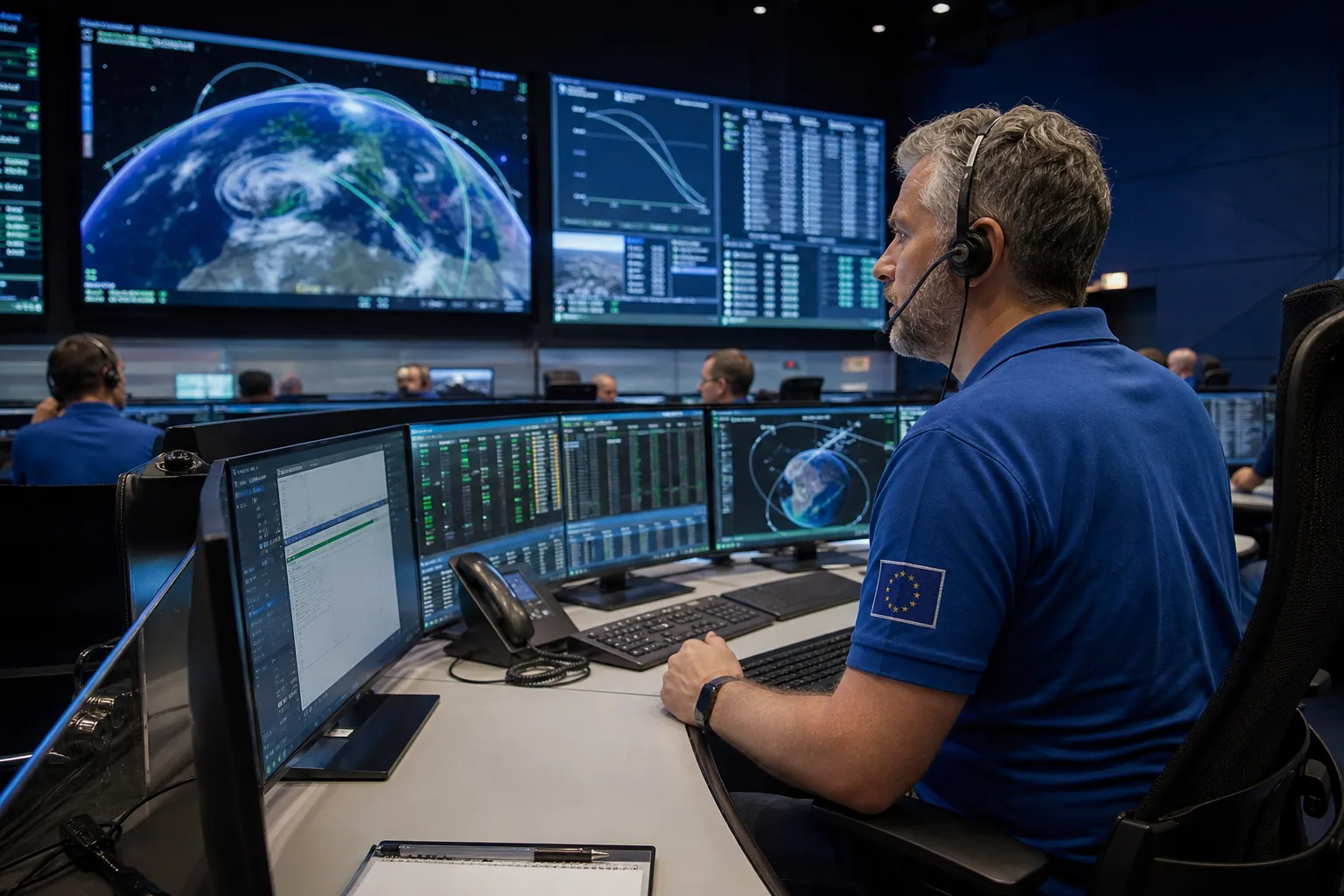
Europe had a genuinely busy month in orbit and beyond. ESA June 2026 delivered on multiple fronts simultaneously — a crewed mission milestone, a launch vehicle record, a telescope revelation, and a climate warning, all within the span of a few weeks. For an agency that sometimes struggles to cut through the noise dominated by SpaceX and NASA headlines, this was a month worth paying attention to.
- ESA June 2026 saw Ariane 6 set a new European launch record, strengthening Europe’s position in the competitive launch market.
- ESA June 2026 marked Luca Parmitano’s assignment as pilot of NASA’s Artemis III mission, a significant milestone for European human spaceflight.
- The Euclid space telescope delivered its most detailed image yet of the Milky Way’s galactic centre, revealing unprecedented cosmic detail.
- ESA satellites detected early signs of El Niño from orbit, demonstrating the growing role of space infrastructure in climate monitoring.
Table of Contents
Luca Parmitano Named Pilot of NASA’s Artemis III
The headline that will matter most to historians arrived quietly by ESA standards. ESA June 2026 brought official confirmation that Italian astronaut Luca Parmitano has been named as pilot of NASA’s Artemis III mission — the flight currently planned to put humans back on the lunar surface for the first time since Apollo 17 in 1972. That’s a remarkable sentence to write, and it’s worth sitting with for a moment.
Parmitano is no stranger to high-profile missions. He’s flown twice to the International Space Station, once serving as commander, and he’s known for conducting one of the most dramatic spacewalks in ISS history when his helmet began flooding with water in 2013. He’s a tested operator under pressure. But being named pilot of Artemis III is a different magnitude entirely — this is the mission that puts boots on the Moon.
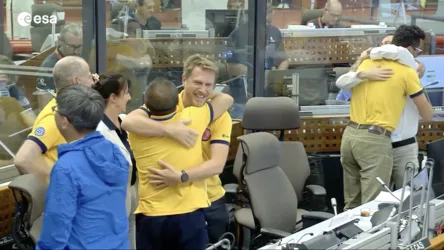
For ESA, the significance is institutional as much as personal. Europe has contributed the European Service Module powering the Orion spacecraft on every Artemis flight, and having a European in the crew for the lunar landing mission cements a genuine partnership rather than a transactional hardware arrangement. It also raises the stakes for ESA’s long-term human exploration ambitions, particularly as the agency pushes to keep European astronauts central to whatever comes after the ISS era. ESA June 2026 will be remembered as the moment that partnership became impossible to overlook.
Ariane 6 Sets a New European Launch Record
On the launch side, Ariane 6 hit a new European record this month — a meaningful data point for a rocket that spent much of its early operational life under scrutiny. The vehicle had a troubled debut period, and the European launch market has faced real commercial pressure from SpaceX’s Falcon 9, which reusability made almost impossible to compete with on pure economics.
The record matters for a few reasons. First, it signals that Ariane 6 is finding its operational rhythm. Launch vehicles need cadence to become truly reliable; each successful flight builds the data and institutional confidence that attracts the next customer. Second, it sends a message to European institutions — the European Space Agency, the EU, national space agencies — that investing in indigenous launch capability is paying off. Whether Ariane 6 can ever close the cost gap with Falcon 9 without a reusability plan of its own remains the harder, unanswered question. ESA June 2026 at least confirmed the vehicle is moving in the right direction.
ESA June 2026 and the Return of Proba-3
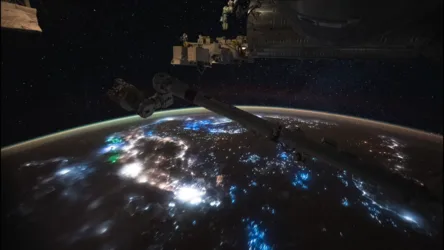
Proba-3 returned to operations this month after what ESA described as a temporary pause. The mission is one of the more technically ambitious things Europe has attempted in recent years — it uses two spacecraft flying in precise formation to artificially create a solar eclipse, allowing scientists to study the Sun’s corona in conditions that would otherwise require waiting for a natural eclipse to happen in the right place.
Formation flying at that level of precision is genuinely hard. Keeping two independent spacecraft aligned to within millimetres across a separation of about 150 metres is a technology demonstration as much as a science mission, and the data it’s generating has applications well beyond solar physics — future space telescopes and distributed sensor arrays could use the same techniques. Proba-3 coming back online is a quiet but real win for ESA June 2026 and for the agency’s technology development portfolio more broadly.
Euclid’s Deepest Look at the Galactic Centre
The Euclid space telescope released what ESA called its most detailed view yet of the Milky Way’s galactic centre — a region so dense with stars, dust, and gravitational complexity that imaging it coherently is a significant technical achievement. Euclid was designed primarily to map the large-scale structure of the universe in pursuit of dark matter and dark energy, but its wide-field optics make it a powerful instrument for galactic science too. ESA June 2026 gave astronomers one of the most striking single images the mission has produced to date.
This kind of imagery does double duty. It advances science directly, and it reminds the public and policymakers what space telescopes are actually capable of. The Euclid mission is still relatively early in its survey work, and if the galactic centre imagery is the standard being set now, the full dataset — expected to cover roughly a third of the sky — is going to be extraordinary by the time it’s complete.
ESA Satellites Detect Early El Niño Signals
From orbit, ESA’s Earth observation network picked up early signs of an emerging El Niño pattern this month. The detection was made possible by satellite-based monitoring of sea surface temperatures and atmospheric conditions across the Pacific — the kind of wide-area, continuous observation that ground-based and ocean-based sensors simply can’t replicate at scale.
This is the practical case for Earth observation investment, made in real time. El Niño events have cascading global effects — droughts in some regions, floods in others, disrupted fisheries, altered hurricane tracks. The earlier a developing El Niño can be detected and characterised, the more lead time governments and relief organisations have to prepare. ESA June 2026 provided a concrete demonstration of why space-based climate infrastructure is increasingly treated as essential rather than aspirational.
Sophie Adenot Hits the Halfway Mark on the εpsilon Mission
French astronaut Sophie Adenot reached the midpoint of her long-duration stay aboard the International Space Station this month, with her mission officially designated εpsilon. Adenot is only the second French woman to fly in space, and her mission has carried a particular weight as ESA works to build out the next generation of its astronaut corps following the 2022 recruitment campaign that brought her in.
Halfway through a six-month ISS stay is the point where the novelty has worn off and the real work defines the experience. The science programme aboard typically intensifies, and the physical and psychological demands of microgravity living are well established by this point. That Adenot is hitting her stride here is exactly what ESA needs — her mission is generating data that will inform future long-duration spaceflight, potentially including eventual lunar and Mars transit scenarios. Her progress is one of the more human stories to emerge from ESA June 2026.

What This All Adds Up To for European Space
Taken individually, each of these stories is interesting. Taken together, ESA June 2026 paints a picture of an agency operating across a genuinely wide front — human spaceflight, launch vehicles, deep space science, Earth observation, and technology demonstration — all in a single month. That breadth is both a strength and a management challenge.
The pressure on ESA in the years ahead is real. Commercial launch providers are reshaping the market. NASA’s Artemis timeline has slipped repeatedly. The post-ISS future is genuinely uncertain. But a month that includes a European on the Artemis III crew, a launch record for Ariane 6, a telescope producing world-class science, and satellites contributing directly to climate monitoring suggests that Europe’s space programme is doing more than treading water. ESA June 2026 sets a high bar for the months that follow. The harder test will be whether it can maintain this momentum — and the funding behind it — when the political cycles that govern ESA’s budget start turning.
Frequently Asked Questions
What was the most significant announcement in ESA June 2026?
The standout announcement was Luca Parmitano being named pilot of NASA’s Artemis III mission. It marks a historic role for a European astronaut in the Artemis programme.
What record did Ariane 6 set in June 2026?
Ariane 6 set a new European launch record in June 2026, though the precise details weren’t fully disclosed in ESA’s summary. The milestone signals growing reliability and cadence for Europe’s flagship rocket.
What did the Euclid telescope image show?
Euclid unveiled its most detailed view yet of the Milky Way’s galactic centre in June 2026, offering an unprecedented look at one of the densest and most complex regions of our galaxy. The telescope is primarily designed to map dark matter and dark energy.
How did ESA satellites detect El Niño from orbit?
ESA satellites detected early signs of El Niño in June 2026, though the source does not specify the precise methods or data types used. The detection allowed scientists to identify the climate pattern at an early stage.