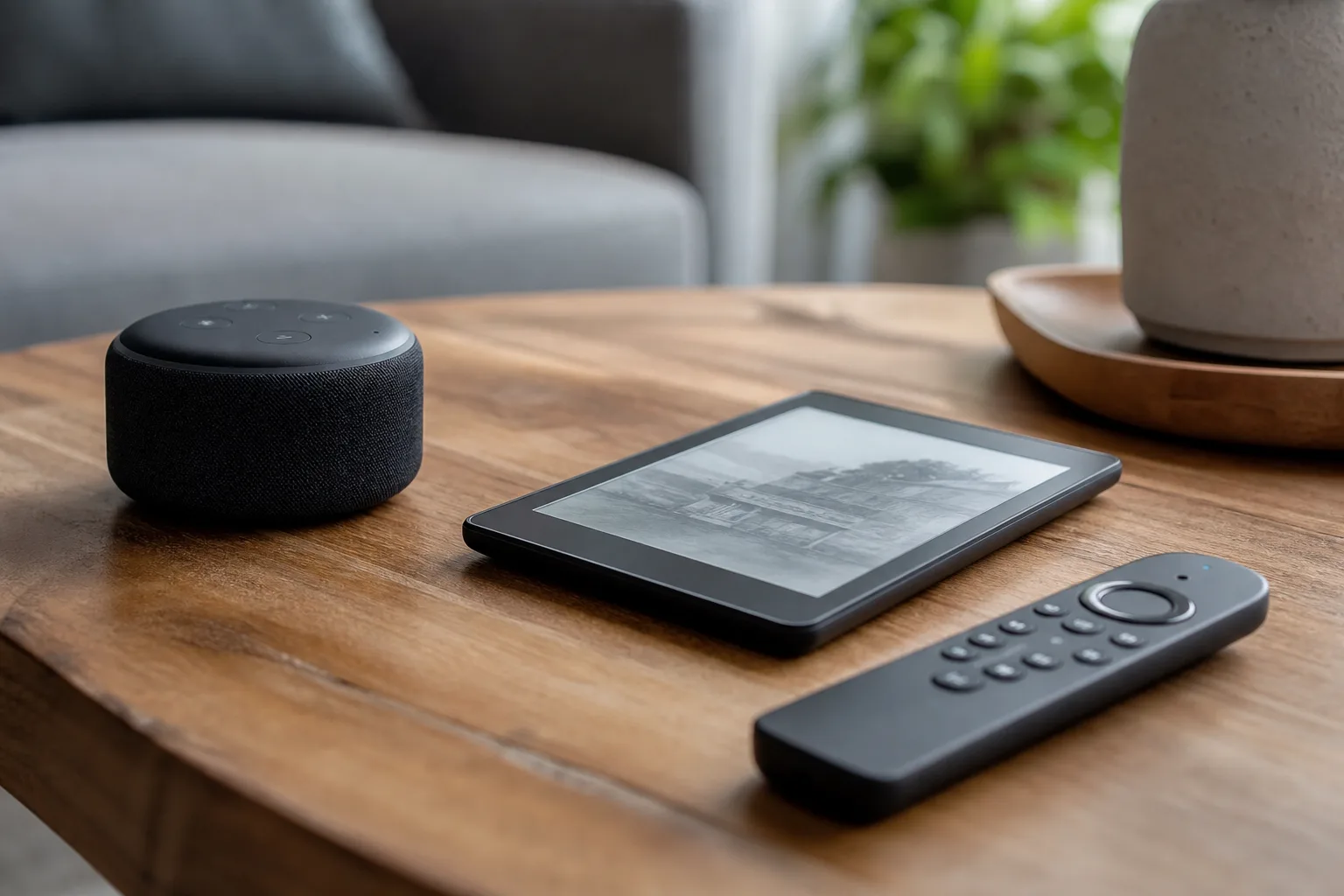
- Amazon device prices rose by as much as 60%, with entry-level Echo, Fire TV and Kindle products bearing the sharpest increases.
- The Amazon device prices increase turns several former impulse buys into purchases that now demand comparison shopping and a wait for sales.
- Amazon cites higher memory and storage costs, while Ring cameras, doorbells and the $219.99 Echo Studio appear unchanged.
- Rivals face similar component pressure, but Amazon’s steepest increases land on products built around low advertised prices.
Table of Contents
Amazon device prices have broken the impulse-buy formula
Amazon device prices are rising sharply across some of the company’s most familiar gadgets, and the cheapest products have taken the hardest hit. The basic Echo Dot, once a $49.99 toss-in for a Prime Day cart, now costs $79.99. That is a 60% jump for a device Amazon spent years positioning as the easy first step into Alexa.
Amazon told Fortune that the increases reflect “significant increases in memory and storage component costs.” That explanation is plausible: flash storage and memory are everywhere in this hardware, from a Kindle’s local library to the streaming stick buffering a 4K show. But plausibility does not make the new shelf prices any easier to swallow.
The Fire TV Stick 4K Max now sells for $84.99, up more than 40%, while Amazon’s entry Kindle is priced at $149.99, nearly 37% above its previous level. The newer Echo Dot Max has moved from $99.99 to $119.99. These are not tiny, inflation-shaped adjustments. Amazon device prices now rewrite the value proposition of products Amazon has historically used to pull shoppers deeper into its services.
For years, Amazon hardware had a simple bargain behind it: buy the device cheaply, then stay inside Amazon’s orbit. Alexa encouraged shopping and smart-home use. Fire TV kept viewers close to Prime Video and Amazon’s advertising operation. Kindle hardware brought readers to Kindle books. The device itself did not always need to be a big profit center. Now, at least at list price, that math looks different.
Why Amazon device prices matter beyond the sticker shock
There is a meaningful distinction between a $50 smart speaker and an $80 one. At $50, a buyer may grab an Echo Dot for the kitchen, the guest room or an elderly relative who wants simple voice controls. At $80, the same buyer starts asking whether the speaker sounds good enough, whether Alexa is actually useful in 2026, and whether a phone or existing Bluetooth speaker can handle the job.
That hesitation is especially dangerous for Amazon because the smart-speaker market is no longer a fresh category. The novelty wore off years ago. Many households that wanted voice assistants already own one, while others have decided microphones in every room are not for them. A higher price makes Amazon’s job of convincing the remaining holdouts appreciably tougher.
The same goes for the Fire TV Stick 4K Max. At $84.99, it sits uncomfortably close to better-regarded streaming options from Roku, Google and Apple, depending on promotions. Amazon will still discount it aggressively during major retail events; frankly, that may be the real price most consumers should expect to pay. Yet constantly leaning on sales can train customers to ignore the official price altogether, which is not a great long-term answer to expensive components.
Kindle buyers may be more tolerant. Reading-focused devices have a loyal audience, and the base Kindle remains far less expensive than a premium tablet. Still, $149.99 is a psychological threshold. Amazon has pushed the Kindle’s advantages for years: long battery life, a low-distraction screen and access to a huge book catalog. Those benefits remain real. But the old argument that a Kindle was a relatively inexpensive escape from a glowing phone screen has become less straightforward.
Component costs are real, but the price strategy is selective
Amazon device prices are not moving in a perfectly uniform way. Ring cameras and video doorbells have avoided the increases, as has the $219.99 Echo Studio. That is revealing. Amazon appears to be making product-by-product decisions rather than simply applying a blanket component-cost surcharge across its catalog.
There are sensible commercial reasons for that. Ring sits at the center of a subscription-driven home-security business, where a low device price can help bring in recurring revenue. The Echo Studio is already a premium purchase, and raising it further could make it a much tougher sell against established audio brands. The lower-cost Echo and Fire TV products, meanwhile, may have been priced with thinner margins from the start.

Amazon is hardly alone in dealing with more expensive electronics parts. Apple increased the HomePod mini from $99.99 to $129, citing rising costs, while Google’s Home Speaker remains at $99.99 for the moment. Apple’s move is useful context, but Amazon’s percentage increases are much more jarring because its entry hardware has long been defined by bargain pricing.
Memory and storage markets are notoriously cyclical. Manufacturers add capacity, demand softens, prices crash; then supply tightens and device makers get squeezed. Consumers rarely see that supply-chain drama directly. They see it when Amazon device prices push the streaming dongle they expected to cost $50 suddenly toward $85. Amazon’s statement is a reminder that even the most mundane living-room gadget is tied to a global component market that can turn quickly.
Watch the sale price, not just the list price
My read is that Amazon device prices will matter most if they stay elevated through the next big deal cycle. Amazon has built an unusually powerful discount machine around Prime Day, Black Friday and targeted member offers. If the Echo Dot returns to something close to its old street price during those events, many shoppers will shrug and carry on. If its sale price settles materially higher, Amazon may discover that the low-end smart-home funnel has narrowed.
There is also an awkward timing issue. Amazon has been trying to give Alexa a new purpose through generative AI, after years in which its voice assistant often felt stuck between useful timer and unreliable household butler. Asking consumers to pay more for the front-door hardware while that broader Alexa transition remains unsettled is a gamble.
The company can justify higher costs all it wants. What it has to prove is that an Echo, Kindle or Fire TV still feels like a deal when it is not on sale. That used to be Amazon’s easiest trick. It may now be one of its harder ones.