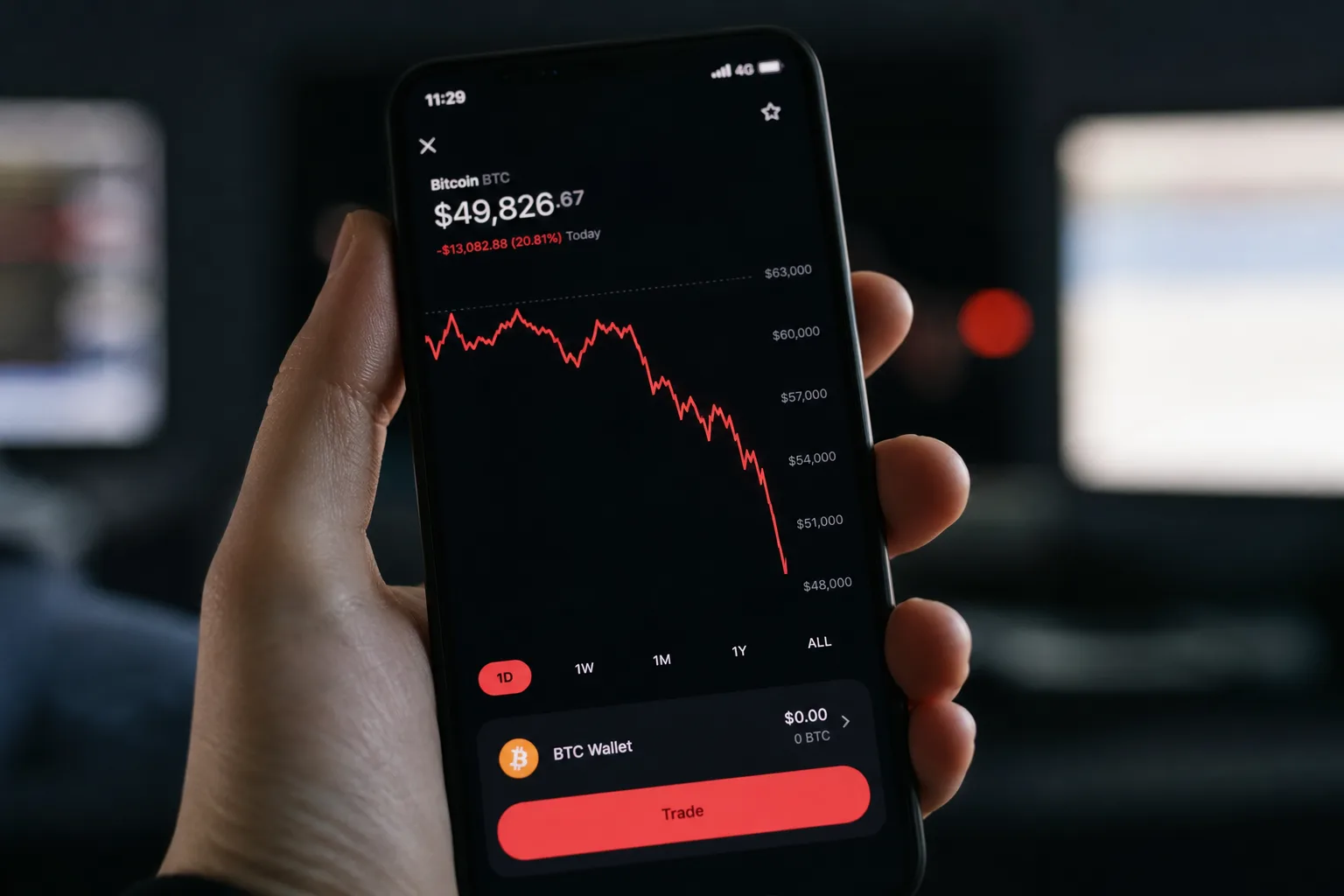
The Cardano price crash has reached a level that’s hard to ignore: ADA is trading around $0.16, a price point the market hasn’t seen since December 2020. In the span of a single week, the token shed nearly 30% of its value. Zoom out to a year, and the damage is even starker — more than 75% wiped from its price. For a project that once held a top-three spot by market cap and commanded one of crypto’s most passionate retail communities, this isn’t just a bad week. It’s a stress test.
- The Cardano price crash has pushed ADA to around $0.16, its lowest point since December 2020, down over 75% in a year.
- The Cardano price crash intensified after founder Charles Hoskinson warned of a potential wave of failures across the ecosystem.
- Despite the sell-off, on-chain active addresses hit a four-month high of 28,459, signalling a stressed but engaged community.
- Analytics platform TapTools shut down and the community voted against funding the 2026 Cardano Summit, deepening investor concern.
Table of Contents
What Broke First: Hoskinson’s Warning and a Collapsing Ecosystem
The sell-off didn’t happen in a vacuum. It followed a string of bad news that landed in quick succession. Charles Hoskinson — Cardano’s founder and its most recognisable public face — announced he was stepping back from his usual active presence, telling the community he was “taking a break.” That alone might not have moved markets dramatically, but the context made it land harder. Hoskinson also warned that Cardano could face a “wave of failures” across its ecosystem, a stark admission from the person who built the project. Many analysts cite this moment as the point at which the Cardano price crash shifted from a routine correction into something more serious.
Around the same time, TapTools, one of Cardano’s more widely used analytics platforms, announced it was shutting down after four years of operation. For a blockchain ecosystem that’s already fighting a narrative problem around developer activity and real-world adoption, losing a key piece of tooling infrastructure is a visible blow. And then the community itself voted against funding the 2026 Cardano Summit in Singapore — an event that would have given the project a high-profile stage at a moment when it desperately needs one.
Each of these events, taken individually, might be manageable. Together, they’ve created a credibility spiral that’s proving difficult to arrest. Markets don’t just respond to fundamentals — they respond to momentum and confidence, and right now both are pointing in the wrong direction for ADA. The Cardano price crash is as much a confidence crisis as it is a market one.
The Cardano Price Crash by the Numbers
To put the scale of the decline in context: ADA is now sitting at $0.16, which means anyone who bought ADA at its last cycle peak has lost the vast majority of their position. By historical cycle standards, some will argue this represents deep value territory. That argument may be technically true, but “cheap” is not the same as “ready to recover.”
The token’s drop below $0.16 — even briefly — is significant because it erases the price gains of an entire crypto market cycle. December 2020 was when Bitcoin was first cracking $20,000 on its way to its then-all-time high. The Cardano price crash has now given back everything ADA made from that point forward. That’s the kind of round-trip that tests long-term holders and filters out anyone who wasn’t a true believer.
On-Chain Data Shows a Cardano Price Crash Paradox
Here’s where it gets genuinely interesting. Despite the sell-off — or perhaps because of it — on-chain and social activity have both surged. Data from Santiment shows that ADA’s social dominance hit approximately 0.52%, the highest reading of 2026. That means roughly one in every 190 tracked crypto-related discussions across monitored social channels was focused on Cardano. For a token that had been fading from mainstream crypto conversation, that’s a significant spike.
Daily active addresses also climbed to 28,459 — the highest level in four months. That’s people actually using the network: moving funds, checking positions, interacting with wallets and protocols. It’s not ghost-chain territory. The network is alive.
But this data demands careful interpretation. There’s a meaningful difference between activity driven by enthusiasm and activity driven by panic. When a token drops 30% in a week and its founder warns of ecosystem failures, the people hitting the blockchain hardest are often those trying to cut their losses or shuffle assets to safety. Rising active addresses during a Cardano price crash can be bullish — or they can simply reflect a community running for the exits in an orderly fashion.
The Real Problem Isn’t the Price — It’s the Narrative
Cardano has always had a peculiar tension at its core. Its academic, peer-reviewed development approach won it a devoted following among holders who valued deliberate, rigorous engineering over the move-fast ethos of some competitors. That same approach has drawn persistent criticism that the chain is too slow to build real ecosystem momentum, too methodical to attract the kind of speculative developer energy that drives short-term excitement.
The question isn’t whether Cardano’s technology is sound — by most independent assessments, the underlying architecture is genuinely sophisticated. The question is whether that’s enough to attract and retain the applications, capital, and users that give a blockchain real utility. And right now, the evidence being weighed by the market is: TapTools is gone, the Summit is unfunded, and the founder is stepping back. That’s a tough case to make to anyone sitting on the sidelines, and it goes a long way toward explaining why the Cardano price crash has been so difficult to arrest.
Compare this to competing layer-1 blockchains. Ethereum, despite its own turbulence, has an enormous DeFi and stablecoin ecosystem generating genuine fee revenue. Solana has rebuilt its reputation after the FTX collapse through a flurry of developer activity, meme coin mania, and high-profile partnerships. Even newer chains like Sui and Aptos — both of which drew from similar academic lineage as Cardano — have managed to generate ecosystem buzz. ADA’s community is loyal, but loyalty alone doesn’t generate TVL or bring institutional capital off the sidelines.
Can Cardano Stabilise, or Is This a Structural Decline?
The charitable reading of the current situation: crypto has a long history of projects surviving the death of their narrative and rebuilding. Bitcoin itself has been declared dead hundreds of times. Ethereum went through an extended period of irrelevance before DeFi made it indispensable. Cardano’s community — stubborn, vocal, and clearly still engaged based on the Santiment figures — hasn’t disappeared. A token at $0.16 with a still-functioning network and an active address count in the tens of thousands isn’t a dead project, and the Cardano price crash alone doesn’t determine the project’s long-term fate.
The less charitable reading: the Cardano price crash is exposing a gap between what the project has promised and what it has delivered in terms of practical, real-world network use. Treasury deployment has been a recurring debate within the community. Funding decisions — including the vote against the 2026 Summit — suggest governance tensions that make it harder to project a coherent direction. And Hoskinson’s departure from active engagement, even if temporary, removes the project’s single most effective communicator at exactly the wrong moment.
What ADA needs right now isn’t a social media spike or even a short-term price bounce. It needs evidence: a major dApp gaining genuine users, treasury funds being deployed toward something that demonstrably works, or a partnership that brings outside capital into the ecosystem. The Cardano price crash has bought the community something — attention — but attention without a compelling answer to the “why should I care?” question won’t hold. The next few months will reveal whether Cardano has a second chapter or whether this is simply the long tail of a project whose best days are behind it.
Frequently Asked Questions
What triggered the Cardano price crash in June 2026?
The Cardano price crash accelerated after founder Charles Hoskinson said he was taking a break and warned of a wave of failures in the ecosystem. This followed the shutdown of analytics platform TapTools and a community vote against funding the 2026 Cardano Summit in Singapore.
How low has ADA fallen and how does it compare historically?
ADA dropped to around $0.16, briefly trading below that level — its lowest price since December 2020. That represents a decline of nearly 30% in a single week and more than 75% over the past year.
Does rising social activity during a sell-off mean ADA will recover?
Not necessarily. While rising social dominance and active addresses show the community is engaged, that attention is often driven by distress rather than optimism. Sustained recovery requires new capital, working applications, and ecosystem growth — not just vocal holders.
What is Cardano’s social dominance figure and why does it matter?
According to Santiment data, ADA’s social dominance reached 0.52% — a 2026 high — meaning roughly one in every 190 tracked crypto discussions mentioned Cardano. High social dominance during a sell-off can indicate either grassroots support or panic-driven attention.