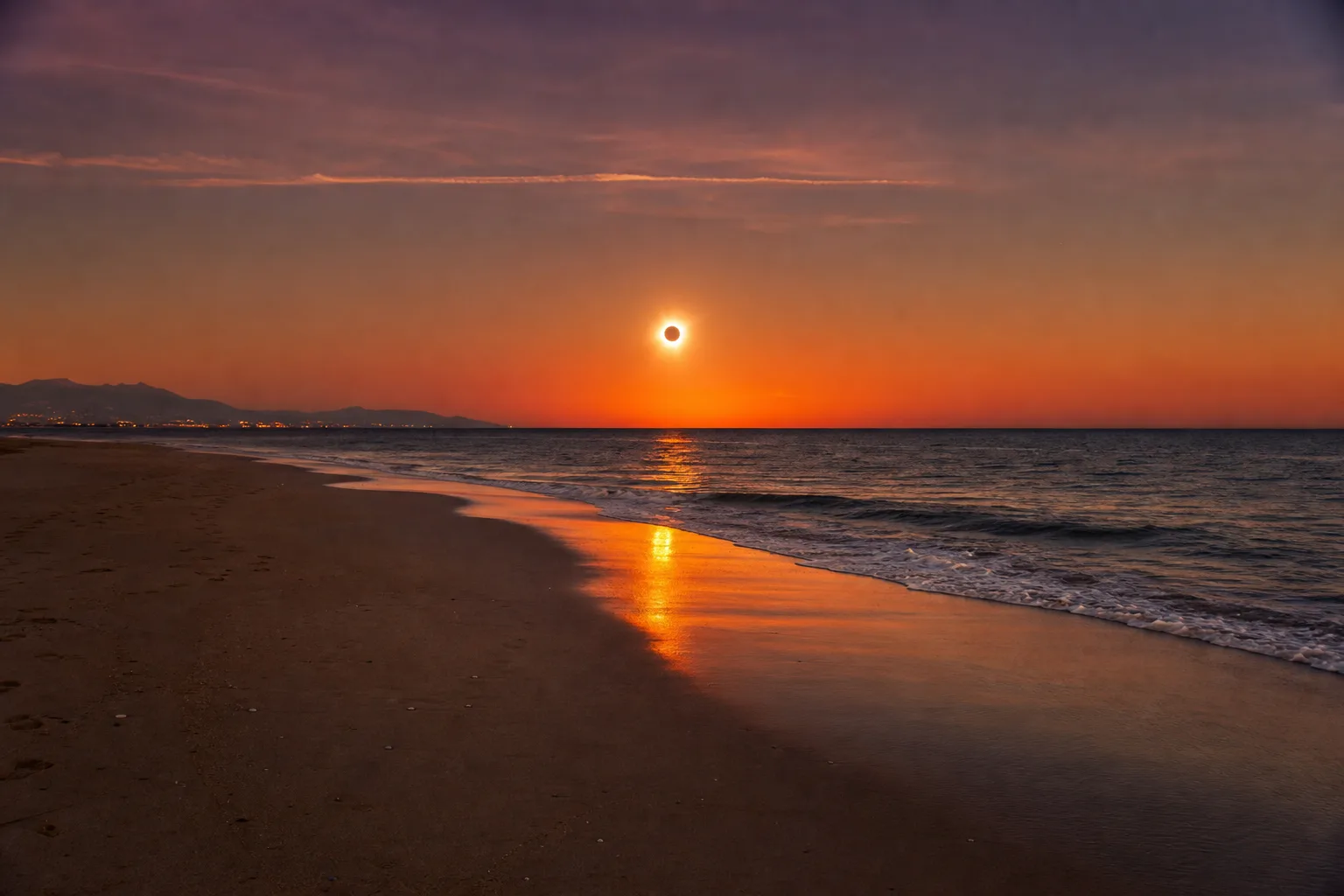
- The 2026 total solar eclipse crosses northern and eastern Spain on August 12, just minutes before sunset.
- Picking the wrong beach for the 2026 total solar eclipse means hotels or terrain could block your view entirely.
- Atlantic-facing beaches in Galicia and Cantabria offer the highest sun angle and widest open horizons for totality.
- Mediterranean and Balearic spots have sunnier forecasts but the eclipsed sun sits just 2–4 degrees above the horizon.
Table of Contents
Why Spain Is the Place to Be for the 2026 Total Solar Eclipse
The 2026 total solar eclipse on August 12 is shaping up to be one of the most anticipated astronomical events of the decade, and Spain is right at the heart of it. The path of totality — that narrow corridor where the moon completely blots out the sun — sweeps across the north and east of the country in the final minutes before sunset. That means observers will be chasing totality with the sun hanging low and dramatic in the west-northwest sky, turning the whole event into something that looks less like a science lesson and more like a scene from an apocalypse film.
But here’s the catch: a low sun is also an unforgiving one. At just 8 to 12 degrees above the horizon on the northern coast — and as little as 2 degrees on the Balearic Islands — any building, hill, or patch of coastal haze between you and the horizon becomes a potential spoiler. Beaches, with their wide-open skies and low, flat horizons, are the obvious solution. The problem is that not all of Spain’s famous shoreline faces the right way. Many of the country’s most popular resort beaches were built for sunrise views, facing east. At the crucial moment on August 12, you’d be staring directly into whatever’s behind you — hotels, cliffs, dunes — while totality plays out in the opposite direction. Choosing the right vantage point for the 2026 total solar eclipse is not a detail you can leave to chance.
The beaches that actually work for this eclipse are either on the Atlantic-facing north coast, where the horizon opens straight out to sea in the right direction, or in carefully chosen Mediterranean spots where low development and clear geometry line things up correctly. Getting this choice right is everything.
The Northern Coast: Galicia and Cantabria Lead the Way
For the 2026 total solar eclipse, Spain’s northern Atlantic coast offers the most reliable geometry, even if the weather is a gamble. Cloud cover probabilities hover between 54% and 61% in this region — not ideal, but not hopeless either, especially if you’re willing to move around on the day. What you get in return is a sun that’s high enough (9 to 12 degrees) to clear most ground-level obstructions, and beaches that face straight out into open ocean to the west-northwest.
Praia de Alba e Sabón in Galicia, just south of A Coruña, is one of the most practical options on the entire list. It’s broad, flat, easily accessible, and delivers totality at 8:27 p.m. CEST for 1 minute and 9 seconds, with the sun sitting 12.1 degrees above the horizon. The infrastructure here is solid — this isn’t a trek into the wilderness. If you want a beach where you can park the car, set up a chair, and actually enjoy the 2026 total solar eclipse without logistics eating your afternoon, this is it.
Playa de Langre in Cantabria is the standout for sheer drama. Backed by cliffs east of Santander, it faces west-northwest across wide open sands and delivers the longest totality window of any beach on this list: 1 minute and 55 seconds. The sun is at 9 degrees when darkness falls at 8:26 p.m. CEST. It requires a short walk to reach, but the elevated clifftop viewpoints above the beach add an extra dimension — you can watch the moon’s shadow race in from the Atlantic from a genuinely spectacular vantage point.
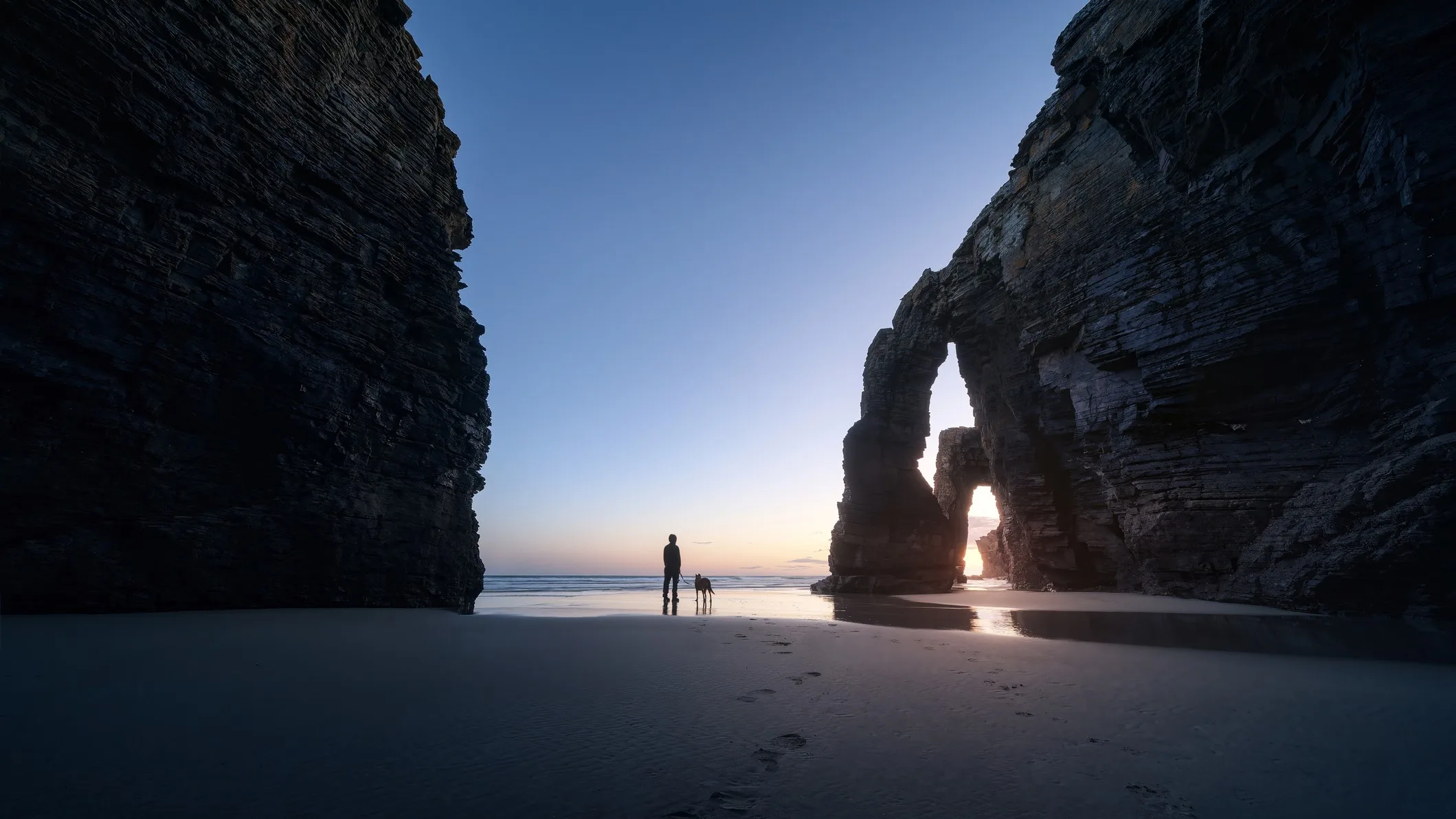
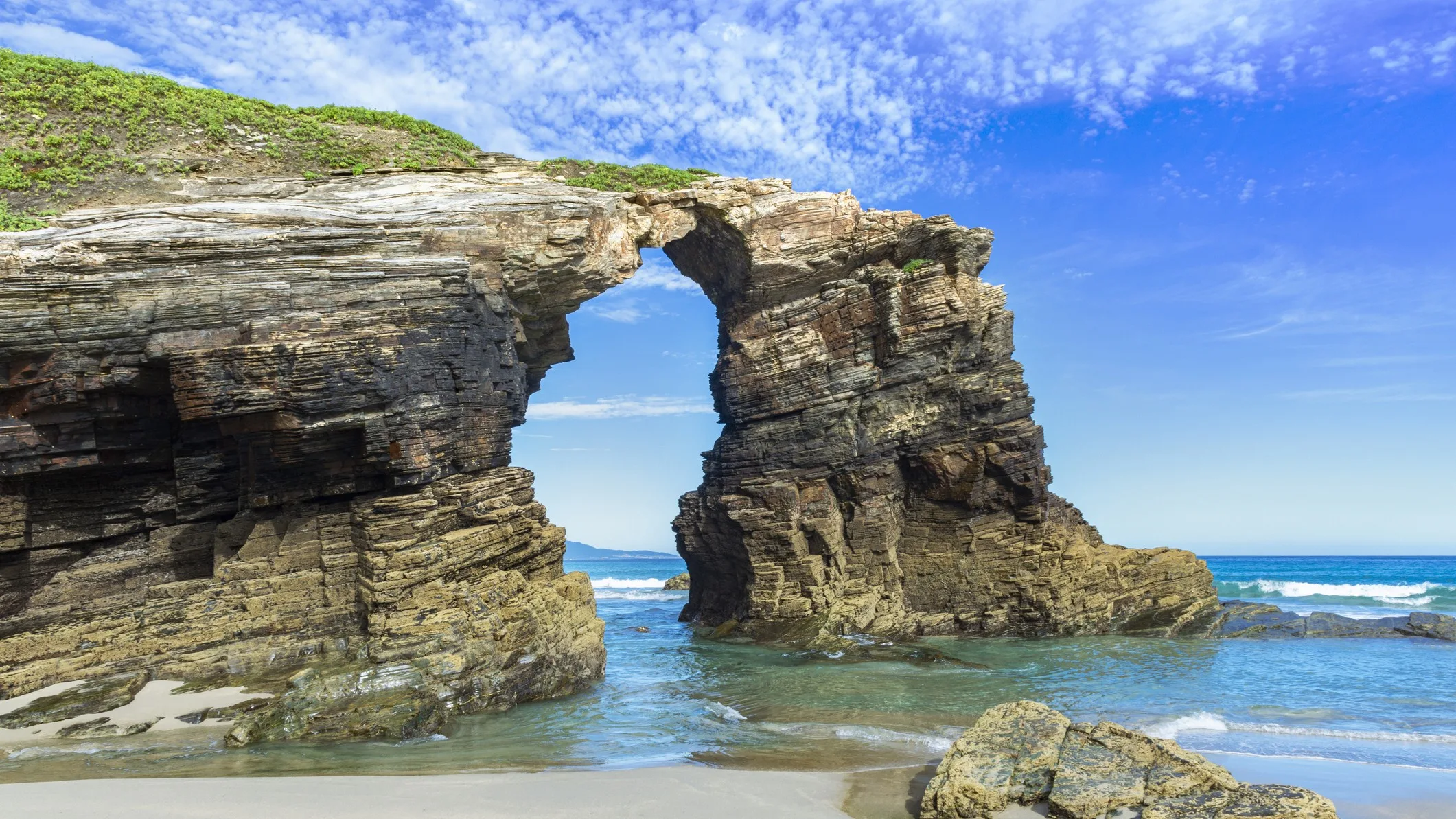
Playa de las Catedrales, also in Galicia near Ribadeo, is one of Spain’s most photographed natural landmarks. Its towering sea-carved rock arches make it visually extraordinary, but those same geological features create a planning headache. Visitor numbers are strictly controlled, and tidal access to the lower beach is heavily restricted. For the 2026 total solar eclipse, the clifftop gardens above may actually be the smarter call — cleaner sightlines, fewer access constraints, and still with that sweeping northwest view toward the Atlantic.
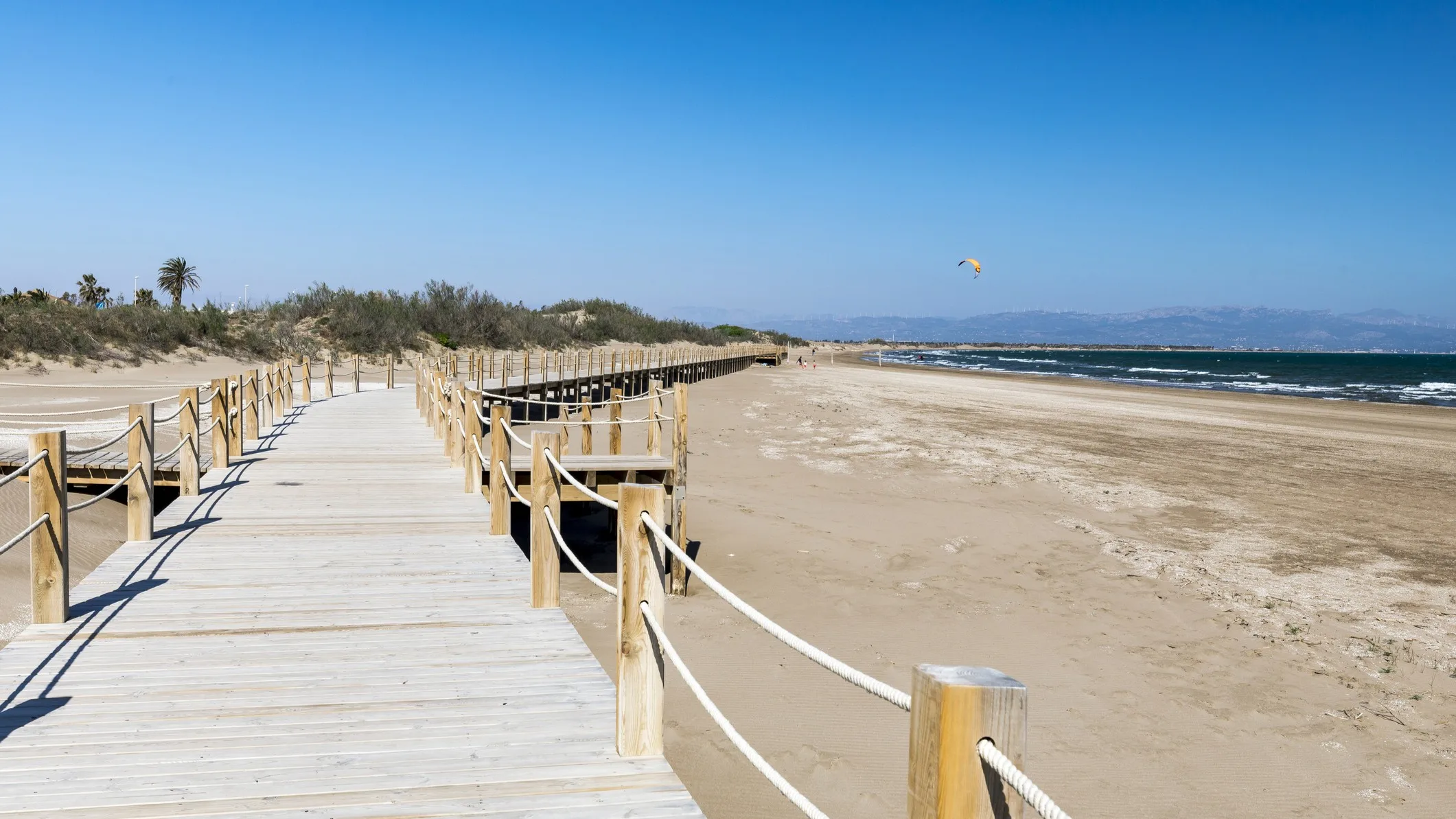
Playa El Puntal de Somo, a vast sandbar near Santander, brings something different to the table: sheer scale. It’s a huge, exposed spit of sand that offers unbroken west-northwest views across the bay, reachable by both boat and road. Totality here lasts just 56 seconds — the shortest on the list — but the open sky and lack of crowds make it an appealing option for those who’d rather spread out than squeeze into a popular spot. Cloud probability sits at a relatively encouraging 55%.
The Mediterranean Option: Better Weather, Bigger Risk
Drop south to Spain’s Mediterranean coast and the weather picture improves significantly. The 2026 total solar eclipse viewed from the Ebro Delta or the Balearic Islands could unfold under much clearer skies — historical cloud cover data puts the chances of overcast conditions at just 31–37% in August for these locations. That’s a meaningful improvement over Cantabria.
The trade-off is brutal, though. By the time the eclipse path reaches the Mediterranean, the sun is only 4 degrees above the horizon — and on Mallorca and Menorca, it drops to between 2 and 2.1 degrees. That’s barely above the waterline. A thin strip of cloud on the horizon, a slight sea haze, or a sand dune in the wrong place could mean missing totality entirely. These locations reward meticulous preparation. Anyone planning to watch the 2026 total solar eclipse from the Mediterranean must account for this razor-thin margin.
Platja de Riumar in the Ebro Delta is arguably the pick of the Mediterranean options. The Ebro Delta is a UNESCO-recognised biosphere reserve — a sprawling landscape of rice paddies, lagoons, and barrier beaches that juts out into the sea. Riumar Beach sits close to the river mouth and looks out unobstructed to the northwest. It sees totality at 8:30 p.m. CEST for 1 minute and 30 seconds, and its 31% cloud probability is the best figure on the entire list.
Platja del Gurugú near Castellón de la Plana is an unusual candidate with a genuinely useful quirk: a nearby airstrip has kept the beachfront almost entirely clear of development. That translates directly into clean, unobstructed sightlines to the west-northwest — exactly what you need when the sun is only 4.4 degrees high. Cloud cover historically runs at 37%, totality runs for 1 minute and 35 seconds, and access is straightforward. It’s the kind of place that rewards doing your homework.
Mallorca and Menorca: High Stakes, High Reward
The Balearic Islands will draw enormous crowds for the 2026 total solar eclipse, and for understandable reasons — they’re already among Europe’s most visited summer destinations, August weather is reliably good, and the 34% cloud probability at Es Trenc on Mallorca is genuinely appealing. But the sun angle here is just 2.1 degrees above the horizon at totality’s start. That’s not a margin for error; that’s a near-complete elimination of it.
Es Trenc remains one of Mallorca’s most naturally preserved beaches, with an undeveloped backdrop that at least removes the man-made obstruction problem. Long sands, wide western sea views, and relatively low cloud risk make it attractive. The concern is more atmospheric than architectural — sea haze at sunset is common in August, and at 2 degrees of altitude, even a light shimmer on the horizon could veil the corona entirely. Still, for those already based in the Balearics, Es Trenc is among the best-positioned spots to witness the 2026 total solar eclipse the islands have to offer.
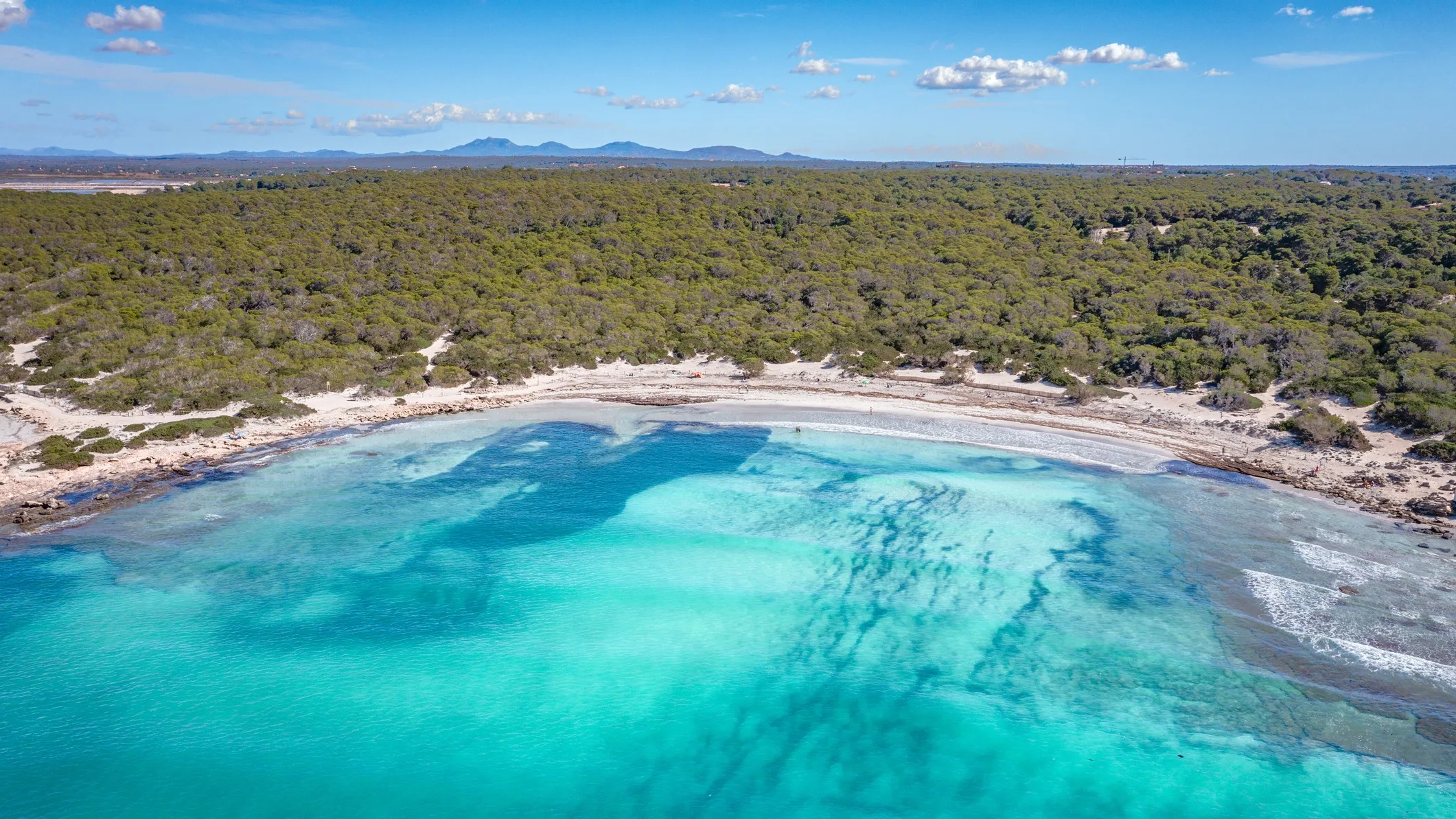
Elsewhere in the Balearics, Platja Estanys and Platja des Carbó on Mallorca, and Platja de Son Bou on Menorca, round out the list. Son Bou is Menorca’s longest beach, and like its Mallorcan counterparts it offers open western sea views with minimal obstruction — but the same brutal geometry applies. At 2 degrees of solar altitude, you’re essentially watching the eclipse happen at the very edge of the world.
How to Plan Your Eclipse Viewing — and What Tools to Use
Planning for the 2026 total solar eclipse requires more than booking a hotel near a beach. The single most important recommendation from eclipse chasers and astronomers alike is to physically test your chosen location the day before — walk to the spot, look toward the west-northwest at the same time of evening, and confirm there’s nothing in your way. Hotels, headlands, and even vegetation you didn’t notice on Google Maps can ruin the moment.
For digital preparation, Xavier Jubier’s Interactive Eclipse Map is the gold standard — it combines precise timing data with sightline tools powered by Peak Finder, so you can model the exact view from any point on the map. The Eclipse App and the Eclipse Horizon Checker are also worth having on your phone. For tide information — critical at a beach like Playa de las Catedrales — Surf Forecast and Tide Forecast give you the data you need weeks in advance.
The cloud cover percentages cited throughout this guide are historical averages since 2000, not forecasts. In practice, northern Spain in August can deliver anything from crystal-clear Atlantic skies to solid overcast within the same afternoon. Flexibility — either staying somewhere central enough to drive north or south on eclipse day, or having a backup location already scouted — could be the difference between seeing the 2026 total solar eclipse in full and watching a slightly darker sunset.
What makes this eclipse genuinely special isn’t just the science. It’s the setting. A total solar eclipse unfolding over the Atlantic Ocean at sunset, from one of Europe’s most beautiful coastlines, with the corona blazing above the water and darkness falling over the sea — that’s a confluence of natural events that won’t come around again for a very long time. Whether you’re on a clifftop in Cantabria or a flat spit of sand in the Ebro Delta, the 2026 eclipse is worth planning seriously. Get the location right, and August 12 could be one of the most extraordinary evenings of your life.
Frequently Asked Questions
Where is the best place in Spain to see the 2026 total solar eclipse?
Galicia and Cantabria’s Atlantic-facing beaches offer the best combination of sun altitude and open horizons. Praia de Alba e Sabón near A Coruña and Playa de Langre near Santander are among the top picks, with totality lasting up to 1 minute 55 seconds.
What time does totality occur during the 2026 total solar eclipse in Spain?
Totality falls between approximately 8:26 p.m. and 8:31 p.m. CEST on August 12, 2026, depending on location. The eclipse happens just before sunset, with the sun sitting very low in the west-northwest sky.
Why do Mediterranean beaches have a lower chance of cloud cover for the eclipse?
The Mediterranean coast and Balearic Islands historically see less cloud cover than the northern Atlantic coast, with figures ranging from around 31–37% versus 54–61% since 2000. The trade-off is a much lower sun angle, just 2–4 degrees above the horizon, making obstructions and haze a bigger risk.
How can I check if my chosen eclipse viewing spot has a clear sightline?
Xavier Jubier’s Interactive Google Map includes timings and built-in sightlines from Peak Finder. The Eclipse App and Eclipse Horizon Checker are also recommended, as is the Instituto Geográfico Nacional. The best advice is to test your location the day before the eclipse.