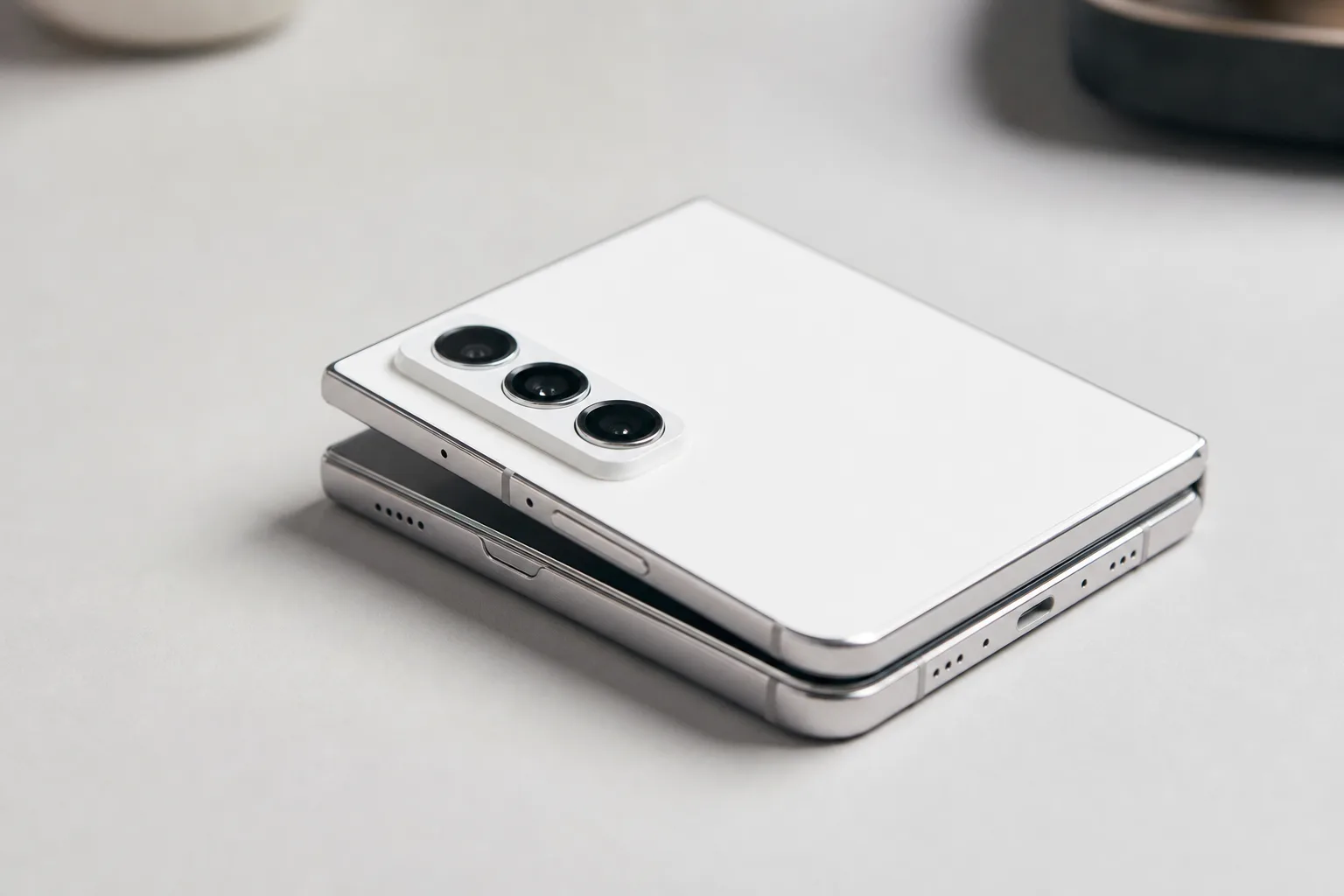
- The foldable iPhone design has been revealed in sharp detail through new dummy unit images shared by leaker Sonny Dickson.
- The foldable iPhone design may launch in white only, with no black or bold color options confirmed so far.
- The device features a passport-shaped form factor with a 7.8-inch inner OLED display and an ultra-thin 4.5mm titanium frame.
- Apple is expected to price the foldable iPhone above $2,000 when it launches alongside the iPhone 18 Pro in September 2026.
Table of Contents
The Foldable iPhone Design Is Coming Into Focus
The foldable iPhone design just got its clearest reveal yet — and it’s doing something genuinely unexpected. Veteran Apple leaker Sonny Dickson published detailed images this week of what appears to be a finalized dummy unit of Apple’s long-rumored foldable, and the pictures tell a story that’s quite different from anything else currently on the foldable market. This isn’t Samsung’s tall, narrow book-fold format. It isn’t Motorola’s flip-phone revival. Apple, it seems, is going its own way entirely.
Dummy units are non-functional physical replicas used primarily by accessory makers — case manufacturers, screen protector companies, and the like — who need precise physical dimensions well before a product ships. When a dummy unit starts circulating that looks this polished and complete, it typically means the industrial design has been signed off internally. That’s significant. Dickson first shared much rougher foldable iPhone dummies back in April alongside early models of the iPhone 18 Pro and iPhone 18 Pro Max, but those earlier units were clearly preliminary. This week’s images are a different matter entirely.
Passport Shape, Wider Than It Is Tall
The foldable iPhone design takes the form of what’s being called a ‘passport’ or ‘book-style’ layout — a device that’s wider than it is tall, with a 4:3 aspect ratio. That’s a deliberate break from the dominant conventions in foldable hardware, and it’s one of the more intriguing choices Apple appears to be making here. Every major foldable on the market right now — the Samsung Galaxy Z Fold6, the OnePlus Open, the Pixel 9 Pro Fold — uses a taller-than-wide format. Apple is essentially betting on a different ergonomic philosophy.
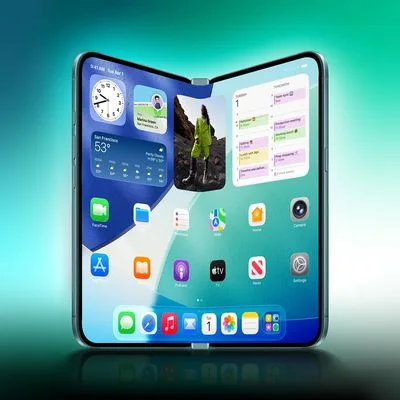
The numbers back up how different this foldable iPhone design’s form factor really is. The inner OLED panel reportedly measures 7.8 inches diagonally, which puts it just fractionally smaller than the current iPad mini when fully open. The outer cover display comes in at 5.5 inches and, based on Dickson’s images, will be edge-to-edge with a slight curve at the edges — a detail that wasn’t visible in earlier, rougher dummy units. Combine those dimensions with an ultra-thin 4.5mm titanium frame and you’re describing something that, at least on paper, sounds more like a miniaturized tablet that folds shut than a phone trying to become a tablet.
What the New Dummy Unit Reveals Beyond the Basics
Beyond confirming the overall shape, Dickson’s latest images surface some specific design details that hadn’t been clearly established before. The rear camera flash sits below the rear microphone in the camera plateau — a horizontal dual-camera setup that echoes the iPhone Air’s camera arrangement rather than the triple-lens Pro configuration. That rear microphone itself has a new design: five small drilled holes rather than a single larger aperture, which is a subtle but distinct change from what Apple has used elsewhere.
Perhaps the most consequential detail involves the selfie camera. On the inner display — that large 7.8-inch panel you’d use most of the time with the phone open — the front-facing camera is positioned in the top-left corner. Not center-top, not tucked into a pill-shaped cutout à la the Dynamic Island, but top-left. That placement almost certainly means the Dynamic Island as we currently know it won’t appear on the foldable iPhone design‘s inner screen, or it will look significantly different. Apple has built a lot of its notification and live-activity UI around the Dynamic Island since it was introduced, so whatever replaces it on the inner display will be worth watching closely.
Other confirmed details include volume buttons relocated to the top edge of the device (rather than the side, where they live on every current iPhone), no Action Button, and Touch ID in place of Face ID. The Touch ID decision makes practical sense — reliably scanning a face across a folding hinge in different orientations is a harder engineering problem than it sounds — but it does represent a step back from the Face ID experience that has defined flagship iPhones since 2017.
Foldable iPhone Design in White Only — and What That Actually Means
Here’s the detail that’s generating the most conversation: the foldable iPhone design may ship in white, and only white. Dickson flagged this directly in his post, and it’s corroborated by a separate report from Weibo leaker ‘Instant Digital,’ who suggested that a black finish won’t be available. Bloomberg’s Mark Gurman had previously reported that Apple planned to stick with traditional finishes and avoid the bold color options it sometimes offers on more mainstream iPhone models.
At first glance, one color option sounds like a limitation. But Apple has form here, and the precedent is telling. The Apple Watch Ultra launched with a single titanium natural finish. The Vision Pro launched in one configuration — silver, with no alternatives. Going back further, the original iPhone X debuted in November 2017 in just two options: Silver and Space Gray. The iPhone XS added Gold a year later. Apple tends to treat its most significant, highest-priced product launches as design statements rather than menu-style lineup expansions. Offering one color isn’t an oversight; it’s a choice about what the product is meant to say.
That said, if the foldable iPhone design sells at the volumes Apple hopes, a broader color range in year two seems almost inevitable. The iPhone lineup now spans a wide palette precisely because that range drives upgrade decisions among existing users who want something that feels fresh without a major hardware change. The same logic will apply to the foldable once it’s established.
A $2,000 iPhone and What Apple Is Really Betting On
Bloomberg’s Gurman has reported that the foldable iPhone will cross the $2,000 starting price — a threshold no iPhone has hit before. Even the Vision Pro, Apple’s most expensive consumer product, was never positioned as a mass-market device. A $2,000 phone is trying to be both a genuine daily driver and a premium status object simultaneously.
That’s a difficult balance to strike. Samsung’s Galaxy Z Fold6 has spent years iterating the format — and it’s still not a mainstream product by any measure. Apple is entering this space later, at a higher price, with a foldable iPhone design that differs from everything else on the market. If the foldable iPhone design proves as compelling in the hand as it looks in dummy unit images, Apple’s brand and ecosystem lock-in may be enough to drive early adoption. But this is a device that Apple will need to get right from the start. At $2,000-plus, early adopters won’t forgive software rough edges or durability compromises the way they might on a $499 product.
The expected September 2026 announcement window — alongside the iPhone 18 Pro and iPhone 18 Pro Max — means we’re likely just a few months from seeing the real thing. Between now and then, expect more leaks, more dummy unit sightings, and increasing clarity on the software side of the equation. The hardware story is shaping up. The more open question is what Apple’s software team has built to take advantage of that 7.8-inch canvas — and whether the result is genuinely worth two thousand dollars.
Frequently Asked Questions
What does the foldable iPhone design look like based on dummy unit leaks?
The foldable iPhone design features a book-style, passport-shaped body with a 4:3 aspect ratio — wider than it is tall. It has a curved, edge-to-edge outer display, a horizontal dual-camera array on the back, and Touch ID instead of Face ID. The frame is reportedly 4.5mm thin titanium.
Will the foldable iPhone only come in white?
Based on current dummy unit evidence and leaker reports, white appears to be the only color option at launch. Leakers ‘Sonny Dickson’ and ‘Instant Digital’ both corroborate this, and Bloomberg’s Mark Gurman previously reported Apple planned to avoid bold colors and stick to traditional finishes.
How much will the foldable iPhone cost?
Bloomberg’s Mark Gurman has reported the foldable iPhone will be priced above $2,000. For comparison, the iPhone X debuted in 2017 at a then-record $999.
When is the foldable iPhone expected to be announced?
Apple is widely expected to announce the foldable iPhone in September 2026, alongside the iPhone 18 Pro and iPhone 18 Pro Max, as part of its annual fall hardware event.