

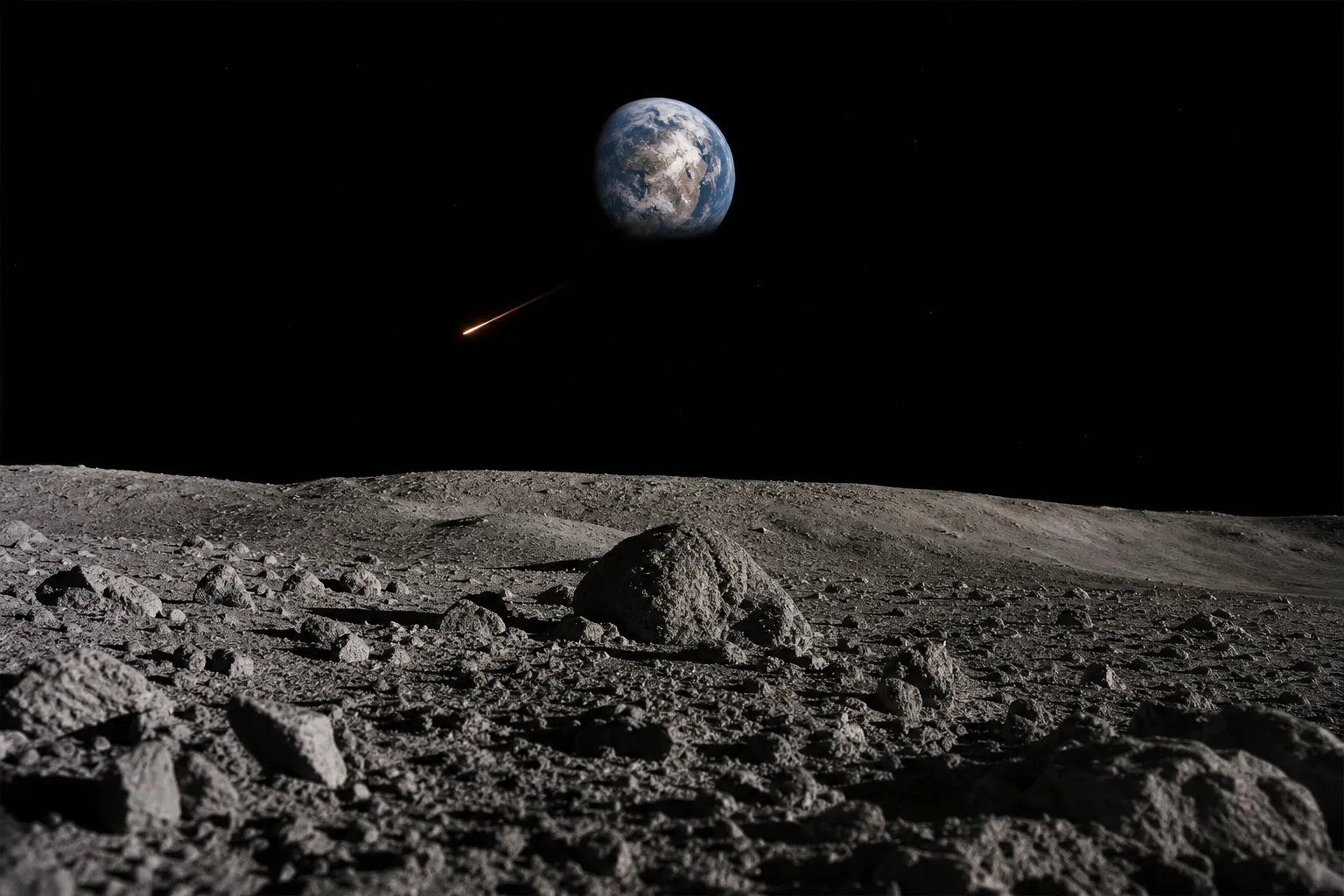
The moon missions meteor problem isn’t the stuff of science fiction. Every day, roughly 48.5 tons of naturally occurring space debris slams into Earth’s atmosphere — most of it burning up harmlessly long before it reaches the ground. But for a crewed spacecraft making the 240,000-mile run to the lunar surface, ‘harmlessly‘ isn’t a word that applies. As NASA pushes toward its first crewed lunar landing since Apollo under the Artemis programme, the threat posed by micrometeoroids — and the far rarer but far more dangerous meteor storms — deserves serious attention.
- Moon missions meteor risks are real — micrometeoroids travel at 22,000 mph and can penetrate spacecraft hulls with devastating force.
- NASA may delay moon missions meteor outburst events, just as it postponed shuttle and satellite launches in 1993 and 2000.
- Four meteor outbursts are forecast in the next decade, including a Perseid event in August 2028 — close to Artemis 4’s launch window.
- Orion’s hull materials and mission trajectories have been specifically optimised to reduce micrometeoroid impact risk for crews.
Table of Contents
The Physics of Tiny, Fast, Deadly
Here’s the thing about micrometeoroids: size is almost irrelevant when speed enters the equation. These particles — some no larger than a grain of sand — travel through space at an average of 22,000 miles per hour, according to NASA. At that velocity, kinetic energy scales brutally. A micrometeoroid that you’d barely notice on Earth becomes a miniature projectile capable of punching through spacecraft-grade materials, deforming hull sections, or severing critical systems entirely. Understanding moon missions meteor exposure at this level is what separates safe mission planning from dangerous assumption.
For the Orion capsule — Lockheed Martin’s crew vehicle at the heart of NASA’s Artemis programme — the specific concern is the heat shield. Orion’s outer tiles are engineered to survive the extraordinary thermal loads of reentry, but a micrometeoroid impact could compromise their integrity. A damaged tile doesn’t just mean a rough ride home; it could mean the capsule fails to protect its crew during the most punishing phase of the return journey. That’s not a theoretical risk. NASA takes it seriously enough to build impact mitigation directly into the spacecraft’s design, making moon missions meteor protection a core engineering discipline rather than an afterthought.
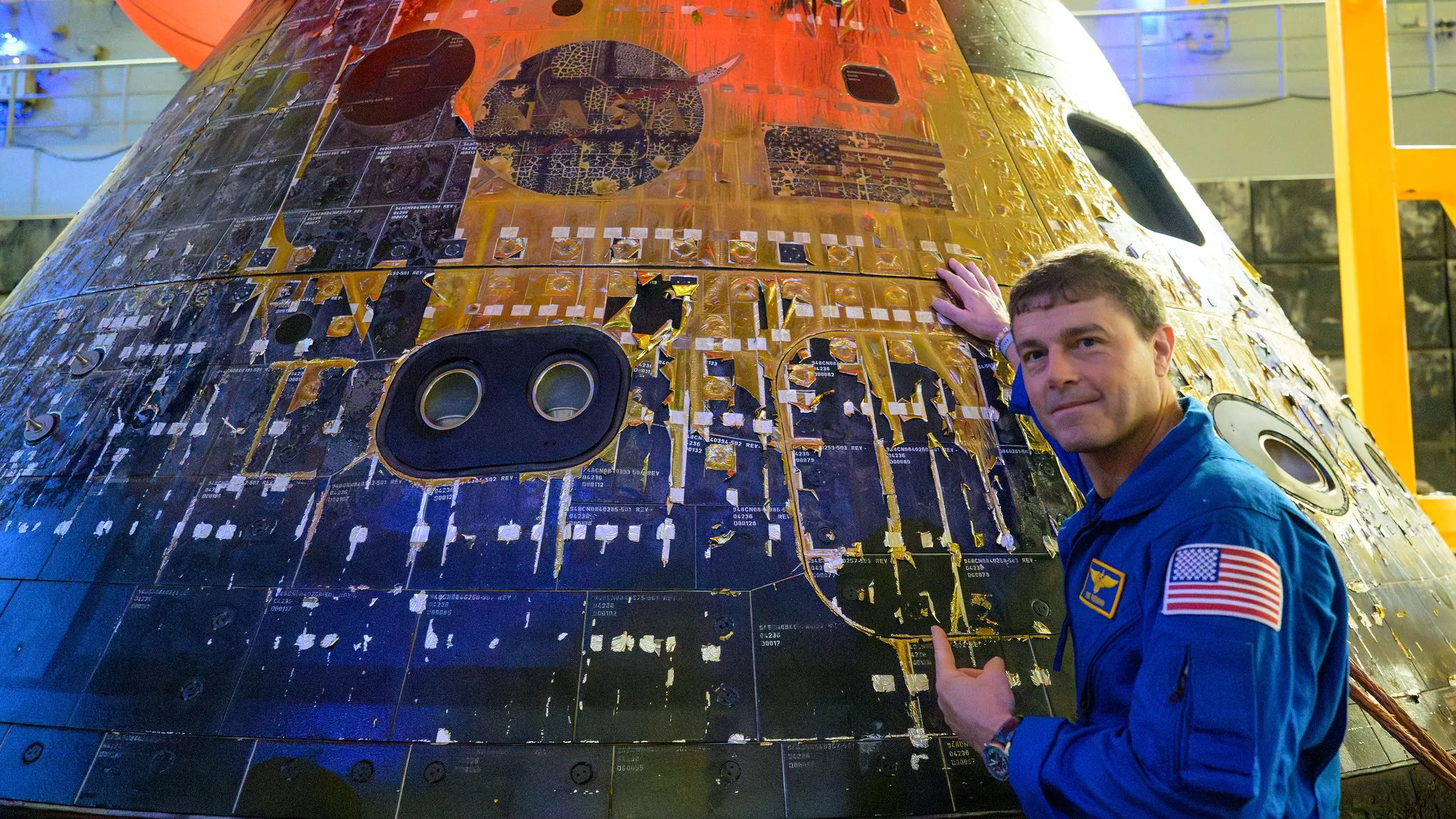
‘Orion spacecraft material selection and thicknesses have been optimised for micrometeoroid and orbital debris (MMOD) protection and risk balancing,’ Mike Heckwolf, Orion crew and mission risk integrator at Lockheed Martin, told Space.com. ‘Hypervelocity impact testing is conducted to confirm impact physics, to characterise damage survivability, and verify performance of the Orion spacecraft MMOD design.’ In other words, before any crew boards that capsule, engineers are firing high-speed particles at it in labs to see exactly what breaks, and designing around those failure points.
The mission trajectory itself also factors in. Heckwolf confirmed that ‘the Artemis mission trajectory and Orion flight attitude are carefully assessed to minimise MMOD risk’ — meaning the route the spacecraft takes, and even the angle it flies at, are calculated in part to reduce the surface area presented to incoming debris streams. It’s meticulous work, and it illustrates just how seriously the agency is treating what sounds like a background concern. Every moon missions meteor calculation feeds directly into how and when crews depart Earth.
When Showers Become Storms
Routine meteor showers are, in NASA’s view, manageable. Bill Cooke, who leads NASA’s Meteoroid Environments Office, has pointed out that only a handful of the 1,000-plus known meteor showers even exceed the normal ‘sporadic background’ rate by more than 5%. The Geminids — one of the most visually spectacular annual showers — sit at that threshold. For a spacecraft in transit, a standard shower adds relatively little to the baseline risk.
Meteor storms and outbursts are a different category entirely. These events can flood the Earth-moon environment with dramatically elevated debris density. During a full storm, observers on the ground might see hundreds or even thousands of meteors per hour streaking across the sky. The gaps between individual particles in space would still likely be measured in miles — space is vast — but the statistical probability of an impact on a spacecraft rises sharply. It is precisely this scenario that makes moon missions meteor storm planning so consequential for mission directors.
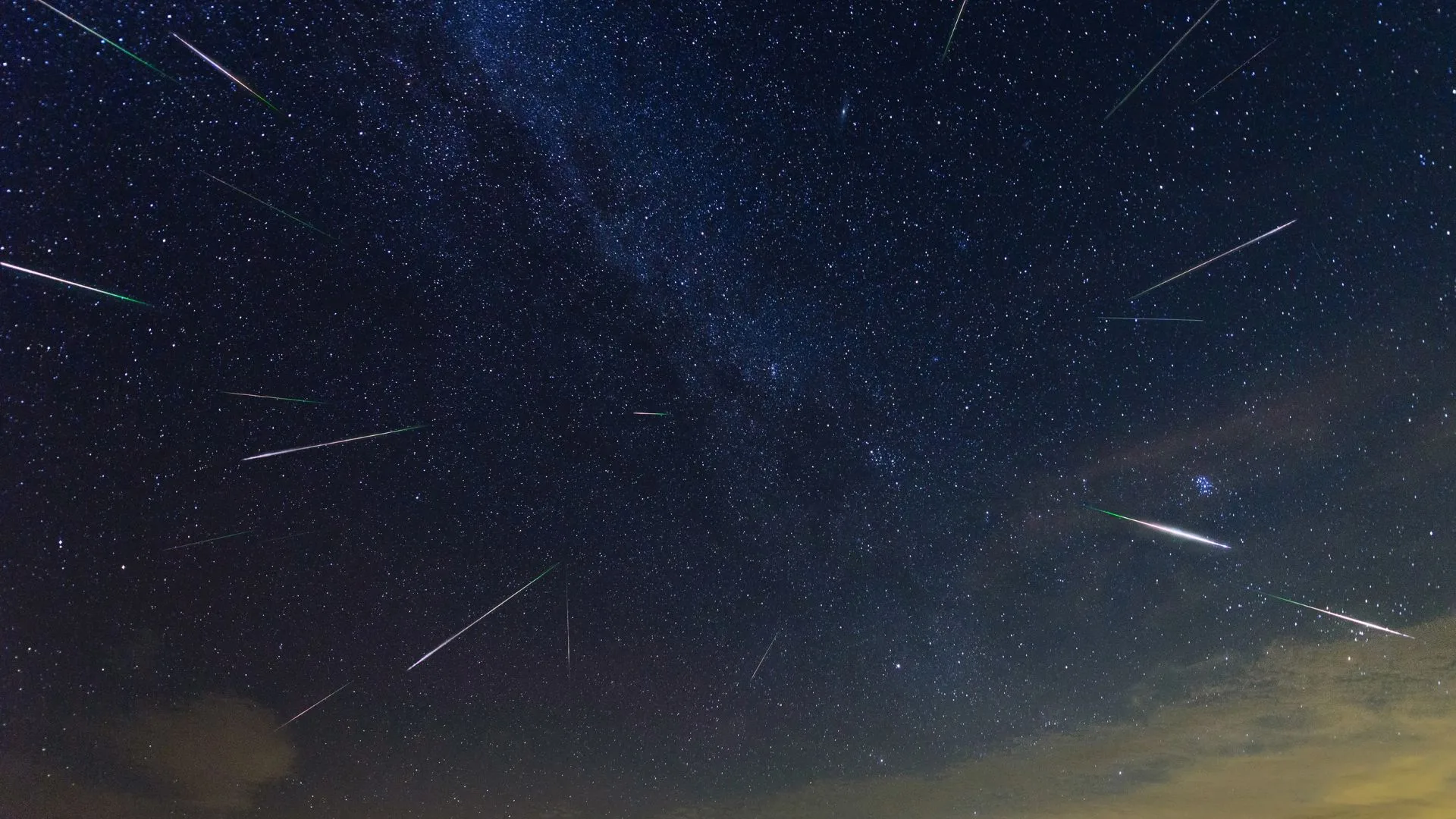
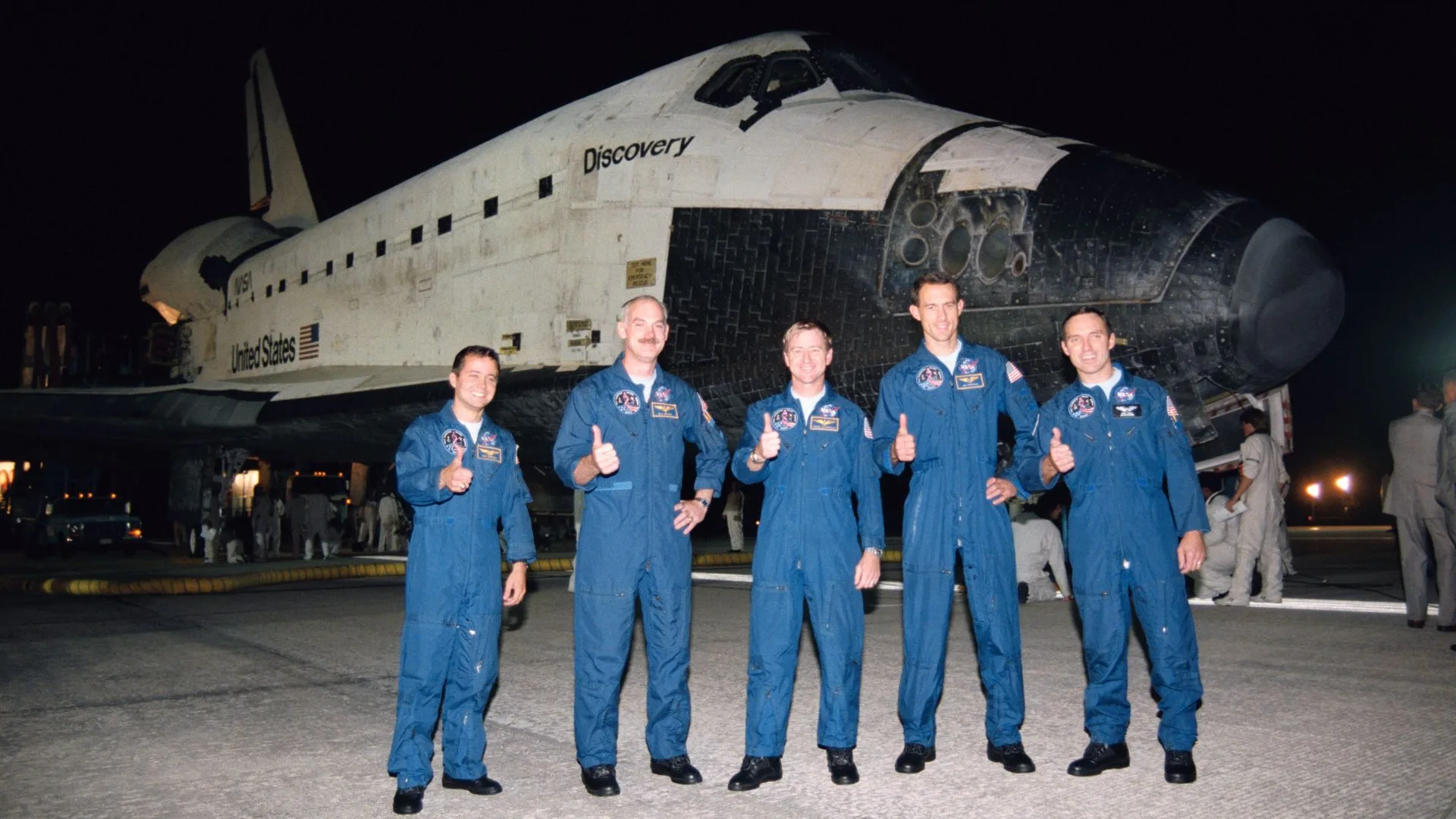
Cooke is blunt about the protocol: ‘If a major meteor shower outburst or storm is forecast during a mission or crew activity, the mission would be delayed or the crew kept inside until the outburst or storm is over.’ That’s not a new policy invented for Artemis. It’s a principle NASA has applied before, and the historical record makes the point clearly. In 1993, the agency delayed the STS-51 space shuttle Discovery mission specifically to avoid the peak of the Perseid shower. Seven years later, an uncrewed science mission launching out of Vandenberg Space Force Base was held back to sidestep a Leonid outburst. The precedent is established, and it will shape moon missions meteor decision-making for every Artemis flight that follows.
Moon Missions Meteor Calendar: Four Dates to Watch
What makes this especially relevant right now is the forecast for the next decade. Robert Lunsford of the American Meteor Society has identified four meteor outburst events predicted to occur before 2035. The dates are specific: a Perseid outburst on August 12, 2028, and Leonid events on November 17, 2033, and November 18 and 19, 2034. Of these, Lunsford flags the 2028 Perseid event as potentially the most intense — capable of producing between 500 and 1,000 meteors per hour at peak. Each of these dates represents a moon missions meteor flashpoint that planners must account for years in advance.
Now consider where Artemis 4 sits in NASA’s schedule. This mission — the agency’s first attempt to put boots on the lunar surface since the final Apollo landing — is currently pencilled in for early 2028. That puts it in the same calendar year as the most significant forecast outburst in the coming decade. If Artemis 4 slips even slightly into the second half of 2028 for any reason, the August Perseid window comes into play as a potential complication. It’s unlikely to be a showstopper, but mission planners will be watching the forecast data closely. The overlap between the Artemis 4 timeline and the August outburst underlines why moon missions meteor awareness has moved from peripheral concern to active planning priority.
Lessons Already Written in Spacecraft History
The dangers micrometeoroids pose aren’t purely hypothetical. In November of a recent year, Chinese taikonaut Chen Dong reportedly discovered a crack in the viewport of a Shenzhou spacecraft while docked at the Chinese Space Station. The damage was serious enough that the three-person crew had to use an alternative return vehicle for their journey home. While the exact cause hasn’t been officially confirmed as a micrometeoroid strike, the incident served as a blunt reminder that spacecraft operating in Earth orbit — let alone on the more exposed moon missions meteor environment of the translunar route — aren’t invulnerable.
NASA’s orbital telescopes face the same environment, and the agency has developed practical protocols for managing their exposure. Both the James Webb Space Telescope and the Hubble Space Telescope are routinely reoriented during intense meteor events — their large primary mirrors pointed away from shower radiants to reduce the cross-section of sensitive optics exposed to incoming debris. It’s an elegant solution to a problem that can’t be fully engineered away, and it’s exactly the kind of thinking that will need to scale up as human activity around the Moon increases.
Planning for a Permanent Lunar Presence
The Artemis programme isn’t just about landing on the Moon and coming home. The long-term vision involves the Gateway space station in lunar orbit and eventually a sustained human presence on the surface. That ambition raises the stakes considerably when it comes to the moon missions meteor threat. A short transit mission presents a finite window of micrometeoroid exposure. A crew spending weeks or months in lunar orbit — or on the surface in habitats that haven’t been hardened to the same degree as a purpose-built spacecraft — faces a very different risk profile.
The Moon itself has no atmosphere to burn up incoming debris. Every micrometeoroid that reaches the lunar surface hits it intact, and the surface is covered in evidence of billions of years’ worth of such bombardment. Human habitats, rovers, and extravehicular equipment will need protection strategies that go well beyond what we’ve built for short-duration missions. The work being done now — the impact testing, the trajectory analysis, the storm forecasting — is really the foundation for a much larger challenge ahead. Whether NASA and its international partners are building that foundation fast enough is a question the coming decade will answer.
Frequently Asked Questions
Could moon missions meteor storms actually cause NASA to cancel a launch?
Outright cancellation is unlikely, but delays are very possible. NASA’s Bill Cooke has confirmed that if a major meteor storm or outburst is forecast during a mission, the launch would be postponed or the crew kept inside until conditions improve. It’s happened before with shuttle and satellite missions.
How fast do micrometeoroids travel near the Moon?
Micrometeoroids average around 22,000 miles per hour — roughly 34,400 kilometres per hour — according to NASA. At that speed, even particles a fraction of a millimetre across carry enough kinetic energy to penetrate spacecraft materials or damage heat shield tiles.
What meteor outbursts are predicted during NASA’s Artemis window?
According to the American Meteor Society’s Robert Lunsford, four outbursts are forecast over the next decade: a Perseid event on August 12, 2028, and Leonid events on November 17, 2033 and November 18 and 19, 2034. The 2028 Perseid event could produce 500 to 1,000 meteors per hour.
How does NASA protect the James Webb Space Telescope from meteor showers?
During intense meteor showers, NASA routinely rotates the James Webb Space Telescope — and the Hubble — so their large primary mirrors point away from the shower’s radiant point, the region of sky from which incoming debris appears to originate.

