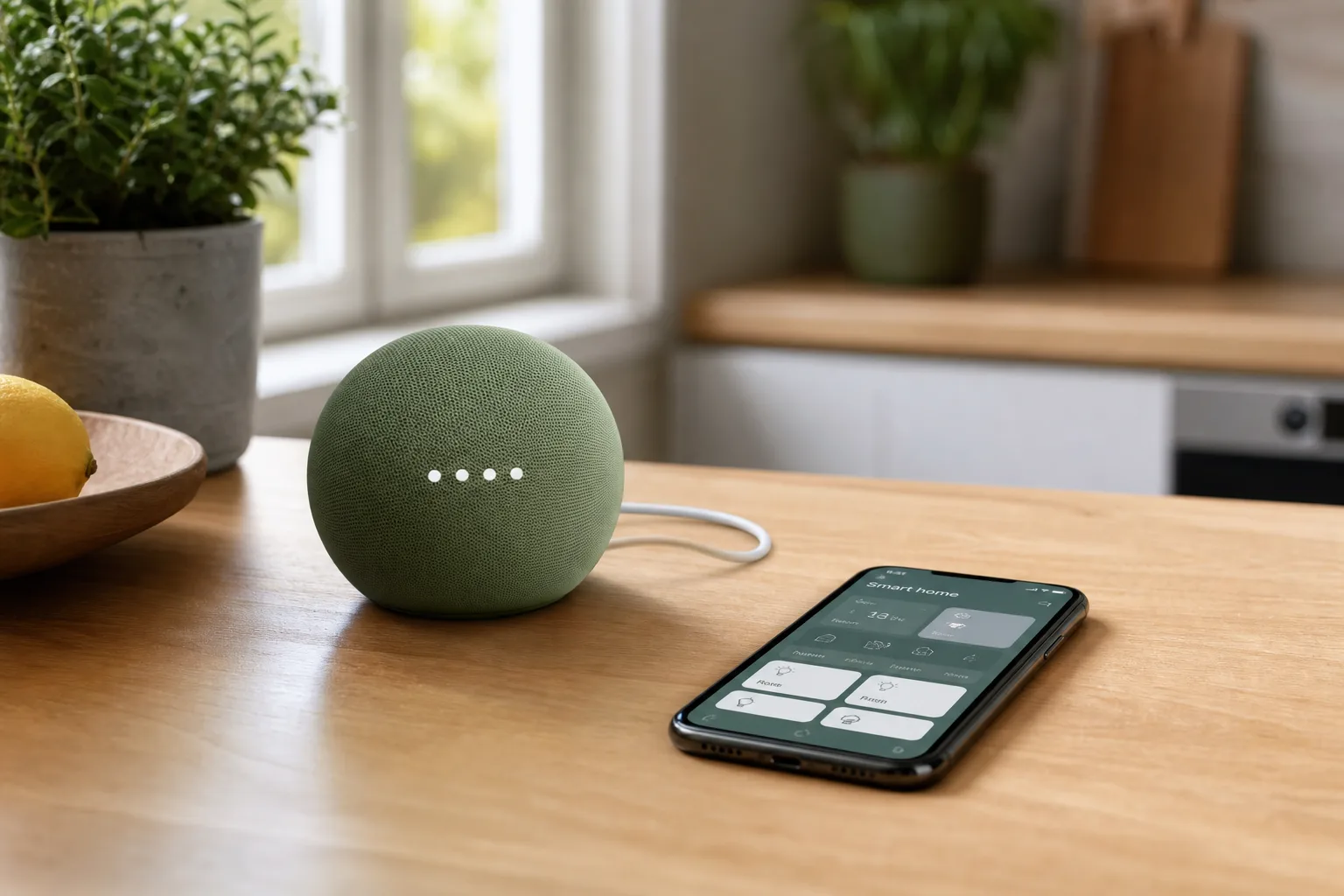
The Google Home Speaker finally has a date on the calendar. After nearly ten months of waiting — from a cryptic August tease buried inside a Pixel 10 announcement to a proper October unveiling — Google has confirmed the speaker ships on June 25 for $99.99. Pre-orders are open right now on the Google Store, and honestly, it’s about time.
- The Google Home Speaker launches June 25 for $99.99, nearly ten months after Google first teased the device.
- The Google Home Speaker ships with Gemini built-in, including Gemini Live for conversational AI and Nest camera summaries.
- It supports Wi-Fi 6, Bluetooth 5.4, and Thread 1.3, and can pair with Google TV Streamer for spatial surround sound.
- Pre-orders are live now on the Google Store in four colors, with Jade and Berry exclusive to the US market.
Table of Contents
A Long Road to a $99 Speaker
Ten months is a long time to hold people’s attention for a hundred-dollar smart speaker. The smart home market has moved fast — Amazon has been quietly iterating on its Echo lineup, and Apple’s HomePod mini continues to hold a loyal (if niche) audience. Google has been playing catch-up in the dedicated audio category for years, and the original Google Home family never quite nailed the combination of audio quality, smart home reliability, and AI capability that the company kept promising. This time, the pitch is different: the Google Home Speaker is being positioned not just as a voice assistant box, but as an ambient AI device powered by Gemini.
The $99.99 price point lands it squarely in the middle of the market — more expensive than Amazon’s entry-level Echo Dot, but cheaper than the HomePod mini, which sits at $99 too. Google is betting that Gemini is the differentiator worth paying for.
Google Home Speaker Specs: What’s Inside
Google hasn’t named the chip powering the Google Home Speaker, but it’s a quad-core processor built on ARM’s Cortex-A55 cores — the same architecture you’ll find in a huge range of efficient, low-power embedded devices. Paired with 1GB of RAM and 4GB of onboard storage, it’s not a powerhouse, but for a speaker running an AI assistant at the edge, it doesn’t need to be. The heavy Gemini lifting happens in the cloud.
On the audio side, there’s a 58mm full-range driver promising omni-directional sound. Three far-field microphones handle voice pickup, and there’s a hardware microphone mute switch — still a non-negotiable feature for anyone who’s thought too hard about always-on listening devices sitting in their kitchen. Connectivity covers Wi-Fi 6, Bluetooth 5.4, and Thread 1.3. That Thread support is worth calling out: the Google Home Speaker can act as a Thread border router, making it a genuine smart home hub rather than just a listening device. For anyone building out a Thread-based setup with compatible bulbs, sensors, or locks, this could be a meaningful secondary sell.
Gemini Built In — and Actually Integrated
Here’s where Google is making its real argument. The Google Home Speaker ships with Gemini at its core, and unlike earlier Google Assistant integrations that often felt like a party trick bolted onto a Bluetooth speaker, this one has actual hooks into the broader Google ecosystem. There are ten new, natural-sounding voices to choose from — a direct shot at Amazon and Apple, whose assistant voices have long felt robotic despite years of refinement.
Gemini Live is included too. Google describes it as enabling “natural, free-flowing chats” — the kind of conversational back-and-forth that feels less like issuing commands and more like talking to someone. Whether it lives up to that in practice is the real test, but the underlying Gemini model has shown genuine conversational range in other contexts, so the hardware finally has AI software that can match its ambitions.
The Nest camera integration is arguably the most practically useful feature. Ask the Google Home Speaker what happened at home while you were out, and it’ll pull a summary from your Nest cameras — recent activity, detected events, that kind of thing. For households already invested in Nest hardware, this turns the speaker into a proper home intelligence terminal rather than just a music player with a voice interface. It’s the kind of deep vertical integration that Google has the unique ability to pull off, and it’s the clearest reason to buy this over an Echo if you’re already in the Google ecosystem.
Home Theater Mode and the Google TV Streamer Connection
One feature that hasn’t gotten enough attention: pair two Google Home Speakers with a Google TV Streamer, and Google says you get spatial surround sound in your living room. It’s positioning the combination as a “mini home theater” — ambitious framing for a pair of $99 speakers, but the spatial audio processing in modern software is genuinely impressive when it works. Sony and Samsung have spent years justifying premium soundbar prices with similar promises, and if Google can get close to that experience at $200 for a stereo pair, it’s a compelling argument for the cord-cutting crowd who’ve already bought into the Google TV ecosystem.
Colors, Availability, and the US-Exclusive Question
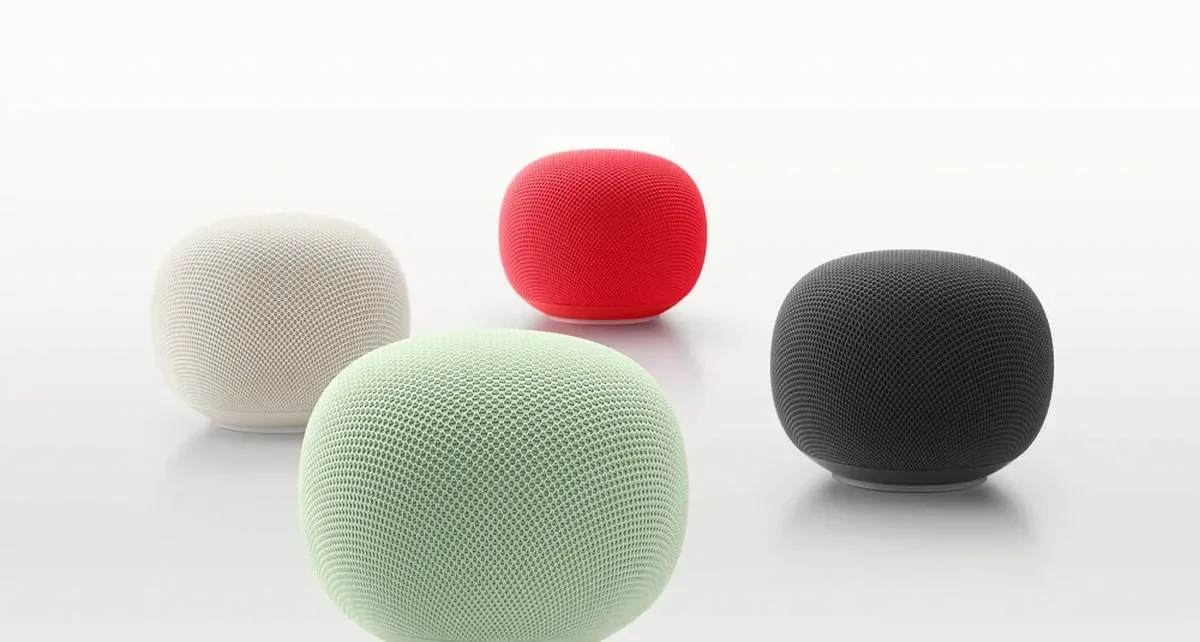
The Google Home Speaker comes in four colors: Jade, Berry, Porcelain, and Hazel. Google has marked Jade and Berry as US-exclusive, which is an odd call that the company hasn’t publicly explained. Color exclusivity by market isn’t unusual in consumer hardware — Apple does it, Samsung does it — but it typically signals either manufacturing batch decisions or market-specific color preference research. Porcelain and Hazel are the safe, neutral options that’ll end up in most homes regardless.
If the June 25 launch date holds globally, the Google Home Speaker will be one of the more significant smart home hardware releases of 2025. The real question isn’t whether the hardware is good — at $99 with this spec sheet, it almost certainly is. The question is whether Gemini, actually running in a living room on a device people use every day, can shift the way people relate to AI assistants. Google has been building toward this moment for years. Now it has a ship date.