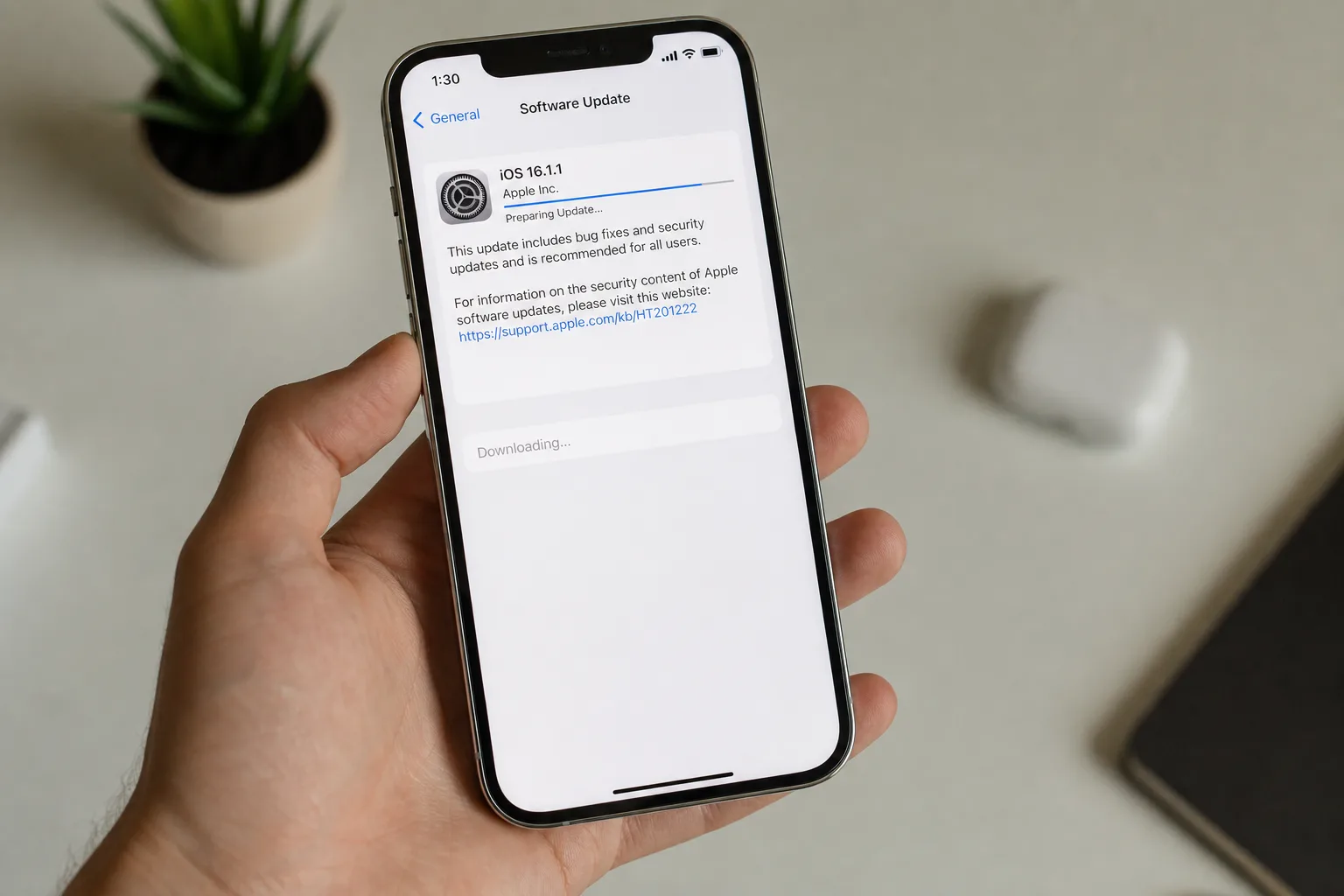
Apple has pushed out the iOS 26.5.2 update to all compatible iPhones, and while it won’t add a single new feature to your home screen, what it does deliver matters: close to 30 security patches, most of them aimed squarely at WebKit. If your phone hasn’t nudged you to install it yet, don’t wait for it.
- The iOS 26.5.2 update delivers nearly 30 security fixes, with most targeting WebKit and related web technologies.
- Apple’s iOS 26.5.2 update carries no new features — it’s a focused, security-only release for iPhone users.
- iPadOS 26.5.2 and macOS 26.5.2 shipped the same day, signalling a coordinated cross-platform security response.
- At least one more update, iOS 26.6, is already in beta before iOS 27 launches this autumn.
Table of Contents
What the iOS 26.5.2 Update Actually Fixes
Apple’s official release notes are, as usual, brief to the point of being almost dismissive — ‘This update provides security fixes for your iPhone.’ That’s it. But dig into Apple’s security content advisory page and the picture gets more detailed. The iOS 26.5.2 update closes out nearly 30 individual vulnerabilities, with the overwhelming majority concentrated in WebKit, Apple’s open-source browser rendering engine.
That’s a significant number for a point-point release. WebKit is a perennial target because it underpins not just Safari but every single in-app browser on iOS — thanks to Apple’s long-standing requirement that all third-party browsers on the platform use WebKit under the hood. A flaw in WebKit isn’t just a Safari problem; it’s potentially an exposure point across a vast swath of apps. The sheer volume of fixes here suggests Apple has been quietly accumulating patches and chose to bundle them into one clean, security-focused drop.

Apple doesn’t publicly specify whether any of these vulnerabilities were actively exploited in the wild — that kind of disclosure is reserved for zero-day patches, which Apple flags with language like ‘Apple is aware of a report that this issue may have been actively exploited.’ The absence of that language in the iOS 26.5.2 update release notes is mildly reassuring, though it doesn’t mean the underlying bugs were harmless. Unpatched WebKit flaws have historically been entry points for sophisticated spyware, including the Pegasus attacks that made global headlines.
No New Features — And That’s Fine
There’s a certain quiet discipline to a release like the iOS 26.5.2 update. No new lock-screen widgets, no redesigned notification stack, no AI writing tools. Apple’s engineers evidently put their energy entirely into closing security gaps rather than shipping anything that would require a polished product announcement. In an era where software updates are frequently used as marketing moments — bundling features in with fixes to juice press coverage — a purely remedial update is almost refreshing.
Apple’s release notes do carry a caveat worth keeping in mind, though. The company has never claimed its notes represent every single change in a given build. Bug fixes that don’t qualify as security vulnerabilities sometimes slip in unannounced, and that may be true here. Users have occasionally reported that point releases quietly addressed persistent annoyances — Bluetooth dropout issues, battery drain quirks — even when Apple said nothing publicly. Whether the iOS 26.5.2 update carries anything like that remains to be seen as the community works through their installs.
A Coordinated Cross-Platform Push
Apple didn’t just patch iPhones today. iPadOS 26.5.2 and macOS 26.5.2 landed simultaneously, with identical release notes pointing to the same class of security fixes. That kind of coordinated rollout is standard Apple practice when the underlying vulnerabilities span its shared frameworks — and since WebKit ships across iPhone, iPad, and Mac alike, it makes sense that all three platforms needed attention at once.
It’s also a reminder that Apple’s ecosystem, for all its integration advantages, carries a shared attack surface. A WebKit flaw that can be exploited on iPhone is almost certainly exploitable on iPad and potentially on macOS through Safari. Rolling fixes across platforms simultaneously limits the window during which a partially-patched ecosystem could be targeted.
What Comes Next Before iOS 27
Apple unveiled iOS 27 earlier this month, but the public launch won’t arrive until autumn — most likely alongside new iPhone 18 hardware in September. In the meantime, the company isn’t done with iOS 26. iOS 26.6 is already in beta testing, meaning at least one more release will land before the big version number rolls over.
Early looks at the iOS 26.6 beta suggest it’s another minimal update — a few internal adjustments but nothing that would make headlines on its own. Apple has clearly kept the feature pipeline buttoned up ahead of the iOS 27 launch. That pattern is deliberate: the months leading up to a major release tend to be about stability and security rather than experimentation. Shipping a half-baked feature in iOS 26.6 that then needs undoing in iOS 27 would be an own goal.
For iPhone users, the practical advice is straightforward. The iOS 26.5.2 update is a pure security release with a meaningful patch count. There’s no compelling reason to hold off, and given how central WebKit is to the iOS browsing experience, there’s a reasonable argument for treating this one with more urgency than a typical minor update. Go to Settings → General → Software Update and get it done.
The broader story, though, is about how Apple continues to manage the maintenance window between major releases. With iOS 27 already generating buzz after its early preview, Apple still has to keep the current platform clean and secure for the millions of users who won’t be running a day-one iOS 27 install the moment it ships. Patches like the iOS 26.5.2 update are how that trust gets maintained — quietly, without fanfare, but no less importantly for it.