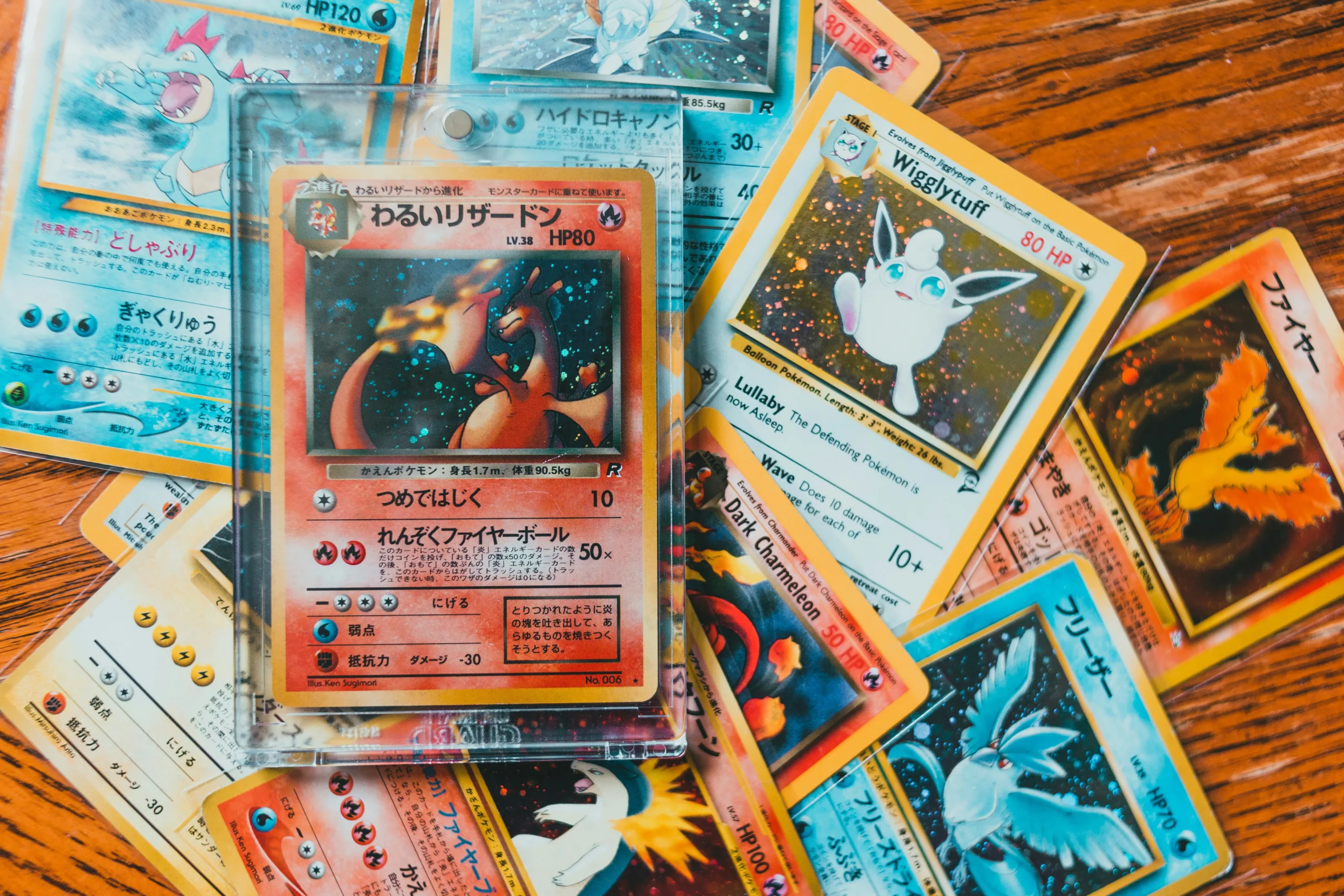
Somewhere in rural Montana, thousands of Pokémon cards sit in a climate-controlled vault, each one tethered to a token on Solana. It sounds like an odd premise — but Pokémon card NFTs have quietly become one of the fastest-growing niches in the entire crypto market, with the top seven platforms generating $230 million in monthly sales this past May alone.
- Pokémon card NFTs generated $230M in monthly sales in May 2026, up from just $32M a year earlier.
- Crypto gacha machines — which spit out random Pokémon card NFTs — are driving 90–95% of top platform revenues.
- Collector Crypt anchors buyer trust with a 28,000-square-foot Montana vault securing its physical card inventory.
- Solana accounts for roughly 64% of total tokenized trading card volume, cementing its role in the collectibles space.
Table of Contents
From $32M to $230M in Twelve Months
To put that number in context: a year ago, the same cohort of platforms was doing around $32 million a month. That’s roughly a tenfold jump in twelve months, a pace that makes even the frothiest corners of the AI investment world look measured. Pokémon card NFTs didn’t just grow — they exploded, and the mechanism behind most of that growth is something borrowed from Japanese arcade culture: the gacha machine.
For the uninitiated, gacha is a randomised dispensing mechanic — you pay, you spin, you get a mystery prize. In the physical card world, that’s the familiar ritual of tearing open a booster pack hoping for a holographic Charizard. These platforms have replicated that dopamine hit in digital form, wrapping it in blockchain rails that provide instant ownership and, crucially, instant liquidity. Solana’s official X account recently spotlit Collector Crypt’s gacha machine with the blunt question: ‘Would you spin for a $15,000 Pokémon card?’ Apparently, a lot of people would.
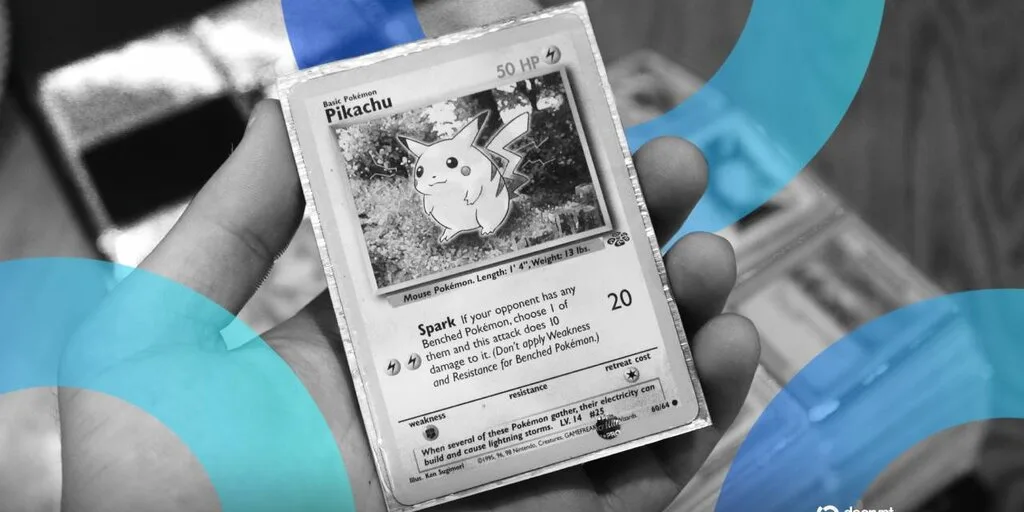
According to Messari data, Solana accounts for approximately 64% of total tokenized trading card volume. The chain’s low fees and near-instant finality make it a natural fit for a market where users might spin dozens of times in a single session. That’s not a coincidence — it’s product-market fit doing its work. Pokémon card NFTs have found in Solana an infrastructure layer that matches their trading intensity almost perfectly.
Pokémon Card NFTs and the Gacha Economy
Collector Crypt CEO Tuom Holmberg is refreshingly candid about what’s actually going on here. The Montana-based platform, which debuted roughly 18 months ago, recently crossed $1 billion in total sales — and Holmberg says 90% to 95% of that volume flows directly through the gacha machine. ‘That’s all gacha,’ he told Decrypt, with the kind of directness you don’t often hear from crypto founders.
He’s also willing to say the quiet part out loud: yes, it borders on gambling. His defence is the concept of ‘positive expected value’ — the idea that a user spending $50 receives roughly $55 back in card value on average. The framing is that it’s a gamified shopping experience rather than a casino, and that a user should be able to open five to ten packs, keep a card they want, and effectively pay market price. Whether regulators will eventually buy that argument is a separate question entirely.
Dominic Jang, co-founder and CSO of rival platform Deadstock, frames the appeal of Pokémon card NFTs slightly differently. He sees gacha and mystery packs serving two distinct audiences simultaneously: speculators chasing ‘the rush and an instant exit,’ and genuine collectors who simply want the card. ‘What’s genuinely new,’ Jang said, ‘is that the pull now comes with instant liquidity.’ That’s the real unlock. In the physical world, pulling a rare card means listing it on eBay, waiting for bids, managing shipping, and praying the buyer doesn’t file a dispute. On-chain, you can flip it in seconds.

The Vault as a Trust Signal
The single biggest obstacle facing Pokémon card NFTs isn’t regulation or volatility — it’s credibility. The NFT space carries bruising baggage from the 2021–2022 boom, when rug pulls and vaporware projects burned retail investors badly enough to make ‘NFT’ a near-profanity in mainstream circles. Holmberg knows this better than most. ‘You walk into a card show, say you’re behind the tokenized cards on Solana, and 90% of people call it a fraud,’ he said. It’s not an exaggeration — it’s just the reality of operating at the intersection of two communities that don’t fully trust each other.
Collector Crypt’s answer to that trust problem is physical and deliberate: a 28,000-square-foot secure facility in Montana that houses its card inventory. The vault isn’t just storage — it’s marketing. In a space where competitors, as Holmberg pointedly noted, may be keeping inventory ‘in their closets,’ having a verifiable, auditable physical anchor matters enormously. Some rival platforms have apparently recognised this; Holmberg says certain competitors now plug directly into Collector Crypt’s trading card liquidity pool, effectively renting trust alongside storage capacity.
It’s a smart structural moat, if it holds. The concern Holmberg himself raises is telling: if one of these platforms executes a rug pull, the Reddit fallout will be severe — not just for that platform, but for the entire tokenized collectibles category. When a niche is this new and this speculative, one high-profile failure can set the whole thing back years. For Pokémon card NFTs specifically, that reputational risk is amplified by how closely the category is watched by a passionate and vocal collector community.
A Market That’s Bigger Than the Hype
It’s easy to dismiss Pokémon card NFTs as a niche-within-a-niche, a crypto fad draped over a nostalgia fad. But the underlying market is genuinely enormous. Strategic Market Research puts the global trading card market at $15.8 billion in 2024, with projections reaching $23.5 billion by 2030. That’s not a bubble — that’s a maturing collectibles category with real, sustained demand.
The NFT layer, meanwhile, has evolved significantly since the PFP-project chaos of 2021. Overall NFT market cap sits at around $2.4 billion today — far below its pandemic-era peak, but increasingly anchored to real physical assets rather than speculative digital art. Courtyard, another major player in the space, has already extended the model beyond Pokémon card NFTs to vintage U.S. coins, luxury watches, and comic books. The tokenization-of-physical-assets thesis, long talked about in crypto circles, is finding its first real consumer-scale proof point in trading cards.
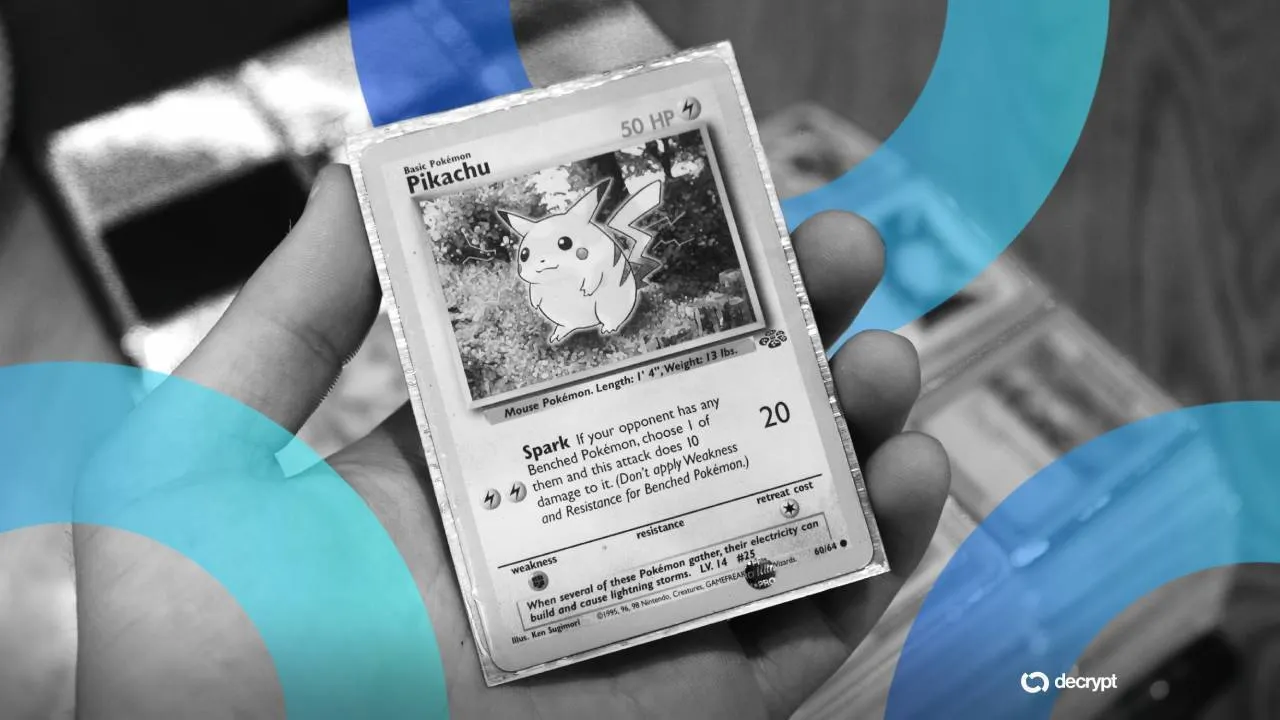
Logan Paul’s $16.5 million Pokémon card auction in February 2026 — theatrical as it was — didn’t create this market, but it absolutely poured fuel on it. When a single card commands eight figures at auction, even casual observers start wondering whether there’s money to be made. The gacha machine becomes a more accessible, democratised version of that same speculative impulse: instead of needing millions, you need fifty dollars and a Solana wallet.
The Road Ahead for Tokenized Collectibles
The pseudonymous Messari analyst AvgJoesCrypto put it plainly: ‘We’re starting to see the snowball effect of something with product-market fit. Blockchain rails are just a better medium for trading these assets once you tokenize them.’ That’s the crux of it. The friction reduction is real — counterfeit risk on eBay is a genuine problem, instant on-chain settlement is a genuine solution, and provable scarcity via blockchain is something physical card grading services have been trying to approximate for decades with PSA slabs and Beckett cases.
What happens next depends on a few things: whether regulators decide gacha mechanics constitute gambling under existing laws, whether the major platforms can maintain the physical custody standards that underpin their credibility, and whether mainstream collectors — the ones who currently bolt at the word ‘Solana’ — can be brought along. If even a fraction of the $15.8 billion traditional trading card market migrates on-chain, the numbers we’re seeing today will look quaint. If a single high-profile platform collapses and takes user funds with it, the whole experiment could be set back by years. Right now, Pokémon card NFTs are riding a wave of genuine utility, speculative demand, and cultural momentum — a combination that’s rare enough in crypto to take seriously.
Frequently Asked Questions
Are Pokémon card NFTs backed by real physical cards?
Yes, on platforms like Collector Crypt and Courtyard, each NFT represents a real physical card stored in a secure facility. Collector Crypt uses a 28,000-square-foot vault in Montana. Owners can redeem their NFT to receive the physical card, or trade it on-chain.
What is a crypto gacha machine and is it gambling?
A crypto gacha machine lets users pay a fee for a randomly selected card-backed NFT — mimicking the pack-ripping experience in traditional trading cards. Collector Crypt CEO Tuom Holmberg acknowledges it borders on gambling but frames it as a gamified shopping experience with positive expected value.
Which blockchain dominates Pokémon card NFT trading?
Solana currently accounts for approximately 64% of total tokenized trading card volume, according to Messari data from May 2026. Its low transaction fees and fast settlement make it well-suited to high-frequency collectible trading.
How big is the global trading card market?
Research firm Strategic Market Research estimates the global trading card market reached $15.8 billion in 2024 and is projected to grow to $23.5 billion by 2030, driven by collectors, speculators, and growing mainstream interest in cards like Pokémon.