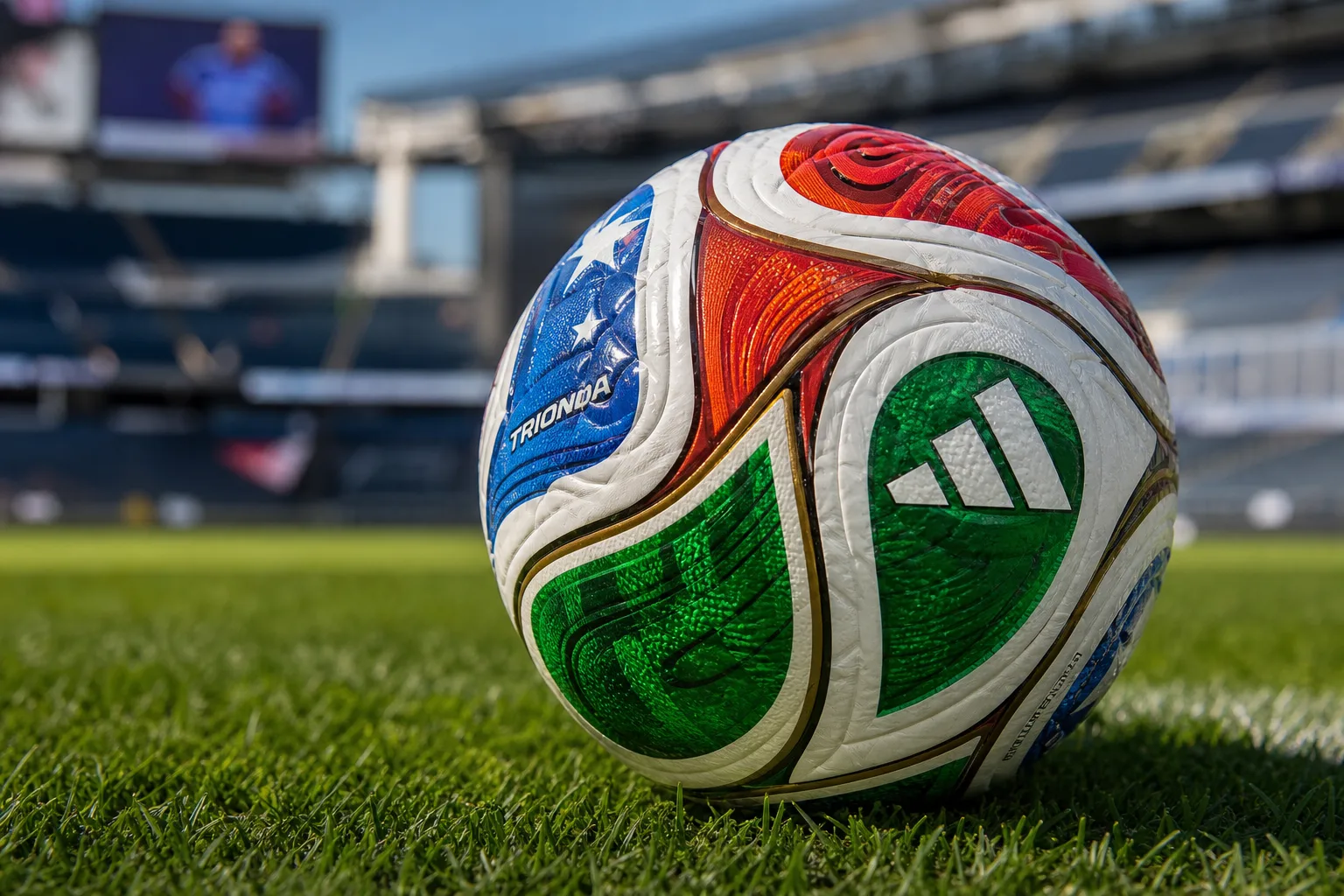
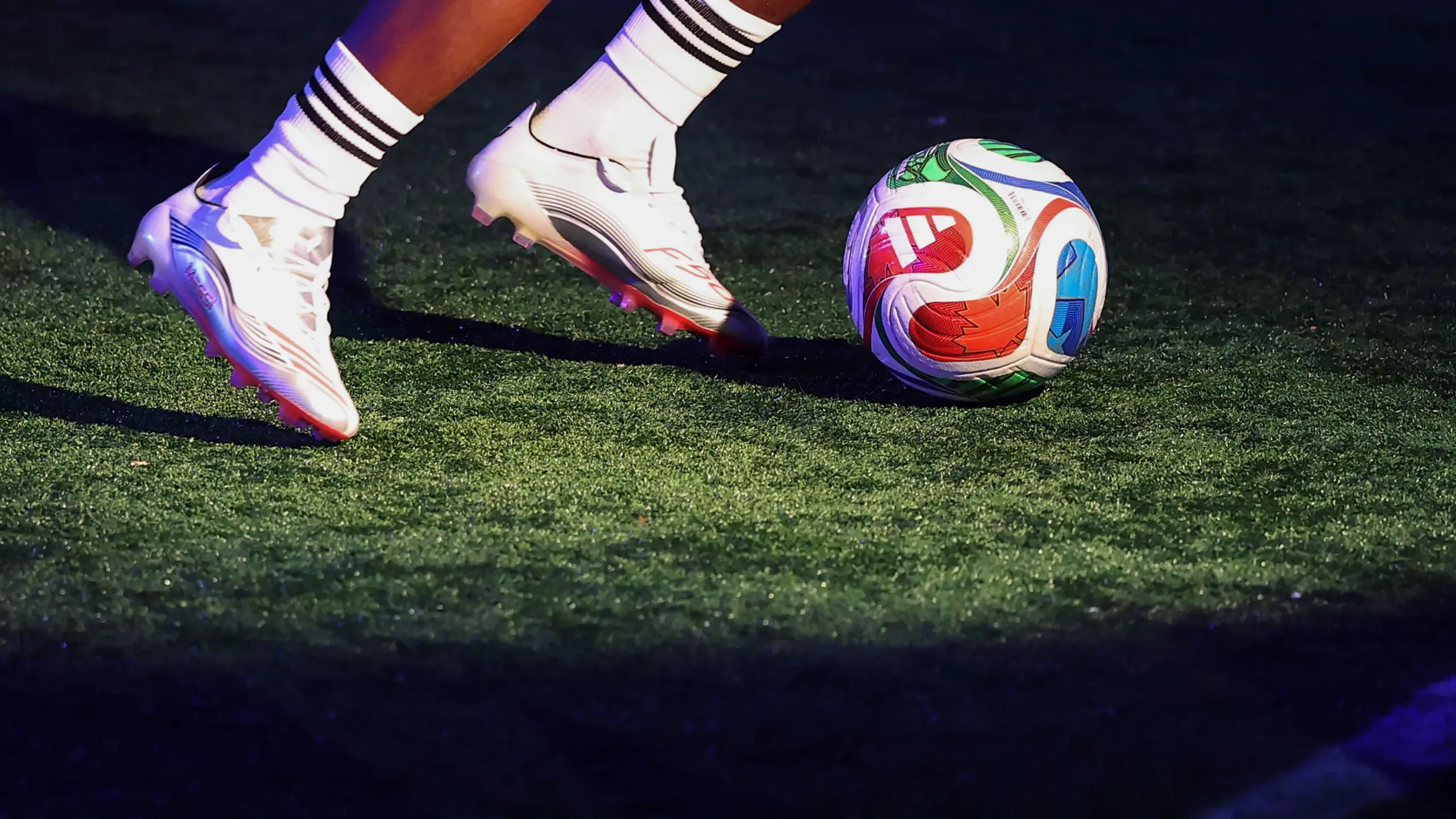
Every four years, the World Cup ball becomes one of the most quietly controversial pieces of sports equipment on the planet. Players complain about it, goalkeepers blame it, and physicists quietly pull it apart in wind tunnels. The 2026 edition — the Adidas Trionda, set for a tournament spanning the US, Canada, and Mexico — is no different. New research suggests it might actually be the most predictable ball in years at normal playing speeds, but there’s a catch: those booming long-range kicks that have defined modern international football could travel a few metres less than they did at previous tournaments.
- The 2026 World Cup ball, the Adidas Trionda, has a higher drag coefficient at speed than recent predecessors, potentially shortening long kicks.
- Research spanning 20 years shows each new World Cup ball design meaningfully changes in-flight behaviour for players and goalkeepers.
- The Trionda’s four deep-grooved panels delay the drag crisis to the slowest speed recorded since 2010, improving predictability at lower speeds.
- Players have had months of access to the Trionda before the tournament, giving them time to adjust to its flight characteristics.
Table of Contents
What the World Cup Ball Research Actually Shows
John Eric Goff, an incoming professor of engineering practice at Purdue University who has spent two decades studying the physics of World Cup balls, recently completed wind-tunnel testing on the Trionda alongside colleagues at the University of Tsukuba in Japan. The methodology has stayed deliberately consistent across all those years — the ball is mounted on a metal rod connected to a force balance instrument, exposed to wind speeds between 7 and 35 metres per second (the realistic range for a ball struck in live play), and measured for aerodynamic drag and lift across multiple orientations.
The goal isn’t just academic curiosity. Changes in a ball’s drag profile translate directly into changes in how a striker’s shot bends, how a goalkeeper’s clearance holds its line, and whether a set-piece curler dips at the right moment. As Goff puts it: ‘The simple picture is that Trionda may very slightly punish extreme distance, but it should reward clean technique and predictable flight.’ He singles out goalkeepers, defenders hitting long passes, and long-range shooters as the players most likely to notice a tangible difference.
The Physics of the Drag Crisis — and Why It Matters
To understand why the World Cup ball design has such a real-world impact, you need to grasp one concept: the drag crisis. At high speeds, airflow around a ball is turbulent, which actually reduces drag and helps the ball carry. But once the ball decelerates past a certain threshold, the airflow transitions from turbulent to laminar — and drag shoots up abruptly. The ball loses speed fast and, critically, behaves unpredictably. That sudden shift is the drag crisis.
Surface texture is the key variable here. Rough surfaces — dimples on a golf ball, the 108 double stitches on a baseball, seams and grooves on a football — trigger turbulent airflow at lower speeds, effectively postponing the drag crisis until the ball is moving slowly. That makes the ball travel farther and act more consistently during the phase of flight that actually matters for most kicks. As Goff explains it: ‘There has to be some kind of a roughness on the ball to move this transition to a smaller speed.’
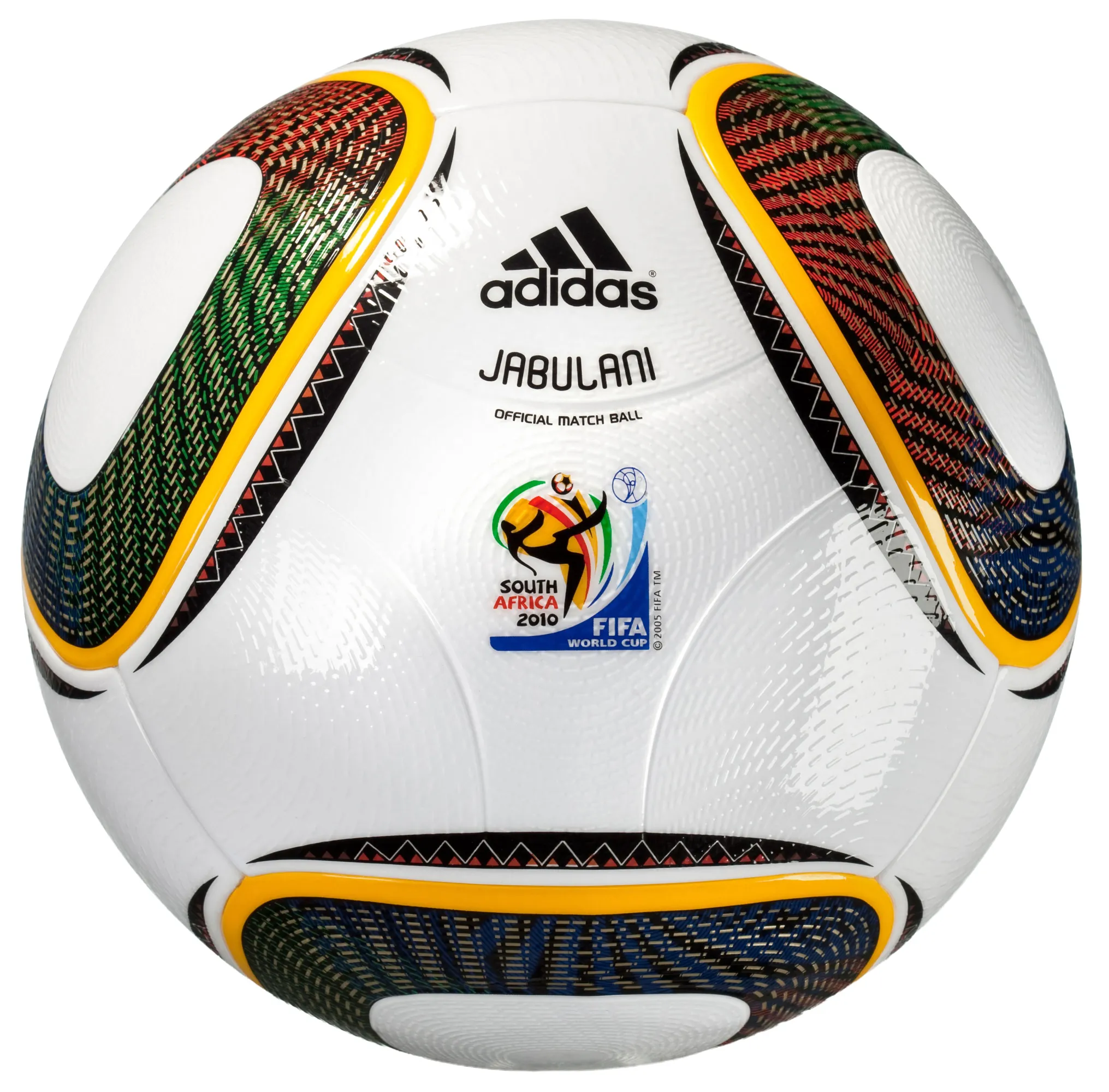
The 2010 World Cup ball, the Jabulani, became the cautionary tale that defined subsequent design thinking. Despite its avant-garde eight-panel construction, it was too smooth. At high speeds its drag was low — fine — but once it crossed the threshold, drag spiked dramatically. Goalkeepers famously described it as dipping ‘wickedly.’ The ball wasn’t misbehaving; it was just obeying the physics of a surface that couldn’t keep airflow turbulent long enough. The design was, aerodynamically speaking, a failure dressed up in attractive graphics.
From the Jabulani to the Trionda: 16 Years of Iteration
Adidas has been designing custom World Cup ball editions since the 1970s, and the visual evolution has been striking — the 1986 ball’s Aztec-temple graphics, the 1994 ball’s space-age theme commemorating the 25th anniversary of the moon landing. But structural changes were relatively modest for decades: the same 32-panel stitched design, incremental upgrades to foam cores and water resistance. The real engineering shift arrived in 2006 with the +Teamgeist, which introduced thermally bonded curved panels (just 14 of them) and better moisture resistance. It was around this time that Goff started tracking the balls systematically.
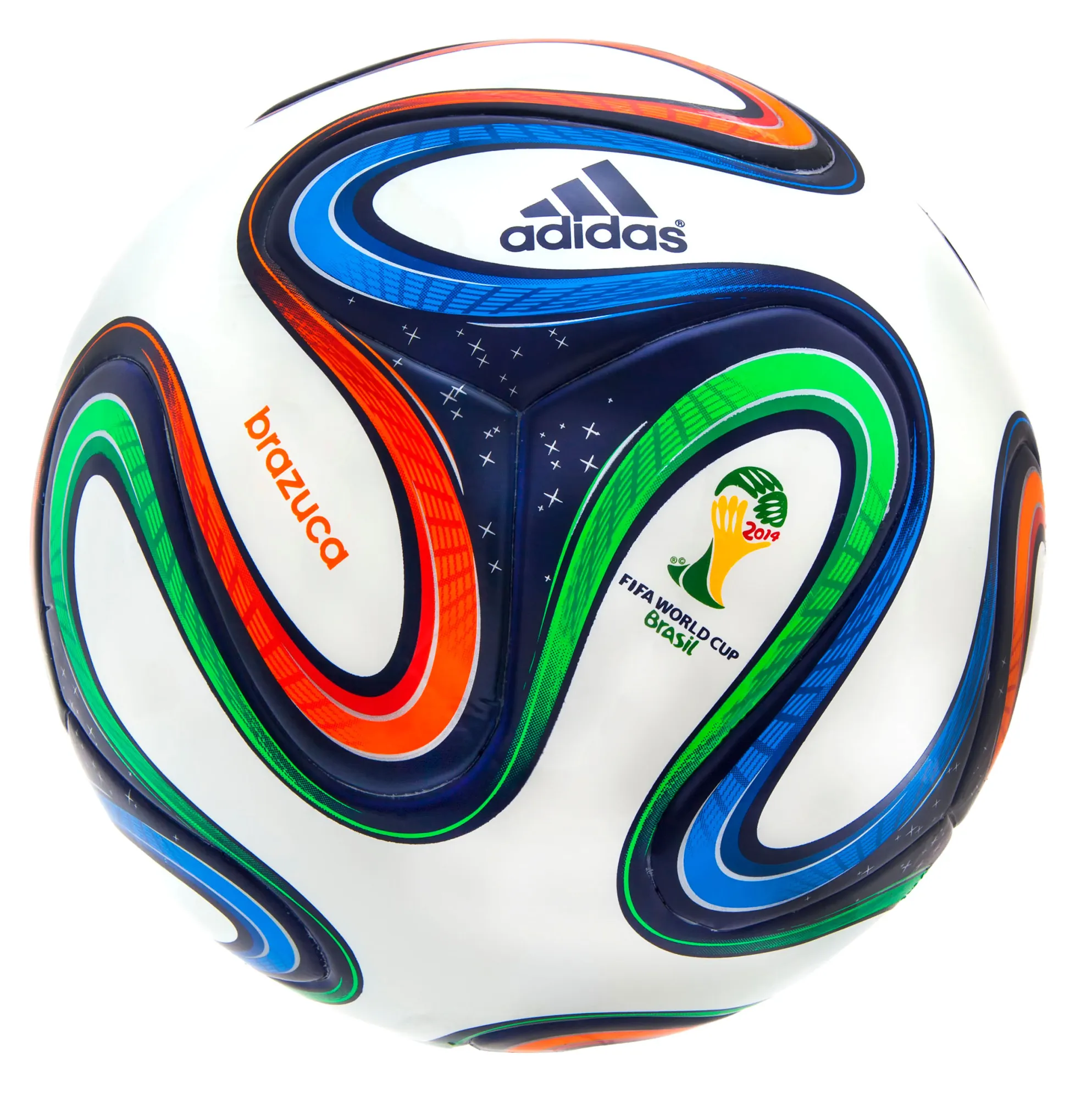
The 2014 Brazuca cut the panel count to six, but compensated by dramatically increasing total seam length — more linear roughness across the surface. It was generally well received, with players finding it more trustworthy than the Jabulani. The progression has been toward fewer panels, more deliberate texture engineering, and a better-managed drag crisis. NASA’s own aerodynamics research on sports balls aligns with these findings — surface roughness is one of the most reliable tools available for controlling turbulent boundary layer behaviour.
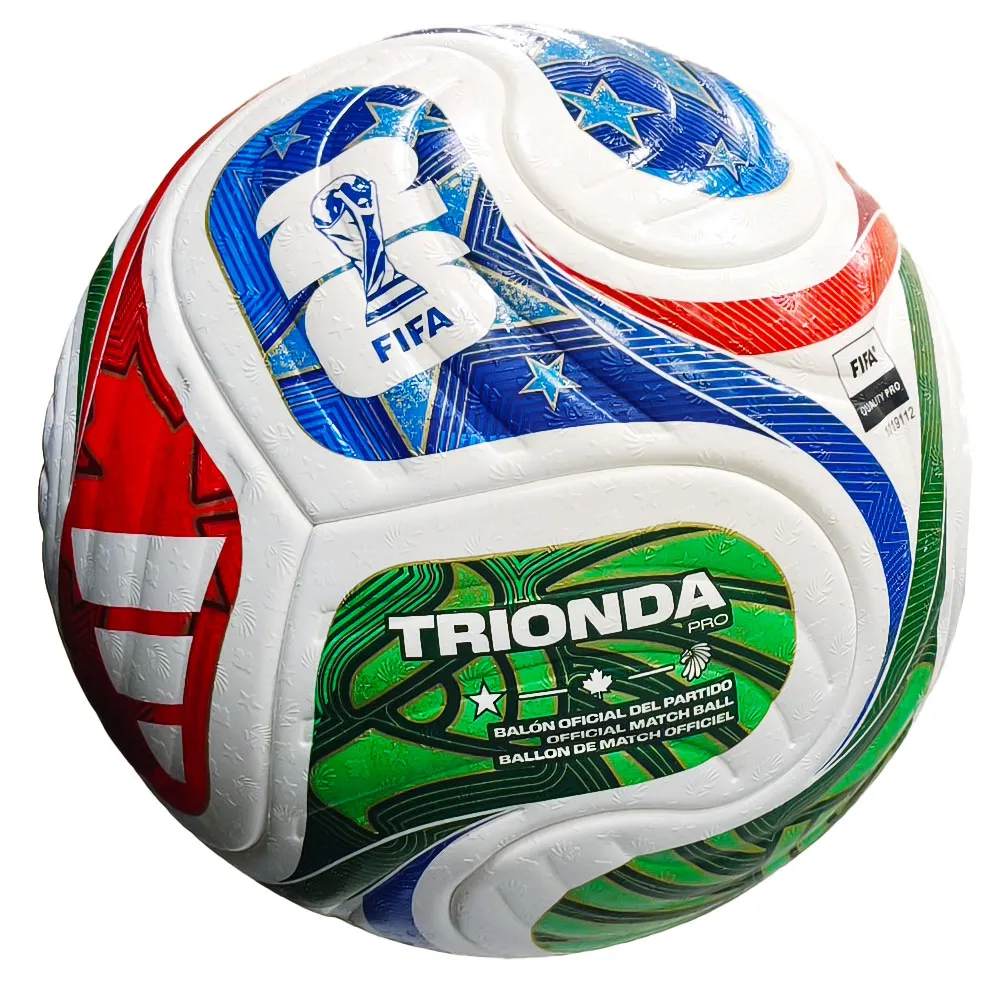
The Trionda takes the panel count down to just four — a significant structural simplification — but each panel carries three deep grooves designed to compensate with additional texture. According to Goff’s simulations, that approach works: the Trionda experiences the drag crisis at the slowest ball speed recorded since the Jabulani era. That’s genuinely good news for predictability during mid-range play. The problem is the other side of the trade-off.
The Trade-Off: Predictability Versus Raw Distance
More surface roughness delays the drag crisis — but it also means higher drag at high speeds. The World Cup ball in 2026 will hit air resistance harder right from the moment it leaves a player’s boot. According to Goff’s analysis, that elevated drag coefficient at fast speeds means long-range shots and clearances will slow down faster during the initial, fastest phase of flight. The practical result: trajectories that might fall a few metres short compared to what players achieved with previous tournament balls.
A few metres might not sound significant. In open play, it probably isn’t. But at set pieces, or in those moments where a goalkeeper is deciding whether to punch or claim a 50-metre punt, the difference could matter. The World Cup ball is always a variable that elite players have to recalibrate around, and this year the recalibration is specific: trust the ball’s predictability, but don’t expect it to carry quite as deep.
What Players and Teams Should Expect
The good news is that the adjustment window hasn’t been zero. Squads have reportedly had access to the Trionda for several months ahead of the tournament, giving technical staff and players time to work out how it behaves during training. That’s meaningfully different from situations where design changes land close to tournament day — though whether training reps in club environments fully replicate the pressure of a World Cup knockout game is another matter entirely.
Adidas didn’t respond to requests for comment on the research findings, which isn’t unusual for a company that tends to let its product speak for itself. What’s telling is that Takeshi Asai, the University of Tsukuba professor who runs the physical experiments, emphasises consistency across the 20-year research programme precisely because the comparative data is where the real story lives. Each World Cup ball is tested under identical conditions so that differences between years are attributable to design, not methodology. That kind of rigour makes Goff and Asai’s findings more credible than manufacturer claims alone.
The broader implication is something the football world has been slow to fully acknowledge: the ball itself is a performance variable, not just a branding exercise. Every four years, the World Cup ball subtly reshapes what’s possible on the pitch — which players thrive, which tactics work, which long shots are worth attempting. The Trionda won’t be remembered as the chaos agent the Jabulani was, and that’s probably the best outcome Adidas could have hoped for. Whether a slightly shorter carry distance ultimately changes anything visible at tournament level is the kind of question that only 64 matches across three countries can answer.
Frequently Asked Questions
Why might the 2026 World Cup ball not travel as far as previous balls?
The Adidas Trionda has a higher drag coefficient at high speeds compared to recent World Cup balls. That means it slows down faster during the early, faster phase of its flight, which can shorten long-distance kicks by a few metres, according to sports physics researcher John Eric Goff.
What is the drag crisis and how does it affect a soccer ball in flight?
The drag crisis is a sudden spike in a ball’s drag coefficient once it drops below a certain speed. Smoother balls hit this transition at higher speeds, making them unpredictable. Surface texture — grooves, seams, dimples — pushes the transition to lower speeds, letting the ball travel farther and more predictably.
How is the Trionda World Cup ball different in design from previous Adidas balls?
The Trionda uses just four panels, each fitted with three deep grooves for added surface roughness. That’s down from six panels on the 2014 Brazuca and eight on the 2010 Jabulani. The source does not indicate that the Trionda’s panels are thermally bonded rather than stitched.
Which players will most notice the difference with the new World Cup ball?
According to researcher John Eric Goff, goalkeepers, defenders hitting long passes, and long-range shooters are most likely to notice the Trionda’s slightly shorter range. Players who rely on clean technique and controlled flight should actually find the new ball more consistent than some earlier designs.