


The Ethereum price hit $1,540 on Friday — its lowest level in 13 months — as a cascade of bad news collided at once: Bitcoin sliding below $60,000 for the first time in months, a freshly uncovered vulnerability in the Zcash protocol, and the lingering trauma of nearly $1.3 billion in forced liquidations across the ETH derivatives market. It’s the kind of multi-front breakdown that doesn’t resolve quickly.
- The Ethereum price dropped to $1,540, its lowest point in 13 months, as Bitcoin fell below $60,000.
- A critical Zcash bug discovered by Anthropic’s AI model triggered fear of contagion, hammering the Ethereum price further.
- Over $1.28 billion in leveraged ETH long positions were liquidated in five days, crushing any hope of a relief bounce.
- Only 30% of ETH supply is currently in profit — a historically rare signal that has preceded major rallies in the past.
Table of Contents
How the Ethereum Price Got Here
Pulling apart what’s driving this sell-off, you can’t point to a single trigger. Bitcoin’s drop below $60,000 was enough to sour the broader market, but the Ethereum price took a disproportionate hit — and that gap tells you something. ETH was already trading 67% below its all-time high from August 2025 before Friday’s move, meaning bulls had been losing ground for months before this week accelerated the decline.
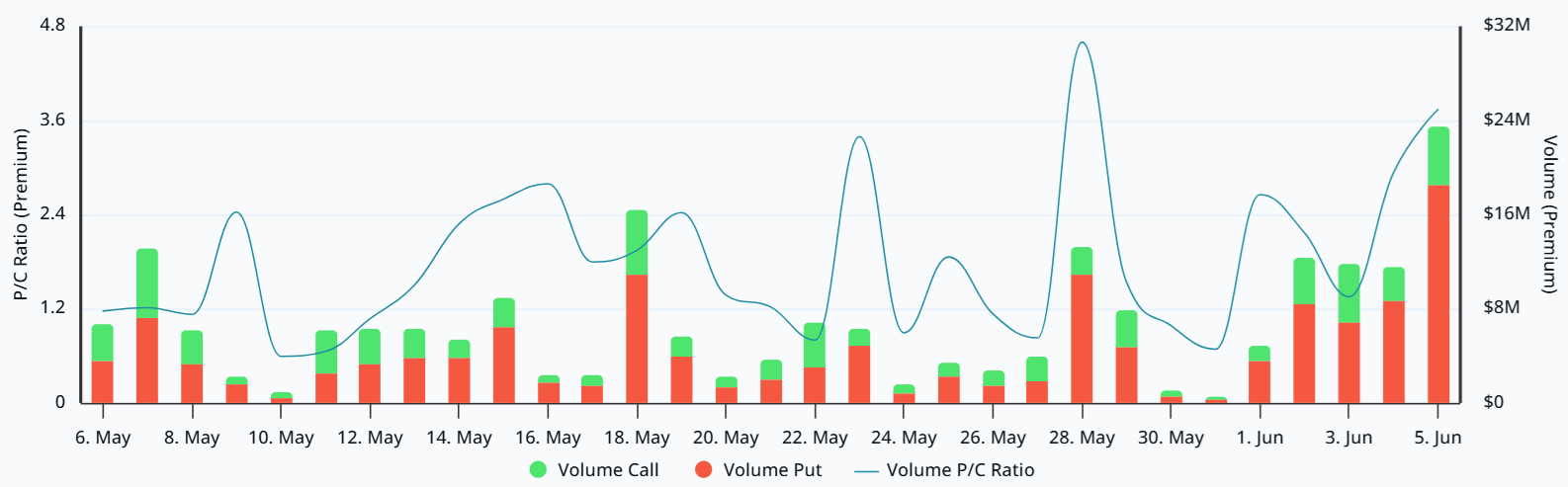
What made Friday particularly brutal was the derivatives picture. According to data from Laevitas, the ETH perpetual futures annualized funding rate flipped negative — a direct signal that the market’s directional bias has structurally shifted bearish, with increased demand for short positions. That’s not noise; that’s the crowd placing an active bet that prices fall further.

Over the same five-day window, $1.28 billion in leveraged long positions were liquidated. That number is significant not just for its size, but for what it does to market structure. Mass liquidations wipe out the buyers who would typically step in to provide a floor. With them gone, the Ethereum price lost its natural support layer — and bears have been happy to fill the vacuum.
The Zcash Bug That Spooked the Entire DeFi Market
The most unusual element of this crash is where part of the fear is coming from: a blockchain most people rarely think about. On May 29, a critical vulnerability was discovered in Zcash’s largest zero-knowledge shielded pool — one that, if exploited, would allow unlimited ZEC minting. The bug had been sitting undetected in the codebase since 2022. What found it wasn’t a human security researcher. It was Anthropic’s Opus 4.8 AI model.
That detail matters enormously. The crypto security community has long assumed that obscure or complex codebases could hide vulnerabilities for years — but the assumption was that those bugs would eventually be caught by skilled human auditors working methodically through the code. What the Zcash discovery demonstrates is that AI can surface three-year-old critical flaws faster than any human audit team. That’s useful. It’s also terrifying if you’re sitting on a DeFi position and wondering what else is out there waiting to be found.
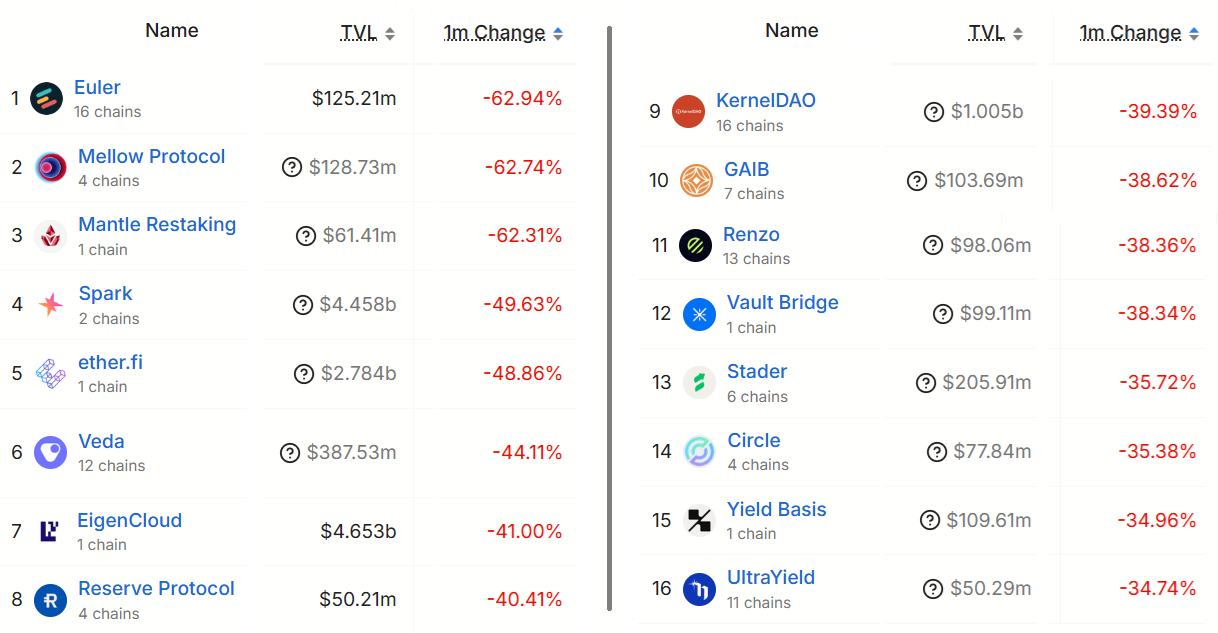
Ethereum’s Total Value Locked dropped to its lowest level since February 2024 in the wake of the Zcash news, according to DefiLlama data. The selldown wasn’t uniform — it was concentrated in protocols with complex smart contract architectures. Spark saw TVL fall 50%, Ether.fi dropped 49%, EigenCloud declined 41%, and KernelDAO shed 39%. These aren’t small projects. They represent significant slices of Ethereum’s DeFi ecosystem, and their simultaneous contraction signals genuine loss of confidence rather than routine profit-taking.
Ethereum Price Pressure from the April Hack Wave
The Zcash bug didn’t land in a vacuum. It arrived on top of a month in which DeFi hacks totalled $630 million across 25 protocols — a figure that would be alarming in isolation but becomes deeply unsettling when you consider where it concentrated. KelpDAO lost $293 million in a single exploit. Drift Protocol was hit for $280 million. Together, those two incidents accounted for 82% of April’s losses, spanning Ethereum, Solana, Base, BNB Chain, Sui, and PulseChain.
For retail and institutional participants alike, that track record is hard to look past. DeFi’s value proposition depends on smart contract security. When two exploits can account for $573 million in losses in a single month, and then an AI model reveals a years-old critical bug in a major zero-knowledge protocol, the rational response — at least in the short term — is to reduce exposure. That’s exactly what on-chain data shows is happening.
What the On-Chain Data Actually Says About Ethereum Price Recovery
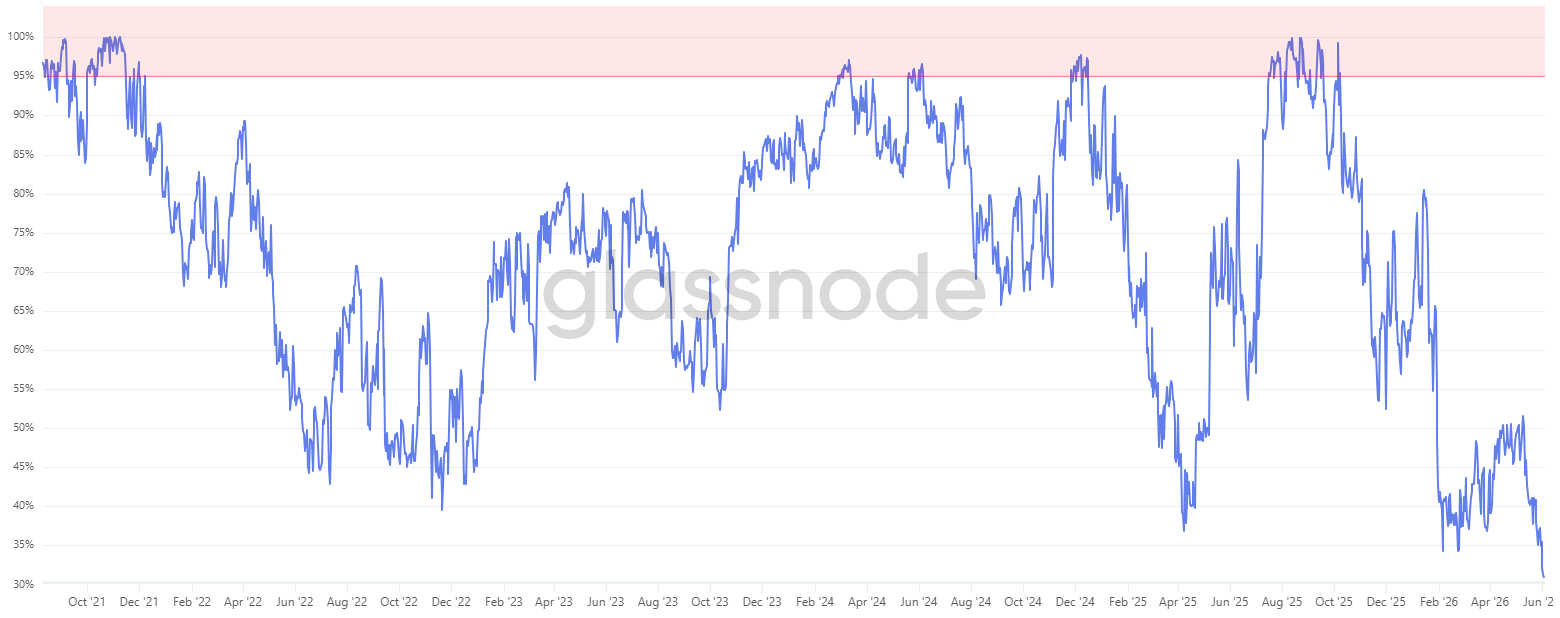
Here’s where the picture gets genuinely interesting, and why writing off ETH entirely may be premature. Glassnode’s profitability metric currently shows that only 30% of ETH supply is in profit relative to when those coins last moved. That’s an exceptionally low reading historically. The last time this setup appeared was during the COVID-induced crash of mid-March 2020. Before that, it showed up in December 2019 — and in both cases, a substantial recovery followed. The December 2019 signal preceded a 118% rally within 60 days.
That said, historical patterns are not guarantees, and the circumstances here are different in important ways. The March 2020 crash was driven by macro panic that resolved relatively quickly once the Federal Reserve intervened. This sell-off is being driven by structural confidence problems in DeFi security — problems that won’t be fixed by a central bank announcement or a single positive macro print.
Meanwhile, there’s a specific institutional variable worth watching. Bitmine (ticker: BMNR US), the largest Ethereum treasury company, is sitting on an unrealized loss of $10.5 billion. The firm holds 4.5% of the entire ETH supply. That’s a position so large that its management decisions — whether to hold, hedge, or reduce exposure — could meaningfully move the Ethereum price in either direction. There’s no indication yet of forced selling from Bitmine, but the scale of that unrealized loss creates pressure that doesn’t disappear.
The Broader Shift: AI as a Security Threat Multiplier
Zoom out and there’s a longer-term question embedded in this week’s events. Anthropic’s AI model finding a three-year-old critical Zcash bug is a proof of concept — one that every security team across DeFi, and frankly across software broadly, now has to take seriously. The same capability that found this vulnerability can be pointed at any protocol. For legitimate security researchers, that’s a powerful new tool. For attackers, it potentially compresses the timeline between zero-day discovery and exploitation to days or hours.
The crypto industry has already been operating under the assumption that its security model is adversarial. But the previous adversarial model assumed human attackers working through known attack surfaces. An AI-assisted attacker — or, more optimistically, an AI-assisted defender racing to patch before an attacker finds the same flaw — changes the dynamics of that contest in ways the industry hasn’t fully priced in yet.
The Ethereum price may stabilise or even recover as on-chain signals suggest. But the harder reset happening in parallel — a fundamental reassessment of how secure DeFi smart contracts actually are in an era of AI-powered vulnerability discovery — won’t be resolved by a funding rate flip or a Bitcoin bounce above $60,000. That reckoning is just getting started.
Frequently Asked Questions
Why is the Ethereum price falling so sharply right now?
The Ethereum price is being hit by a combination of factors: Bitcoin dropping below $60,000, a critical bug found in the Zcash protocol that spooked DeFi investors, $1.28 billion in long liquidations over five days, and collapsing Total Value Locked across major Ethereum DApps.
What is the Zcash bug and why does it matter to Ethereum?
An AI model from Anthropic discovered a vulnerability in Zcash’s largest zero-knowledge pool allowing unlimited ZEC minting. The bug had gone undetected since 2022. Investors fear similar hidden flaws exist in Ethereum smart contracts, prompting a rapid withdrawal of capital from DeFi protocols.
How bad were the DeFi hacks in April 2025?
Cryptocurrency hacks totalled $630 million in April 2025 across 25 protocols and six networks. KelpDAO lost $293 million and Drift Protocol suffered a $280 million exploit, together accounting for 82% of monthly losses and significantly eroding confidence in DeFi security.
Could the Ethereum price recover from these levels?
Historical on-chain data from Glassnode shows that only 30% of ETH supply is currently profitable relative to last movement — a setup seen during the March 2020 COVID crash, which preceded a 118% rally within 60 days. However, current derivatives metrics remain heavily bearish with no clear catalyst for recovery yet.

