

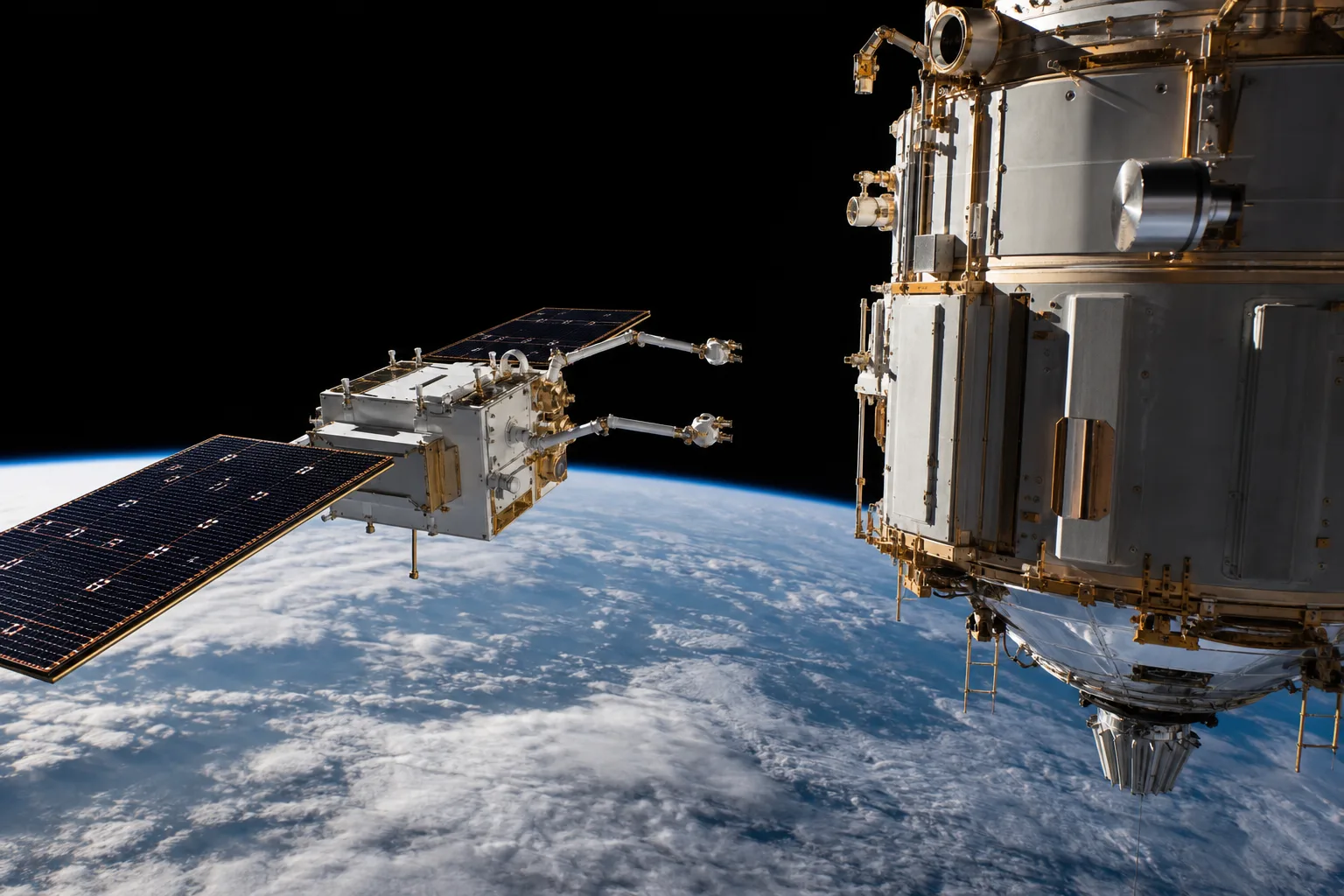
NASA‘s Neil Gehrels Swift Observatory has spent two decades as one of the most versatile telescopes in the agency’s fleet — scanning the sky for gamma-ray bursts, tracking cosmic explosions, and rapidly alerting ground-based observatories when something interesting flares up. Now, the Swift boost mission is its best shot at surviving long enough to keep doing exactly that. Scheduled for launch no earlier than June 30 at 6:23 a.m. EDT, a robotic satellite called LINK will blast into low Earth orbit aboard a Northrop Grumman Pegasus XL rocket, with the sole job of grabbing Swift and hauling it back to a safe altitude before it falls out of the sky.
- The Swift boost mission launches June 30 from Kwajalein Atoll, aiming to raise NASA’s observatory before it re-enters Earth’s atmosphere.
- The Swift boost mission uses Katalyst Space’s LINK robot — designed, built, and tested in under a year — to grab and reposition the telescope.
- Increased solar activity accelerated Swift’s orbital decay, forcing engineers at Penn State to reorient the spacecraft to reduce atmospheric drag.
- If successful, the Swift boost mission could set a commercial blueprint for servicing satellites that were never originally designed for on-orbit maintenance.
Table of Contents
Why the Swift Boost Mission Matters Right Now
Swift launched in November 2004, which means it’s approaching its 21st year in space. That’s an impressive run for any spacecraft, but the clock has started ticking faster than expected. The culprit is the sun. A recent spike in solar activity heated Earth’s upper atmosphere, causing it to expand and increase drag on spacecraft in low Earth orbit. Swift, which has no propulsion system of its own to counteract this effect, started losing altitude at an accelerated rate. By the end of last year, orbital predictions showed the observatory potentially dipping below the critical 185-mile threshold as early as July — at which point re-entry becomes unavoidable within a fairly short window. The Swift boost mission exists precisely because that window is closing.
The operations team at Penn State’s Eberly College of Science moved quickly to buy time. Rather than pointing Swift at the most scientifically valuable targets, they started selecting observation positions that would orient the spacecraft in the most aerodynamically streamlined way possible — essentially, reducing its cross-sectional area against the thin but real drag of the upper atmosphere. They also cut power consumption to reposition Swift’s large solar panels into a more favourable orientation. It’s a clever workaround, and it’s worked well enough to push the critical altitude deadline from July to sometime this fall — which is just enough runway for the Swift boost mission to get there first.
Meet LINK: The Robot With a Very Specific Job
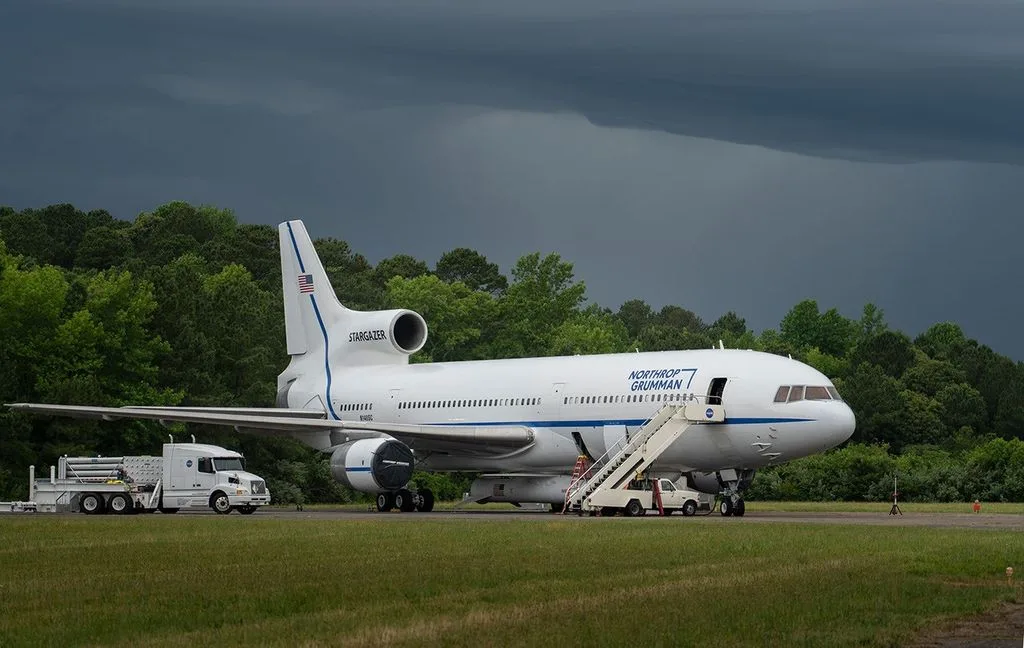
The spacecraft doing the heavy lifting here is LINK, built by Katalyst Space, a Colorado-based company headquartered in Broomfield. LINK is not a large spacecraft — it weighs about 880 pounds and stands roughly five feet tall, making it about a third of Swift’s overall size. But it’s purpose-built for this task. Nearly 20 feet of solar panels power three ion thrusters and a trio of robotic arms designed to grab onto Swift’s exterior, something the observatory was decidedly not designed to accommodate.
‘Swift wasn’t designed to be serviced,’ said Ghonhee Lee, CEO of Katalyst. ‘By demonstrating we can quickly and cost-effectively extend its lifetime, we’re creating a blueprint for servicing spacecraft that were never designed for on-orbit maintenance.’ The Swift boost mission is the first real-world test of that blueprint.
That’s the part of this story that extends well beyond Swift itself. The vast majority of the satellites currently in orbit were designed with a fixed lifespan and no expectation of being visited, upgraded, or repositioned once they were up there. The economics of space have historically made servicing impractical. But that calculus is changing. Companies like Northrop Grumman’s SpaceLogistics division have already demonstrated satellite life-extension through their Mission Extension Vehicles, which have docked with commercial geostationary satellites. NASA’s Swift mission page frames the LINK demonstration as part of a broader U.S. commercial servicing industry push — and if it works, LINK’s design could inform how future servicing missions are scoped and built.
A Timeline Built on Urgency
What makes the Swift boost mission particularly striking is how fast it came together. NASA awarded the contract to Katalyst in September 2024. That gave the company less than a year to design, build, test, and launch a spacecraft capable of rendezvous, grapple, and orbital transfer operations — the kind of mission profile that would typically take several years to develop under traditional procurement timelines.
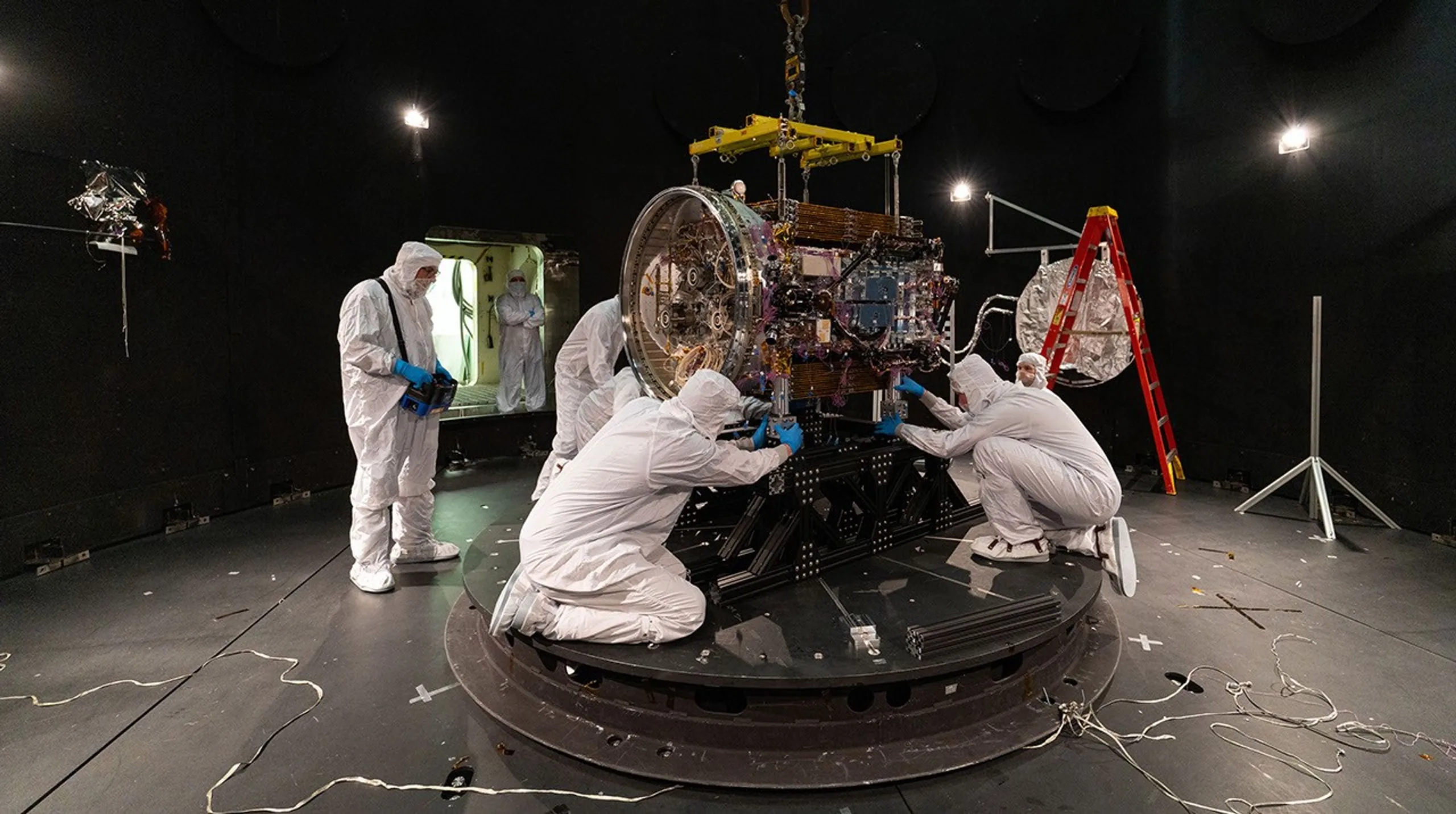
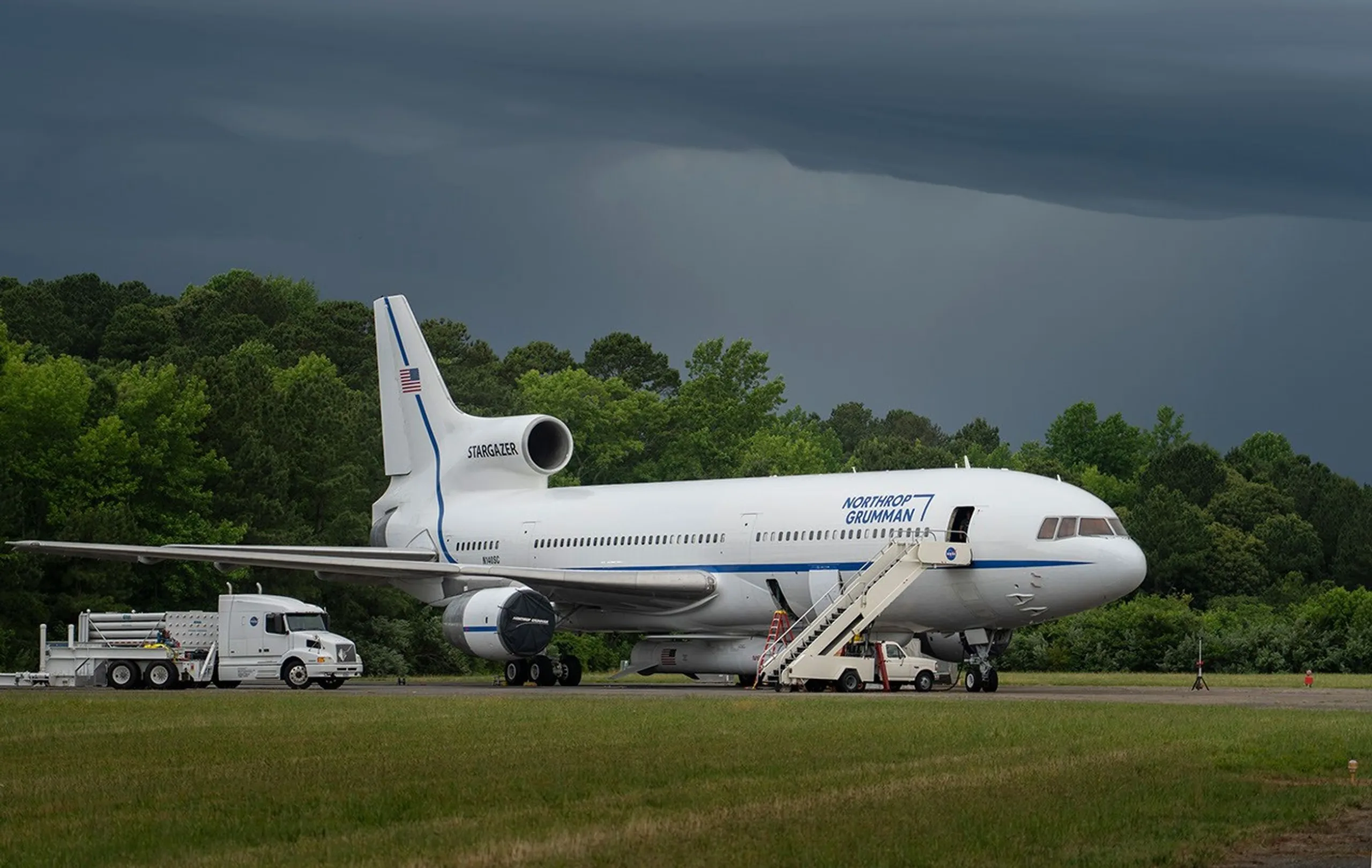
LINK completed environmental testing at NASA’s Goddard Space Flight Center this spring, running through simulated launch loads and space-like conditions to verify it could survive the trip and operate reliably in orbit. Additional preflight checks followed at Katalyst’s Broomfield facility. Earlier this month, engineers loaded LINK into the Pegasus XL fairing and attached the rocket to the Stargazer — Northrop Grumman’s modified L-1011 carrier aircraft — at NASA’s Wallops Flight Facility in Virginia. On June 18, the aircraft and its payload departed for Kwajalein Atoll in the Republic of the Marshall Islands, where it now sits waiting for the Swift boost mission launch window to open.
The Pegasus XL’s air-launch capability is genuinely well-suited to this mission. ‘We can deploy Pegasus from almost anywhere in the world using our Stargazer,’ said Wes Collier, vice president of launch systems at Northrop Grumman. ‘That combination of flexibility and responsive access to space will help LINK quickly reach Swift, giving the teams time to complete the boost.’ Launching from an equatorial region like the Marshall Islands also helps LINK reach the orbital inclination it needs to match Swift’s path around Earth.
What Happens After Launch
Getting LINK into orbit is only the beginning. After separation from the Pegasus upper stage, the spacecraft will spend several weeks in commissioning — Katalyst engineers will methodically check out its propulsion, navigation, and sensor systems before allowing it anywhere near the telescope. Once the spacecraft is cleared, LINK will slowly approach Swift, survey it in detail, and then use its robotic arms to grapple the observatory. From there, it will gradually raise Swift’s orbit to nearly 370 miles, close to where the telescope operated when it first launched back in 2004. That final orbital transfer is the moment the Swift boost mission will be judged on.
That process will take several months. Ion thrusters are efficient but not fast — they produce thrust measured in millinewtons, not kilonewtons. The tradeoff is fuel efficiency: ion propulsion can achieve significant velocity changes using far less propellant than chemical rockets, which is part of why LINK could be built small enough to fit on a Pegasus XL in the first place.
S. Bradley Cenko, Swift’s principal investigator at NASA Goddard, is clearly eager to get the observatory back to normal science operations. ‘Swift is NASA’s multitool when it comes to studying the cosmos,’ he said. ‘It observes the sky using a wide range of light and rapidly points at short-lived outbursts, alerting other facilities in space and on the ground to help coordinate follow-up observations. For the last two decades, Swift has been a key player in NASA’s efforts to understand how the universe works, and we’re looking forward to getting back to that work after the Swift boost mission is complete.’

A Swift Boost Mission With Implications Beyond Swift
Shawn Domagal-Goldman, division director of Astrophysics at NASA Headquarters, called this a ‘high-risk, high-reward mission’ — and that framing is honest. LINK has to perform a set of operations that haven’t been done in quite this way before: autonomous rendezvous and grapple of a non-cooperative target (Swift has no docking port, no grapple fixture, and no active cooperation with LINK’s approach), followed by sustained orbital transfer using ion propulsion. Any one of those steps carries real technical risk.
But the potential upside is substantial. If the Swift boost mission succeeds, it validates a fast, commercial approach to satellite life extension that could reshape how agencies and operators think about aging assets. Rather than writing off a spacecraft the moment its orbit degrades or a component starts to fail, the option to service it — quickly, affordably, commercially — becomes real. Domagal-Goldman put the economics plainly: attempting the boost ‘is more affordable than trying to replace Swift’s capabilities and allows NASA to advance the nation’s satellite servicing industry, for the benefit of all.’
Lee’s vision for where this leads is ambitious. ‘If we’re going to build an enduring presence beyond Earth,’ he said, ‘we need the capability to manipulate our environment in space. That means deploying robotic spacecraft that can reposition, repair, refuel, and refit satellites after launch.’ That’s a long-term bet, but June 30 is when the Swift boost mission plays its first hand.
Frequently Asked Questions
What is the Swift boost mission trying to achieve?
The Swift boost mission aims to use a robotic spacecraft called LINK to grab NASA’s Neil Gehrels Swift Observatory and raise its orbit from a dangerously low altitude back to nearly 370 miles, preventing it from re-entering and burning up in Earth’s atmosphere.
Why is Swift’s orbit decaying in the first place?
All spacecraft in low Earth orbit experience atmospheric drag, which gradually lowers their altitude. A recent period of heightened solar activity amplified this effect on Swift, accelerating its descent and threatening to push it below a safe operating altitude as early as July.
Who built the LINK satellite and how quickly was it made?
LINK was built by Katalyst Space, a Colorado-based company. After NASA awarded the contract in September, Katalyst had less than a year to design, build, test, and launch the spacecraft — an unusually compressed timeline for a mission of this technical complexity.
How does the Pegasus XL rocket launch LINK into orbit?
The Pegasus XL is an air-launched rocket carried beneath a modified L-1011 aircraft called Stargazer. The plane flies to altitude, then releases the rocket, which ignites and carries its payload to orbit. This approach offers flexibility to launch from almost anywhere in the world.

