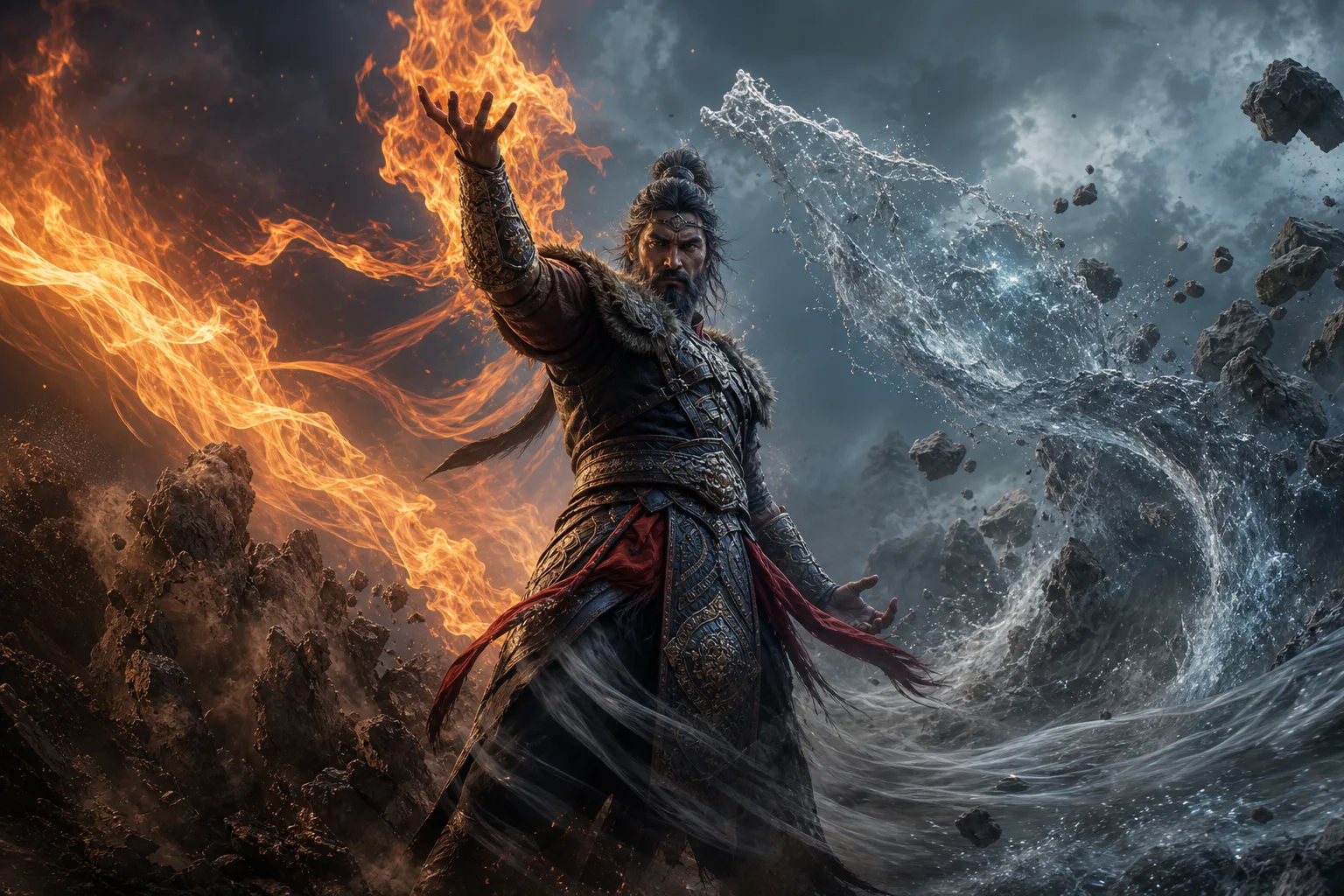
- Paramount’s Avatar game cancelled — the Last Airbender action-RPG from Saber Interactive has been quietly axed after its 2024 announcement.
- The Avatar game cancelled was set thousands of years before the show, featuring an original elemental master in a title codenamed Ice Wars.
- Paramount Games Studio was restructured after the Skydance merger, triggering a review that ended with the project being dropped.
- The only active major project at PGS is PlatinumGames’ Ninja Turtles: The Last Ronin, which predates the merger.
Table of Contents
Paramount’s Avatar Game Cancelled While No One Was Looking
On a Friday evening — always a red flag for bad corporate news — Paramount quietly confirmed that its Avatar game cancelled plans are now official. The title in question was a Last Airbender action-RPG being developed by Saber Interactive, the studio that shipped the critically well-received Warhammer 40,000: Space Marine II last year. The project, reportedly codenamed Ice Wars, had been announced in 2024 and generated real excitement among fans of the franchise. Now it’s gone, and the timing of the announcement — buried under the noise of Summer Game Fest — tells you everything about how confident Paramount was in delivering this news.
According to IGN, Ice Wars was shaping up to be something genuinely interesting on paper. Set thousands of years before the events of the animated series, the game would have followed a previously unseen master of all four elements. That’s a smart creative angle — it sidesteps the baggage of recasting beloved characters and gives writers genuine room to build a world. For Saber, it would have added real prestige to a growing portfolio of IP-based games that now includes John Wick and Clive Barker’s Hellraiser adaptations. That’s a mixed bag, sure, but Space Marine II proved Saber can execute when the conditions are right. Seeing the Avatar game cancelled at this stage is a genuine loss for a studio that had something to prove with a flagship narrative title.
What Paramount Games Studio Actually Is — and Why It Matters
To understand why the Avatar game cancelled announcement happened at all, you need a quick primer on what Paramount Games Studio even is. PGS was formed to consolidate Paramount and Skydance’s video game teams into a single, accountable unit after the two companies completed their merger. Before that, according to PGS creative head Shawn Kittelsen speaking to IGN, games were effectively a sub-department inside the organisation — not exactly a recipe for bold creative investment or long-term planning.
That structural context is important. When PGS was set up and its leadership took stock of what was actually in production, Ice Wars wasn’t on the list. It had been announced but hadn’t moved into active development. From a cold business perspective, that makes it an easy cut — no sunk costs, no team to reassign, no milestone payments to untangle. Kittelsen put it plainly: ‘We’re accountable for driving revenue and building games.’ That’s the language of a newly empowered unit trying to prove its worth internally, and projects without momentum become liabilities fast. The Avatar game cancelled decision fits that pattern precisely — a pre-production title with no internal champion in the new structure.
It’s a familiar story in the games industry. Mergers and restructurings almost always produce a triage moment, where every project gets graded against a new set of priorities. EA’s acquisition of studios, Microsoft’s post-Activision consolidation, and Warner Bros.’ recurring habit of cancelling near-finished games all follow the same basic logic: new leadership wants its own wins, not someone else’s promises.
The Only Survivor: Ninja Turtles and the One-Project Pipeline
So what does Paramount’s games operation actually look like right now? Thin. The only confirmed major project is PlatinumGames’ Ninja Turtles: The Last Ronin, which was already being developed by Black Forest Games before the Paramount-Skydance merger concluded. Kittelsen made clear that PGS is committed to seeing that one through — but it’s hard to miss the fact that it was essentially inherited, not greenlit by the new team.
There’s also a separate Avatar fighting game still pencilled in for July, which is a very different beast from the action-RPG Ice Wars would have been. Fighting games built on existing IP can work — Nickelodeon All-Star Brawl proved there’s an audience, even if the first entry had a rocky launch. But a fighting game and a narrative action-RPG serve entirely different creative and commercial purposes, and Paramount’s willingness to call that an adequate substitute for Ice Wars is telling. Fans who were excited about the Avatar game cancelled RPG are not the same audience a platform fighter is built to serve.
Paramount Has Never Quite Figured Out Avatar
With the Avatar game cancelled, it’s worth stepping back to look at Paramount’s broader relationship with the Last Airbender franchise. It hasn’t been great. The M. Night Shyamalan live-action film from 2010 remains one of the most derided adaptations in modern pop culture memory. The Netflix live-action series has been better received, but it’s a Netflix production — Paramount’s creative fingerprints aren’t really on it. And in gaming, the franchise has never had a genuine marquee moment.
That’s a striking failure considering what Avatar is. The animated series is widely regarded as some of the best world-building and character writing in the history of Western animation. The elemental combat system alone is tailor-made for games — fluid, visual, and mechanically distinct. If anything, Avatar should be one of the easiest IP properties to translate into a compelling game. The fact that it hasn’t happened yet isn’t bad luck; it’s a sustained failure of strategic commitment from whoever holds the rights at any given moment. Each Avatar game cancelled or quietly shelved over the years has reinforced the same pattern.
Kittelsen offered a cautiously optimistic note, saying a triple-A Avatar game ‘might come in a different iteration.’ That’s not a plan. That’s a PR cushion — the kind of vague forward-looking statement designed to keep fans from fully losing faith while the company figures out what it actually wants to do. If and when that different iteration materialises, it’ll be worth paying attention to how far along in production it is before anyone announces it publicly. Paramount has now demonstrated it’s willing to announce projects it hasn’t committed to building.
What This Signals for Paramount’s Broader IP Ambitions
Paramount is a company in transition. The Skydance merger reshaped its ownership structure, and the studio is clearly trying to position itself as a serious player across film, TV, and now games. Kittelsen’s framing of PGS as a revenue-accountable business unit — rather than a marketing appendage — is the right instinct. Studios that treat games as an afterthought consistently produce underwhelming results. The better model is what companies like Sony Interactive Entertainment or even the revamped Warner Bros. Games have attempted: treating game development as a genuine content pillar, not a licensing checkbox.
But intention and execution are very different things. Right now, Paramount’s games operation has one confirmed major project in the pipeline, a cancelled RPG, and a fighting game releasing in a few months. That’s not a portfolio — that’s a starting point. And if Paramount does succeed in expanding its IP holdings through further acquisitions or partnerships, the Avatar game cancelled situation suggests the company still hasn’t built the internal infrastructure to handle multiple simultaneous game projects with real ambition.
Avatar fans have learned to lower their expectations when Paramount is involved. The harder question is whether the studio’s new games unit can raise them again — and whether another promising project will quietly disappear on a Friday evening before it ever gets the chance to exist.
Frequently Asked Questions
Why was the Avatar game cancelled by Paramount?
Paramount Games Studio reviewed its portfolio after forming as a unified entity post-Skydance merger. The Avatar game wasn’t in active production at that point, so the newly accountable business unit decided to drop it rather than commit fresh resources to the project.
Who was developing the cancelled Avatar Last Airbender game?
Saber — the studio behind Space Marine II — was developing the game, internally dubbed Ice Wars. It was planned as an action-RPG set thousands of years in the past and would have focused on a previously unseen master of the four elements.
What Avatar projects are still in development at Paramount?
Paramount’s creative head Shawn Kittelsen indicated the only committed major project is PlatinumGames’ Ninja Turtles: The Last Ronin. A separate Avatar fighting game is still due out in July.
Could the Avatar Last Airbender game come back in some form?
Kittelsen left the door open, saying a triple-A Avatar game ‘might come in a different iteration,’ but offered no timeline or confirmed plan. For now, that’s little more than a holding statement.