

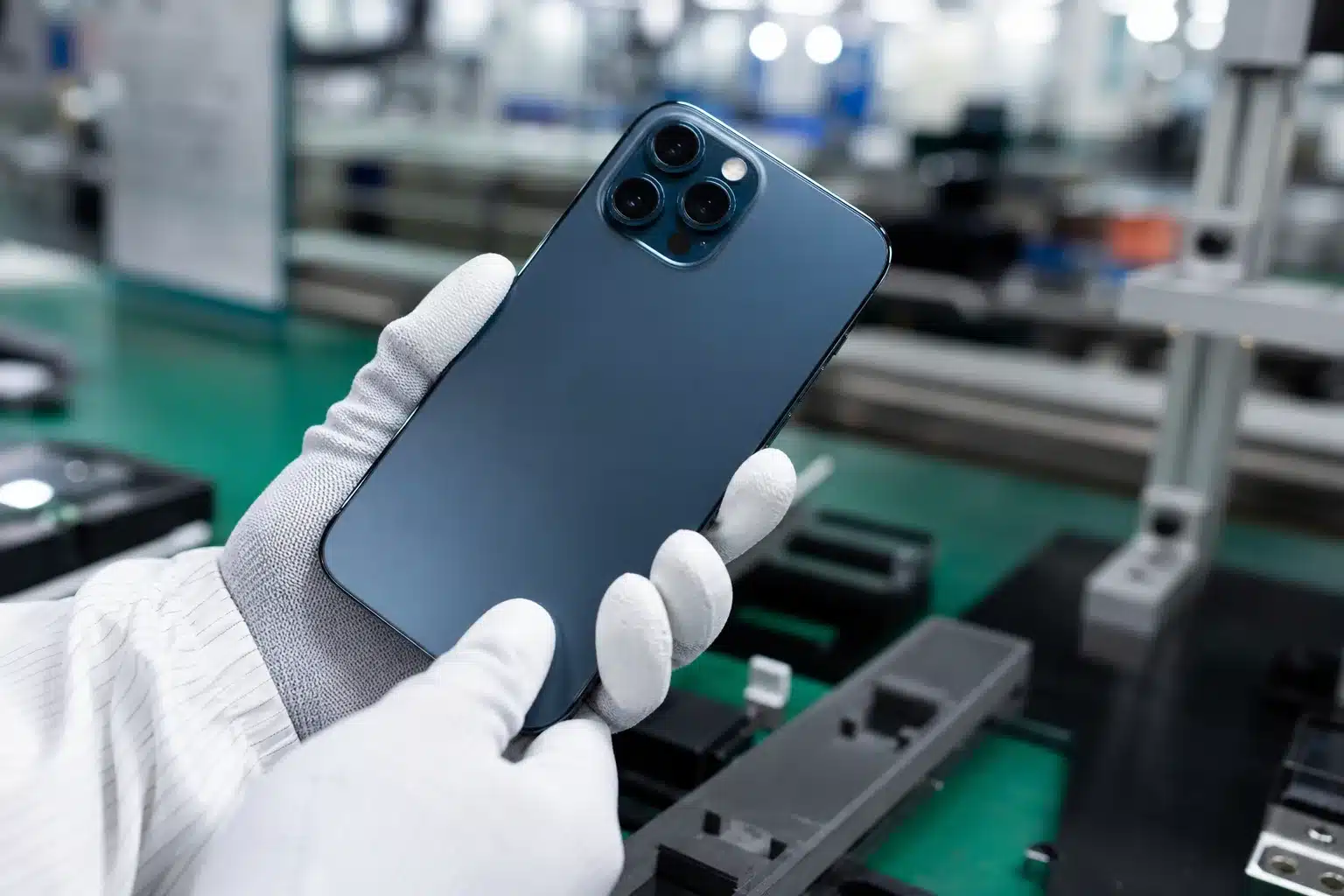
After one of the strongest product cycles in its history, iPhone 17 production is reportedly being dialled back. Supply chain sources say Apple has cut its output targets by around 15% — a notable shift for a lineup that spent the better part of nine months breaking records and outpacing almost every competitor on the planet.
- iPhone 17 production has reportedly been cut by 15%, according to a leaker citing Apple supply chain sources on Weibo.
- Despite the iPhone 17 production slowdown, Apple dominated Q1 2026 with 21% of global smartphone shipments — a first-ever record.
- Rival brands including Xiaomi, OPPO, and vivo are also slashing shipment targets by up to 30% amid broader market softening.
- The upcoming iPhone 18 lineup, including Apple’s first foldable iPhone, is widely expected to be driving the demand shift.
Table of Contents
What the Supply Chain Sources Are Actually Saying
The report originated from a leaker operating under the name ‘Fixed Focus Digital’ on Weibo, the Chinese social platform that has become a reliable conduit for Apple supply chain intelligence. The leaker claims the information comes from sources directly inside the supply chain, and the framing is notably blunt: the iPhone 17’s current demand outlook ‘won’t hold for long.’
More interesting than the Apple-specific figure is the broader context the leaker layered on top. According to the same posts, the iPhone 17 production pullback isn’t an Apple anomaly — it’s an industry-wide recalibration. Xiaomi has reportedly slashed its own shipment targets by somewhere between 20% and 30%. OPPO, vivo, and Honor are each reportedly cutting by a similar 15–30% range. In other words, almost every major global smartphone brand is staring down softening demand at the same time.
That context matters. When a single company trims production, it can signal a product-specific problem. When every major player does it simultaneously, you’re looking at a macro demand story — and one that Apple, for most of 2026, has been remarkably insulated from.
Nine Months of iPhone 17 Production Records That Deserve Context
To understand why a 15% production cut is significant, you have to appreciate just how extraordinary the iPhone 17 cycle has been. This wasn’t a modest bump from the previous generation — it was a sustained, broad-based surge that consistently surprised even Apple’s own forecasters.
When the lineup launched in September 2025, Apple moved quickly. Within days of release, it instructed at least two suppliers to increase daily iPhone 17 production output by a minimum of 30% — an unusually aggressive ramp triggered by a strong pre-order weekend. Counterpoint Research subsequently found the lineup outsold iPhone 16 models by 14% in its first 10 days across both the US and China.
The holiday quarter was the real headline moment. Apple CEO Tim Cook went on CNBC in January and described holiday iPhone demand as ‘simply staggering’ — a characterisation backed by the numbers. iPhone revenue hit $85.2 billion for the quarter, a new all-time high. That’s not a product cycle going well; that’s a product cycle going historically well.

The momentum carried into 2026. TrendForce reported in June that Apple’s iPhone 17 production surged 19.7% year-over-year in Q1 2026, even as the broader global smartphone market contracted 1.7% over the same period. Part of that was driven by the launch of the iPhone 17e alongside continued production momentum across the main iPhone 17 lineup. TrendForce also noted Apple was better placed than its rivals to absorb rising memory component costs without squeezing its margins — a structural advantage that has become increasingly important as component prices climb.
Counterpoint’s numbers told an equally striking story. The iPhone 17 was the single best-selling smartphone globally in Q1 2026, capturing 6% of worldwide unit sales. The iPhone 17 Pro Max and iPhone 17 Pro took second and third place respectively — meaning Apple held the top three spots in global smartphone sales simultaneously. And at the market level, Apple topped global smartphone shipments in a first quarter for the first time ever, landing 21% of global shipments and growing 9% year-over-year even as the overall market shrank 3%.
Why iPhone 17 Production Is Slowing Now
The simplest explanation here is also the most accurate one: product cycles end. The iPhone 17 lineup has been on sale for nearly a year. Most consumers who were planning to buy one have already bought one. That’s not a failure — that’s a successful product cycle reaching its natural conclusion. iPhone 17 production volumes naturally peak well before a lineup’s anniversary, and the current figures are no exception.
There’s also a forward-looking dynamic at play that’s impossible to ignore. The iPhone 18 Pro and iPhone 18 Pro Max are expected to land in September, and alongside them, Apple is widely expected to debut its first foldable iPhone. For anyone sitting on the fence about upgrading, that combination is a compelling reason to wait. Foldable devices tend to attract significant consumer curiosity regardless of price point, and Apple’s entry into that category — whenever it arrives — will be one of the most-watched product launches the company has staged in years.

That upstream pull on consumer attention almost certainly accelerates the natural demand slowdown for current-generation hardware. It’s the same pattern that plays out every year when credible iPhone 18 rumours start circulating — except this time, the foldable angle gives it extra weight.
What This Means for Apple and the Broader Market
A 15% iPhone 17 production cut sounds concerning in isolation, but it needs to be weighed against the baseline. Apple is trimming from historically elevated levels, not from a position of weakness. The company spent the first three quarters of the iPhone 17 cycle outperforming both its own guidance and nearly every analyst forecast. Pulling back production ahead of a new launch cycle isn’t a red flag — it’s basic inventory management.
The more telling signal is the industry-wide nature of the cuts. The global smartphone market has been under pressure for a while — contraction has been the norm rather than the exception across multiple quarters. Apple has been the outlier, posting growth while competitors struggled. The fact that even Apple is now trimming iPhone 17 production suggests that the macro headwinds affecting the broader market are finally catching up, at least at the margins.

For suppliers, the transition period between iPhone generations is always uncomfortable. A 15% reduction in Apple orders carries significant weight across a supply chain that has geared up to handle peak-cycle volumes. The companies that ramped capacity to meet Apple’s aggressive early iPhone 17 production targets — the ones asked to boost daily output by 30% back in late 2025 — now face the inverse challenge of managing excess capacity through the summer.
Longer term, the iPhone 18 launch will reset expectations again. If Apple’s foldable debut lives up to the speculation around it, the company could be looking at another strong demand cycle — potentially stronger than the one that’s now winding down. The question is whether the foldable form factor appeals beyond the early-adopter crowd, and at what price point Apple decides to position it. Those answers will define the next chapter of iPhone 17 production’s successor story.

