
- Luca Parmitano will pilot the Artemis III mission in 2027, becoming the first Italian to hold that role on an Artemis flight.
- The Artemis III mission will remain in Earth orbit, testing two lunar modules before any crewed lunar surface attempt.
- Parmitano is a veteran ESA astronaut with two previous ISS long-duration missions and extensive spacewalk experience.
- NASA’s Artemis program continues to push back timelines, making this 2027 test flight a critical milestone for the Moon effort.
Table of Contents
Artemis III Mission Gets a Pilot — and a European One at That
The Artemis III mission now has a face, and it belongs to Luca Parmitano — the Italian European Space Agency astronaut who’s been tapped to sit in the pilot seat for the 2027 flight. The mission won’t land on the Moon. Instead, it’s a near-Earth operation designed to put two lunar modules through their paces in orbit, collecting the kind of hard data NASA needs before it sends anyone to the lunar surface for real. That distinction matters, and it’s one that tends to get lost in the broader excitement around the Artemis program.

Parmitano brings serious credentials to the role. He’s completed two long-duration missions aboard the International Space Station — Volare in 2013 and Beyond in 2019. He’s also one of ESA’s most experienced spacewalkers, with extensive EVA experience to his name. The man knows how to keep his head when things go sideways, which is exactly the kind of temperament you want in a test pilot overseeing unproven hardware.
What the 2027 Test Flight Actually Involves
The Artemis III mission in 2027 isn’t the Moon landing mission many people assume when they hear the name. NASA has restructured the Artemis sequence significantly over the past few years, and what was once envisioned as the first crewed lunar landing has evolved into something more methodical. This flight will see Parmitano and his crewmates take the Orion spacecraft into near-Earth space and conduct a rigorous evaluation of two lunar modules. Think of it as a shakedown cruise, the kind of cautious step-by-step approach that the original Apollo program used with missions like Apollo 9, which tested the lunar module in Earth orbit before Apollo 10 took it to the Moon and Apollo 11 landed.
The two modules being tested are central to NASA’s plan for actually reaching the lunar surface on a future flight. One of them is SpaceX’s Starship Human Landing System, which has been contracted to ferry astronauts from lunar orbit down to the surface and back. Getting that hardware proven before committing a crew to a surface landing isn’t just prudent — it’s essential. The stakes are too high and the hardware too new to skip the rehearsal.
Why a European Pilot Is a Bigger Deal Than It Sounds
Having an ESA astronaut in the pilot seat on the Artemis III mission is a notable moment for European human spaceflight. ESA has been a key partner in Artemis from the start — the agency is building the service module for Orion, the cylindrical section that provides propulsion, power, and life support for the capsule. That contribution earned European astronauts seats on Artemis missions, a deal that was formalised in agreements between NASA and ESA over the past several years.
Parmitano becoming pilot rather than a mission specialist or secondary crew member signals something more than a token gesture toward international partnership. The pilot role in Orion carries real responsibility — managing spacecraft systems, executing critical manoeuvres, and supporting the commander during the most demanding phases of the flight. It’s not a passenger seat. For Italy specifically, this is a point of genuine national pride. The Italian Space Agency (ASI) has been one of ESA’s most active contributors to human spaceflight, and Parmitano has long been the country’s most prominent astronaut. He’s already a household name in Italy in the way that few scientists or engineers ever become.
The Artemis Program’s Uncomfortable Relationship with Timelines
Anyone who’s followed NASA’s Artemis program closely knows that dates have a tendency to slip. The sequence of what mission gets called what has shifted more than once as NASA has adapted to technical and budgetary realities, and various milestones across the program have faced repeated delays.
That context is worth keeping in mind when assessing the 2027 target for this test flight. It’s an ambitious date, not a guaranteed one. NASA is simultaneously dealing with the ongoing development of SpaceX’s Starship (which has had its own dramatic test flight journey), the evolution of the Space Launch System rocket, budget pressures from Congress, and the logistical complexity of coordinating with international partners. Any one of those threads could pull the schedule again.
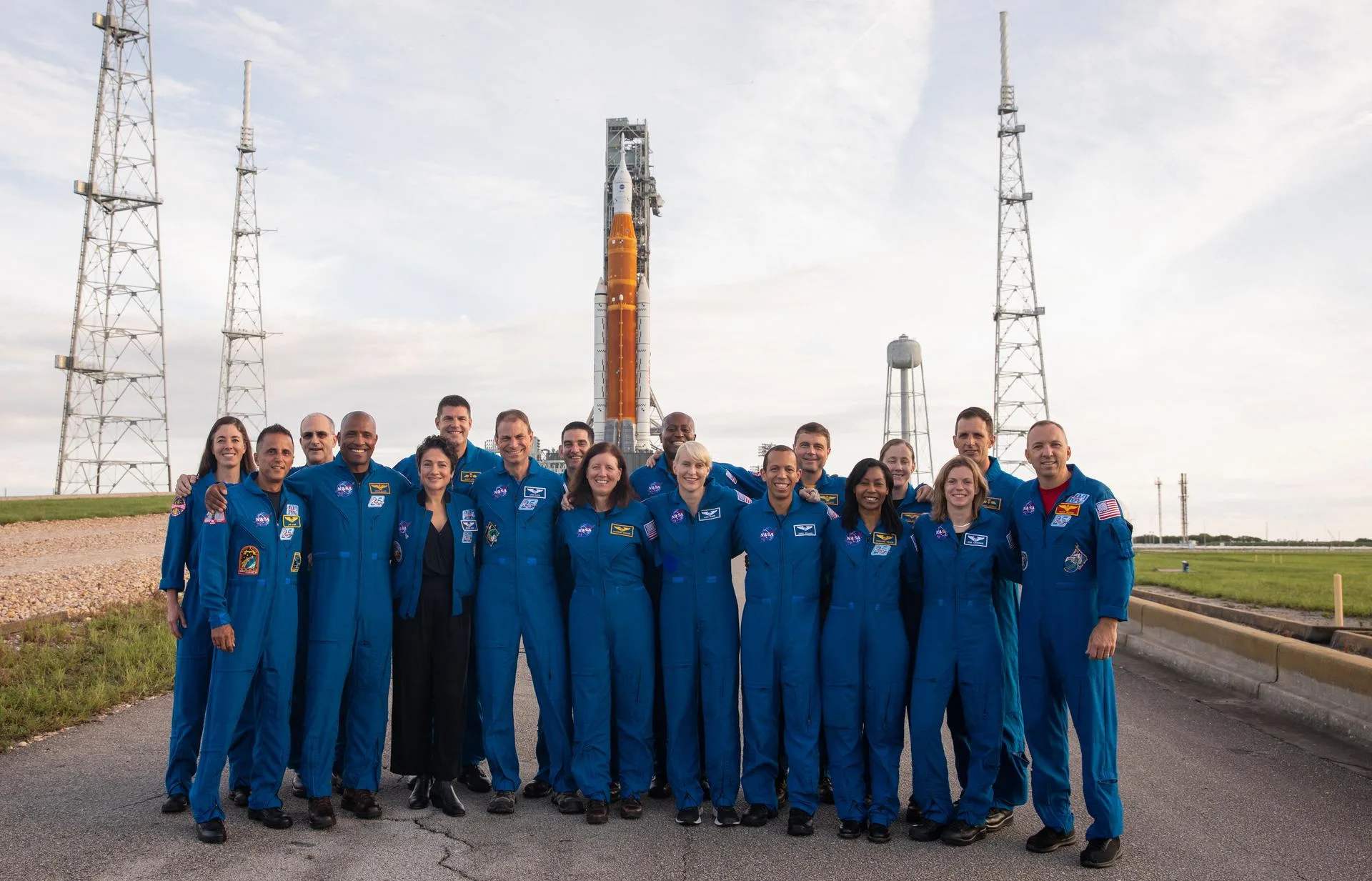
Still, the assignment of a specific crew member — and a high-profile one at that — to the Artemis III mission suggests NASA is treating 2027 as a serious target rather than a placeholder. Crew assignments tend to come when a mission is close enough to maturity that training can begin in earnest. Parmitano and whoever else joins the crew will spend years rehearsing procedures, working in simulators, and building the kind of intuitive familiarity with the spacecraft that saves lives when something unexpected happens.
What Comes After the Artemis III Test Flight
Assuming the 2027 orbital test delivers the data NASA needs, the path forward becomes a crewed lunar landing — the real headline mission that Artemis was always building toward. That flight, likely to be called Artemis IV or a renumbered successor depending on how the sequencing continues to evolve, would put boots on the Moon for the first time since Gene Cernan stepped off the lunar surface in December 1972.
There’s enormous geopolitical pressure on that moment. China’s space program has made no secret of its own lunar ambitions, with plans for crewed Moon missions in the 2030s. NASA and its partners are acutely aware that the first return to the lunar surface isn’t just a scientific achievement — it’s a statement. Which makes every milestone on the Artemis timeline, including a test flight piloted by an Italian astronaut in near-Earth space in 2027, part of a much larger story about who shapes the next era of human presence beyond Earth.